Flathead Catfish vs Channel Catfish: Key Differences
It's easy to get a little turned around when you're out on the water, especially when you reel in a big catfish and aren't quite sure if you've landed a channel or a flathead. Many Illinois anglers struggle with telling these two distinct species apart, and understanding their differences is key to successful fishing and adhering to regulations. This guide will walk you through the undeniable characteristics, habits, and best fishing strategies for both the powerful flathead and the abundant channel catfish, helping you become a more informed and effective angler.
The Core Visual Differences: How to Spot Each Catfish
When you pull a catfish out of the water, your first instinct might be to just admire its size and fight. But taking a moment to observe its physical features can immediately tell you whether you've got a channel or a flathead on the line. These aren't just subtle nuances; they're clear, unmistakable distinctions that once you know them, you'll never confuse again.
Head Shape and Mouth Structure
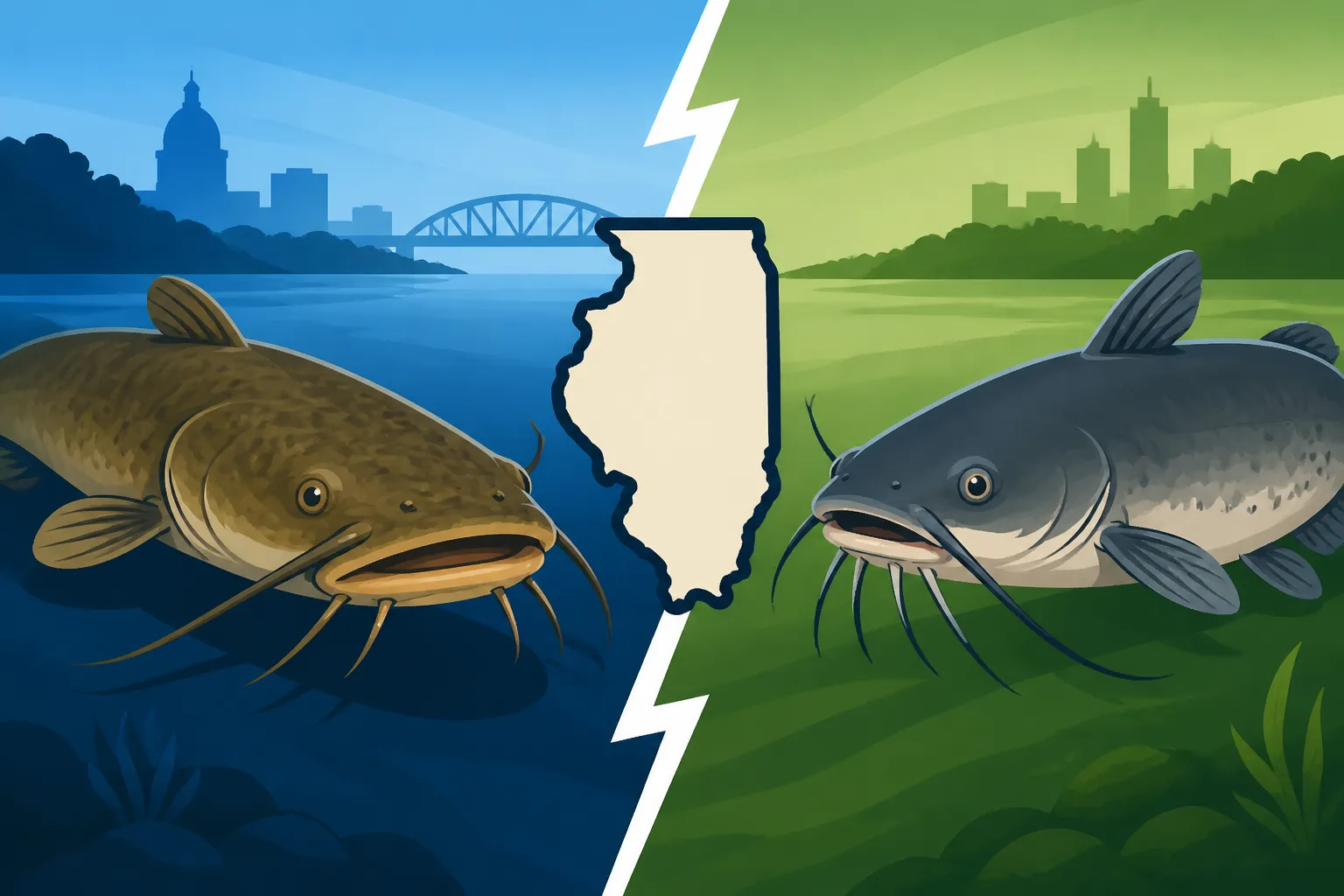
This is often the most telling feature. Think about the name "flathead" – it's not just for show! A flathead catfish truly has a broad, noticeably flattened head that resembles a shovel, especially when viewed from above. Their lower jaw protrudes significantly beyond the upper jaw, giving them a distinct "underbite." This unique mouth structure is perfectly adapted for their predatory lifestyle, allowing them to engulf smaller fish whole. If you run your hand along their head, you'll feel that wide, almost blocky shape.
In stark contrast, the channel catfish has a more conical, rounded head that slopes smoothly from its back to its snout. Their upper jaw typically extends slightly beyond the lower jaw, or the jaws are roughly equal in length. They don't have that prominent underbite. Their mouths are also smaller in proportion to their body size compared to a flathead's gaping maw. It’s a subtle difference at times, but once you've seen a few of each, the distinction becomes incredibly clear. That rounded, almost sleek head is a hallmark of the channel cat.
Body Shape and Fin Characteristics
Beyond the head, the body and fins offer crucial clues. Flathead catfish boast a robust, stocky body that tapers gradually towards their tail. Their skin is often a mottled brown, olive, or yellowish-brown, sometimes with darker spots or blotches, giving them a somewhat camouflaged appearance that blends in with the murky bottoms they prefer. Perhaps the most defining fin feature of a flathead is its tail: it’s squared or slightly emarginate (meaning it has a very slight indentation), without the deep fork you see on other catfish species. It looks sturdy and powerful, much like the rest of their body, built for holding position in current and ambushing prey.
Channel catfish, on the other hand, typically have a sleeker, more streamlined body, often with a silvery-gray or olive-green coloration. Younger channel cats, in particular, are famous for their distinct dark spots along their sides, although these spots can fade significantly or even disappear entirely as the fish ages and grows larger. This is where some confusion can happen, as a large, unspotted channel cat might momentarily trick you. However, the tail fin is your ultimate identifier here: a channel catfish always has a deeply forked tail, much like a swallow's tail. It's a clear, V-shaped split that is unmistakable. No matter how old or how big, a channel cat will always have that forked tail. Understanding these visual cues is the first step in differentiating these two popular Illinois game fish.
Habitat and Diet: Where They Live and What They Eat
Knowing where to find a fish and what it eats is half the battle when you're trying to catch it. Flatheads and channel catfish, despite both being "catfish," have remarkably different preferences when it comes to their living arrangements and dinner menus. These differences directly influence where you'll find them and what baits you should use.
Preferred Haunts in Illinois Waters
Flathead catfish are creatures of structure and current. In Illinois, you'll typically find them in larger rivers like the Illinois River, the Mississippi River, and the Kankakee River. They absolutely love deep holes, log jams, submerged trees, rock piles, and any other kind of heavy cover that provides ambush points and protection from strong currents. They're masters of finding the slack water just behind a major current break, waiting patiently for an unsuspecting meal to drift by. Think about those gnarly, brush-filled banks or the deep bends in a river with plenty of downed timber – that's prime flathead territory. They are less common in smaller lakes and ponds unless these bodies of water are directly connected to major river systems.
Channel catfish, however, are far more adaptable and widespread across Illinois. You can find them in virtually any body of water, from small farm ponds and creeks to large reservoirs like Rend Lake, Lake Shelbyville, and Carlyle Lake, and of course, all the major rivers. They thrive in a wider range of conditions, tolerating varying water temperatures and oxygen levels better than flatheads. While they appreciate structure, too, they're not as dependent on heavy cover. You'll find them cruising along channel edges, over flats, around submerged points, and even in open water. They're the quintessential "everywhere" catfish, making them a fantastic target for anglers across the state, whether you're fishing from a boat or the bank.
Feeding Strategies and Prey
This is where the true divergence in their biology shines through. Flathead catfish are almost exclusively piscivores, meaning they prefer to eat live fish. They are ambush predators, lying in wait within their chosen cover, ready to pounce on anything from bluegill and carp to shad and suckers. They rarely scavenge and are generally uninterested in dead bait. This is why their wide, flattened head and protruding lower jaw are so effective – they can quickly inhale their prey. If you're targeting flatheads, you need to think like a predator and present a lively offering. Best Live Bait for Flathead Catfish will go into more detail on this.
Channel catfish, on the other hand, are true omnivores and opportunistic feeders. They'll eat just about anything they can get their mouths on! This includes insects, crustaceans, mollusks, aquatic vegetation, and a wide variety of dead or decaying organic matter. They are fantastic scavengers, which is why "stink baits" and cut baits are so incredibly effective for them. They use their sensitive whiskers, or barbels, to detect food by smell and touch, making them highly efficient at finding meals in murky water. This broad diet makes them much easier to entice with a wider array of baits, a key reason they are such a popular species for anglers of all skill levels. You'll rarely hear of someone struggling to find a bait that a channel cat will hit. For more specific bait recommendations, check out Best Bait for Illinois Channel Catfish.
Fishing Techniques and Gear: Targeting Each Species
Because flatheads and channel catfish behave so differently, it only makes sense that your fishing techniques and gear need to adapt as well. Trying to catch a big flathead with a light panfish setup is a recipe for heartbreak, and you don't need heavy river tackle for every channel cat in a pond. Matching your approach to the species you're after is critical for success.
Best Baits and Rigs for Flatheads
When you're chasing flatheads, you need to commit to live bait. Period. Their predatory instincts mean they want something struggling and swimming. Small to medium-sized bluegill, sunfish, shad, or even carp are excellent choices, provided they are legal to use as bait in your fishing location. Always check local regulations before collecting or using baitfish. The presentation needs to keep the bait alive and kicking. A common setup involves a heavy sinker to hold the bait near the bottom, a strong circle hook (often 5/0 to 8/0, depending on bait size), and a leader, sometimes with a float or bobber to keep the bait just off the bottom or to suspend it in current.
For flatheads, patience is more than a virtue; it's a necessity. You often need to anchor up current from a promising log jam or deep hole and let your bait work its magic. When a flathead hits, it’s usually a powerful, deliberate take. You need a setup that can handle the initial shock and the ensuing bulldog fight in heavy cover. Don't be shy about using robust gear; a flathead won't be. Learn more about effective tactics in Flathead Catfish Fishing Tips for Illinois Anglers.
Effective Methods for Channel Catfish
Targeting channel catfish offers a much wider range of successful techniques, thanks to their diverse diet. Stink baits, cut baits (like pieces of shad, herring, or skipjack), chicken livers, nightcrawlers, shrimp, and even hot dogs are all excellent choices. You can fish these baits on the bottom with a simple slip sinker rig, under a bobber in shallower water, or even drift them along current seams in rivers. Given their widespread presence, channel cats are often targeted from the bank, piers, and boats alike.
The key to channel cat fishing is often finding concentrations of fish, which can be anywhere from a deep hole in a small creek to a main lake basin. They are social fish, so where you find one, you'll often find more. Unlike flatheads, a channel cat bite can range from a gentle nibble to a hard pull, and they put up a respectable fight on lighter tackle. This makes them a fantastic target for anglers of all ages and experience levels. You can find many suitable baits and tackle to get started on sites like Amazon, making it easy to stock up before your next trip.
Choosing the Right Gear
For flathead catfish, you'll want heavy-duty gear. This means a strong, medium-heavy to heavy action rod, typically 7-9 feet long, paired with a stout baitcasting reel capable of holding at least 100 yards of 30-50 pound monofilament or braided line. You need that power to turn a big fish away from snags and to withstand their incredible pulling strength. Don't skimp on hooks; a quality, sharp circle hook is essential for good hooksets and protecting the fish if you plan to release it. Heavy-duty swivels and sinkers are also a must to keep your bait in place and prevent line twist. Heavy Tackle for Mississippi River Catfish in Illinois offers more insights into gear specifics.
Channel catfish can be caught on a much lighter setup. A medium to medium-heavy spinning or baitcasting rod, 6-7 feet in length, paired with a reel spooled with 10-20 pound test line is often more than sufficient. You can use smaller circle hooks (1/0 to 4/0) or even J-hooks, depending on your bait and preference. This lighter tackle makes the fight more enjoyable and allows for easier casting. For those just starting out or looking for versatile equipment, Amazon offers a wide selection of affordable and effective rod and reel combos that are perfect for channel catfishing. Having a well-stocked tackle box with various sinkers, hooks, and swivels is always a good idea, as channel cats can be found in diverse environments requiring slight adjustments to your rig.
Size, Growth, and Culinary Considerations
Beyond the thrilling fight and the challenge of the catch, many anglers are interested in the potential size of their quarry and, of course, how they'll taste on the dinner plate. Flatheads and channel catfish have distinct reputations in both these areas, making them appealing to different types of anglers for different reasons.
Typical Size and Potential for Trophy Catches
This is where flatheads really stand out. Flathead catfish are the giants of Illinois's catfishing world. While an average flathead might be in the 10-20 pound range, they have the potential to grow much, much larger. Fish in the 30-50 pound class are not uncommon, especially in the bigger river systems, and true monsters exceeding 60, 70, or even 80 pounds have been pulled from Illinois waters. They are slow-growing, powerful fish that offer an incredible challenge to anglers seeking a trophy. If you dream of battling a fish that can truly test your strength and tackle, the flathead is your target. Just imagine the thrill of wrestling one of those river beasts into your net!
Channel catfish, while abundant, generally don't reach the gargantuan sizes of their flathead cousins. Most channel cats you'll encounter in Illinois will be in the 1-10 pound range. However, don't let that fool you into thinking they can't get big! "Trophy" channel cats can certainly reach 15-20 pounds, and occasionally even heavier, especially in nutrient-rich lakes and rivers. A 10-pound channel cat is a fantastic catch and provides a strong, exciting fight on appropriate tackle. While they might not shatter state records in the same way a flathead can, they offer consistent action and plenty of opportunities for anglers to catch good-sized fish. You can learn about daily limits for both species in Illinois Flathead Catfish Daily Limit Rules and Illinois Channel Catfish Daily Limit Explained.
Meat Quality and Preparation
When it comes to putting fish on the table, both flatheads and channel catfish are highly regarded, but they do have some distinct differences in taste and texture that influence how anglers prefer to prepare them. These differences often stem from their diets and habitats.
Flathead catfish, due to their diet of live fish, typically have very firm, white, and mild-tasting flesh. Many anglers consider them to be one of the best-tasting freshwater fish, often compared to the texture and flavor of cod or even haddock. Because their diet is clean and primarily protein-based, their meat tends to be less "muddy" or "fishy" than some other bottom feeders. They are fantastic when fried, grilled, or baked. The larger the flathead, the thicker the fillets, which means they hold up well to various cooking methods. For those who appreciate a clean, firm fillet, the flathead is a real treat.
Channel catfish, particularly those from cleaner waters like many of Illinois's lakes and rivers, also offer excellent eating. Their flesh is typically white, flaky, and has a mild, slightly sweeter flavor than a flathead. However, because channel cats are omnivorous scavengers, their flavor can sometimes be influenced by their immediate environment and diet. Some anglers find them to have a slightly more "earthy" or "fishy" taste, though this is often minimal and can be managed by properly cleaning and preparing the fish. They are incredibly versatile in the kitchen and are arguably the most popular fish for frying, but also do well baked, broiled, or in stews. You can find a lot of tasty recipes and tips for preparation for both species on fishing forums and culinary sites, just search for whether Is Channel Catfish Good to Eat? or Is Flathead Catfish Good to Eat?. No matter which you catch, you're in for a delicious meal, as long as you handle your catch with care.
In Illinois, we're lucky to have both these incredible catfish species gracing our waters. Whether you're drawn to the sheer power and trophy potential of the flathead or the consistent action and widespread availability of the channel cat, understanding their key differences will undoubtedly make you a more skilled and successful angler. So grab your gear, consider your target, and get out on the water – those whiskers are calling!
Disclaimer
This article is for general informational purposes only and does not constitute professional advice. Laws, prices and regulations vary by location and change over time. Consult a qualified professional for guidance on your specific situation.