Green Sunfish vs Hybrid Sunfish: Identification Guide
One of the most common dilemmas for anglers hitting the local pond or creek in Illinois is figuring out exactly what kind of sunfish just bit their hook. It's easy to confuse a Green Sunfish with a Hybrid Sunfish, especially when you're just starting out or if the fish is a bit on the small side. This comprehensive guide is here to untangle that confusion, helping you confidently identify your catch and understand more about these feisty, fun-to-catch panfish.
The Green Sunfish: An Illinois Native
The Green Sunfish (Lepomis cyanellus) is a true staple of Illinois waters, often found in nearly every nook and cranny, from sluggish backwaters to clear streams. It's one of those fish that, once you learn its distinct features, becomes instantly recognizable. However, because it shares some general "sunfish" characteristics with its hybrid cousins, many folks lump them together. But trust me, a Green Sunfish has its own unique charm and fight that sets it apart.
Physical Characteristics of a True Green Sunfish
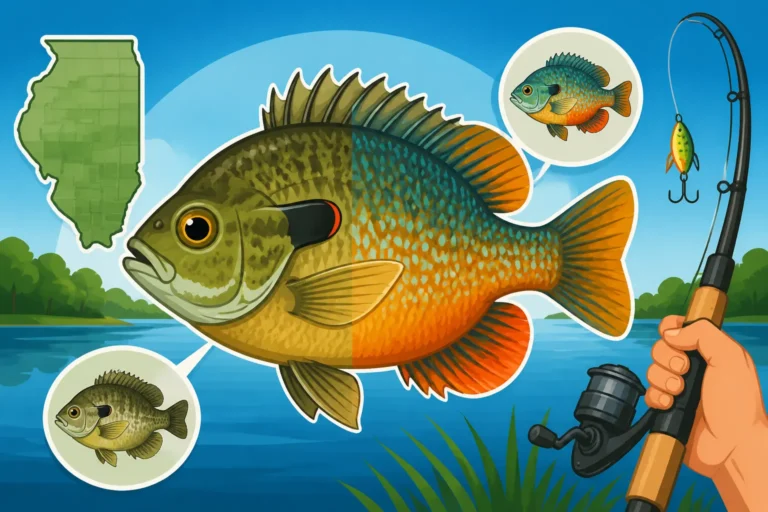
When you pull a Green Sunfish out of the water, the first thing you'll often notice is its robust, almost "chunky" body shape. They're not as disc-shaped as some other sunfish; instead, they have a more elongated, bass-like profile. Look closely at the mouth: it's surprisingly large for a panfish, extending back to at least the middle of the eye, sometimes even further. This wide mouth is a dead giveaway, earning them the nickname "goggle-eye" in some areas. The opercular flap – that's the little "ear flap" on the gill cover – will have a black spot, often with a pale or orange-red margin around it. This margin is crucial for identification.
Another defining feature is the series of bright, iridescent blue-green streaks that radiate from their snout and under their eyes. These lines are quite prominent and really make the fish "pop" in good light. Their body color can vary a lot depending on the water conditions, but generally, they'll have a greenish-bronze back fading to a lighter belly, often with some yellowish or orange-tinged fins, especially on the pectoral fins. You might also spot some irregular, dark vertical bars or blotches along their sides, but these aren't always super distinct. Think of them as the rugged, tough-looking cousins of the sunfish family.
Habitat and Behavior of Green Sunfish in Illinois
Green Sunfish are incredibly adaptable, which is why you can find them in almost any body of water in Illinois. They thrive in small streams, ponds, ditches, and the shallow, often turbid backwaters of larger rivers and lakes. They aren't picky about water quality, often tolerating conditions that might deter other fish species. This adaptability means they can be found in places other sunfish might avoid, like muddy farm ponds or slow-moving urban creeks. They love structure – think submerged logs, weed beds, rocky bottoms, and undercut banks. These spots provide both cover from predators and ambush points for their prey.
Their diet is equally diverse, making them opportunistic feeders. They'll munch on insects, small crustaceans, snails, fish eggs, and even smaller fish. This aggressive feeding behavior contributes to their reputation as feisty fighters on light tackle. When you cast a worm or a small jig into a brush pile, a Green Sunfish is often the first to attack. They're not schoolers in the same way bluegill are; you'll typically find them in smaller groups or singly, holding tight to cover. If you're looking for a good time on the water, targeting these eager biters with a simple rod and reel setup can be a blast, especially if you're taking kids fishing for the first time. They’re often one of the Best Beginner-Friendly Fish Species for Kids Fishing in Illinois.
Why Green Sunfish Are So Common
Their incredible resilience and prolific breeding habits are the main reasons Green Sunfish are so widespread across Illinois. They mature quickly, spawn multiple times throughout the spring and summer, and are fierce protectors of their nests. The males will guard the eggs and fry aggressively, warding off anything that comes too close. This robust reproductive strategy means that even in less-than-ideal environments, Green Sunfish populations tend to flourish. They can even become overpopulated in smaller ponds, leading to stunted growth if not managed properly.
This abundance makes them a fantastic target for casual angling. You don't need fancy gear or specialized techniques to catch them. A simple hook, line, and sinker with a piece of worm or a small insect is often all it takes. Many seasoned anglers consider them a nuisance when targeting larger game fish, but their willingness to bite consistently makes them perfect for honing skills or introducing new anglers to the sport. Their omnipresence is truly a testament to their tough nature and ability to thrive where other species might struggle.
Understanding Hybrid Sunfish: A Mix of Traits
Hybrid Sunfish, especially those found in Illinois, are usually a cross between two different sunfish species. The most common hybrid you'll encounter is a cross between a male Bluegill and a female Green Sunfish, often referred to as a "Green Sunfish x Bluegill Hybrid" or sometimes simply a "hybrid bluegill." These hybrids are quite popular in pond stocking programs because they tend to grow faster, fight harder, and are often more forgiving to catch than their purebred counterparts.
The Genetics Behind Hybrid Sunfish
The magic of hybrid sunfish lies in their genetics. When two distinct but closely related species interbreed, their offspring often exhibit what's called "hybrid vigor." This means the hybrids can display enhanced traits compared to either parent, such as faster growth rates, increased disease resistance, or a more aggressive feeding nature. In the case of Green Sunfish and Bluegill, the resulting hybrid often combines the large, aggressive mouth of the Green Sunfish with the broad, pan-shaped body and strong fighting spirit of the Bluegill.
The primary reason these specific hybrids are so popular for stocking is that they tend to be sterile or have very low reproductive success. This is a huge advantage for pond management. If you stock purebred Bluegill, they can quickly overpopulate a pond and become stunted. Hybrid sunfish, however, grow large without overpopulating, making them ideal for catch-and-release or for harvesting for a meal. This sterility means pond owners don't have to worry as much about controlling their numbers through repeated fishing pressure or chemical treatments, creating a more balanced fishery. You can often find great deals on hybrid sunfish fingerlings for stocking private waters from various suppliers, or sometimes you'll encounter them in public waters where they've been introduced.
Common Hybrid Varieties Found in Illinois
While the Green Sunfish x Bluegill cross is by far the most prevalent hybrid sunfish in Illinois, especially in stocked ponds, you might occasionally encounter other combinations. For example, some ponds might be stocked with a different hybrid like a Bluegill x Redear Sunfish. However, the Green Sunfish x Bluegill hybrid dominates the commercial and private pond stocking market due to its robust characteristics and ease of production. These fish are intentionally bred for their desirable angling traits and their ability to keep pond ecosystems balanced.
It's important to remember that these hybrids aren't necessarily a "natural" occurrence in most waters. While some interbreeding can happen naturally when different sunfish species share the same spawning grounds, the widespread presence of these specific hybrids is largely due to human intervention and stocking efforts. When you're fishing in a small private pond or a publicly managed lake known for its panfish, there's a good chance you'll be pulling out some of these feisty hybrids alongside purebred Green Sunfish or Bluegill. They provide a fantastic fishing experience, often offering a stronger pull for their size than a pure bluegill.
Key Differences in Appearance and Temperament
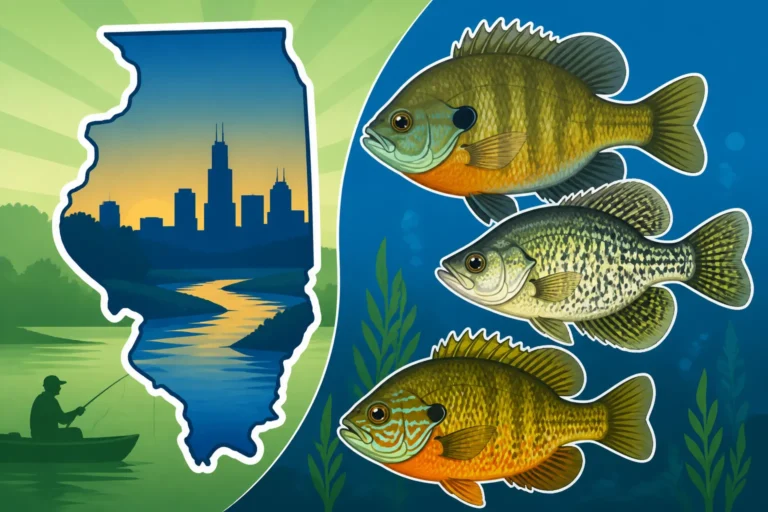
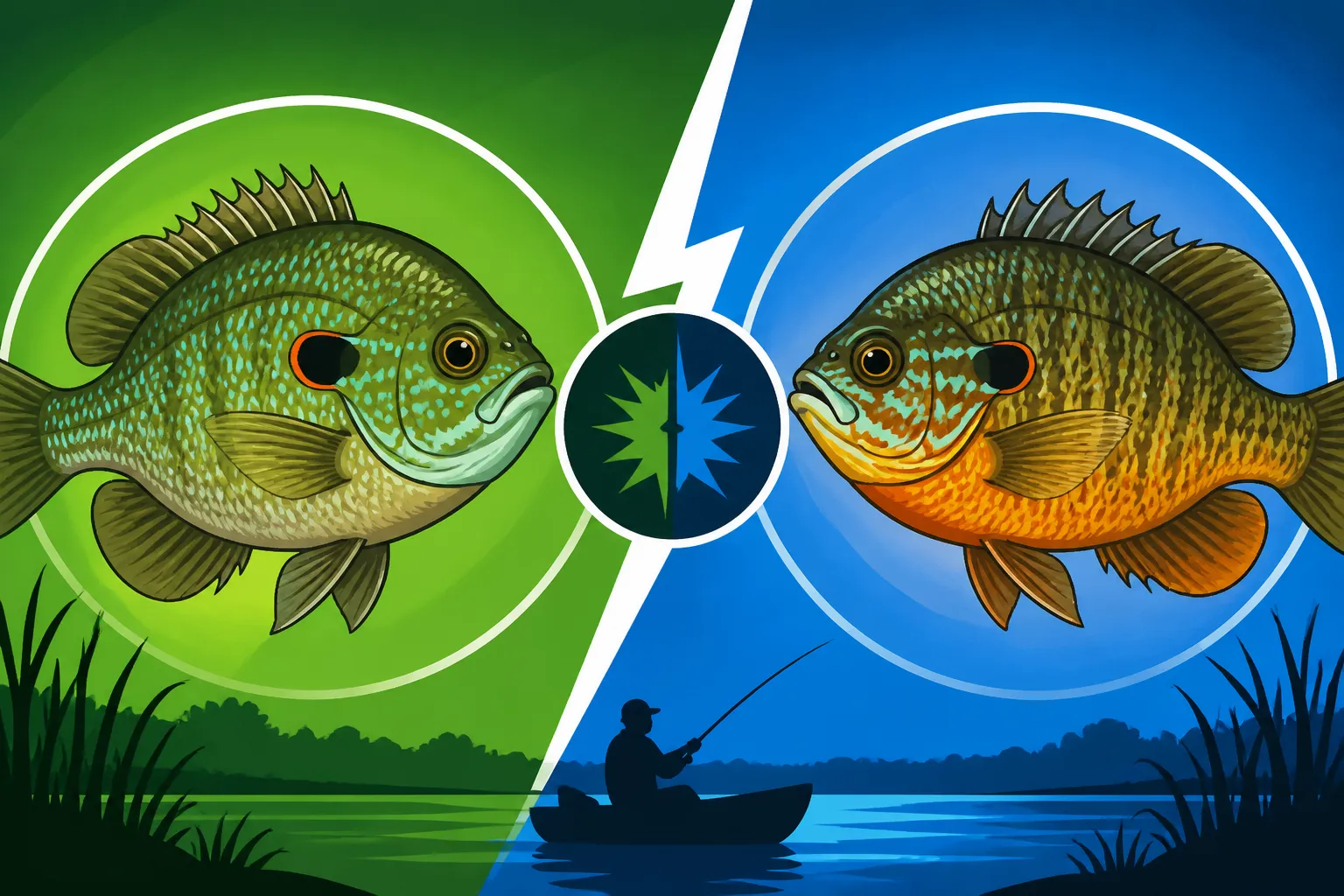
Visually, hybrid sunfish often present a blend of their parent species. They'll usually have a body shape that's somewhat intermediate between the more elongated Green Sunfish and the very rounded Bluegill. Their mouths are typically larger than a pure Bluegill's but might not be quite as massive as a Green Sunfish's. The opercular flap (gill cover "ear") is a key differentiator: it will still have a black spot, but the margin around it often won't be as distinctively orange or red as a pure Green Sunfish. Instead, it might be a faint orange, yellow, or even absent. Sometimes it will have a milky white edge.
Temperament-wise, hybrids tend to be just as aggressive, if not more so, than pure Green Sunfish. This aggressive streak is part of their appeal to anglers. They're less finicky than pure Bluegill, often hitting a wider variety of baits and lures with enthusiasm. If you've ever had a day where the bluegill were being shy, but something was still tugging hard on your line, chances are it was a hybrid sunfish. They're robust fighters for their size and provide excellent sport on light tackle. Many anglers appreciate them because they combine the best attributes of both parent species into one eager package.
Spotting the Differences: A Practical Identification Guide
Distinguishing between a Green Sunfish and a Hybrid Sunfish (especially a Green x Bluegill cross) can sometimes feel like a game of "spot the difference." It's not always cut and dry, especially with variations in individual fish and water conditions. However, with a keen eye and knowing what specific features to focus on, you can get pretty good at telling them apart. Let's break down the critical markers.
Fin and Gill Cover Markings to Look For
The opercular flap – that "ear" on the back of the gill cover – is your first and often best clue. A pure Green Sunfish will almost always have a distinct black spot on this flap, bordered by a noticeable pale yellow, orange, or reddish margin. It's like a little ring around the black spot. On a Green Sunfish x Bluegill hybrid, this margin is typically much less defined, often pale or yellowish, or sometimes entirely absent. It won't have the vibrant, clean border you'd expect on a pure Greenie. This is one of the most reliable features to examine right away.
Next, look at the dorsal fin (the one on its back). Green Sunfish often have a more pronounced separation or notch between the spiny front part and the soft-rayed back part of their dorsal fin. Hybrid sunfish might show a slightly less distinct separation, leaning more towards the Bluegill's single, continuous dorsal fin. Also, check the pectoral fins (the ones behind the gill cover, like arms). On a Green Sunfish, these are usually rounded and relatively short. On a hybrid, they might be slightly longer and more pointed, taking after the Bluegill parent. These subtle differences in fin structure, combined with the opercular flap, can really help solidify your identification.
Body Shape and Mouth Size Cues
The overall body shape is another significant indicator. A Green Sunfish tends to have a thicker, more elongated, almost "football" shape. It’s not as round or compressed side-to-side as a typical Bluegill. Imagine a mini bass. A hybrid, being a mix, will often have a body shape that's somewhat in between – maybe a bit more rounded than a Green Sunfish, but not quite as pancake-flat as a pure Bluegill. The mouth is also a huge clue. Green Sunfish have an uncharacteristically large mouth for a panfish, easily extending back past the pupil of the eye, sometimes even to the back edge. You can practically fit your thumb in there!
Hybrid sunfish will usually have a mouth that is larger than a pure Bluegill's, but it might not be as exaggeratedly large as a pure Green Sunfish. It often stops around the middle of the eye. This larger mouth is a trait they inherit from their Green Sunfish parent, which contributes to their aggressive feeding and willingness to strike bigger baits and lures. So, if you're holding a sunfish with a mouth that seems disproportionately large compared to its body, you're leaning heavily towards a Green Sunfish or a hybrid with strong Green Sunfish genetics.
Coloration Patterns and Their Variations
Coloration can be tricky because it varies so much based on habitat, diet, and water clarity. However, there are some general trends. Green Sunfish, as their name suggests, typically have a greenish-bronze or olive-green back, often with those iridescent blue-green wavy lines on their cheeks and gill covers. They may have faint dark vertical bars or blotches on their sides, but these are often subdued. Their belly can range from yellow to whitish.
Hybrid sunfish, on the other hand, often display a mosaic of colors from both parents. They might have some of the greenish tint of the Green Sunfish but combined with the yellow or orange belly and sometimes more distinct vertical barring (like a Bluegill). The iridescent blue streaks on the face might be present but perhaps less vibrant or complete than on a pure Green Sunfish. In some hybrids, you might even see a faint "gill raker" mark, which is a key identification feature for pure Bluegill (though often absent or very weak in hybrids). If you're comparing two fish side-by-side, the Green Sunfish will often look more "rugged" and uniformly olive-green, while the hybrid might have a slightly brighter, more mottled appearance.
Here's a quick comparison table to help you out on the water:
| Feature | Green Sunfish (Lepomis cyanellus) | Hybrid Sunfish (Green x Bluegill) |
|---|---|---|
| Body Shape | More elongated, "football" shaped, robust | Intermediate, often more rounded than Green Sunfish |
| Mouth Size | Large, extends back past middle of eye, often to back edge | Larger than Bluegill, but often not as extreme as Green Sunfish |
| Opercular Flap | Black spot with distinct pale yellow/orange/red margin | Black spot, but margin is pale, faint, or often absent/milky white |
| Facial Markings | Prominent iridescent blue-green streaks from snout to eye | Blue streaks may be present but often less vibrant/complete |
| Pectoral Fins | Relatively short and rounded | Can be slightly longer and more pointed (Bluegill influence) |
| Dorsal Fin Notch | Often a more distinct notch between spiny and soft rays | Less distinct notch, more continuous (Bluegill influence) |
| Coloration | Greenish-bronze/olive back, faint bars, yellow/white belly | Variable, blend of green/bluegill colors, often mottled |
| Growth Rate | Moderate to slow, prone to stunting in small ponds | Typically faster growing than either parent, reaches larger size |
| Reproduction | Highly prolific, self-sustaining populations | Often sterile or low reproductive success |
Where You're Most Likely to Encounter Each Species
Knowing where to find these fish can also be a huge help in identification. While there's always overlap, certain environments favor one species over the other, especially when it comes to intentional stocking. This insight can give you a head start before you even make your first cast.
Natural Waters for Green Sunfish
Green Sunfish are true survivors and masters of adaptation, making them ubiquitous in Illinois' natural aquatic environments. You'll find them in almost every small stream, creek, and river backwater throughout the state. They thrive in areas with slower currents, abundant aquatic vegetation, and plenty of submerged structure like fallen trees, brush piles, and rock ledges. Farm ponds, even those that are muddy or slightly neglected, are prime Green Sunfish territory. Their ability to tolerate lower oxygen levels and murkier water gives them an edge in these less pristine habitats. You can spend an entire afternoon with a simple ultralight rod, a handful of worms, and a bobber in a small creek, catching Green Sunfish after Green Sunfish.
They are also present in the shallow, protected coves and backwaters of larger Illinois lakes and reservoirs, though they might not be the dominant panfish species there. Think of places like the shallow arms of Rend Lake or the quieter bays of Lake Shelbyville. If you're exploring lesser-fished areas or waters that haven't been intensely managed for specific game fish, chances are excellent you'll run into a healthy population of Green Sunfish. They are part of the amazing diversity of Illinois' 220 Fish Species: What Anglers Can Actually Expect to Catch. They're not particular about bait, hitting everything from crickets to small pieces of hot dog.
Stocked Ponds and Lakes for Hybrid Sunfish
Hybrid sunfish are primarily a product of deliberate stocking programs. You are most likely to encounter them in privately owned farm ponds, community fishing ponds, and smaller public lakes that are actively managed for panfish production. Many landowners and municipalities choose to stock hybrid sunfish because of their fast growth rate and their tendency not to overpopulate (due to sterility). This means less management effort for the pond owner and a more consistent population of decent-sized panfish for anglers.
Fisheries biologists or private pond management companies often recommend hybrids for ponds where anglers want a good eating fish that won't out-compete other species or take over the ecosystem. You'll often find these ponds specifically advertised as having "hybrid bluegill" or "hybrid sunfish." If you're fishing a well-maintained, relatively small body of water, especially one known for its panfish, there's a very high probability that you're going to catch some hybrid sunfish. They're a favorite for Hybrid Sunfish Stocked Ponds Worth Trying as they provide consistent action and often grow quite large. When buying tackle from a retailer like Amazon, you'll find plenty of small jigs and baits perfect for these eager biters.
Fishing Tips for Both Species in Illinois
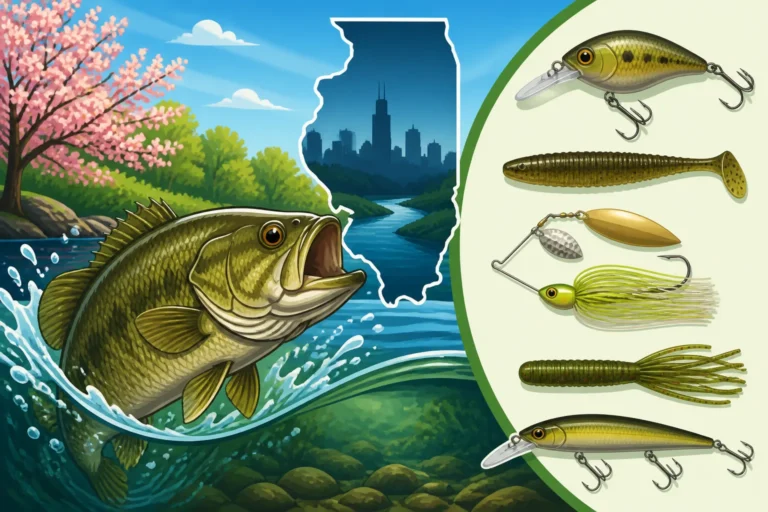
Catching both Green Sunfish and Hybrid Sunfish in Illinois is generally straightforward, making them excellent targets for anglers of all skill levels. They respond well to classic panfish tactics. For bait, think natural options like redworms, nightcrawlers (cut into pieces), crickets, grasshoppers, and even small bits of corn or bread. If you prefer artificials, tiny jigs (1/32 oz or 1/16 oz) tipped with a small plastic grub, tube, or a feather jig are incredibly effective. Micro-spoons and small spinnerbaits can also draw strikes.
Fish these baits and lures around cover: weed lines, submerged timber, docks, rock piles, and brush. A small bobber rig is always a reliable choice, allowing your bait to suspend at a desired depth. For Green Sunfish in creeks and small ponds, fishing closer to the bank and around any structure is key. For hybrids in stocked ponds, they might be found schooling a bit more, sometimes deeper, but still relating to cover. Use ultralight spinning gear with 2-4 pound test line for maximum fun and fight. These fish, especially the hybrids, can put a surprising bend in a light rod! Don't forget to check the specific regulations for the body of water you're fishing, as limits can vary.
The Angler's Perspective: Catching and Enjoying Sunfish
There's a reason sunfish, in all their forms, are such a beloved target for anglers across Illinois: they're accessible, abundant, and always up for a fight. Whether you're chasing the native Green Sunfish or the robust Hybrid Sunfish, you're in for a rewarding experience. They truly represent the joy of simple, effective fishing.
Gear and Techniques for Sunfish Fishing
When it comes to sunfish, simplicity is often the name of the game. You don't need a boatload of expensive gear to have a fantastic day. An ultralight spinning combo is ideal, typically a 5-6 foot rod with a fast action, paired with a small spinning reel spooled with 2-4 pound monofilament line. This setup allows you to feel even the lightest nibble and makes a 6-inch sunfish feel like a trophy. Many anglers find excellent starter kits and individual components on Amazon, making it easy to get equipped without breaking the bank. For a complete overview, check out our guide on Best Panfish Setup for Kids.
As for tackle, a small assortment of hooks (sizes 8-12), some split shot weights, and a few small bobbers (cork or slip bobbers work great) will cover most situations. For baits, live options like waxworms, redworms, small nightcrawler pieces, crickets, or even small pieces of hot dog are always a hit. Artificial lures include tiny tube jigs, micro-grubs, small spoons, and spinnerbaits. These fish are generally not picky! Cast your bait near submerged cover, along weed lines, or near drop-offs. If using a bobber, set your depth so the bait is suspended a foot or two off the bottom or just above any visible structure. A slow retrieve with artificials or a gentle twitch of the bobber often entices a strike.
Culinary Delights: Eating Green and Hybrid Sunfish
Absolutely! Both Green Sunfish and Hybrid Sunfish are delicious table fare, especially when fresh from the clean waters of Illinois. Their white, flaky meat has a mild, sweet flavor that's perfect for frying, baking, or grilling. Many anglers consider panfish fillets, lightly breaded and fried golden brown, to be one of the best reasons to go fishing. The key is to fillet them when they are fresh.
While they may not grow to enormous sizes, a stringer full of 6- to 9-inch sunfish provides plenty of meat for a family meal. Cleaning them can be a bit tedious due to their smaller size, but a sharp fillet knife and a bit of practice make the process much easier. Some people prefer to scale and gut them, then cook them whole, especially the smaller ones. No matter your preparation, these fish offer a fantastic reward for a fun day on the water. Just be sure to check the local regulations for daily catch and possession limits before you keep your catch.
Conservation and Management of Sunfish Populations
While both Green Sunfish and Hybrid Sunfish are generally abundant, understanding their role in the ecosystem is important for responsible angling and conservation. Green Sunfish, being prolific breeders and highly adaptable, can sometimes overpopulate smaller ponds, leading to stunted growth where no fish grow to a decent size. In such cases, selective harvesting of smaller Green Sunfish can actually be beneficial for the overall health of the pond's fish population, allowing the remaining fish to grow larger.
Hybrid sunfish, on the other hand, are often stocked precisely because they are less likely to overpopulate due to their reduced reproductive capabilities. This makes them an excellent choice for "put-and-take" fisheries or ponds where consistent catch rates of larger panfish are desired. Always respect catch limits and size restrictions, and consider practicing catch and release for larger specimens, especially if you're fishing in a wilder, unmanaged water body. By being mindful of our impact, we can ensure that future generations of anglers can also enjoy the thrill of catching these delightful Illinois panfish. Remember, a fishing license is required for most waters, and you can learn all about it in our Illinois Fishing License Guide for 2026.
Disclaimer
This article is for general informational purposes only and does not constitute professional advice. Laws, prices and regulations vary by location and change over time. Consult a qualified professional for guidance on your specific situation.