Best Bait and Lures for Illinois Smallmouth Bass
Oh, the smallmouth bass! If you've spent any time on Illinois's rivers or clear-water lakes, you know the exhilarating tug of a smallmouth on the line. These bronze beauties are feisty, cunning, and absolute masters of their aquatic domain. But if you've ever felt frustrated, wondering why your usual bass lures aren't getting a strike, or if you're just starting out and feeling overwhelmed by the sheer number of options, you're not alone. This comprehensive guide is here to unravel the mystery of what truly entices an Illinois smallmouth, diving deep into the best baits and lures to help you fill your livewell or simply enjoy a fantastic day on the water.
Understanding Smallmouth Bass Behavior in Illinois
To consistently catch smallmouth bass, you first need to think like a smallmouth. These aren't your typical lazy largemouths hiding in thick cover. Smallmouths are often called "brown bass" or "bronzebacks" for a reason – they thrive in specific environments and have distinct feeding patterns that, once understood, can drastically improve your fishing success.
Smallmouth Habitat Preferences
Unlike their largemouth cousins that prefer warmer, weedier, and often murkier waters, smallmouth bass gravitate towards cooler, clearer water, often with rocky or gravelly bottoms. Think of flowing rivers and large, deep lakes with plenty of structure. In Illinois, this means places like the Kankakee River, the Rock River, and the northern stretches of the Mississippi River are prime smallmouth territory. These fish absolutely love current breaks, eddies, submerged rock piles, natural ledges, and rocky points where they can ambush prey. They’ll use these structures for cover from predators and strong currents, as well as prime staging areas to dart out and grab a meal. Understanding these preferences helps you narrow down where to cast your line before even thinking about what bait to use. You might find them tucked behind a large boulder in a river current or patrolling the deep edges of a rocky drop-off in a lake. Many anglers find success exploring Where to Catch Smallmouth Bass in Rivers and Streams.
Smallmouth Feeding Habits
Smallmouth bass are opportunistic predators with a diet that primarily consists of crayfish, small baitfish like minnows and shiners, insects, and even frogs. Their keen eyesight is a major asset in the clear waters they inhabit, making visual appeal of your bait just as important as its action. They are aggressive feeders, often striking with considerable force, especially when active. However, they can also be incredibly finicky, especially in highly pressured waters or during slow periods. Matching your bait to their natural forage is a golden rule here. If you know a particular body of water is teeming with crayfish, you bet a crayfish imitation will be a hot ticket. During certain times of year, especially early morning or late evening, they might be looking up for an easy meal, making topwater presentations highly effective. It’s all about observation and adapting to what the fish are telling you.
Live Bait for Smallmouth Bass: The Natural Advantage
When it comes to smallmouth, sometimes the simplest approach is the best. Live bait offers a natural presentation, scent, and movement that artificial lures can't always perfectly replicate. For finicky smallmouth, especially, live bait can be the difference between a frustrating day and a fantastic one.
Crayfish
Hands down, crayfish are perhaps the number one natural food source for smallmouth bass, particularly in rivers and rocky lakes. If you want to put a smallmouth in the net, especially a big one, a live crayfish is incredibly hard to beat. Their natural movement, scent, and texture are irresistible. You can catch your own using small traps or nets in rocky shallows, or buy them at local bait shops.
When fishing with crayfish, hook them through the tail from the bottom, pushing the hook up through the top. This allows them to swim naturally backwards, mimicking their escape mechanism. Cast them near rocky structure, current breaks, or drop-offs. Let them sink to the bottom and slowly crawl them along, letting the crayfish do most of the work. You'll often feel a series of subtle bumps as the smallmouth picks it up before a solid strike. This technique is especially potent in clear rivers where smallmouth actively hunt among the rocks.
Minnows and Shiners
Another stellar live bait choice, minnows and shiners mimic the small baitfish that smallmouth frequently prey upon. These are excellent for covering more water than crayfish, especially if you suspect smallmouth are schooling or actively chasing baitfish in open water or along submerged structures. Common choices include golden shiners, fathead minnows, and emerald shiners.
Hook minnows either through the lips for a more natural swimming action (great for drifting in current or slow retrieves) or just behind the dorsal fin if you want them to swim away from the boat or bank (good for still fishing with a bobber). You can fish them under a bobber in shallower areas, on a slip-sinker rig for deeper water, or simply slow-troll them behind a boat. The key is to keep them lively. Smallmouth can be surprisingly selective, and a dying minnow might be ignored. When fishing them, watch for any unnatural movement in your line or a sudden run; smallmouth will often grab a minnow and try to swallow it whole before realizing they're hooked.
Worms and Leeches
While maybe not as celebrated for smallmouth as crayfish or minnows, nightcrawlers and leeches can absolutely be effective, especially when the fish are less aggressive or when fishing in slightly murkier conditions. Nightcrawlers offer a large, juicy target and a strong scent trail, while leeches provide a more subtle, undulating movement.
For nightcrawlers, threading them onto a hook to create a squirming, natural presentation is usually best. You can fish them on a simple hook and sinker, under a bobber, or even on a small jig head. Leeches can be hooked once through the suction cup end and fished similarly, either still-fishing or with a slow retrieve. These baits are often great for younger anglers or when you're just looking for any bite, as they're also attractive to other species like sunfish and crappie. Just remember that smallmouth tend to prefer a more active presentation, so a slowly dragged worm or leech along the bottom near cover can often trigger a strike from a curious smallmouth.
Artificial Lures for Smallmouth Bass: Versatility and Action
For the angler who loves the challenge and versatility, artificial lures are where smallmouth fishing truly shines. Modern lure technology offers an incredible array of options that can mimic any forage and trigger strikes in almost any condition.
Soft Plastics
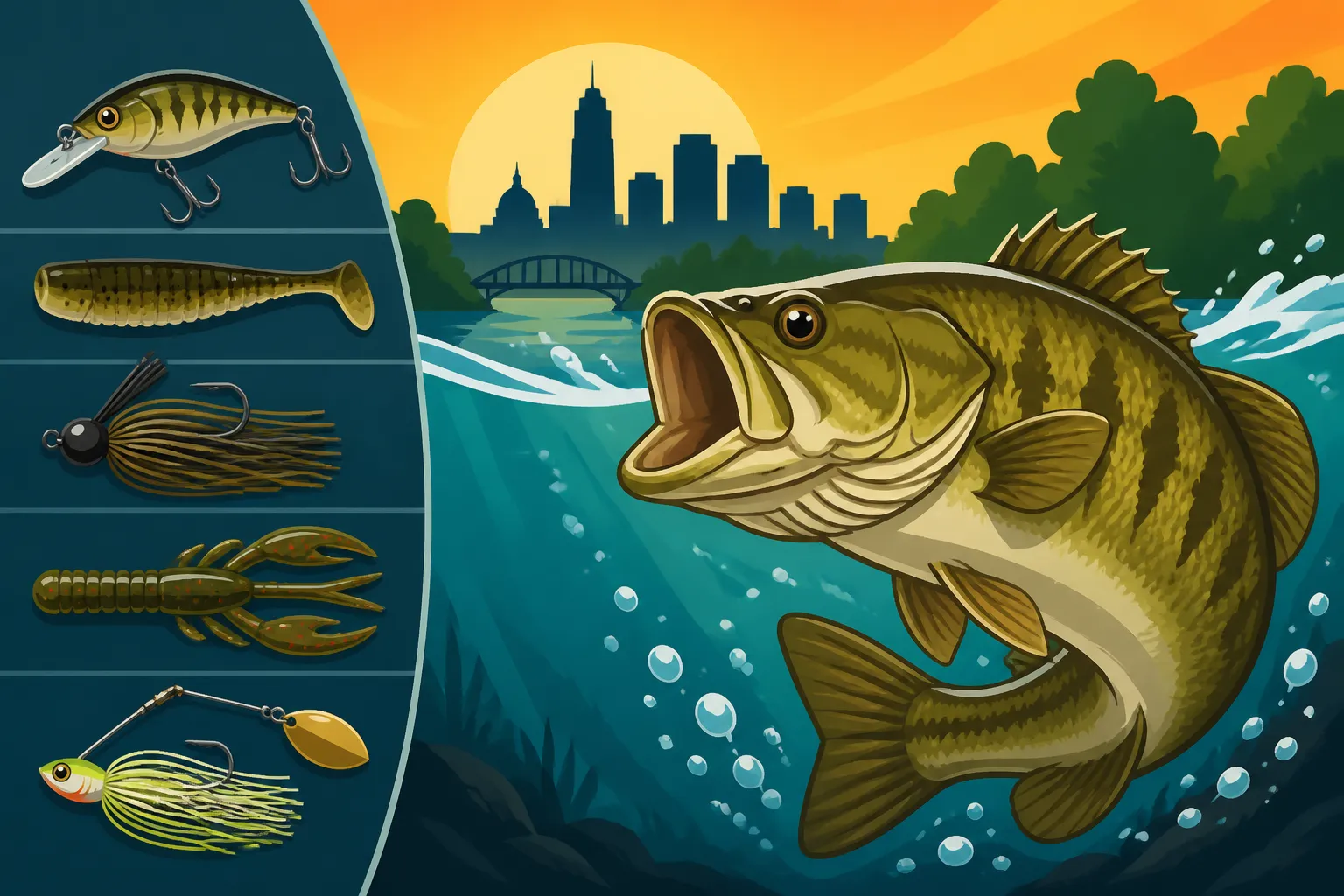
Soft plastics are perhaps the most versatile category of lures for smallmouth bass. They come in countless shapes, sizes, and colors, allowing you to imitate anything from crayfish and minnows to worms and leeches. The key to their effectiveness is their lifelike texture and subtle action. Popular choices include tube jigs, grubs, soft plastic jerkbaits, and creature baits.
- Tube Jigs: These hollow, cylindrical baits with tentacles are phenomenal for mimicking crayfish or a struggling baitfish. Rig them on an internal jig head and fish them with a slow drag-and-hop retrieve along the bottom. They shine in rocky areas and can be extremely effective for subtle bites. Many anglers swear by green pumpkin or watermelon colors.
- Grubs & Swimbait Tails: Single-tail or double-tail grubs rigged on a small jig head offer a fantastic swimming action, great for covering water. Swimbait tails, with their realistic fish profiles, are excellent for imitating baitfish. These are often fished with a steady retrieve, letting the tail do the work, or with a lift-and-drop technique.
- Soft Plastic Jerkbaits: These lipless wonders, fished weightless or with a small hook, are deadly for imitating an injured baitfish. A sharp twitch-twitch-pause retrieve makes them dart erratically, drawing aggressive strikes. They excel in clear water when smallmouth are actively feeding on minnows. If you're looking for different rigging options, understanding How to Fish a Texas Rig for Bass can also be beneficial for certain soft plastic presentations.
- Creature Baits: Designed to mimic crayfish or other bottom-dwelling prey, creature baits often have multiple appendages that create a lot of subtle movement. Rigged on a jig or Texas-rigged, they're perfect for punching into cover or dragging along rocky bottoms.
Crankbaits
Crankbaits are fantastic search baits for smallmouth, especially when you need to cover a lot of water quickly or fish deeper areas. Their erratic swimming action and vibrations can trigger reaction strikes from active fish. They come in various diving depths, from shallow-running square bills to deep-diving models.
- Shallow-Diving Crankbaits (e.g., Square Bills): These are excellent for fishing shallow rocky flats, submerged timber, or along riprap. Their aggressive wobbling action and ability to deflect off cover often trigger violent strikes. Chartreuse and crawfish patterns are perennial favorites.
- Medium- and Deep-Diving Crankbaits: When smallmouth move deeper, perhaps during the summer heat or in large lake settings, deep-diving crankbaits are essential. They allow you to get your lure down to the fish’s depth range, often where they’re holding on ledges or deep rock piles. Matching the dive depth to the structure is crucial. Always choose colors that mimic local baitfish or crayfish. You can find a huge selection of different crankbaits for various conditions on sites like Amazon.
Topwater Lures
There's nothing quite like the explosive strike of a smallmouth bass on a topwater lure. These baits are fished on the surface, creating commotion that draws fish up from below. They are most effective during low-light conditions (dawn, dusk, or overcast days) and when the water is relatively calm.
- Poppers & Chuggers: These lures have a cupped face that "pops" or "chugs" water when twitched, mimicking a struggling baitfish or a frog. Their loud action can draw fish from a distance.
- Walk-the-Dog Lures (e.g., Zara Spooks): These slender, cigar-shaped lures are designed to be retrieved with a rhythmic side-to-side "walking" action. This subtle yet enticing movement is incredibly effective for enticing wary smallmouth.
- Prop Baits: Featuring propellers on the front or back (or both), prop baits create a buzzing, sputtering commotion on the surface. They can be retrieved steadily or twitched, creating a unique sound and splash that smallmouth find irresistible. For anglers chasing the excitement of a surface strike, topwater fishing is truly an art form.
Jigs and Spinnerbaits
These are workhorse lures that belong in every smallmouth angler's tackle box. They are incredibly versatile and can be fished effectively in various conditions and depths.
- Jigs: From hair jigs to football jigs to swim jigs, jigs are a staple for smallmouth. They can imitate crayfish, minnows, or even an injured insect falling through the water column. Football jigs are excellent for dragging along rocky bottoms, while swim jigs with a grub or paddle tail trailer are great for working through lighter cover or covering water. Smallmouth often prefer lighter jigs than largemouth, typically in the 1/8 to 3/8 ounce range. Best Lures for Smallmouth Bass in Spring often include various types of jigs.
- Spinnerbaits: With their flashing blades and vibrating skirt, spinnerbaits are fantastic for covering water, especially in stained conditions or when there's a breeze. The flash and vibration mimic a fleeing baitfish or something splashing through the water. They are also highly effective at deflecting off cover without getting snagged. Look for models with willow leaf or Colorado blades, depending on the desired flash and vibration profile.
Matching Bait and Lures to Seasonal Patterns
Smallmouth bass, like most fish, change their behavior significantly with the seasons. Understanding these seasonal shifts in Illinois water temperatures and forage availability is crucial for selecting the right bait or lure. This adaptability is what makes a well-rounded angler truly successful. A comprehensive Illinois Fishing Seasons Guide can help you plan your trips.
Spring Smallmouth Fishing
Spring is a magical time for smallmouth as they move from their deeper winter haunts into shallower staging areas in preparation for spawning. Water temperatures are rising, and the fish are often aggressive as they feed up.
- Pre-Spawn (Water 45-55°F): Smallmouth will begin moving towards shallower, rocky areas, often congregating on points, humps, and ledges adjacent to deeper water. Jigs (hair jigs, Ned rigs, football jigs) worked slowly along the bottom are deadly. Soft plastic jerkbaits can also be incredibly effective, twitched erratically to mimic a cold-stunned or injured baitfish. Live minnows or crayfish are also excellent choices, fished slowly. This is a prime time for a big bite. Many anglers follow Spring Bass Fishing Patterns closely.
- Spawn (Water 55-65°F): Smallmouth will build nests in shallower, gravelly or rocky areas. While it's tempting to target bedding fish, many anglers prefer to leave them undisturbed. However, if you are fishing, tube jigs or small creature baits that mimic a nest intruder can provoke a strike. Live crayfish fished near rocky cover are also highly effective. It’s a delicate balance of enticing a strike without unduly stressing the fish during this critical time.
- Post-Spawn (Water 65-70°F): After the spawn, smallmouth can be a bit lethargic as they recover. They may move back to slightly deeper, cooler water, but they will still be close to their spawning areas. Soft plastics (tubes, grubs, drop shots) fished slowly and patiently can elicit bites. Topwater lures can also start to become effective during low light, as the fish are recovering and might look for an easy meal on the surface.
Summer Smallmouth Fishing
Summer means warmer water, and smallmouth will generally move to deeper, cooler sections of lakes and rivers, often seeking out deeper rock piles, ledges, current breaks, and submerged structure. They can be highly active during this period, especially during morning and evening.
- Active Feeding: Crankbaits (medium to deep divers) are excellent for covering water and finding active fish along deep breaks. Spinnerbaits and buzzbaits can be used in low light or on windy days to cover shallower points or flats. When the sun is high and bright, jigs and drop shots fished vertically or slowly along deep structure are highly effective. Live bait, particularly minnows or crayfish, fished on a Carolina rig or drop shot in deeper water, can also be a game-changer.
- Night Fishing: Don't overlook night fishing for smallmouth in the summer. They often become more active after dark, moving shallower to feed. Dark-colored topwater lures or slow-rolled spinnerbaits can be incredibly productive under the cover of darkness.
Fall Smallmouth Fishing
Fall is another fantastic time to target smallmouth bass. As water temperatures drop, fish begin to feed aggressively, putting on weight for the upcoming winter. This is often when you can catch some of the biggest smallmouth of the year.
- Feeding Frenzy: Smallmouth will move to shallower areas for feeding before retreating to deeper water for winter. Crankbaits (especially those mimicking baitfish like shad or perch), spinnerbaits, and swimbaits are great for covering active fish. Jigs and soft plastics are also essential, especially when fishing rocky bluffs, points, and humps where baitfish congregate. Live bait, particularly large minnows or shiners, can be incredibly effective when fished on a slip bobber or a simple bottom rig. Fall Fishing Calendar for Illinois Anglers provides more specific dates and tips.
Winter Smallmouth Fishing
Winter fishing for smallmouth in Illinois can be challenging but rewarding for dedicated anglers. Smallmouth become very lethargic in cold water, often schooling up in deep holes, along ledges, or near significant current breaks in rivers.
- Slow and Deep: The key to winter smallmouth is slow, subtle presentations in deep water. Vertical jigging with spoons, blade baits, or small hair jigs can be effective. Drop shot rigs with small soft plastics or live minnows are also excellent choices for presenting a bait right in front of the fish's nose. Patience is paramount, as bites will be very light. Ice fishing, where permitted, can also yield some impressive smallmouth through the ice, often with small jigs or minnows.
Tips for Presenting Your Bait and Lures Effectively
Having the right bait or lure is only half the battle. How you present it—the retrieve, the pause, the subtle twitch—can make all the difference between a follow and a solid strike. Smallmouth are discerning, and a natural presentation is often key.
Reading the Water
Before you even make a cast, take a moment to "read the water." Look for current breaks, eddies, visible rock formations, submerged timber, or changes in water color or depth. Smallmouth are structure-oriented, so identifying these potential holding areas is crucial. In rivers, current seams where fast water meets slow water are magnets for smallmouth. In lakes, look for rocky points, humps, or sharp drop-offs. Pay attention to how the current moves your boat or lure; understanding the flow will help you position your bait naturally. Observing where baitfish are schooling or where birds are diving can also give you clues about where smallmouth might be lurking. Remember, Why Fishing Rules Vary by Lake and River so knowing your specific spot is always helpful.
Mastering Retrieval Techniques
Each lure type has an optimal retrieval technique, but mastering these and adapting them to the conditions is what separates good anglers from great ones.
- Slow & Subtle: For jigs, soft plastics, and live bait, a slow, deliberate retrieve is often best, especially in cold water or when fish are finicky. Think about dragging, hopping, or subtle twitching to imitate a bottom-feeding crayfish or a struggling baitfish. The "Ned Rig" technique, for example, is all about minimal movement on a mushroom-shaped jig head.
- Erratic & Aggressive: For crankbaits, spinnerbaits, and soft plastic jerkbaits, a more erratic retrieve can trigger reaction strikes. Vary your retrieve speed, add pauses, or twitch your rod tip to make the lure dart and stumble. When fishing crankbaits, let them bang off rocks or wood; the deflection often makes a bass strike.
- Walk-the-Dog: This specific technique for topwater lures takes practice but is incredibly rewarding. A rhythmic twitch of the rod tip, combined with reeling in slack, makes the lure glide from side to side across the surface, mimicking a vulnerable baitfish.
- Varying Depth: Don't be afraid to experiment with how deep your lure is running. Smallmouth might be holding tight to the bottom, suspended in the water column, or looking up for a meal. Use different lure weights, retrieve speeds, or even adjust your boat position to target different depths. Sometimes, just changing the angle of your cast can present the lure differently and elicit a strike.
Essential Gear for Smallmouth Bass Anglers
Having the right rod, reel, and line setup can make a huge difference in your ability to cast effectively, detect subtle bites, and fight these powerful fish. While smallmouth aren't the largest fish in Illinois waters, their fighting spirit demands a balanced setup.
Rods, Reels, and Line
- Rods: For most smallmouth fishing, a medium-light to medium power spinning rod, 6'6" to 7'6" long, with a fast or extra-fast action, is ideal. This setup provides the sensitivity to detect light bites and the backbone to handle their powerful runs. If you prefer baitcasting, a medium power, fast action rod of similar length works well for heavier jigs, crankbaits, and spinnerbaits. While these recommendations lean toward the specific fish, you might find some overlap in concepts with Best Rods for Illinois Largemouth Bass.
- Reels: A high-quality spinning reel in the 2000-3000 size range, or a baitcasting reel with a smooth drag system, is essential. Smooth drag is crucial for preventing break-offs when a smallmouth makes a sudden surge.
- Line:
- Monofilament: A classic choice, 6-10 lb test mono offers good knot strength and stretch, which can be forgiving.
- Fluorocarbon: Becoming increasingly popular, 6-12 lb test fluorocarbon is nearly invisible underwater, extremely sensitive, and has excellent abrasion resistance—perfect for rocky smallmouth habitats. It sinks, which can be an advantage for bottom-contact baits.
- Braided Line: While very strong and sensitive, braided line can be visible to fish. Many anglers use 10-20 lb braided main line with a 6-10 lb fluorocarbon leader for maximum sensitivity and invisibility.
Tackle Box Essentials for Smallmouth
A well-stocked tackle box is critical for adapting to different conditions and fish moods. When assembling your smallmouth arsenal, consider the variety of lures discussed above.
- Hooks and Weights: An assortment of jig heads (1/16 oz to 1/2 oz), often in mushroom or round ball styles, is key for soft plastics. You'll also need Texas rig hooks (EWG or straight shank) and drop shot hooks. Keep a variety of bullet weights, tungsten weights, and split shots handy.
- Swivels and Leaders: Small barrel swivels and a spool of fluorocarbon leader material (6-12 lb test) are essential, especially when fishing with braid or when you need to quickly change lures.
- Pliers and Line Cutters: Essential tools for knot tying, hook removal, and cutting line. Having a good pair of long-nosed pliers can be a lifesaver when a smallmouth swallows a hook deep.
- Bait Containers: If you plan on using live bait, make sure you have a quality bait bucket or aerated livewell to keep your minnows or crayfish lively throughout the day.
- Net: A small, rubberized landing net is highly recommended. It protects the fish (especially if you're practicing catch and release) and makes landing a feisty smallmouth much easier, especially if you're fishing alone. Many great options for tackle storage and tools can be found on Amazon.
Illinois Smallmouth Bass Lure and Bait Summary
To help you quickly reference the best options, here's a summary of top baits and lures for smallmouth bass in Illinois, categorized by general type and effectiveness. This table is a great starting point for stocking your tackle box or planning your next trip.
| Bait/Lure Type | Primary Imitation | Best Conditions & Depth | Key Retrieval | Notes |
|---|---|---|---|---|
| Live Crayfish | Crayfish | Clear, rocky rivers & lakes, bottom structure, all depths | Slow drag, subtle hops | Highly effective, natural scent & action |
| Live Minnows/Shiners | Baitfish | Various, open water, current breaks, all depths | Drifting, slow retrieve, under bobber | Great for finicky fish, keep them lively |
| Tube Jigs | Crayfish, Baitfish | Rocky bottoms, current breaks, deeper water | Drag & hop, slow retrieve | Extremely versatile, weedless options |
| Soft Plastic Jerkbaits | Injured Baitfish | Clear water, shallow to medium depth | Twitch-twitch-pause, erratic | Visual appeal, triggers reaction strikes |
| Deep Diving Crankbaits | Baitfish | Deeper ledges, drops, covering water quickly | Steady retrieve, varied speed | Good for active fish, creates vibration |
| Topwater Poppers/Walkers | Struggling Prey | Low light, calm water, shallow flats | Pop/chug, walk-the-dog, splash | Exciting surface strikes, draws fish from afar |
| Hair Jigs | Minnows, Insects | Cold water, clear conditions, subtle presentations | Slow retrieve, slight jigging, suspend | Extremely subtle, often overlooked |
| Spinnerbaits | Baitfish | Stained water, windy conditions, covering water | Steady retrieve, slow roll, bump cover | Flash & vibration, good in light cover |
| Drop Shot Rigs | Minnows, Worms | Deep water, vertical presentations, finicky fish | Subtle shakes, suspend still | Precision presentation, highly sensitive |
Conclusion for Catching Illinois Smallmouth
Catching smallmouth bass in Illinois is a truly rewarding experience, offering some of the most exciting freshwater fishing the state has to offer. They're not just any bass; they're a challenging, hard-fighting species that will test your skills and reward your persistence. By understanding their preferred habitats, their feeding behaviors, and how to match your bait or lure to the season, you'll be well on your way to consistent success. Experiment with live bait, explore the vast world of artificial lures, and remember that sometimes the most subtle presentation can unlock the bite. Whether you're drifting a live crayfish down a river current or walking a topwater bait across a glassy lake surface, the thrill of that distinctive smallmouth tug is what keeps us coming back for more. Don't be afraid to put in the time, observe the water, and adapt your approach—the bronzeback rewards those who do!
Disclaimer
This article is for general informational purposes only and does not constitute professional advice. Laws, prices and regulations vary by location and change over time. Consult a qualified professional for guidance on your specific situation.