Post-Rain Fishing Techniques
It's incredibly frustrating when you've been looking forward to a day on the water, only for a big rainstorm to sweep through and seemingly ruin your plans. Many anglers pack up their gear, assuming the fish have shut down or the water is too messy to bother with. But what if I told you that those post-rain conditions, once you understand them, can actually lead to some of the most productive fishing trips? This guide is here to unravel the mysteries of post-rain fishing in Illinois, helping you understand how fish react, where to find them, and what techniques to use to turn a washout into a memorable catch.
The Immediate Aftermath: How Rain Changes the Water
When the skies open up and dump a significant amount of rain, it’s not just a little sprinkle that momentarily wets the boat ramp. We're talking about heavy downpours that can dramatically alter the aquatic environment. Understanding these changes is the first step to successful post-rain angling. It’s all about putting yourself in the fish's fins and anticipating their reactions.
Water Level Fluctuations and Current Increases
One of the most immediate and noticeable effects of heavy rain, especially on rivers and smaller lakes with significant feeder creeks, is a rapid increase in water levels. This surge can happen quickly, sometimes rising several feet in a matter of hours. Along with higher water comes increased current. Rivers like the Illinois River or the Kankakee River can transform from a gentle flow to a raging torrent overnight. Even larger impoundments like Lake Shelbyville or Rend Lake will see their coves and shallow bays swell, and any inlets or outflows will experience stronger currents. This influx of water brings with it a whole host of changes, from temperature shifts to debris, all of which impact fish behavior.
Anglers often get a little spooked by fast-rising water and strong currents, thinking it’s too challenging to fish. However, this movement often concentrates fish in predictable areas. They’ll seek relief from the strongest current, either by moving closer to the bank, finding eddies behind obstructions, or settling into deeper, calmer pockets. This can make them easier to locate, rather than having them scattered across vast stretches of water. It’s important to remember that fish are constantly looking for the path of least resistance when it comes to expending energy.
Turbidity and Debris: The Muddy Water Challenge
Heavy rainfall inevitably stirs up the bottom and washes sediment, dirt, and organic matter from the surrounding land into the water system. This leads to increased turbidity, meaning the water becomes murky or muddy. In some areas, especially after a particularly intense storm, visibility might drop to just a few inches. This muddy water challenge is often what causes many anglers to head home, convinced that fishing in such conditions is futile.
However, muddy water, while making sight-fishing impossible, also presents opportunities. It reduces visibility for fish predators, making certain species feel bolder. It also disorients baitfish, making them easier targets. Along with the sediment, rain also washes in debris: leaves, twigs, grass, and even small branches. This floating and submerged debris can be a nuisance for anglers, getting caught on lines and lures, but it also creates additional cover and ambush points for fish. Knowing how to fish effectively in these conditions, focusing on sound, vibration, and scent rather than visual cues, is crucial. You might find that the fish are more aggressive, willing to strike at something they can hear or feel rather than see clearly. For more insights on this, check out our guide on how to fish muddy water after rain.
Temperature and Oxygen Levels
Rainfall, especially cold rain in warmer months or warmer rain in colder months, can significantly alter the water temperature. A sudden downpour in July might cool the surface layers, while an unseasonably warm rain in early spring can slightly warm the water. These temperature shifts, even by a few degrees, can trigger fish activity, particularly for species sensitive to thermal changes.
More importantly, rain can impact dissolved oxygen levels. While heavy runoff can sometimes carry pollutants that deplete oxygen, the general effect of a good rainstorm, especially one that creates a lot of surface agitation, is to introduce fresh, oxygenated water. This is particularly beneficial in stagnant areas or during hot summer months when oxygen can be depleted. Fish, being living creatures, need oxygen to survive and thrive. Areas with higher oxygen levels will naturally attract and hold more fish. This is why creek mouths, spillways, and areas with incoming fresh water become hotspots after rain. Understanding the water temperature and fish activity guide can really help predict these post-rain hot zones.
Adapting Your Approach: Lure and Bait Selection
Fishing after a rainstorm isn't just about showing up; it's about showing up with the right arsenal. The changes in water clarity, current, and fish behavior demand a shift in tactics. What worked perfectly on a sunny, calm day might be completely ignored when the water is murky and flowing.
Vibrating and Scented Lures for Low Visibility
In the post-rain environment, especially when the water is muddy or stained, fish primarily rely on their lateral line system to detect vibrations and their olfactory senses to pick up scents. This means your lure choices need to cater to these heightened senses. Forget about delicate, natural-colored baits that rely on visual appeal. You need something that screams "I'm here!"
Lures with strong vibration are your best friends. Think spinnerbaits with large thumping blades, lipless crankbaits that wobble aggressively, or chatterbaits that send out a distinct pulse through the water. The vibration helps fish locate your bait even if they can't see it until the last second. Colors also play a role, but not in the way you might think. Instead of mimicking natural forage, you want high-contrast colors like chartreuse, white, or firetiger that create a silhouette in the low visibility. For added attraction, consider adding scent to your lures. Scent sprays, gels, or even soft plastics infused with garlic or fish extracts can provide that extra edge, giving fish a reason to investigate and hold onto your bait longer. Many effective scent applications can be found easily on Amazon, ready for your next outing.
Natural Baits and Slow Presentations
While artificial lures are fantastic for covering water and creating commotion, don't underestimate the power of natural baits after a rain. The influx of fresh water often washes terrestrial insects, worms, and other critters into the aquatic environment. This provides a sudden, unexpected feast for many fish species. Worms, minnows, and even crawfish become prime targets.
When using natural bait, a slower, more deliberate presentation is often key. Fish might be less aggressive in their chase, preferring an easy meal that drifts directly into their strike zone. Bottom fishing with worms or cut bait, letting it sit in a likely holding area, can be incredibly effective, especially for catfish. For crappie or bass, a minnow suspended under a bobber or slowly retrieved near cover can be irresistible. The slower presentation allows the fish to use their heightened sense of smell and lateral line to find the bait, rather than relying on speed or visual cues. This patient approach is especially effective when the water is still very turbid and fish are still settling into their new post-rain patterns.
Weighting and Line Choices
The increased current that often accompanies post-rain conditions means you'll need to adjust your weighting and line choices. Lighter weights that might have been perfect on a calm day will be swept away downstream, preventing your bait from reaching the strike zone. You'll often need to bump up your weight significantly to keep your bait in place or to get it down to where the fish are holding in the current breaks.
For rivers, heavy bullet weights or bell sinkers are common. For lakes, depending on depth and current near inflows, you might need heavier jigs or Texas rigs to maintain contact with the bottom. As for line, while braided line offers superior sensitivity and strength, its lack of stretch can be a disadvantage in strong currents if you're not careful about setting the hook. Fluorocarbon, with its low visibility and abrasion resistance, is often a good choice, especially if you're dealing with submerged debris. The key is to use the heaviest line you can get away with that still allows for a natural presentation and can withstand potential snags from the increased debris. You might find a good selection of heavier line options and sinkers to suit these conditions on Amazon.
Finding the Fish: Key Post-Rain Locations
The secret to post-rain success often lies less in what you throw and more in where you throw it. Fish don't just randomly swim around; they react instinctively to changes in their environment, seeking comfort, food, and safety. After a storm, certain areas become magnets for fish.
Inflow Areas and Creek Mouths
Without a doubt, the most important locations to target after a rainstorm are inflow areas, especially creek mouths and culverts where fresh water pours into a larger body of water. This incoming water is often warmer or cooler than the main lake, creating a thermal shock that can trigger feeding. More importantly, it carries a buffet of nutrients, insects, worms, and baitfish that have been washed in from the land. This makes these areas instant feeding zones.
Fish, especially predatory species like bass, walleye, and even catfish, will congregate at these points, staging to ambush the unsuspecting prey brought in by the current. The murky water from the runoff also provides excellent cover, allowing them to hide more effectively. Look for current seams, eddies, and submerged structures near these inflows. Even small ditches running into a pond can become prime real estate after a heavy shower. It's almost like ringing a dinner bell for them! Our guide on the best time to fish in Illinois emphasizes how these seasonal and weather-related events dictate fish movement.
Shallow Flats and Flooded Shorelines
As water levels rise, shallow flats and previously dry shorelines become inundated. This creates new habitat and new feeding opportunities for fish. Terrestrial vegetation, insect larvae, and even small rodents get washed into these newly flooded areas, attracting panfish, bass, and other species looking for an easy meal. This is particularly true for largemouth bass, which love to cruise these flooded edges, picking off whatever they can find.
While the main lake might be muddy, these newly flooded areas might clear up faster or offer slightly less turbulent conditions where fish feel more comfortable exploring. Focus on areas with submerged grass, brush, or other cover that fish can hide in. A slow, methodical approach with weedless lures or natural baits can be incredibly effective here. Don't be afraid to cast right up onto what used to be the bank. You might be surprised at how shallow fish will go to capitalize on these new food sources.
Current Breaks and Eddies
In rivers and areas with significant current, fish will always seek out current breaks and eddies to conserve energy. After a heavy rain, when currents are even stronger, this behavior becomes amplified. Current breaks are essentially areas where the flow of water is interrupted by an obstruction, creating a calmer "pocket" behind it. This could be a large rock, a fallen tree, a bridge pilings, or even a sharp bend in the river.
Eddies are swirling areas of relatively calm water, often found just downstream of a significant current break. Fish will sit in these calmer zones, letting the main current bring food to them, expending minimal energy while maximizing feeding opportunities. Targeting these spots with a controlled drift or by anchoring upstream and casting into the eddy can be highly productive. Knowing how to read the water and identify these subtle current changes is a skill that develops over time, but after a rain, these features become more pronounced and easier to spot. This strategy is also very helpful for Illinois Walleye Fishing: The Complete Guide on rivers.
Targeting Specific Species After Rainfall
Different fish species react to post-rain conditions in various ways. While some might become more active, others might seek refuge and be harder to entice. Understanding these species-specific behaviors can further refine your post-rain angling strategy.
Bass (Largemouth and Smallmouth)
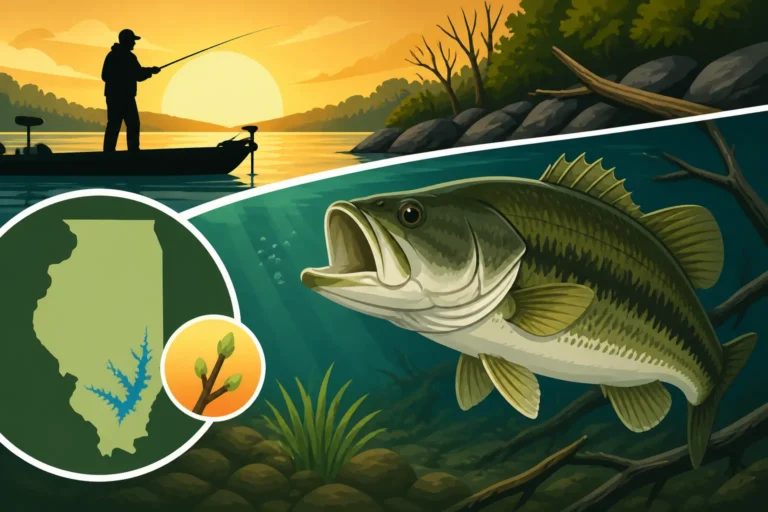
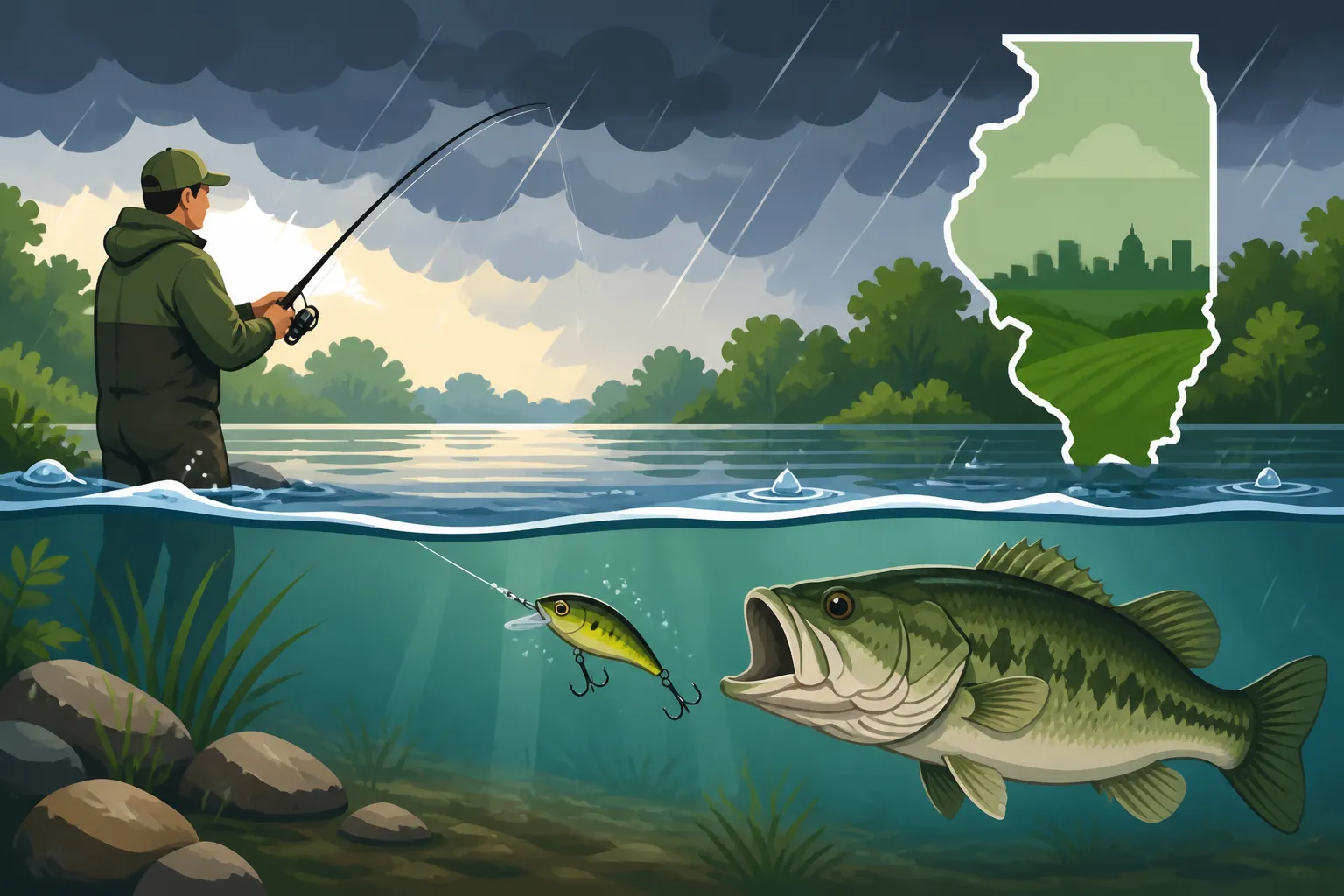
Bass are often among the most active predators after a rainstorm, especially largemouth bass. They thrive in the low-light conditions and enjoy the influx of food and cover that muddy, rising water provides. Largemouth will patrol those newly flooded shallow flats, targeting any displaced critters. They’ll also congregate around creek mouths and inflow areas, ambushing baitfish. Focus on noisy, vibrating lures like spinnerbaits, chatterbaits, and square-bill crankbaits in bright, high-contrast colors. Texas-rigged worms or jigs pitched into flooded brush can also be very effective.
Smallmouth bass, found more in rocky rivers and clear-water lakes, also benefit from rain, but their preferences might be slightly different. In rivers, they'll often stack up behind current breaks and in eddies, waiting for food to wash by. Soft plastics, jigs, and small crankbaits that mimic crawfish or baitfish can work well here. The key is to get your lure into the slower-moving water where they're holding. For insights on how they behave before rain, check out our Illinois Bass Pre-Spawn Fishing Patterns article.
| Species | Preferred Post-Rain Locations | Recommended Lures/Baits | Presentation Style |
|---|---|---|---|
| Largemouth Bass | Flooded shorelines, creek mouths, shallow flats | Spinnerbaits, Chatterbaits, Square-bill Crankbaits, Jigs | Aggressive retrieve, pitching into cover, slow roll |
| Smallmouth Bass | River eddies, current breaks, rocky points | Jigs, Small Crankbaits, Soft Plastics (tubes, grubs) | Bounced on bottom, slow retrieve, controlled drift |
| Catfish | Main channel washes, deep holes near inflows | Cut bait, Nightcrawlers, Stink Baits | Bottom fishing, tight-lining, jug fishing |
| Crappie | Submerged brush, flooded timber, deeper creek channels | Minnows, Small Jigs (bright colors) | Slow retrieve, suspended under bobber, vertical jigging |
| Walleye | River eddies, current seams, main lake points (windy side) | Jig-n-Minnow, Crankbaits, Blade Baits | Vertical jigging, slow trolling, controlled drift |
Catfish (Channel, Blue, and Flathead)
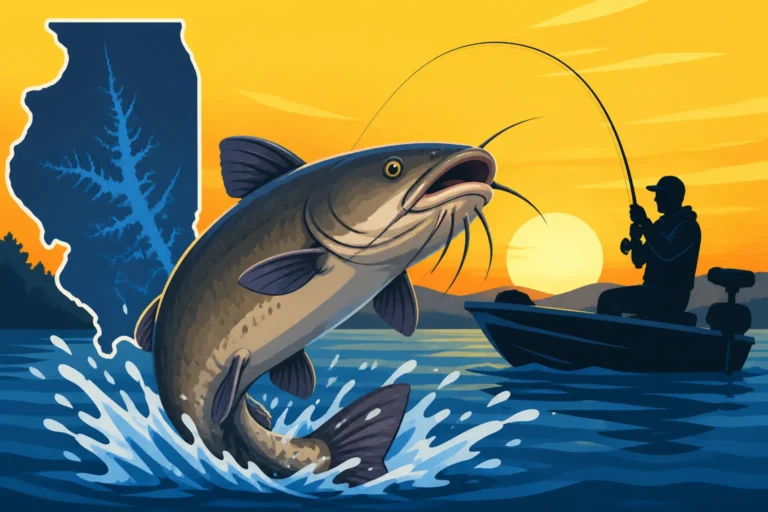
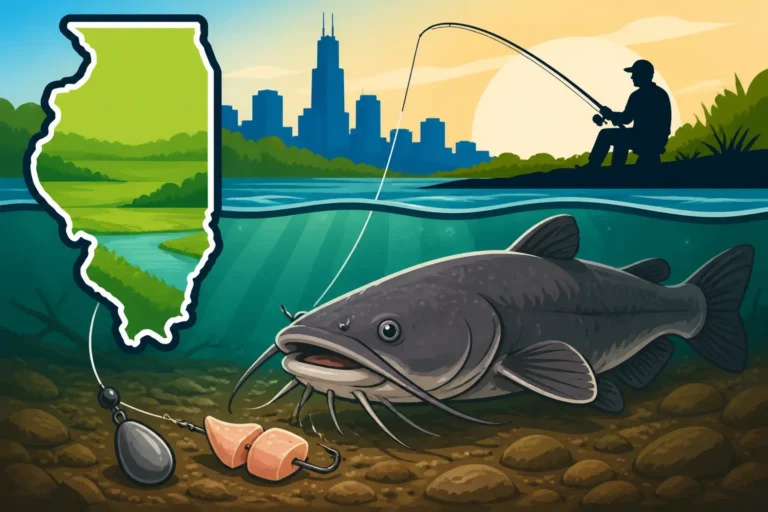
If there's one species that absolutely loves post-rain conditions, it's catfish. The increased current, turbidity, and influx of food make them extremely active. Channel catfish will move into the main river channel washes, gorging themselves on anything carried by the current. Blue catfish in larger rivers like the Mississippi River or big lakes like Carlyle Lake will also follow these food sources. Flathead catfish, being ambush predators, will lie in wait in deeper holes near inflows or beneath structure, ready to snatch up any passing meal.
For catfish, fresh cut bait is king. Shad, carp, or even chicken liver soaked in scent can be deadly. Nightcrawlers are also excellent, especially for channel cats. The key is to get your bait on the bottom and let the scent plume attract fish. Heavy weights are often necessary to hold your bait in place against the current. Many anglers find the Illinois Catfish Season Guide to be their best friend for understanding peak activity.
Crappie and Panfish
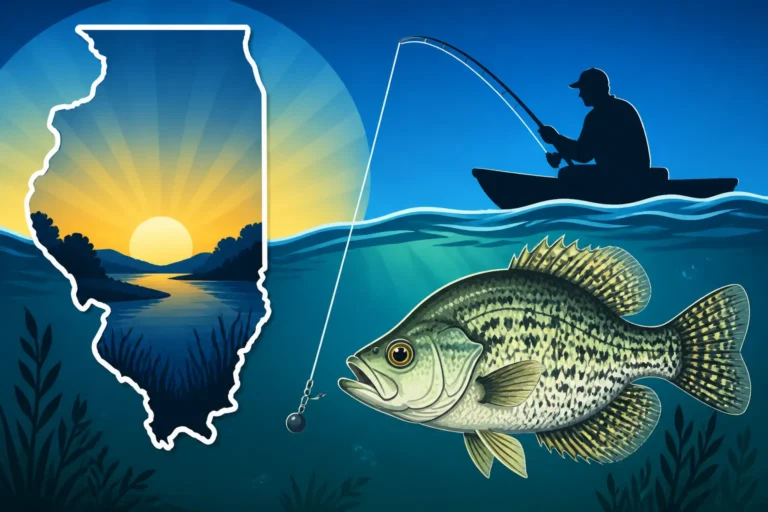
Crappie and other panfish like bluegill and redear sunfish can also become very active after rain, especially if the new water influx brings them into fresh cover or new feeding grounds. Crappie will often move into flooded timber, submerged brush, or deeper creek channels that have swelled with fresh water. They're looking for baitfish that have been disoriented by the storm.
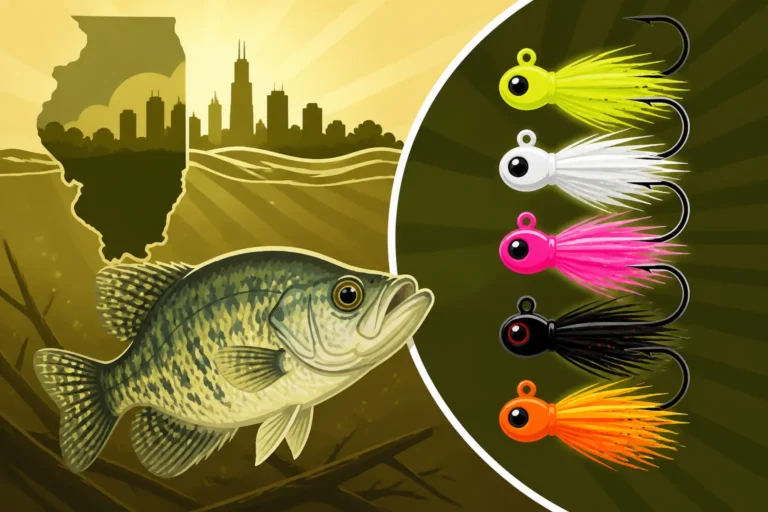
Small jigs in bright colors like chartreuse, pink, or orange, tipped with a minnow or a small plastic grub, are excellent. A slow retrieve or vertical jigging around cover can be very effective. Bluegill will also move into those newly flooded shallow areas, especially if there's submerged vegetation, feeding on insects and larvae. A simple setup with a bobber, a small hook, and a piece of worm can yield fantastic results for panfish. For more ideas, explore our Crappie Fishing Techniques for Spring.
Staying Safe and Smart on Post-Rain Waters
While post-rain fishing can be incredibly rewarding, it also comes with increased risks. Safety should always be your top priority. Overlooking potential hazards can turn a great fishing day into a dangerous situation.
Elevated Water Levels and Stronger Currents
The most immediate danger after heavy rain is the elevated water levels and significantly stronger currents, especially in rivers. What might have been a calm, navigable river yesterday could be a fast-moving, debris-filled torrent today. Always exercise extreme caution when navigating these conditions. If you're in a boat, be aware that floating debris (logs, branches, even entire trees) can be a major hazard to your motor and hull. The increased current can make boat control challenging, even for experienced operators.
For bank anglers, watch out for slippery banks and rapidly eroding shorelines. Never stand too close to the edge of a fast-moving river, as the ground can give way unexpectedly. Pay attention to warnings from local authorities or conservation departments about flood levels or dangerous currents. Sometimes, it's just not worth the risk, and waiting a day or two for the water to settle can make all the difference for both safety and fishing success. Always have a good Illinois Boating Safety Gear Checklist onboard.
Submerged Debris and Obstructions
Beyond the surface hazards, the increased water levels and currents will also carry a lot of submerged debris. This can create new snags for your line and lures, but more critically, it can pose a threat to your boat's propeller or even your motor's lower unit. Navigating unfamiliar or newly flooded areas blindly can lead to costly damage or, worse, leave you stranded.
If you're fishing from a boat, proceed slowly and cautiously, especially in areas where you suspect there might be submerged obstacles. Using a depth finder can help you identify submerged logs or other structures. For bank anglers, be prepared to lose a few lures. Using weedless setups or fishing with cheaper baits can help mitigate some of the frustration and cost of getting snagged. Always be mindful of where you cast and retrieve.
Electrical Storms and Flash Floods
While you might be eager to hit the water as soon as the rain stops, take a moment to assess the lingering weather conditions. Post-rain periods can sometimes be followed by secondary storms or continue to have a risk of lightning. Always check the weather forecast before and during your trip. If you see dark clouds rolling in or hear thunder, it's time to head in immediately. Lightning on the water is no joke.
Additionally, in areas prone to flash flooding, especially in canyons, ravines, or narrow river valleys, the danger isn't over just because the rain has stopped. Water levels can continue to rise rapidly from upstream runoff, even if your immediate area is clear. Stay vigilant and be aware of your surroundings, especially if you're in a low-lying area. Being prepared and informed about the forecast is a huge part of your Illinois Fishing Seasons Guide.
Disclaimer
The information provided in this guide is for general informational purposes only and does not constitute professional advice. Always consult official Illinois Department of Natural Resources (IDNR) regulations and local authorities before fishing. Fishing conditions can change rapidly, and safety should always be your priority.