Lake Michigan Salmon Season Timing in Illinois
Figuring out the absolute best time to hit Lake Michigan for salmon can feel like trying to solve a complicated puzzle. You hear stories about incredible catches in spring, huge fish in the fall, and sometimes even impressive hauls in the dead of summer, leaving many anglers wondering when they should really commit to a trip. This comprehensive guide will break down the prime seasons and specific timing for salmon fishing in Illinois’s portion of Lake Michigan, helping you maximize your chances of success and land that trophy fish.
Understanding the Illinois Lake Michigan Salmon Fishery
Illinois's stretch of Lake Michigan is a truly unique and dynamic fishery, largely thanks to the extensive stocking programs by the Illinois Department of Natural Resources (IDNR) and neighboring states. While it might not boast the sheer miles of coastline that some other Great Lakes states do, the waters off Chicago and points north offer incredible opportunities for anglers chasing powerful salmon and aggressive trout. But it's not a static fishery; fish movements and feeding patterns change dramatically with the seasons, making timing absolutely critical for success.
The Primary Salmon Species You'll Encounter
When you talk about "salmon" in Lake Michigan, you're primarily referring to two main species, though other trout species are often caught using similar methods and at similar times.
Coho Salmon: These are often the first salmon to show up in numbers in the spring. They're known for their aggressive strikes and spirited fights, often staying near the surface in cooler water. Coho tend to be smaller than Chinook but make up for it in abundance and willingness to bite. They have a distinctive blunt snout and a few spots on their back, but usually none on the lower lobe of their tail.
Chinook Salmon (King Salmon): The undisputed heavyweight champions of Lake Michigan, Chinook are what most anglers dream of catching. They grow to impressive sizes, offering incredible strength and a powerful fight. Chinook can be found throughout the year, but their presence nearshore peaks in specific windows. They have a more pointed snout and spots on both lobes of their tail.
Beyond these two true salmon species, you'll also be targeting several types of trout:
- Steelhead (Rainbow Trout): These migratory rainbow trout are often found mixed in with salmon, especially in the upper water column. They're acrobatic fighters and a highly prized catch.
- Lake Trout: Native to the Great Lakes, these deep-water dwellers are often found near the bottom, especially during warmer months. They're powerful fish that put up a strong, consistent fight.
- Brown Trout: While less common than Coho or Chinook, brown trout can be found in Lake Michigan, often preferring cooler, nearshore waters. They are beautiful fish with distinct spots and are known for being a bit more elusive.
Understanding which species is most prevalent at different times of the year is your first step to planning a successful trip. The behavior and preferred depths of these species shift with water temperature and baitfish presence, so a successful angler knows when to target what.
General Timing of the Salmon and Trout Season
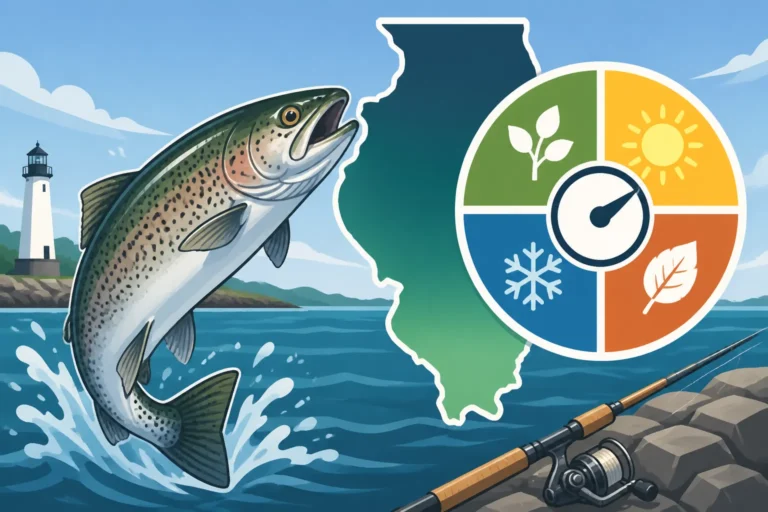
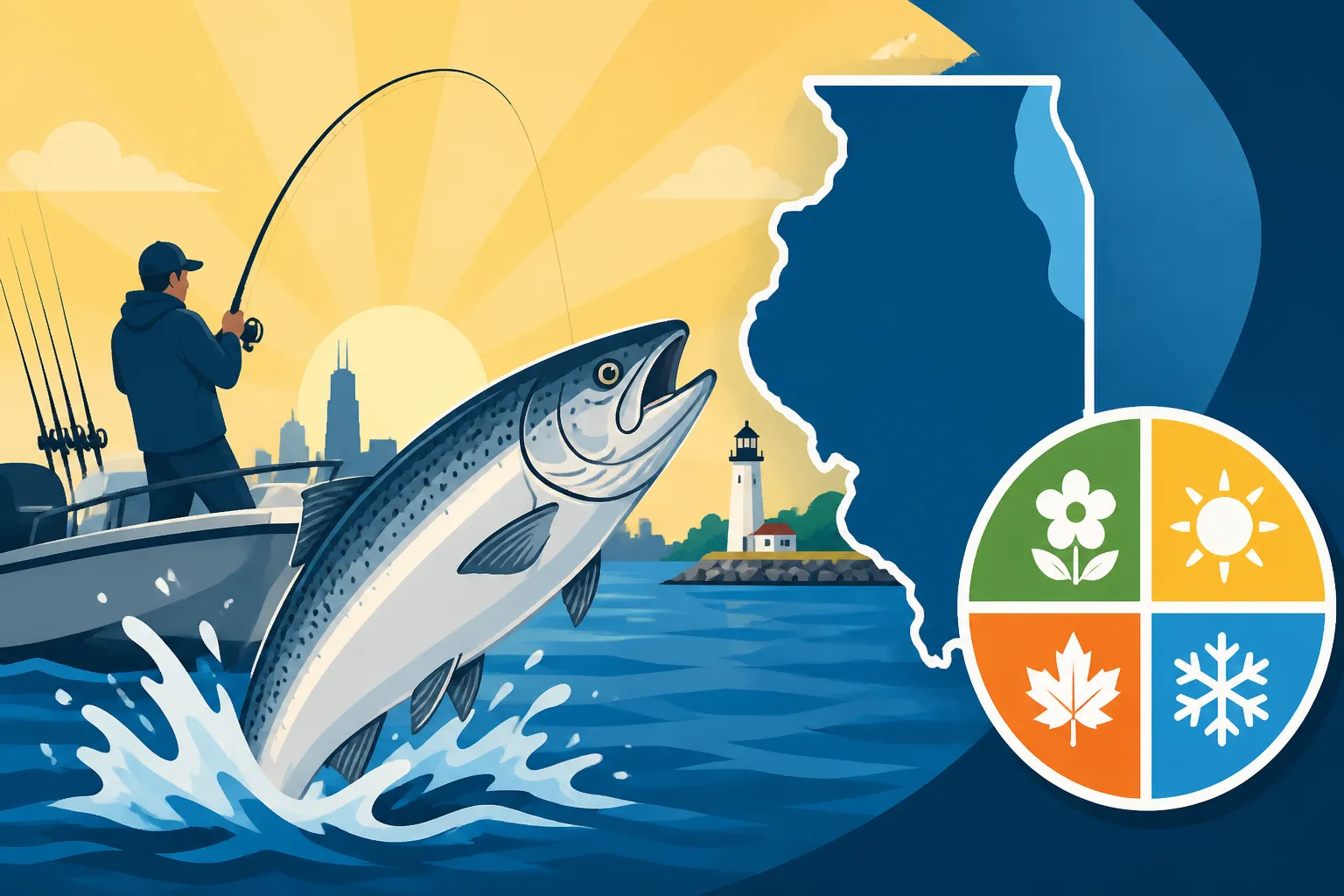
Unlike some freshwater fisheries with strict opening and closing dates, Lake Michigan salmon and trout are available year-round in Illinois. However, the peak seasons and the methods used to catch them vary dramatically. Generally, the season can be broken down into four distinct periods, each offering unique opportunities and challenges:
- Early Spring (March – April): This is prime time for nearshore Coho salmon, often mixed with brown trout and early steelhead.
- Late Spring/Early Summer (May – June): Coho fishing continues, with Chinook starting to become more prevalent as they move closer to shore and begin to spread out. Steelhead and lake trout also become more active.
- Mid-Summer (July – August): The main Chinook season kicks into high gear, often requiring offshore trolling in deeper water. Lake trout and steelhead are also strong contenders.
- Fall (September – November): This period sees the mature salmon staging for their spawning runs, offering fantastic pier and nearshore opportunities for larger fish. Steelhead and brown trout fishing also picks up.
- Winter (December – February): While less popular, winter can provide excellent opportunities for lake trout and steelhead, particularly in sheltered harbors or through the ice if conditions allow.
Each of these periods demands different strategies, gear, and an understanding of where the fish are holding. Successfully navigating these seasonal shifts is key to consistent catches on Lake Michigan. You'll often find specific nuances in their behavior, especially when comparing Lake Michigan Salmon Season Timing in Illinois to Lake Michigan Trout Season Timing in Illinois.
Why Timing is Everything on Lake Michigan
Lake Michigan is a vast body of water, and fish can be anywhere. Knowing when and where to find them dramatically increases your odds. Fish movements are largely dictated by two primary factors: water temperature and the availability of baitfish, mainly alewives and smelt.
Salmon and trout are cold-blooded creatures, meaning their metabolism and activity levels are directly tied to water temperature. Each species has a preferred temperature range. For example, Coho salmon often prefer temperatures in the mid-50s Fahrenheit, while Chinook can tolerate a slightly wider range. As the lake warms up in summer, these preferred temperature bands shrink and move deeper, pushing the fish offshore. In the spring and fall, these bands expand and often move closer to the surface and shore, making them more accessible.
Baitfish are the other crucial piece of the puzzle. Alewives, in particular, are the primary food source for most salmon and trout in Lake Michigan. Where the baitfish go, the predators follow. Wind patterns, currents, and even large weather systems can push baitfish into certain areas, concentrating salmon and trout. Understanding these dynamics and being able to react to changing conditions—like checking local fishing reports or water temperature charts—is vital. A little research into Best Time of Year to Fish Lake Michigan in Illinois can give you an edge before you even launch your boat.
Springtime Salmon Runs on Lake Michigan (March – May)
Ah, spring! After a long Illinois winter, the thought of open water and screaming reels is enough to get any angler excited. Spring on Lake Michigan is synonymous with Coho salmon, offering some of the most consistent and often explosive fishing of the year, particularly in the nearshore waters. The cooling waters of winter begin to slowly warm up, creating perfect conditions for these aggressive silver bullets.
Targeting Coho Salmon in Nearshore Waters
As the ice retreats (if it formed at all), and the waters closest to shore begin to warm even slightly, Coho salmon move in. They’re often found in the top 30-50 feet of the water column, frequently chasing baitfish in the warmer, stained water created by snowmelt and spring rains. This makes them highly accessible, even for smaller boats or those trolling closer to the harbors.
Coho in spring are notoriously aggressive, often hitting brightly colored lures with incredible force. Think oranges, reds, and hot pinks in spoons, dodgers, and flies. Many successful spring anglers will troll a spread of these baits at varying depths, usually covering the top 20-40 feet. Speed is often key for Coho; don't be afraid to bump it up a bit compared to slower summer trolling. You might find them in depths of 20 to 60 feet of water, often shadowing the thermocline (the boundary between warmer surface water and colder deeper water) as it starts to establish itself. Knowing what to expect when it comes to Coho Salmon Fishing in Illinois: What to Expect can really help you dial in your presentation.
A typical spring Coho spread might include planer boards to get lures away from the boat, along with downriggers or leadcore line to target specific depths. Early in the season, before the main thermocline sets up, the fish can be anywhere in the top half of the water column, so covering a wide range of depths is important. Keep an eye on your fishfinder for bait balls; where there's bait, there are usually Coho.
Early Season Chinook and Lake Trout Opportunities
While Coho grab most of the headlines in spring, there are also excellent opportunities for other species. Some Chinook salmon, especially juvenile ones, will be present in the same nearshore waters, often mixed in with the Coho schools. These "shakers" are a welcome bonus and can put up a surprisingly good fight for their size. Larger, resident Chinook might also be found, particularly in areas with good baitfish concentrations.
Lake trout, being cold-water fish, are often found deeper, but in early spring, before the main lake really stratifies, they can sometimes be caught shallower than you might expect. They'll generally hug the bottom in 60-120 feet of water, often near structure or drop-offs. If you're targeting Coho and seeing deeper marks on your sonar, dropping a spoon or flasher/fly combo down to the bottom can sometimes yield a nice lake trout.
Brown trout, on the other hand, often prefer the very nearshore, cooler waters, especially around rocky areas or river mouths. They are ambush predators and can be targeted with stickbaits or spoons cast from shore or trolled very close to structures in shallow water. These often require a dedicated approach but can yield some truly beautiful fish.
Weather and Water Temperature Considerations
Spring weather on Lake Michigan can be notoriously fickle. One day it's sunny and calm, the next it's a howling gale. These conditions directly impact water temperatures and fish behavior. A strong west wind can push warm surface water offshore, bringing cold, deeper water up ("upwelling") closer to shore. Conversely, an east wind can push warm water closer to shore.
The "thermal bar" effect is also a critical factor in spring. As rivers and nearshore areas warm faster than the main lake, a distinct thermal boundary forms. Baitfish and salmon often concentrate along this boundary, making it a hotspot for anglers. Watching local buoy data and satellite temperature maps can give you a significant advantage. If you're heading out for a trip, always check the marine forecast before hitting the water. The rapidly changing conditions in spring mean your gear needs to be versatile. You might even find some excellent deals on specialized spring fishing gear on Amazon before the season kicks into full swing.
Remember that early season means cold water, so dress in layers and always have proper safety gear, including your personal flotation devices. Don't forget that an Illinois Fishing License Guide for 2026 and the proper Illinois Trout and Salmon Stamp Requirements are essential before you even think about dropping a line.
Summer's Abundance: Mid-Lake Salmon and Trout (June – August)
When the dog days of summer arrive, Lake Michigan transforms into a vast playground for those willing to venture further offshore. The nearshore Coho bite often dissipates as surface waters warm, pushing the thermocline deeper and moving the baitfish – and the salmon – out into the open lake. This is prime time for big Chinook and a more diverse mix of trout species, but it requires different strategies and often more specialized gear.
Chasing Chinook Salmon in Deeper Waters
From June through August, Chinook salmon become the main target, and they're usually found in deeper water, often 80 to 200 feet down, following the ideal temperature zone (the "thermal sweet spot") and abundant alewives. This means long runs offshore, often several miles out, and employing various trolling techniques to cover the water column.
Downriggers are indispensable for summer Chinook fishing, allowing you to precisely present lures at specific depths. Wire divers, leadcore lines, and copper lines are also used to achieve depth without the need for additional weight. Popular baits include large spoons (like those from Amazon), flasher/fly combinations, and meat rigs, often in brighter colors on sunny days and more natural patterns on overcast days. The key is to match the hatch – observing what the alewives are doing can give you clues about what the fish want.
Trolling speeds are typically slower than for Coho, often in the 2.0 to 3.0 mph range, but it can vary based on the lure action and fish preference. A good fish finder is invaluable for locating the thermocline, bait balls, and individual fish. You'll often mark fish suspended at different depths, so having a spread that covers a range of 20-foot increments is a common strategy. Many anglers consult the Best Months for Lake Michigan Salmon Fishing in Illinois to fine-tune their summer outings.
Steelhead and Lake Trout Action in the Thermocline
Summer also brings fantastic opportunities for steelhead (rainbow trout) and lake trout. Steelhead are often found higher in the water column, frequently chasing bait near the surface or just above the thermocline. They are known for their spectacular aerial jumps and incredible speed. Pink and orange spoons or small dodgers with flies are very effective for steelhead, often run on planer boards or simply flatlined far behind the boat.
Lake trout, being bottom dwellers and preferring very cold water, will typically be found much deeper, often hugging the bottom in 100 to 200 feet of water. They're usually targeted with large cowbells and spin-n-glos, or heavy spoons fished on downriggers or even by jigging vertically. Lake trout are powerful fighters, often making deep, sustained runs. If you're wondering When to Chase Salmon vs Trout on Illinois's Lake Michigan Shore, summer definitely offers a chance to catch both in the same outing, though often at different depths.
Adapting to Warmer Water Conditions
Warmer water means fish are more sensitive to light and boat pressure. Early mornings and late evenings can be particularly productive as fish move higher in the water column during these low-light periods. Midday often requires deeper presentations. Water clarity also plays a role; clear water often means more subtle lure colors are effective, while stained water can call for brighter, more attention-grabbing options.
Understanding the dynamics of the thermocline is paramount in summer. This layer of abrupt temperature change acts like a highway for baitfish and a holding zone for salmon and trout. Your fish finder will show it as a distinct band. Positioning your lures just above, within, or just below this layer can be incredibly effective. The depths of this thermocline can change daily with wind and currents, so constant monitoring is key. You'll need robust Lake Michigan Trolling Gear for Salmon and Trout to handle these conditions and the strong fish you'll encounter.
Fall Frenzy: The Spawning Runs and Nearshore Action (September – November)
As the days shorten and the crisp air returns, Lake Michigan gears up for another spectacular show: the fall salmon run. This period sees mature Chinook and Coho salmon migrating from the open lake back towards their natal rivers and harbors, preparing for their spawning ritual. This is a thrilling time for anglers, offering the chance to catch some of the largest salmon of the year, often very close to shore or even from piers.
Coho and Chinook Staging for Spawning
Beginning in late August and peaking in September and October, mature Chinook salmon, some weighing 20, 30, or even 40 pounds, begin to congregate near river mouths and harbor entrances. They are often less interested in feeding aggressively as their biological drive shifts to reproduction, but they can still be enticed to strike. Coho salmon also make their spawning runs, often later in the fall.
Anglers targeting these staging fish will often troll tight to shore, especially around river mouths, breakwalls, and points. Spoons, crankbaits, and even large fly patterns trolled slowly are effective. The fish will often be found in relatively shallow water, sometimes as little as 10-30 feet deep, but they can be particular about their presentation. This is the time when understanding the nuances of Best Months for Lake Michigan Salmon Fishing in Illinois truly pays off, as the windows for prime action can be quite specific.
Pier and Shore Fishing for Migrating Salmon
One of the most exciting aspects of the fall run is the accessibility it offers to shore and pier anglers. As salmon move into harbors and close to structures, they become within casting range. Piers along the Chicago lakefront, like Montrose Harbor or Navy Pier, can become hotspots. Anglers use heavy casting rods, throwing spoons, crankbaits, or even drifting spawn sacks under bobbers.
This can be a truly electrifying experience, hooking into a large king salmon from a pier. However, it also requires patience and persistence. The fish are often finicky and can be pressured by crowds. Early mornings and late evenings tend to be the most productive times. While not always the easiest fishing, the potential reward of a giant salmon makes it incredibly popular. Just ensure you're familiar with the Illinois Fishing Regulations Overview for these specific areas.
Preparing for Cooler Water and Aggressive Bites
As fall progresses, the overall water temperature of Lake Michigan drops. This cool-down often rejuvenates the remaining non-spawning salmon and trout. Steelhead, in particular, become very active in the fall, often feeding aggressively on schools of baitfish before winter sets in. They can be found higher in the water column and will readily strike spoons and crankbaits. Brown trout also become more active nearshore during this period.
The aggressive nature of some of these post-spawn or non-spawning fish can lead to incredible battles. However, cooler temperatures also mean anglers need to dress warmly and be prepared for rapidly changing weather conditions. Rain, wind, and even early snow are common. Keep an eye on weather forecasts and water temperatures. This is also a good time to ensure your Illinois Lake Michigan Salmon Trolling Setup is ready for the colder conditions. You might consider purchasing some high-quality thermal layers and waterproof outer shells from Amazon to keep you comfortable during these chilly but productive outings.
Winter's Hidden Gems: Cold Weather Trout and Salmon (December – February)
While many anglers pack away their rods after the fall runs, Lake Michigan doesn't completely shut down in winter. For the dedicated few, the colder months offer a unique opportunity to target robust lake trout and resilient steelhead, often with less competition. This isn't your typical wide-open water trolling, but rather a more specialized approach focused on specific locations and conditions.
Targeting Lake Trout and Steelhead Through the Cold
In the deepest parts of winter, lake trout become a primary target. These fish are well-adapted to cold water and will often congregate in deeper holes or near specific offshore structures where they can find food. Trolling with downriggers or heavy jigging spoons in depths of 100-200 feet is a common method. Electronic fish finders are crucial for locating these deep-water aggregations.
Steelhead also remain active throughout the winter, particularly around river mouths and harbor entrances. They'll often cruise closer to the surface, especially after a warm spell or during periods of stable weather. Casting small spoons or twitching crankbaits from shore or boat can entice strikes. These winter steelhead are incredibly strong and vibrant, often putting on an exhilarating fight despite the cold. For those venturing out, knowledge of the Illinois Fishing Seasons Guide can highlight the year-round opportunities that exist.
Ice Fishing Opportunities on Sheltered Harbors
While the main body of Lake Michigan rarely freezes over sufficiently for safe ice fishing, some of the more sheltered harbors and protected bays in Illinois can offer opportunities for hardwater anglers. Areas like Montrose Harbor, Diversey Harbor, or even parts of Waukegan Harbor can freeze solid enough in prolonged cold spells.
When ice fishing, anglers often target brown trout, steelhead, and sometimes even residual Coho salmon that have overwintered in the harbors. Small jigs tipped with minnows, wax worms, or even tiny spoons are effective. A portable ice shelter and a heater are highly recommended for comfort. Always prioritize safety: check ice thickness rigorously, go with a buddy, and inform someone of your plans. This is a very niche but rewarding aspect of Illinois Lake Michigan fishing, and it’s important to remember that not every winter will present these opportunities.
Safety and Specialized Gear for Winter Angling
Winter fishing on Lake Michigan demands an even greater emphasis on safety and specialized gear. The dangers of cold water immersion are severe, so wearing a float suit or having a high-quality, insulated life vest (PFD) is non-negotiable. Layers of warm clothing, waterproof outer shells, and insulated boots are essential.
Electronics like high-quality fish finders with GPS capabilities become even more critical for navigation in potentially rough or foggy conditions, and for locating fish in deep water. Specialized cold-weather trolling gear, including sturdy rods and reels capable of handling heavy lines and big fish in freezing temperatures, is a must. You can often find durable, cold-weather appropriate fishing gear on Amazon, from heated gloves to full float suits, which are investments worth making for winter safety and comfort. Always be mindful of the weather, as Lake Michigan can turn dangerous quickly, even in winter.
Essential Gear and Regulations for Seasonal Success
Regardless of the season, having the right gear and a clear understanding of the rules are paramount for a safe and successful Lake Michigan salmon and trout fishing experience in Illinois. The vastness and depth of the lake, combined with the power of these incredible fish, demand reliable equipment and responsible angling.
Recommended Trolling Setups for Each Season
Successful Lake Michigan salmon and trout fishing largely revolves around trolling, but the specific setups can change with the seasons and the target species.
- Spring (Coho Focused): You'll want a spread that covers the top 20-50 feet. Planer boards are great for getting lures away from the boat, often paired with light-to-medium action rods (7-9 feet) and reels spooled with monofilament or braid. Small dodgers and flies, or brightly colored spoons, are go-to baits. You might also use leadcore line to get some lures deeper.
- Summer (Chinook Focused): This is when heavy artillery comes out. Downriggers are essential for precise depth control, often running larger spoons, flasher/fly combos, or meat rigs. Wire divers, copper, and leadcore lines are also crucial for covering the entire water column, from the thermocline down to deeper lake trout haunts. Rods will be heavier action (8-10 feet) with stout trolling reels spooled with braid, wire, or heavy monofilament. Look for reels with line counters to keep track of your depths.
- Fall (Spawning Runs/Mixed Bag): Gear can be a mix of spring and summer setups. Nearshore trolling might employ planer boards and leadcore for shallower presentations, while offshore efforts for staging fish will still rely on downriggers. For pier or shore fishing, a medium-heavy casting rod (8-10 feet) with a durable spinning reel spooled with 20-30 lb braided line is ideal for casting heavy spoons or crankbaits.
- Winter (Lake Trout/Steelhead Focused): For deep lake trout, you'll still need downriggers or heavy jigging setups. For steelhead nearshore, a lighter casting or spinning setup can work. Ice fishing gear, if conditions allow, includes short, sensitive rods (28-36 inches) with small spinning reels.
Regardless of the season, a good quality fish finder is non-negotiable. It helps locate bait, fish, and the critical thermocline. Brands like Humminbird or Lowrance offer excellent options that can be found on Amazon. Your Illinois Lake Michigan Salmon Trolling Setup will likely evolve as you gain experience and adapt to different seasonal patterns.
Understanding Illinois Lake Michigan Salmon and Trout Regulations
Before you even think about buying gear, you need to understand the rules. The Illinois Department of Natural Resources (IDNR) sets specific regulations for salmon and trout on Lake Michigan, which can include minimum size limits, daily creel (catch) limits, and possession limits. These rules are in place to manage the fishery sustainably and ensure healthy populations for future generations.
Key regulations to be aware of:
- Fishing License: Every angler aged 16 and over needs a valid Illinois Fishing License Guide for 2026.
- Salmon & Trout Stamp: In addition to a general fishing license, you must purchase a separate Lake Michigan Salmon Stamp Requirements for Anglers or an Illinois Trout and Salmon Stamp Requirements to fish for salmon and trout in Lake Michigan. This revenue directly supports the stocking programs that make this fishery possible.
- Size and Creel Limits: These vary by species and can change year to year. For instance, Chinook salmon often have a minimum size limit and a daily bag limit, while lake trout might have different rules. Always consult the most current Illinois Fishing Information Guide or the IDNR website before each season.
- Boundary Waters: If you plan to fish near state lines, be aware of potential reciprocity agreements or differing regulations in neighboring states like Indiana or Wisconsin.
Penalties for violating fishing regulations can be severe, including fines, confiscation of gear, and loss of fishing privileges. It's your responsibility as an angler to know and follow the rules. These regulations are detailed in the Illinois Fishing Regulations Overview which is updated annually. Always double-check current regulations before heading out, as they can sometimes change without much notice, often to adapt to the health of the fish populations.
| Species | Peak Illinois Season | Primary Depths (Trolling) | Common Baits | Typical Sizes (Illinois) |
|---|---|---|---|---|
| Coho Salmon | Spring (March-May), Fall (Sept-Oct) | Top 20-50 ft (Spring), 10-40 ft (Fall) | Spoons (orange, pink), Dodgers/Flies | 2-8 lbs (Spring), 5-15 lbs (Fall) |
| Chinook Salmon | Summer (June-Aug), Fall (Aug-Sept) | 50-150 ft (Summer), 10-60 ft (Fall) | Large Spoons, Flashers/Flies, Meat Rigs | 10-30 lbs (Summer), 20-40+ lbs (Fall) |
| Steelhead | Spring (Apr-May), Summer (June-Aug), Fall (Sept-Nov) | Top 30 ft (Spring/Fall), Above Thermocline (Summer) | Spoons (pink, orange), Small Dodgers/Flies | 5-15 lbs |
| Lake Trout | Year-round (best Summer/Winter) | 80-200+ ft (Bottom-oriented) | Cowbells/Spin-n-Glos, Heavy Spoons, Dodgers/Flies | 8-20 lbs (can be much larger) |
| Brown Trout | Spring (March-May), Fall (Sept-Nov) | 5-40 ft (Nearshore, Structure) | Stickbaits, Spoons (natural patterns) | 3-10 lbs |
Disclaimer
Please note: Fishing conditions, regulations, and fish behavior can change rapidly. Always consult the most current Illinois Department of Natural Resources (IDNR) fishing regulations before any outing. This guide is for informational purposes only and does not supersede official regulations.