Fishing the Wabash River With an Indiana License
Navigating the fishing regulations for border waters can feel like trying to untangle a hundred-yard knot on a windy day – frustrating, confusing, and with a high chance of leading to a headache. Many anglers dream of casting lines into the mighty Wabash River, a true gem that separates Illinois and Indiana, but they often get stuck wondering if their Indiana fishing license is actually valid on the Illinois side. This guide is here to clear up that confusion, explaining exactly when and where your Indiana fishing license covers you on this beautiful boundary water, and when you might need to think about additional permits.
Understanding Wabash River Reciprocity for Anglers
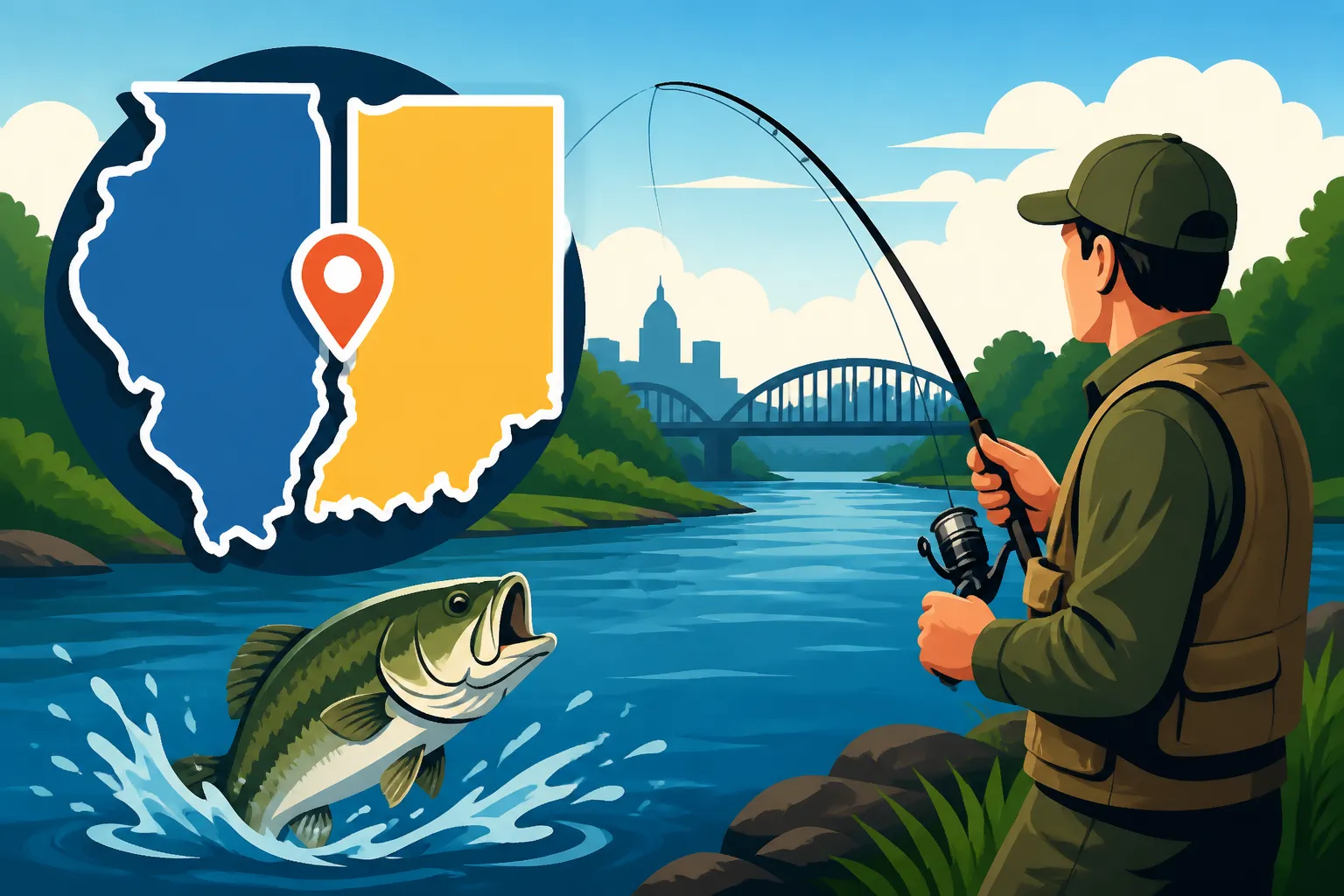
The Wabash River, a long and winding ribbon of water, forms a significant portion of the border between Illinois and Indiana. This creates a unique situation for anglers, where the question of which state's license is required isn't always straightforward. Thankfully, both states recognize the need for common sense when it comes to shared natural resources, leading to agreements that simplify things for us fishing enthusiasts. This means you won't always need two separate licenses just to fish the same stretch of river.
The Illinois-Indiana Wabash River Agreement
The Illinois Department of Natural Resources (IDNR) and the Indiana Department of Natural Resources (IDNR) have a standing agreement regarding fishing on the Wabash River. This agreement, often referred to as a reciprocity agreement, essentially allows a properly licensed angler from either state to fish the main stem of the Wabash River that forms the border. This is a huge relief for many, as it means if you've got your valid Indiana fishing license in hand, you generally don't need to also purchase an Illinois license just to fish those border waters. The spirit of this agreement is to encourage participation in fishing without creating unnecessary bureaucratic hurdles, which we can all appreciate. It's designed to make it easier for people to enjoy the river, whether they're launching from Terre Haute, Indiana, or pitching a tent near Mount Carmel, Illinois.
Where Reciprocity Applies on the Wabash
This reciprocal agreement isn't a blanket rule for all waters in both states, but specifically for the Wabash River where it serves as a boundary. The reciprocity applies to the main channel of the Wabash River itself. This means if you're out in a boat, on a sandbar, or even casting from a bank directly adjacent to the main river channel, your Indiana license should cover you. This usually extends from the confluence of the Wabash with the Ohio River all the way north to a point near Terre Haute or even further, where the river truly separates the two states. However, it's critically important to understand that this does not extend into tributaries or oxbow lakes that are entirely within one state's boundary. For example, if you decide to venture up a small creek on the Illinois side that feeds into the Wabash, you would then be in Illinois-only waters and an Illinois license would be required. This distinction is vital for avoiding potential fines. Always remember, the agreement focuses on the shared water, not the waters that clearly belong to one side. For specific details on where exactly these lines are drawn, anglers should consult the latest Illinois Fishing Information Guide Covers April 2026 Through March 2027.
Common Misconceptions About Border Water Licenses
One of the biggest misconceptions is that if you have any state's fishing license, you can fish anywhere on a border river. Not true! The reciprocity only applies between the two specific states sharing that body of water. So, an Indiana license is only valid on the reciprocal parts of the Wabash River because Indiana shares the Wabash with Illinois. You couldn't, for example, use your Indiana license to fish the Mississippi River, which Illinois shares with other states like Missouri or Iowa, without specific agreements for those particular stretches. Another common belief is that if you launch your boat from one state, your license from that state automatically covers you everywhere. This is also false; it’s about where you are fishing, not where you launched. If you launch from Indiana but then go fish a backwater completely inside Illinois, you'd need an Illinois license. It’s also often assumed that all rules become uniform across the border waters. While license validity is reciprocal, catch limits and size restrictions for certain species might still default to the rules of the state you're closest to, or the most stringent of the two. It's why doing your homework is always the first step.
What an Indiana License Allows and Doesn't Allow on the Wabash
So, you've got your Indiana fishing license. That's a great start for tackling the Wabash! But let's get into the nitty-gritty of what that actually means when you're out on the water, especially when you're straddling that invisible line between two states. It's not just about having the piece of paper; it's about understanding its boundaries.
Fishing from an Indiana-Licensed Boat
If you're out in a boat registered and owned by an Indiana resident, and you possess a valid Indiana fishing license, you are generally good to go for fishing the main stem of the Wabash River. This is the simplest scenario. You can drift, anchor, or troll anywhere in the reciprocal waters, as long as you're within the main river channel that forms the boundary. This means you can launch from an Indiana boat ramp and fish both the Indiana side and the Illinois side of the main river without an Illinois license. Many anglers enjoy this freedom, allowing them to explore prime spots like those along the New Harmony Bridge or near the Wabash River boat launches in Vincennes, Indiana, without worrying about state lines. Remember, this applies to the actual act of fishing from your boat in the shared waters. If you decide to pull your boat up onto an Illinois bank and fish from shore, you might be stepping into a different category.
Fishing from Illinois Shoreline with an Indiana License
This is where things can get a bit trickier, and it’s a common point of confusion. While the reciprocal agreement generally covers the main stem of the Wabash, the interpretation often becomes more conservative when you're talking about fishing from the shoreline of the other state. If you are an Indiana resident with an Indiana license, and you're standing on the Illinois bank fishing, you might technically be in Illinois-only territory, even if it's right on the Wabash River. The agreement is primarily designed for the water itself, allowing licensed anglers from either state to fish the entire width of the river. However, when you step onto the land of the other state, you are subject to the regulations of that state. Therefore, it is generally recommended that if you plan to fish from the Illinois shoreline, you should purchase an Illinois fishing license. It's always better to be safe than sorry, and a conservation officer might interpret your presence on the bank as fishing solely within Illinois jurisdiction. This is particularly true if you are on public access points or state park property on the Illinois side.
Specific Species and Limits on Reciprocal Waters
Even with reciprocal license validity, the specific fishing regulations regarding daily catch limits and minimum size restrictions can sometimes default to the rules of the state whose nearest shore you are fishing from, or in some cases, the more conservative rule of the two. For instance, while you might be legally fishing for channel catfish with your Indiana license, the daily limit for Channel Catfish Daily Limit of 20 Fish might differ slightly between Illinois and Indiana, or site-specific rules may apply. The same goes for walleye; Illinois Walleye Minimum Size Limit of 14 Inches might be slightly different from Indiana's. It's not usually a huge difference, but enough to get you into a bind if you're not careful. Always check the most current regulations from both states' DNR guides before heading out, especially for popular species like bass, catfish, and walleye. A quick check on the IDNR website for Illinois fishing regulations overview or the Indiana DNR website can save you a lot of hassle.
When an Illinois License is Still Necessary
While the reciprocity agreement is wonderfully convenient for Wabash River anglers, it's not a magic pass for all Illinois waters. There are definite scenarios where, even with an Indiana license, you absolutely must have an Illinois fishing license to avoid penalties. Ignoring these distinctions can turn a relaxing day on the water into a costly citation.
Fishing Illinois Tributaries or Inland Waters
This is perhaps the most crucial distinction. The reciprocity agreement for the Wabash River applies only to the main channel that forms the border. It does not extend to any tributary streams, creeks, rivers, lakes, or ponds that are located entirely within Illinois. If you decide to take your boat up a small creek flowing into the Wabash from the Illinois side, or if you drive to a lake or reservoir located wholly within Illinois, your Indiana license is no longer valid. For example, if you're exploring the lower stretches of the Embarras River in Illinois, which eventually feeds into the Wabash, you'll need an Illinois fishing license. The same goes for any number of small fishing lakes or reservoirs throughout southern Illinois. These are considered Illinois inland waters, and they fall under the exclusive jurisdiction of the Illinois Department of Natural Resources. If your goal is to explore beyond the immediate main channel of the Wabash, then securing an Illinois license is a non-negotiable step.
Crossing Over to Non-Reciprocal Stretches
While most of the border portion of the Wabash River falls under the reciprocity agreement, there might be very specific, localized areas or scenarios where the agreement doesn't fully apply, or where the states have different interpretations. For example, some backwater sloughs, oxbows, or marshy areas might be clearly demarcated as entirely within one state's boundary, even if they are very close to the main river channel. These areas, though seemingly part of the river, might legally be considered "inland" waters for the purpose of license requirements. It's rare, but it happens. If you're ever in doubt about a specific spot, especially one that looks like it might be an isolated lake or a side channel clearly cut off from the main flow, it's always best to assume you need an Illinois license if you're fishing it from the Illinois side. Err on the side of caution.
Residency and License Types
The type of license you hold also matters. The reciprocal agreement primarily benefits resident anglers who hold a valid annual license from their home state. While an Illinois Nonresident 3-Day Fishing License Cost might be an option for visitors, the core reciprocity is built around residents. If you're an Indiana resident with a valid Indiana annual fishing license, you're set for the main stem. However, if you are not an Indiana resident and simply bought an Indiana license, the intricacies of whether that nonresident Indiana license grants you full reciprocity on the Illinois side can sometimes be a gray area depending on the exact wording of the agreements. Generally, as long as your Indiana license is valid and you are fishing the reciprocal waters, you should be fine. But always verify your specific license type against the current regulations if you have any doubts. Remember, Illinois Fishing License Rules for Kids and Seniors also outline specific requirements for different age groups, which might impact how reciprocity is viewed for younger or older anglers.
Practical Tips for Wabash River Anglers
Fishing the Wabash River is an incredible experience, offering diverse species and beautiful scenery. To make sure your trip is smooth, enjoyable, and regulation-compliant, here are some practical tips that seasoned border-water anglers swear by. Being prepared means less stress and more time with a line in the water.
Double-Checking Regulations Before You Go
This cannot be stressed enough: regulations change! What was true last year might have minor adjustments this year. Before every trip to the Wabash, take a few minutes to check both the Illinois Department of Natural Resources (IDNR) and Indiana Department of Natural Resources (IDNR) websites for their latest fishing handbooks and any emergency rule changes. Pay close attention to statewide limits versus site-specific rules, as these can vary even within the same river system. For example, the Illinois Fishing Season and Catch Limit Rules might differ slightly from Indiana’s for certain species, or there could be special regulations for certain stretches of the Wabash. This due diligence takes minimal effort but can save you from a hefty fine or a confiscated catch. You can often find PDF versions of the guides online, which you can easily download to your phone or tablet for quick reference on the water, even if cell service is spotty.
Carrying Both Licenses Just in Case
Even if you firmly believe your Indiana license covers you on the Wabash's reciprocal waters, it’s not a bad idea to have digital or physical proof of both an Indiana and an Illinois license, if possible, especially if you plan to venture anywhere near the shore or into any potential tributaries. A conservation officer (or "game warden," as many of us still call them) might have a different interpretation of the exact boundary lines on a given day, or you might inadvertently drift into non-reciprocal waters. Carrying a valid Illinois Fishing License Guide for 2026 alongside your Indiana license gives you ultimate peace of mind. It shows you're a responsible angler who respects the rules of both states. You can often carry digital proof of your license on your phone, which is perfectly acceptable in most cases. Just make sure your phone is charged!
Essential Gear for Wabash Fishing
The Wabash River is a fantastic fishery for various species, so having the right gear is key to a successful outing. For many, the Wabash is a prime spot for catfish, so heavy-duty Catfish Gear for the Big Three Illinois Lakes, including sturdy rods, strong lines (like 30-50 lb test monofilament or braid), and a variety of weights and circle hooks, is essential. Popular baits include cut bait, chicken liver, and stink baits, which you can often find at local bait shops along the river. If you're targeting bass, a medium-heavy rod with a baitcasting reel is versatile enough for a variety of lures, from crankbaits to soft plastics. Many anglers find great deals on these items on platforms like Amazon, stocking up on everything from hooks and sinkers to a new tackle box. Don't forget a good pair of polarized sunglasses for spotting structure and protecting your eyes, a wide-brimmed hat, and plenty of water. A reliable fish finder can also be a game-changer for locating structure and fish schools in the main river channel. For specific species, ensure your tackle box setup for Illinois species is well-organized and ready for anything the Wabash might throw at you.
Here's a quick reference table to help visualize some key differences and requirements:
| Feature/Requirement | Indiana Resident Fishing Wabash (Reciprocal Waters) | Illinois Resident Fishing Wabash (Reciprocal Waters) | Indiana Resident Fishing Illinois Inland Waters | Illinois Resident Fishing Indiana Inland Waters | Non-Resident Fishing Wabash (Any State) |
|---|---|---|---|---|---|
| License Needed | Valid Indiana Fishing License | Valid Illinois Fishing License | Valid Illinois Fishing License | Valid Indiana Fishing License | Valid Indiana OR Illinois Nonresident License (for reciprocal waters) |
| Reciprocity Applies | Yes (Main Stem of Wabash) | Yes (Main Stem of Wabash) | No | No | Yes (Main Stem of Wabash, if from IN or IL) |
| Fishing from Boat | Yes | Yes | N/A (requires IL license) | N/A (requires IN license) | Yes (with valid license) |
| Fishing from IL Shore | Generally No (IL License Recommended) | Yes | N/A (requires IL license) | N/A (requires IN license) | Generally No (IL License Recommended) |
| Fishing from IN Shore | Yes | Generally No (IN License Recommended) | N/A (requires IL license) | N/A (requires IN license) | Generally No (IN License Recommended) |
| Tributaries/Backwaters | No (Requires IL License if on IL side) | No (Requires IN License if on IN side) | Yes | Yes | No (Requires state-specific license) |
This table simplifies a complex topic, but always remember to refer to the official regulations for the most current and comprehensive information.
Disclaimer
Please note that fishing regulations are subject to change by the Illinois Department of Natural Resources (IDNR) and the Indiana Department of Natural Resources (IDNR). This guide is intended for informational purposes only and should not be considered legal advice. Always consult the most current official fishing handbooks and regulations from both states before engaging in any fishing activities. Compliance with all state and local laws is the sole responsibility of the angler.