Boat Horn and Whistle Requirements Explained
Navigating the waters of Illinois, whether it's a calm morning on Lake Shelbyville or a busy afternoon on the Illinois River, means more than just knowing your way around with a map and a compass. One area that often leaves boaters scratching their heads is the requirement for sound-producing devices. It can feel like a maze of rules, wondering if your little fishing boat needs a full-blown horn system or if a simple whistle will do. This guide aims to clear up all that confusion, breaking down the specific requirements for boat horns and whistles, ensuring you're safe, legal, and ready for whatever the water throws your way.
The Essentials of Sound-Producing Devices on Illinois Waters
When you're out on the water, communication is key, and sometimes, that communication needs to be loud and clear, especially when visual signals aren't enough. That's where sound-producing devices come into play. The rules aren't just there to make your life harder; they're fundamental safety measures designed to prevent accidents, alert other vessels to your presence, and signal distress when things go wrong. Every boater on Illinois waters, regardless of vessel size, needs to understand these basics.
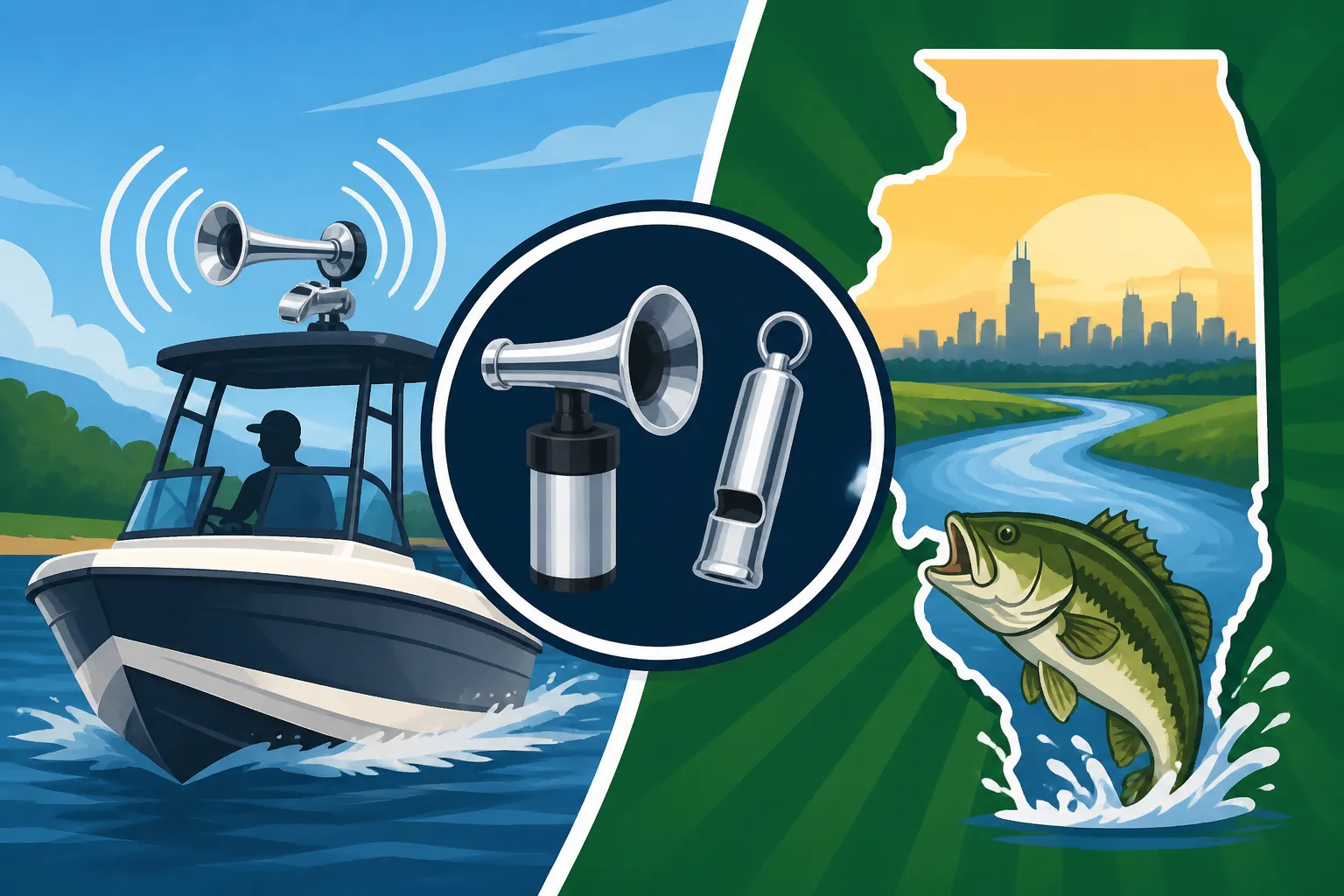
The Illinois Department of Natural Resources (IDNR), in alignment with federal regulations, mandates that all vessels carry an "efficient sound-producing device." This phrase can be a bit vague, but it essentially means anything capable of producing an audible signal to warn other boaters, signal intentions, or call for help. For many small craft, this might be a simple, hand-operated whistle. For larger vessels, it could mean an electric horn or even an air horn system. The key is that it must be immediately available and ready for use. Thinking ahead about how you'd signal if a sudden fog rolls in, or if another boat is on a collision course, is exactly why these rules exist.
Understanding the "Efficient Sound-Producing Device"
So, what exactly counts as "efficient"? It boils down to being heard, and heard clearly, when it matters most. For smaller vessels like canoes, kayaks, rowboats, or even a small jon boat with a trolling motor, a simple plastic or metal whistle attached to your life jacket or a lanyard around your neck is often sufficient. It might not seem like much, but a sharp, distinct whistle sound can cut through engine noise and wind better than you might think. The critical part is that it must be capable of producing a signal for at least two seconds and be heard for at least half a nautical mile. This isn't just for emergencies; it's also for routine signaling, like when you're passing another vessel or approaching a blind bend in a river.
As boats get larger, the expectation for their sound device increases. A recreational vessel, especially one with an engine, will need something more substantial than just a whistle. This is where mechanical horns, either air-powered or electric, become standard. They provide a much louder and more sustained blast, essential for covering greater distances and overcoming the louder ambient noise of larger boats and wider bodies of water. The choice between an air horn (which requires a canister of compressed air) and an electric horn (wired into your boat's electrical system) often comes down to personal preference, reliability, and boat size. Both are considered efficient, provided they meet the audibility requirements.
Why Sound Signals Matter for Safety
Imagine trying to navigate a dense fog on Lake Michigan, or perhaps an evening cruise on the Mississippi River when a heavy rain shower suddenly reduces visibility to almost nothing. In these scenarios, your eyes become less reliable, and that's when sound signals become your primary communication tool. They're like your voice on the water, announcing your presence, your intentions, and your needs to other unseen vessels. Without a reliable sound device, you're essentially mute in situations where clear communication is crucial to preventing collisions.
Beyond reduced visibility, sound signals play a vital role in everyday boating. They're used to signal your intention to pass another boat, to warn of danger, or to alert someone who might not see you. Think about a crowded weekend on Lake Carlyle: there are dozens of boats, jet skis, and kayakers all sharing the water. A quick blast of your horn can make all the difference in alerting a distracted boater to your presence, averting a potential accident. It’s not just about obeying the law; it’s about active participation in maintaining a safe environment for everyone on the water. Illinois Boating Safety Equipment Checklist details these and other vital items you should always have onboard.
Specific Requirements by Boat Size and Type
The world of boating regulations can feel a bit like a choose-your-own-adventure book, where the rules change depending on the size and type of your vessel. When it comes to horns and whistles in Illinois, this is definitely the case. What’s perfectly acceptable for a solo kayaker is woefully inadequate for a cruiser on Lake Michigan. Understanding these distinctions is key to staying compliant and, more importantly, safe.
The primary factor dictating your sound device requirement is your vessel's length. This is a common standard used in maritime regulations worldwide because it generally correlates with a boat's speed, maneuverability, and the distance at which it can be heard or seen. Illinois regulations mirror federal guidelines, categorizing vessels into different length classes, each with its own set of requirements. This stratification ensures that the safety equipment scales appropriately with the potential hazards and operational conditions of different boat types.
Small Boats: Canoes, Kayaks, and Rowboats
For those who enjoy the tranquility of paddling or rowing on smaller lakes and rivers, the requirements are thankfully straightforward. If your vessel is under 16 feet in length, like most canoes, kayaks, stand-up paddleboards, and small rowboats, you are required to have "some means of making an efficient sound signal." This usually translates to a simple mouth-operated whistle. It needs to be capable of producing a blast that lasts at least two seconds and is audible for at least half a mile.
It's a good idea to have your whistle attached to your Illinois Life Jacket and PFD Rules compliant personal flotation device or a lanyard so it's always within easy reach. Losing your whistle overboard defeats the purpose entirely! Even though these small craft are often quiet, imagine needing to alert a larger, faster-moving motorboat to your presence, especially if you're out in open water or around a blind bend. That little whistle becomes your voice and a crucial piece of safety gear. You can easily find multi-packs of marine-grade whistles online at places like Amazon, or pick one up from your local Bass Pro Shops.
Mid-Size Boats: Motorboats and Sailboats Under 39.4 Feet
This category encompasses a vast majority of recreational boats found on Illinois waters, from bass boats and pontoon boats to smaller cruisers and sailboats. For any vessel from 16 feet up to, but not including, 39.4 feet (which is 12 meters), the requirements step up a notch. You must have on board a "whistle or horn, or some other means of making an efficient sound signal audible for at least one-half mile." While a powerful whistle could technically meet this, most boaters in this category opt for a mechanical horn, either air-powered or electric, for better reliability and volume.
These horns are designed to be louder and more consistent than a simple whistle, which is vital on larger lakes and rivers where ambient noise from multiple boats, wind, and waves can be significant. The horn should be easily accessible from the helm, allowing the operator to quickly sound signals without fumbling around. This is especially critical when approaching narrow channels, dense areas of other boats, or during periods of reduced visibility. Installing an electric horn is a common choice for many powerboaters, while sailboats might have a manual foghorn or an air horn in addition to a whistle.
Larger Vessels: Over 39.4 Feet and Commercial Operations
If you're operating a larger pleasure craft or any vessel approaching commercial size (39.4 feet or 12 meters and over), the sound signal requirements become more stringent. These vessels must carry a "whistle or horn and a bell." The whistle or horn must be audible for at least one mile, and the bell must be at least 7.9 inches (200 millimeters) in diameter at the mouth. While a bell isn't often used for routine signals, it's a critical component for signaling in restricted visibility, particularly when anchored or aground.
These larger vessels, due to their size and momentum, have a greater responsibility to clearly communicate their presence and intentions to prevent serious incidents. The increased audibility requirement reflects the greater distances over which these boats operate and the longer stopping distances they typically require. If you're considering a larger vessel, make sure you're well-versed in Illinois Boat Registration Requirements Explained and all associated safety gear, as the rules escalate with size.
Here’s a quick summary of the requirements by boat length:
| Vessel Length | Minimum Sound Device Required | Audibility Range | Notes |
|---|---|---|---|
| Under 16 feet (e.g., canoes, kayaks, rowboats) | Mouth-operated whistle or other efficient sound-producing device | At least 0.5 mile | Must be capable of 2-second blast. Easily accessible. |
| 16 to under 39.4 feet (e.g., motorboats, sailboats) | Whistle, horn, or other efficient sound-producing device | At least 0.5 mile | Most commonly a mechanical (air or electric) horn. |
| 39.4 feet (12 meters) and over | Whistle or horn AND a bell | Whistle/Horn: 1 mile | Bell must be at least 7.9 inches in diameter. |
Choosing and Maintaining Your Sound Device
Selecting the right sound-producing device for your boat isn't just about meeting the minimum legal requirement; it's about making a practical choice that ensures your safety and ease of use on the water. Just like picking out the right fishing rod for Largemouth Bass Fishing in Illinois: The Complete Guide, a little thought goes a long way. Once you have it, proper maintenance is crucial to ensure it works when you need it most. After all, a silent horn in an emergency is worse than no horn at all because it gives a false sense of security.
When browsing for options, you'll find everything from basic whistles to sophisticated electric horn systems. Think about the conditions you typically boat in, the size of your vessel, and your personal comfort level with different types of equipment. A high-quality device is an investment in safety, not just another piece of gear.
Types of Sound Devices: Manual, Air, and Electric
The options for sound-producing devices primarily fall into three categories:
- Manual Whistles: These are the simplest and most portable. They're typically mouth-operated and require no batteries or compressed air. Perfect for kayaks, canoes, stand-up paddleboards, and small fishing boats under 16 feet. Many come with lanyards to attach them to your life jacket, ensuring they're always handy. While they meet the minimum requirement for smaller vessels, they might not cut through the noise of a busy waterway as effectively as a powered horn.
- Air Horns: These devices use compressed air from a replaceable canister to produce a loud, piercing blast. They're excellent for mid-sized boats (16 to under 39.4 feet) that might not have a robust electrical system or for those who prefer a portable, battery-free option. They're also great as a backup for electric horns. The main drawback is that the air canisters can run out, so carrying spares is a smart move, especially on longer trips. You can find reliable air horn kits at most marine supply stores or through online retailers like Amazon. They're often sold in packs, making it easy to stock up.
- Electric Horns: These are typically found on larger motorboats and some sailboats, wired directly into the boat's electrical system. They offer a consistent, powerful blast with the push of a button. Electric horns are generally the most convenient and reliable for boats with adequate power, as you don't have to worry about running out of air. However, they do depend on your boat's battery and electrical integrity. Make sure it's installed correctly and protected from the elements to prevent corrosion. When shopping for an electric horn, consider models designed for marine environments, often available from reputable brands at stores like Bass Pro Shops. They offer excellent durability against spray and humidity.
Maintenance and Storage for Reliability
No matter what type of sound device you choose, regular maintenance and proper storage are non-negotiable.
- For Whistles: Keep them clean and clear of debris. A quick rinse with fresh water after each trip, especially if you've been on saltwater (though less common in Illinois, it's good practice), prevents clogging. Store them in a dry place, preferably still attached to your PFD or in an easily accessible compartment.
- For Air Horns: Always check the air pressure in your canisters before heading out. If it sounds weak, replace it. Store spare canisters in a cool, dry place away from direct sunlight and extreme temperatures, as pressure can build up. Ensure the horn itself is kept clean and free of blockages.
- For Electric Horns: Periodically check the wiring for corrosion, especially at the connections. Test the horn before each outing to ensure it's functioning properly. If it sounds weak or doesn't work, troubleshoot the electrical connection or check the fuse. Keep the horn's opening clear of spider webs, dirt, or anything that could muffle the sound. Installing it in a protected location, but still allowing sound to project forward, is ideal. Your Illinois Boating Safety Gear Checklist should always include a pre-trip check of your horn.
Remember, the goal isn't just to have a horn or whistle; it's to have one that works perfectly the moment you need it.
Practical Application and Signaling Rules
Having the right horn or whistle is only half the battle; knowing when and how to use it is equally crucial. These aren't just noisemakers; they're essential communication tools governed by specific rules known as the Rules of the Road. Misusing them can cause more confusion than clarity, potentially leading to dangerous situations. Think of it like learning the specific calls for different bird species – each signal has a distinct meaning in the language of boating. Understanding these signals is a core part of responsible seamanship, much like understanding Illinois Fishing Regulations Overview before you cast a line.
The sound signals are universally recognized in boating, whether you're on a small Illinois lake or a large navigable river. They are designed to convey your intentions to other vessels, especially when you are approaching them, maneuvering around them, or when visibility is low. Taking the time to learn these signals will not only make you a safer boater but also a more confident one, allowing you to react appropriately to other vessels' signals.
Common Sound Signals Every Boater Should Know
There are specific short and prolonged blasts used to convey information between vessels. Here are some of the most common signals you'll encounter and need to use:
- One Short Blast (about 1 second): This means "I intend to leave you on my port (left) side." Essentially, you're saying, "I'm going to pass you on your left." This is primarily used when you are overtaking another vessel.
- Two Short Blasts: This signals "I intend to leave you on my starboard (right) side." You're indicating you'll pass on their right. Again, mainly for overtaking.
- Three Short Blasts: This is a crucial signal meaning "I am operating astern propulsion." In simpler terms, "I am backing up." This is important because backing up often means your boat's maneuverability is limited or unpredictable.
- Five or More Short, Rapid Blasts: This is the universal "danger signal." It means "I do not understand your intention or action," or "I am in doubt as to whether you are taking sufficient action to avoid collision." If you hear this, pay immediate attention to the vessel signaling and be prepared to take evasive action. It’s essentially a loud cry of confusion or warning.
- One Prolonged Blast (4 to 6 seconds): This signal has a few uses:
- When approaching a bend or obstruction that obscures other vessels (like a blind corner on the Fox River).
- When leaving a dock or berth.
- As a power-driven vessel making way in restricted visibility.
Navigating in Reduced Visibility and Emergency Signals
Restricted visibility, caused by fog, heavy rain, or even just darkness, is perhaps when your sound device is most critical. In these conditions, visual cues are minimal, and boats rely heavily on sound to determine the presence and movements of other vessels.
- Power-Driven Vessel Making Way in Restricted Visibility: One prolonged blast every two minutes. This tells other vessels you are moving.
- Power-Driven Vessel Underway but Stopped in Restricted Visibility: Two prolonged blasts every two minutes, with an interval of about two seconds between them. This indicates you are not moving relative to the water.
- Sailing Vessel, Fishing Vessel, or Vessel Not Under Command in Restricted Visibility: One prolonged blast followed by two short blasts every two minutes. This signals you have limited maneuverability or are a non-motorized vessel.
- Vessel at Anchor in Restricted Visibility: For vessels under 39.4 feet, no specific signal is required by law, but it's a good practice to ring a bell rapidly for about 5 seconds every minute, or use a prolonged blast on a horn if you don't have a bell. For vessels 39.4 feet and over, you must ring a bell rapidly for about 5 seconds every minute, and may also sound a prolonged blast followed by two short blasts on your horn if needed.
Beyond these navigation signals, your horn or whistle also serves as an important distress signal. In an emergency, continuous sounding of the horn or whistle can attract attention and signal for help. This is often part of a broader distress signal, which might also include waving your arms, firing flares, or using a marine radio. It's a critical component of your overall Illinois Boating Safety Equipment Checklist and knowing the specific procedures for various emergencies is covered in courses for your Illinois Boater Education Card Requirements. Always be prepared for the unexpected, and ensure your sound device is a tool you know how to use instinctively.
Disclaimer
This article is for general informational purposes only and does not constitute professional advice. Laws, prices and regulations vary by location and change over time. Consult a qualified professional for guidance on your specific situation.