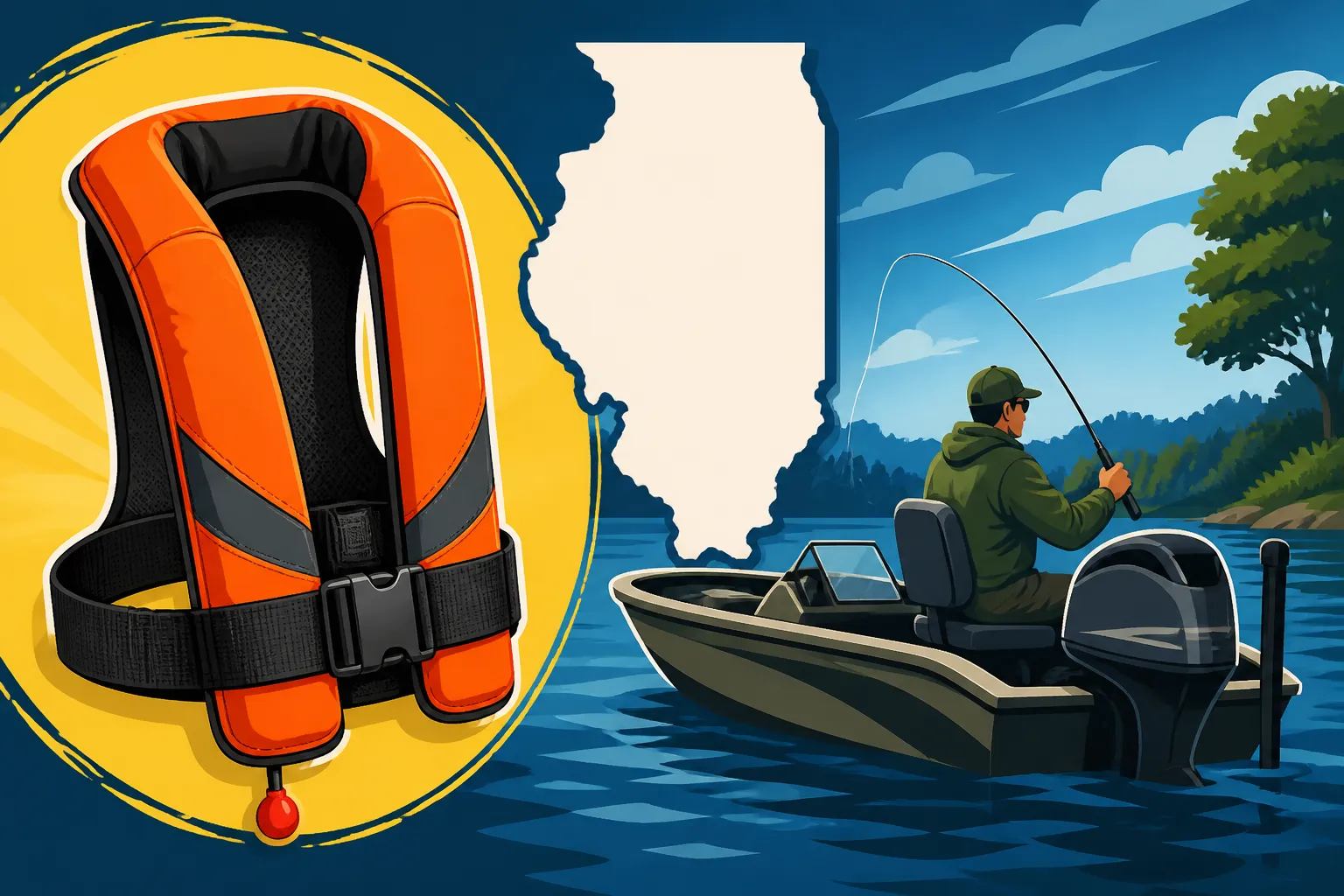
Type IV Throwable PFD Requirements for Illinois Boats
Navigating Illinois waters means understanding more than just where the fish are biting; it means knowing the ins and outs of boating safety regulations. One area that often causes confusion for many anglers and boaters is the specific requirements for personal flotation devices, or PFDs, especially the often-misunderstood Type IV throwable PFD. This guide is here to untangle those rules, ensuring you're not only compliant but also genuinely prepared for any unexpected situation on the water.
Understanding Illinois PFD Regulations: More Than Just Wearable Vests
When you think of a PFD, your mind probably jumps straight to those bright orange vests you strap on. And you're right, wearable PFDs are absolutely critical! But the regulations in Illinois, and frankly, everywhere, go a step further by requiring different types of PFDs for various safety scenarios. It's not just about having a life jacket; it's about having the right ones for the situation.
The Basics of PFD Types in Illinois
Let's break down the alphabet soup of PFD types. The U.S. Coast Guard, whose regulations Illinois largely mirrors, classifies PFDs into five main types, each designed for specific uses.
- Type I (Off-Shore Life Jackets): These are the most buoyant and are designed for all waters, open ocean, rough seas, or where rescue may be delayed. They can turn an unconscious person face-up. You'll often see these on larger vessels or those venturing far from shore.
- Type II (Near-Shore Vests): Good for calm, inland waters where a quick rescue is likely. They will turn some unconscious wearers face up, but not all. These are your standard orange or yellow vests.
- Type III (Flotation Aids): These are comfortable for continuous wear and often come in various styles like fishing vests or watersport vests. They're good for calm, inland waters and provide freedom of movement. They generally will not turn an unconscious person face up.
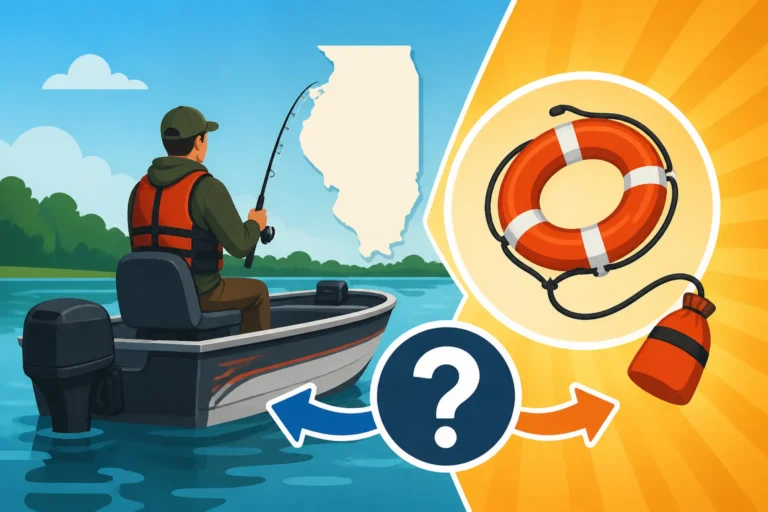
- Type IV (Throwable Devices): This is our focus today! These are designed to be thrown to someone in the water, not worn. Think buoyant cushions or ring buoys. They are never a substitute for a wearable PFD.
- Type V (Special Use Devices): These are approved for specific activities and often have a label stating their approval for that use, like deck suits or work vests. They must be worn to be considered a legal PFD.
It's really important to get this distinction clear: A Type IV throwable device is an additional safety measure. It's not there to replace the wearable PFDs that everyone on your boat needs to have readily available, or in some cases, be actively wearing, especially for kids under 13. Understanding Illinois Life Jacket and PFD Rules is your first step to being a responsible boater. Each type serves a unique purpose in preventing tragedy, and mixing them up can leave you vulnerable.
Why Throwable PFDs Are Essential, Not Optional
So, why bother with a throwable device if everyone has a wearable PFD? Imagine this: you're out on Lake Michigan or Lake Shelbyville, enjoying a beautiful day. Suddenly, someone slips and goes overboard. Even if they're wearing a PFD, they might be disoriented, injured, or simply too far away for you to grab them immediately. This is where the Type IV throwable device shines.
It’s designed for quick deployment to assist someone already in the water. You can toss a buoyant cushion or a ring buoy towards them, giving them something to grab onto while you maneuver your boat for a full rescue. This buys precious time, especially if the person is struggling or the current is strong. In a real-life emergency, seconds count. Trying to don a wearable PFD while in the water is incredibly difficult, if not impossible, especially if you're injured or panicking. The throwable PFD provides immediate flotation without requiring the person to put it on. It’s a vital link in the chain of survival, a bridge between falling in and being safely back in the boat.
Specific Requirements for Type IV Throwable PFDs on Illinois Waters
The rules for throwable PFDs aren't arbitrary; they're based on vessel size and operational needs. Not every small canoe or kayak needs one, but many popular fishing boats absolutely do. Getting this right isn't just about avoiding a citation from a game warden; it's about having the right gear when a life might depend on it.
Which Boats Need a Type IV PFD?
In Illinois, all recreational boats 16 feet in length or longer are required to carry at least one Coast Guard-approved Type IV throwable PFD. This measurement refers to the length of the vessel from bow to stern, not including any outboard motors or bowsprits. So, if you're rocking a 17-foot bass boat, a 20-foot pontoon, or a cruiser, this rule definitely applies to you.
There are some important caveats, though. Canoes and kayaks, regardless of their length, are exempt from the Type IV requirement. This is because their small size and typical operational areas often make a throwable device less practical or necessary compared to other PFD types. However, this doesn't mean you shouldn't consider one, especially if you're taking a long kayak trip on a larger body of water like the Illinois River. The rule is about the minimum requirement, not the maximum safety you can provide. It’s a common question: Do You Need a Throwable PFD on a 16-Foot Boat in Illinois?, and the answer is generally yes for powered vessels of that length or greater. Always double-check your boat's specific length to ensure compliance.
What Counts as a Legal Type IV Throwable Device?
Not just any old cushion or foam noodle will do. A Type IV throwable PFD must be specifically U.S. Coast Guard approved. This approval means it meets certain standards for buoyancy, construction, and durability. You'll typically find a label on the device indicating its approval status.
The most common types of approved Type IV devices you'll see are:
- Buoyant Cushions: These are square or rectangular cushions, often with straps, designed to be thrown. They provide about 16.5 pounds of buoyancy.
- Ring Buoys (Life Rings): These are the classic circular devices, typically seen on larger vessels or at public docks, offering around 16.5 to 24 pounds of buoyancy.
- Horseshoe Buoys: Similar to ring buoys but shaped like a horseshoe, often attached to a boat with a line for quick retrieval.
The key here is buoyant. A regular seat cushion from your patio set, no matter how comfortable, will not meet the requirement because it isn't designed or approved to provide the necessary flotation. You can usually find Coast Guard-approved buoyant cushions and ring buoys at reputable marine supply stores or even online retailers like Bass Pro Shops or Amazon. They're designed to be highly visible, often in orange or yellow, so they can be easily spotted in the water. Always check for the Coast Guard approval stamp on any PFD you purchase.
Accessibility and Condition: More Than Just Having It On Board
Having the right Type IV PFD is only half the battle. It also needs to be in good working order and, most importantly, immediately available when an emergency strikes. A PFD tucked away in a deep locker, under a tangle of fishing nets, or covered in fuel stains is practically useless.
"Readily Accessible" – What Does That Really Mean?
The term "readily accessible" is one that boating safety officers take very seriously, and so should you. It means that in the event of an emergency, you should be able to grab and deploy that throwable PFD within a matter of seconds, without fumbling, unlocking, or moving other gear.
Think about it this way: if someone falls overboard, you don't have time to dig through your tackle box, pull out a cooler, or unlock a compartment. That throwable PFD should be within arm's reach of the helm or a primary passenger area. Common, compliant locations include:
- Strapped to the back of a seat in the open.
- Lying on an open deck area where it won't slide off.
- In an open, easily accessible storage bin, not buried.
What doesn't count as "readily accessible"? Stored in a zippered bag, tied down under a boat cover, stuffed under a console, or in a locked cabin. The idea is that you should be able to see it, grab it, and throw it without any significant delay. This applies to all required PFDs, as detailed in our comprehensive Illinois Boating Safety Gear Checklist.
Maintaining Your Throwable PFD for Compliance and Safety
A PFD isn't a "set it and forget it" piece of equipment. Just like your boat's engine or your fishing reels, it needs periodic inspection and proper care to ensure it's functional. A damaged PFD, even if it's technically on board, might not pass inspection and, more critically, might fail when you need it most.
Here's what to look for when inspecting your Type IV throwable PFD:
- Rips, Tears, or Holes: Any damage to the outer fabric can compromise the flotation material inside.
- Waterlogging: Squeeze the PFD. If it feels heavy or soggy, the flotation material might be saturated, reducing its buoyancy. Exposure to weather, especially rain, can lead to this.
- Faded or Brittle Straps/Handles: If the grab straps are frayed or breaking, it will be hard for someone in the water to hold onto it.
- Mildew or Mold: While not directly affecting buoyancy, it indicates poor storage and can degrade the material over time.
Proper storage is key. Keep your throwable PFDs out of direct sunlight when not in use, as UV rays can degrade fabrics and stitching. Store them in a dry, well-ventilated area to prevent mildew. If it gets wet, let it air dry completely before stowing. While PFDs don't have an official expiration date, their effective lifespan is greatly reduced by neglect. Regular checks, especially at the start of each boating season, are crucial. If you notice significant degradation, it’s time to replace it. Finding replacements is easy through retailers like Amazon or Bass Pro Shops. Remember, it’s always a good idea to refresh your Illinois PFD Storage and Accessibility Rules knowledge annually.
Common Misconceptions and Real-World Scenarios
Boating rules can sometimes feel overwhelming, leading to common misunderstandings, especially when it comes to the different types of PFDs. Clearing up these misconceptions is vital for your safety and compliance on Illinois waters.
Is a Type IV PFD a Substitute for Wearable PFDs? (Absolutely Not!)
This is perhaps the biggest and most dangerous misconception out there. Let's be unequivocally clear: A Type IV throwable PFD is never a substitute for a wearable PFD. Every person on your boat, regardless of age, must have access to a properly fitting, Coast Guard-approved wearable PFD (Type I, II, III, or V). In Illinois, children under the age of 13 are required to wear their PFDs at all times when underway on any vessel unless they are below deck or in an enclosed cabin. This rule alone highlights the distinct roles of wearable versus throwable PFDs. For more on this, check out Illinois Life Jacket Rules for Children Under 13.
Think of it this way: a wearable PFD keeps you afloat immediately if you fall in, potentially even if you're unconscious. A throwable PFD is a rescue tool for someone already in the water. If you fall in without a wearable PFD, you might be too disoriented, injured, or far away to grab a tossed cushion, especially in rough water or strong currents. The primary goal of a wearable PFD is prevention, while the primary goal of a throwable PFD is active rescue. Having one without the other leaves a significant gap in your safety plan.
Enforcement and Penalties for Non-Compliance
Illinois conservation police officers (CPOs) and other law enforcement officials actively patrol the state's waterways, conducting safety checks. During a routine stop, they will inspect your boat for required safety equipment, and throwable PFDs are definitely on that list for vessels 16 feet or longer.
If your boat is found to be in violation – meaning you don't have a required Type IV PFD, it's not readily accessible, or it's in poor condition – you could face a citation. While the specific penalties can vary, they often involve fines and could potentially lead to further inspections or even the termination of your trip if the safety violation is severe enough. This is similar to the consequences outlined in Penalties for Fishing Without a License in Illinois, where non-compliance with regulations carries real consequences.
Beyond the legal ramifications, the real penalty for non-compliance could be far graver: a preventable accident or even a fatality. The cost of a compliant, well-maintained throwable PFD is minimal compared to the peace of mind and, potentially, the life it could save. Law enforcement isn't just trying to issue tickets; they're trying to ensure everyone on the water has a safe and enjoyable experience by following essential safety protocols. Knowing your Illinois Boater Education Card Requirements also helps you understand the bigger picture of responsible boating.
Choosing and Storing Your Type IV PFD Wisely
Making smart choices about your safety gear means selecting equipment that fits your needs and maintaining it correctly. It's not just about meeting the bare minimum; it's about optimizing for safety and ease of use in a real-world emergency.
Selecting the Right Type IV for Your Boat
When you head to the store, or browse online at places like Bass Pro Shops or Amazon, you'll find a few options for Type IV PFDs. How do you choose?
- Buoyant Cushions: These are generally more compact and can double as a comfortable seat cushion (though remember, it must remain readily accessible and shouldn't be sat on if it damages the flotation material). They are often a good choice for smaller powerboats or pontoon boats where space is a concern. Their rectangular shape makes them easy to grab and throw.
- Ring Buoys/Horseshoe Buoys: These typically offer slightly more buoyancy and are designed to be thrown from a distance. They're excellent for larger boats, especially those that might operate in choppier waters, as they are very stable once in the water. Many even come with a short throw line attached.
Consider the layout of your boat and how quickly you (or a passenger) could deploy the device. Is there enough space for a ring buoy? Or would a cushion fit better? Also, think about visibility. While most come in bright colors, some might be more visible than others depending on your boat's color scheme or the typical water conditions you face. Regardless of the type, always ensure it is explicitly U.S. Coast Guard approved.
Best Practices for Storage and Quick Deployment
Once you've got your approved Type IV PFD, proper storage is paramount. As we discussed, "readily accessible" is the golden rule. But let's get even more practical with best practices:
- Visibility is Key: Store your throwable PFD in a location where it can be easily seen. This is often on the dash, strapped to an open seat, or in an open compartment near the helm or primary passenger area.
- Avoid Obstructions: Don't pile other gear on top of it. Keep the area around it clear. If you have a boat with lots of fishing gear, this can be a challenge, but safety must come first.
- Protection from Elements (without hindering access): While you want it accessible, prolonged exposure to direct sunlight and harsh weather can degrade the material. If possible, consider a breathable cover that's easy to remove quickly, or an open storage area that offers some shade. However, never put it in a sealed, waterproof bag that requires unzipping or untying.
- Practice Makes Perfect: Seriously, take a moment to practice grabbing and throwing your throwable PFD. You don't need to throw it at a person, but get a feel for its weight and how it flies. Know how to grab it and send it accurately towards a target, perhaps a floating marker or buoy. This muscle memory will be invaluable in a high-stress situation.
- Educate Your Passengers: Make sure anyone who regularly rides on your boat knows where the throwable PFD is located and how to use it. In an emergency, it might be a passenger who spots someone in the water and needs to act quickly.
By following these guidelines, you're not just checking a box for compliance; you're building a solid foundation of safety for every trip on Illinois' beautiful lakes and rivers. And remember, a How to Store Life Jackets for Quick Boat Access guide applies just as much to your throwable devices as it does to your wearable ones!
| PFD Type | Primary Use | Key Illinois Requirement | Common Examples | Notes |
|---|---|---|---|---|
| Type I | Off-shore, rough waters | Wearable for all | Vest-style | Most buoyant, turns unconscious person face-up |
| Type II | Near-shore, calm waters | Wearable for all | Vest-style | Good for quick rescue, may turn unconscious |
| Type III | Flotation aid | Wearable for all | Fishing vests, watersport vests | Comfortable, will generally not turn face-up |
| Type IV | Throwable device | 1 per boat 16' or more | Buoyant cushion, ring buoy | Not wearable, for active rescue |
| Type V | Special Use (must be worn) | Wearable for specific use | Work vests, deck suits | Must be worn for specific activity |
Disclaimer
This article is for general informational purposes only and does not constitute professional advice. Laws, prices and regulations vary by location and change over time. Consult a qualified professional for guidance on your specific situation.