Illinois Boating Safety Gear Checklist
You know, there's nothing quite like the feeling of hitting the water in Illinois, whether it's a placid morning on a small lake or tackling the vast expanse of Lake Michigan. But before you cast off, that little voice in your head might start wondering, "Am I forgetting anything? Am I truly safe out here?" It’s a common worry, and for good reason—boating safety regulations can feel like a tangled mess of rules. This comprehensive guide is here to untangle that knot, ensuring you have all the essential safety gear required by Illinois law, giving you peace of mind so you can focus on the fishing, not the fines.
Understanding Illinois Boating Safety Regulations
Navigating the waters of Illinois means more than just knowing where the fish are biting; it also means understanding the rules that keep everyone safe. It can feel like a lot to absorb, especially when you're just eager to get your lines wet, but these regulations are truly designed for your protection and the protection of others. Think of them not as hurdles, but as fundamental principles for a good, safe day on the water. Ignoring them isn't just a risk for a citation; it's a risk to life and limb, and that's something no one wants to contend with.
Who Needs to Know These Rules?
If you're operating any vessel in Illinois waters, from a full-blown bass boat tearing across Rend Lake to a small Jon boat with a trolling motor on a quiet farm pond, these rules apply to you. It's not just the person at the helm; it's anyone aboard who might need to react in an emergency. Even if you're just fishing from a kayak, you're still considered a vessel operator. New boaters often feel overwhelmed, and seasoned anglers might assume they know it all, but regulations can sometimes change, and a quick refresher never hurts. Every single person who steps foot on your boat should have at least a basic understanding of where safety gear is located and how to use it. It's about shared responsibility on the water.
The Illinois Department of Natural Resources (IDNR) Role
The Illinois Department of Natural Resources (IDNR) is your go-to authority for all things related to outdoor recreation, and that absolutely includes boating safety. They're the ones who set, enforce, and update the rules you need to follow. Their dedicated conservation police officers patrol our lakes and rivers, ensuring everyone is complying with regulations. They're not out to ruin your day, but rather to ensure that a day of fun doesn't turn into a tragedy. The IDNR website is a treasure trove of information, and it's wise to check it periodically, especially before the start of a new season, as rules regarding specific water bodies or vessel types might be updated. Staying informed through the official channels is always your best bet.
Consequences of Non-Compliance
Let's be frank: nobody wants to get a ticket while they're out enjoying a beautiful day on the water. But more than just the monetary penalties, the real consequence of non-compliance is the increased risk of an accident or injury. Think about it: if you don't have enough Illinois Life Jacket and PFD Rules on board, or they're not the right size, and someone goes overboard unexpectedly, what then? The immediate financial hit of a citation is one thing, but the potential for serious harm or even loss of life is far more significant. Just like understanding the Penalties for Fishing Without a License in Illinois reminds us of the importance of legal fishing, understanding boating safety penalties underscores the need for safe boating practices. Conservation officers can and will check for required safety gear, and being caught without it can lead to warnings, fines, or even the termination of your boating trip right there on the spot.
Essential Personal Flotation Devices (PFDs) – Life Jackets
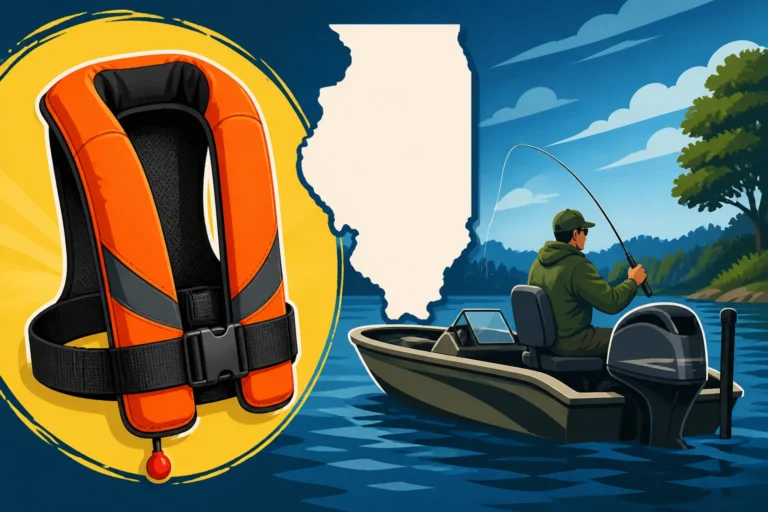
If there's one piece of safety gear that should be non-negotiable on any boat, it's the personal flotation device, or PFD—what most of us just call a life jacket. It sounds so basic, right? But the nuances of PFD requirements often trip people up. It's not just about having them on board; it's about having the right ones, in good condition, and accessible. In an emergency, there's no time to dig through a cluttered storage compartment.
PFD Requirements by Age and Boat Type
Illinois law has very specific rules about PFDs, and they vary depending on the age of your passengers and the type of vessel you're operating. For instance, any child under the age of 13 must wear a U.S. Coast Guard-approved PFD at all times while on a recreational vessel that is underway, unless they are below deck in an enclosed cabin or operating on a river designated as a Class I river. This is a critical rule for families to remember when planning Illinois Free Fishing Days Kids Fishing Ideas. Furthermore, all vessels must have at least one wearable PFD for each person on board. This isn't just for motorized boats; even canoes, kayaks, and stand-up paddleboards must adhere to this. If you’re towing someone, like a water-skier, there needs to be an additional PFD specifically for that person. The nuances can be confusing, so a good rule of thumb is to always have more PFDs than people, and ensure they are all in excellent, ready-to-use condition.
Choosing the Right Type of PFD
Not all PFDs are created equal, and understanding the different types is crucial. The U.S. Coast Guard classifies PFDs into various types, each designed for different situations and levels of buoyancy.
- Type I (Off-Shore Life Jackets): These are bulky but offer the most buoyancy and are designed to turn an unconscious person face-up in the water. Best for rough, open, or remote waters where rescue might be delayed.
- Type II (Near-Shore Vests): Less bulky than Type I, good for calmer waters where quick rescue is likely. They may turn an unconscious person face-up, but it's not guaranteed.
- Type III (Flotation Aids): Popular for recreational activities like fishing and waterskiing because they're comfortable. They allow for freedom of movement but generally won't turn an unconscious person face-up. These require the wearer to be conscious to keep their face out of the water.
- Type IV (Throwable Devices): These are not worn but are designed to be thrown to a person in the water. Examples include ring buoys or seat cushions. Every vessel 16 feet or longer (excluding canoes and kayaks) must have at least one Type IV throwable device. This is in addition to the wearable PFDs. For more details, check out Type IV Throwable PFD Requirements for Illinois Boats.
- Type V (Special Use Devices): These are designed for specific activities like waterskiing vests or work vests. They are only approved for the specific activity printed on the label.
When you're shopping for PFDs, whether online through a retailer like Amazon or at a specialty store like Bass Pro Shops, always look for the U.S. Coast Guard approval stamp. Remember that a PFD's effectiveness hinges on its proper fit and condition. A life jacket that's too big can slip off, and one that's too small won't provide adequate flotation.
Proper Care and Storage of Your PFDs
Just like your favorite fishing rod, your PFDs need proper care to function correctly when you need them most. Storing them incorrectly can lead to degradation, rendering them unsafe. Always allow PFDs to air dry thoroughly after use before stowing them away. Storing them wet can lead to mildew, which weakens the fabric and stitching over time. Keep them out of direct sunlight when not in use, as UV rays can break down the material. Avoid storing them in cramped, unventilated spaces where moisture can build up.
Regularly inspect your PFDs for tears, rips, or punctures. Check the buckles and zippers to ensure they are in good working order. If a PFD shows signs of damage or deterioration, it's time to replace it. A compromised PFD is no PFD at all in an emergency. Remember, these aren't just pieces of gear; they are life-saving devices. Treat them with the respect they deserve, and they'll be there for you when it truly counts. For a deep dive into specific regulations, take a look at Illinois Life Jacket and PFD Rules.
Visual Distress Signals (VDS): Making Yourself Seen
Imagine this scenario: you're out on the vastness of Lake Michigan, perhaps chasing salmon, and suddenly, your engine sputters and dies. Or maybe a sudden storm rolls in, and you find yourself in distress. How do you signal for help? That's where Visual Distress Signals (VDS) come in. These aren't just optional extras; they're critical tools for getting the attention of other boaters or rescue personnel when you're in trouble.
Day vs. Night Signals: What You Need
The requirements for VDS depend heavily on the time of day you're operating your vessel and the body of water. For recreational boats under 16 feet operating on coastal waters (like Lake Michigan) or federal waters, visual distress signals are generally required for night use. For boats 16 feet and over, VDS are required for both day and night operation on these waters. For inland waters, specific VDS requirements may vary, but it's always prudent to carry them, especially if you venture far from shore or operate after sunset.
Day signals are designed to be seen in bright conditions, typically involving orange flags or smoke flares. Night signals are, as you might guess, designed for darkness, primarily red flares or strobe lights. It's vital to have a combination that covers both eventualities. Don't assume that just because you have a flag, you're covered for night. Being prepared for any time of day or night could make all the difference in a rescue situation.
Pyrotechnic vs. Non-Pyrotechnic Options
When it comes to VDS, you generally have two main categories: pyrotechnic and non-pyrotechnic. Each has its pros and cons, and understanding them helps you choose the right combination for your boating needs.
- Pyrotechnic Devices: These are your traditional flares (red handheld, red aerial, orange smoke). They are incredibly effective at drawing attention due to their bright light or dense smoke. However, they have a limited burn time, expire, and must be handled with extreme care as they are fire hazards. Once activated, they cannot be reused. You'll often find these in various kits at Bass Pro Shops or specialized marine stores.
- Non-Pyrotechnic Devices: These include things like orange distress flags (for daytime use) and electric distress lights (for nighttime use). The advantage here is that they don't expire, are reusable, and pose less of a fire risk. An electric distress light, for example, can flash continuously for many hours. However, they might not be as universally recognized or as attention-grabbing as a bright red flare in certain conditions.
Many boaters choose to carry a combination of both: a few pyrotechnic flares for immediate, high-impact signaling, and a non-pyrotechnic device for prolonged signaling if rescue takes longer. Always ensure any VDS you carry is U.S. Coast Guard approved.
Proper Storage and Expiration of VDS
Flares, being pyrotechnic, have an expiration date—typically 42 months from the date of manufacture. It's absolutely crucial to check these dates regularly, especially at the beginning of each boating season. Expired flares can either fail to ignite or not burn properly, making them useless in an emergency. Always store flares in a cool, dry, and easily accessible location, preferably in a waterproof, clearly marked container. You want them protected from moisture, but also within arm's reach should an emergency arise.
Non-pyrotechnic devices, like flags and electric lights, don't expire, but they still need proper care. Keep distress flags clean and unfolded for quick deployment. Ensure electric distress lights have fresh batteries and are tested periodically to confirm they are functional. A dead battery on an electric light is just as useless as an expired flare. Keeping all your VDS in top working order is a key part of your overall Illinois Boating Safety Equipment Checklist.
Sound Producing Devices: Getting Heard on the Water
Imagine dense fog rolling in unexpectedly on Lake Shelbyville, or maybe you're navigating a busy channel near Alton on the Mississippi River at night. How do you alert other vessels to your presence, or signal your intentions? You can't always rely on sight, which is why sound-producing devices are a non-negotiable part of your safety gear. They act as your voice on the water, especially when visibility is low or other noises drown out verbal communication.
Horns, Whistles, and Bells: What's Required
The requirements for sound-producing devices vary depending on the length of your vessel.
- Vessels under 40 feet (12 meters): You must carry a whistle or horn (or some other means to make an efficient sound signal) that is capable of producing a four-second blast audible for at least half a mile. This can be as simple as an athletic whistle, a compressed air horn, or a permanently installed electric horn.
- Vessels 40 feet (12 meters) or longer: These larger boats have more stringent requirements. They must carry a whistle or horn that can produce a two-second blast audible for at least one mile, and a bell. The bell's mouth must be at least 7.9 inches in diameter.
It’s important to remember that these aren't just for emergencies. Sound signals are used for communicating intentions with other vessels, especially when passing, meeting head-on, or in restricted visibility. Knowing the proper "language" of horn blasts is just as important as having the device itself. You can find detailed requirements in resources like Illinois Boat Horn and Whistle Requirements Explained.
When and How to Use Sound Signals
Knowing what to have is one thing, but knowing when and how to use it is another. Sound signals are specifically regulated to avoid confusion on the water. Here are some common scenarios:
- Meeting Head-On: When you're approaching another vessel head-on, both vessels should turn to starboard (right) to pass port-to-port (left side to left side).
- One short blast (about 1 second): "I intend to leave you on my port side" (passing to your left).
- Two short blasts: "I intend to leave you on my starboard side" (passing to your right). This is less common in head-on situations.
- Overtaking: When passing another vessel from behind:
- One short blast: "I intend to overtake you on your starboard side."
- Two short blasts: "I intend to overtake you on your port side."
- Danger Signal:
- Five or more short, rapid blasts: "I am in doubt as to your intention or whether you are taking sufficient action to avoid collision." This is also often used as a general "DANGER!" signal.
- Restricted Visibility (e.g., fog, heavy rain):
- One prolonged blast (4-6 seconds) every two minutes: Power-driven vessel making way.
- Two prolonged blasts every two minutes: Power-driven vessel underway but stopped and not making way.
- One prolonged and two short blasts every two minutes: Sailing vessel, fishing vessel, or towing vessel.
Learning these signals is crucial for safe navigation, especially if you operate on busy waterways or in unpredictable weather conditions.
Maintenance and Testing Your Devices
Sound-producing devices are often overlooked when it comes to maintenance, but their reliability is paramount. If you rely on a compressed air horn, always ensure you have a fresh canister of air onboard. These can run out surprisingly quickly, and a half-hearted squeak won't do you any good in an emergency. Electric horns should be tested regularly to ensure they're working. Check wiring for corrosion or loose connections. Make sure the horn itself isn't obstructed by debris.
For whistles, ensure they are clean and free of dirt or grit that could impede the sound. A bell, if required, should be kept clear of obstructions and its clapper free to move. Many boaters keep a spare athletic whistle attached to their life jacket, a simple and effective backup. Just like your depth finder or fishing electronics, these devices are there to help you, but only if they are in working order. A quick test before you launch each trip is a smart habit to develop.
Fire Extinguishers: Protecting Against the Unforeseen
It's a scary thought, but fires can happen on boats. Whether it's an electrical short, a fuel leak, or even a carelessly discarded cigarette, a fire on the water can escalate rapidly. Having a readily accessible, properly maintained fire extinguisher isn't just a good idea; it's a legal requirement for many vessels in Illinois. It could literally save your boat and your life.
Fire Extinguisher Type and Size Requirements
The type and size of fire extinguisher you need depend on the length of your boat and whether it has certain risk factors like an enclosed engine compartment or permanently installed fuel tanks. Generally, U.S. Coast Guard-approved marine fire extinguishers are classified by letters (B for flammable liquids and gases) and numbers (indicating size/capacity).
- For boats under 26 feet: If your boat has an enclosed engine compartment, permanently installed fuel tanks, or other enclosed spaces where flammable liquids or gases might accumulate (like a locker where you store a spare fuel can), you'll need at least one B-I type extinguisher. If it doesn't have these, you might be exempt from carrying one, but it's still highly recommended.
- For boats 26 to under 40 feet: You'll need at least two B-I type extinguishers, or one B-II type.
- For boats 40 to under 65 feet: You'll need at least three B-I type extinguishers, or one B-I and one B-II type.
Note that if your boat has a permanently installed fire extinguishing system in the engine compartment (like an automatic Halon or FM-200 system), it can reduce the number of portable extinguishers required. Always refer to the most current IDNR or U.S. Coast Guard regulations for precise requirements. This critical piece of safety gear is covered in depth in Fire Extinguisher Requirements for Illinois Boats.
Placement and Accessibility on Your Boat
Having a fire extinguisher on board is one thing; having it accessible in an emergency is another. There's no point in having one if it's buried under tackle boxes, coolers, and life jackets in the bottom of a storage locker. Fire extinguishers must be readily accessible from the operating position. This usually means mounted in a visible location, often near the helm, or in a compartment that can be opened quickly without fumbling.
Think about the most likely places a fire could start: near the engine, in the galley area if you have one, or where fuel is stored. Position your extinguishers strategically to cover these high-risk areas. If you have multiple extinguishers, spread them out. The last thing you want to do when a fire breaks out is to waste precious seconds searching for the extinguisher. Make sure everyone on board knows where they are located and how to use them.
Inspection and Maintenance Tips
Fire extinguishers require regular inspection and maintenance to ensure they are ready for use. Here’s a quick checklist:
- Pressure Gauge: Check the pressure gauge monthly. It should be in the "green" zone, indicating the extinguisher is fully charged.
- Seals and Pin: Ensure the tamper seal is intact and the locking pin is in place. This confirms the extinguisher hasn't been accidentally discharged.
- Nozzle and Hose: Inspect the nozzle for any obstructions and ensure the hose (if applicable) is not cracked or damaged.
- Exterior: Look for any signs of corrosion, dents, or physical damage to the cylinder.
- Mounting Bracket: Ensure the extinguisher is securely mounted and easily removable.
- Expiration/Service Date: While most modern marine extinguishers are disposable, some older or larger ones may require professional recharging or hydrostatic testing every few years. Check the label for details.
If your extinguisher's pressure gauge drops out of the green, if it shows signs of damage, or if the seal is broken, it needs to be replaced immediately. Don't gamble with fire safety. You can easily find replacement extinguishers at marine supply stores or even major retailers like Amazon. Being vigilant with these checks is a small effort for potentially huge peace of mind.
Navigation Lights and Day Shapes: Visibility Day and Night
Operating a boat, especially after sunset or in low visibility, requires you to be seen and to signal your operational status to other vessels. This is where navigation lights and day shapes come into play. These aren't just for fancy yachts; even smaller fishing boats have specific requirements. Ignoring these rules is like driving a car at night without headlights—a recipe for disaster.
Required Lighting Configurations by Boat Size
The type and placement of navigation lights depend on your boat's length and whether it's underway or at anchor. The goal is to clearly indicate your boat's size, direction of travel, and whether it's under power or sail.
- Boats under 20 meters (65.6 feet):
- Power-driven vessels: Must display a masthead light (white, showing an unbroken light over an arc of 225 degrees forward), sidelights (red for port, green for starboard, showing an unbroken light over an arc of 112.5 degrees each), and a stern light (white, showing an unbroken light over an arc of 135 degrees aft). On smaller boats (under 12 meters), the masthead and stern light can be combined into an all-around white light, visible for 360 degrees, as long as the sidelights are separate.
- Sailing vessels: Must display sidelights and a stern light. They may also carry a combined masthead tricolor light.
- Vessels under 7 meters (23 feet) and with a maximum speed of under 7 knots: These small, slow vessels can often get by with just an all-around white light, in addition to sidelights if practical. However, it's always safer to comply with the full requirements for your size class if possible.
It's crucial that your navigation lights are visible from the required distances and are not obstructed by gear, Bimini tops, or other structures on your boat. Always check your lights before heading out for a night trip.
Day Shapes for Anchoring and Sailing
While lights are for night, day shapes are for signaling your status during daylight hours, particularly for larger vessels or in specific situations.
- Anchored Vessels (20 meters/65.6 feet or longer): Must display a black ball shape forward where it can best be seen. This signals to other vessels that you are at anchor and not moving.
- Sailing Vessels (under sail and power simultaneously): While most recreational sailors either sail or motor, if you're doing both, you must display a black cone shape, apex (point) downward, where it can best be seen. This indicates you are a power-driven vessel.
While smaller recreational fishing boats often aren't explicitly required to display day shapes, understanding what they mean is part of being a responsible boater. If you see a vessel displaying a black ball, you know it's stationary. If you see a black cone with the point down, you know it's under power, even if it has sails up. This knowledge contributes to overall navigational safety on busy waterways.
Ensuring Your Lights Are Functional
It seems obvious, but it's worth repeating: always test your navigation lights before heading out, especially if there's any chance you'll be out after dark. A quick pre-departure check of your electrical system and light bulbs can prevent a serious problem.
- Check Bulbs: Old bulbs can burn out, or connections can become corroded. Carry spare bulbs, especially for older incandescent systems.
- Wiring: Inspect wiring for fraying, nicks, or corrosion, particularly in exposed areas. Saltwater environments are especially harsh on electrical connections.
- Power Source: Ensure your battery is charged and that all connections are secure. A loose connection can cause intermittent light failure.
- Visibility: Clear any obstructions from around your lights. A fishing flag, an antenna, or even a spider web can reduce visibility. Keep lenses clean for maximum brightness.
Investing in LED navigation lights can be a smart move. They draw less power, last significantly longer, and are often brighter and more reliable than traditional incandescent bulbs. Maintaining your lights is a fundamental part of responsible boating and your Illinois Boating Safety Equipment Checklist.
Other Crucial Safety Equipment: Beyond the Basics
While we've covered the legally mandated gear, there are several other pieces of equipment that, while not always strictly required by law for all vessels, are absolutely critical for safe and comfortable boating. These are the items that transform a basic "compliant" boat into a truly "safe and prepared" vessel, ready for almost anything Illinois waters might throw at you.
First-Aid Kits and Emergency Preparedness
A well-stocked first-aid kit is arguably one of the most important non-mandated items you can have on board. Minor cuts from hooks, scrapes from boat surfaces, or even an unexpected allergic reaction can happen quickly. Having the right supplies to address these issues immediately can prevent them from becoming much more serious problems.
Your kit should include:
- Bandages and dressings of various sizes, including sterile pads.
- Antiseptic wipes and ointment for cleaning wounds.
- Pain relievers (ibuprofen, acetaminophen).
- Anti-itch cream for bug bites or rashes.
- Allergy medication (antihistamines).
- Sunscreen and insect repellent.
- Scissors, tweezers, and latex gloves.
- A CPR mask.
- Any personal medications that you or regular passengers might need (e.g., inhalers, EpiPens).
Beyond the kit itself, having a basic understanding of first aid is invaluable. Consider taking a CPR and basic first-aid course. When you're miles from shore, you are the first responder. Many retailers, like Amazon, offer pre-assembled marine first-aid kits that are a great starting point, though you may want to customize them further for your specific needs.
Anchors, Lines, and Bailing Devices
These items are often overlooked, but they are absolutely essential for practical boating and emergency situations.
- Anchor and Rode (Anchor Line): Even if you're primarily a trolling angler, having a properly sized anchor with adequate rode is crucial. If your engine dies, or you need to hold position in strong currents or wind, an anchor is your best friend. The general rule of thumb for rode length is 7:1 scope (7 feet of rode for every 1 foot of water depth). Ensure your anchor is appropriate for the bottom type you'll encounter (e.g., fluke/Danforth for sand/mud, grapnel for rocky bottoms).
- Dock Lines: Having several strong dock lines on board, ideally at least two of sufficient length, is critical for tying up to docks, rafts, or even another vessel in an emergency. They should be in good condition, without fraying.
- Bailing Device: Every vessel, regardless of size, should have some means to dewater the boat in case of a leak or unexpected water ingress. For smaller boats like kayaks, this might be a simple sponge or hand bailer. For larger boats, a functional bilge pump (manual and/or electric) is mandatory. Regular checks of your bilge pump and float switch are vital.
Imagine a sudden downpour, or a leaky livewell overflowing into your bilge. A reliable bailing device ensures you can keep water out and stay afloat.
Oars, Paddles, and Communication Devices
Sometimes, technology fails, and you have to rely on good old-fashioned muscle or alternative communication methods.
- Oars or Paddles: For smaller boats, especially those under 16 feet, carrying a set of oars or a paddle is often required by law and always a wise backup. If your engine gives out and you're far from a ramp, these can literally be your only way back to shore. For larger vessels, they might not propel you much, but they can be invaluable for maneuvering into a dock with a dead engine or fending off another boat.
- Communication Devices: While a cell phone is almost always with us, it's not a reliable primary communication device on the water, especially on larger lakes like Lake Michigan where signal can be spotty. A VHF marine radio is the gold standard for communicating with other vessels and the Coast Guard. They operate on dedicated marine channels and are specifically designed for maritime use. Consider a handheld waterproof VHF for smaller boats or as a backup. Whistles, signal mirrors, and even basic air horns also fall under the umbrella of communication, ensuring you have multiple ways to make your presence known or call for help.
Having a robust set of safety gear, beyond the bare minimum, is about empowering yourself to handle various situations on the water. It’s part of embracing the full spirit of responsible Illinois Fishing.
Preparing for Your Trip: A Pre-Departure Checklist
You've got all the gear, you understand the rules – that's fantastic! But just having the equipment isn't quite enough. The final, critical step is to incorporate safety into your routine, making it second nature every time you head out. A quick pre-departure checklist can save you a world of trouble and ensure that your outing is nothing but smooth sailing, or, in our case, successful fishing.
Conducting a Pre-Departure Safety Check
Before your boat even touches the water, run through a quick, systematic check of your vessel and all its safety components. This isn't just for big trips; it should be a habit for every single outing, whether you're heading to the local pond or navigating the expanse of Carlyle Lake.
Here’s a practical checklist you can adapt:
- Fuel Levels: Is your tank full, or do you have enough for your planned trip plus a reserve? Check for leaks.
- Battery: Is it fully charged? Are connections clean and tight?
- Engine: (If applicable) Does it start and run smoothly? Check oil and fluid levels.
- Lights: Are all navigation lights, anchor lights, and interior lights (if used) working?
- PFDs: Do you have enough U.S. Coast Guard-approved life jackets for everyone on board, and are they in good condition and readily accessible? Don’t forget the Illinois Life Jacket Rules for Children Under 13 if you have little ones!
- Throwable Device: If your boat is 16 feet or longer, is your Type IV throwable PFD easily reachable?
- Sound Device: Does your horn or whistle work?
- Fire Extinguisher: Is it charged, mounted correctly, and easily accessible?
- Visual Distress Signals: Are your flares unexpired and dry? Is your flag or electric light ready?
- First-Aid Kit: Is it stocked and accessible?
- Bailing Device/Bilge Pump: Is it working?
- Drain Plug: Is it in? (Trust me, this is a classic oversight!)
- Weather Check: Have you checked the latest forecast for wind, storms, and water conditions?
This might seem like a lot, but after doing it a few times, it becomes second nature, taking only a few minutes. This diligent check is what truly completes your Illinois Boat Safety Equipment Checklist for New Owners and seasoned boaters alike.
Educating Your Passengers on Safety
You're the captain, and with that title comes the responsibility of ensuring everyone on board is safe and informed. Before you leave the dock or launch ramp, take a few moments to brief your passengers, especially if they are new to boating or new to your particular vessel.
- Location of Safety Gear: Point out where the life jackets are, and show them how to put them on. Show them the fire extinguisher, the first-aid kit, and the communication devices.
- Basic Rules: Briefly explain any critical rules, like staying seated while underway, or not leaning over the side.
- Emergency Procedures: What should they do if someone falls overboard? What if you, the operator, become incapacitated? Assign simple roles if possible (e.g., "If I fall out, point to me and don't take your eyes off me").
- Communication: Remind them to speak up if they see something concerning or feel uncomfortable. Open communication is key to safety.
This isn't about scaring them; it's about empowering them to be part of the safety team. A well-informed passenger can be a huge asset in an emergency.
The Value of a Boater Education Course
While not all boaters in Illinois are legally required to take a boater education course (it depends on your age and horsepower of your boat), it's truly one of the best investments you can make in your own safety and knowledge. Think of it as gaining an advanced degree in safe boating. The course covers everything from navigation rules, proper signaling, emergency procedures, boat handling, and much more.
Even if you've been boating for years, these courses often provide valuable refreshers and introduce you to new regulations or best practices you might not have known. Many insurance companies even offer discounts for completing a certified course! You can find more information about these requirements and how to enroll by looking into Illinois Boater Education Card Requirements. Being a knowledgeable and responsible boater means more fun on the water for everyone, and that's what Illinois fishing is all about!
Disclaimer
This article is for general informational purposes only and does not constitute professional advice. Laws, prices and regulations vary by location and change over time. Consult a qualified professional for guidance on your specific situation.