How to Catch Crappie in Backwater Lakes and Sloughs
There’s a special kind of frustration that comes with knowing crappie are somewhere in those quiet backwater lakes and sloughs, but just not knowing where or how to coax them out. Those often-overlooked pockets of water can hold some absolute slabs, but they demand a specific approach. This guide is here to demystify crappie fishing in these unique Illinois environments, helping you pinpoint those elusive fish and fill your cooler.
Understanding Backwater Crappie Habitats
Backwater lakes and sloughs aren't your typical wide-open reservoirs. They're often quieter, shallower, and packed with unique features that crappie absolutely adore. If you want to consistently catch fish, you first need to understand where they live and why.
Defining Backwater Lakes and Sloughs
When we talk about backwater lakes and sloughs, we're generally referring to areas adjacent to larger rivers or main lakes that have limited flow or are partially cut off. Think of oxbows, old river channels, flooded timber areas, or sheltered coves that might only connect to the main body of water via a narrow channel. These areas often warm up faster in spring and retain heat longer in the fall, creating ideal conditions for crappie forage and spawning. They also offer a degree of protection from strong currents and heavy boat traffic that you might find on larger, more exposed waters. This tranquility, combined with abundant cover, makes them prime crappie real estate.
Many of these spots might even seem a little overlooked, tucked away from the main ramps, but that's precisely their charm. They can be found along the Mississippi River, the Illinois River, and even some of the smaller tributaries. These calmer, often shallower regions tend to hold a higher density of food sources, like small minnows and insects, which keeps crappie returning season after season. Understanding these quiet havens is the first step to unlocking their crappie potential.
Key Structure and Cover Crappie Love
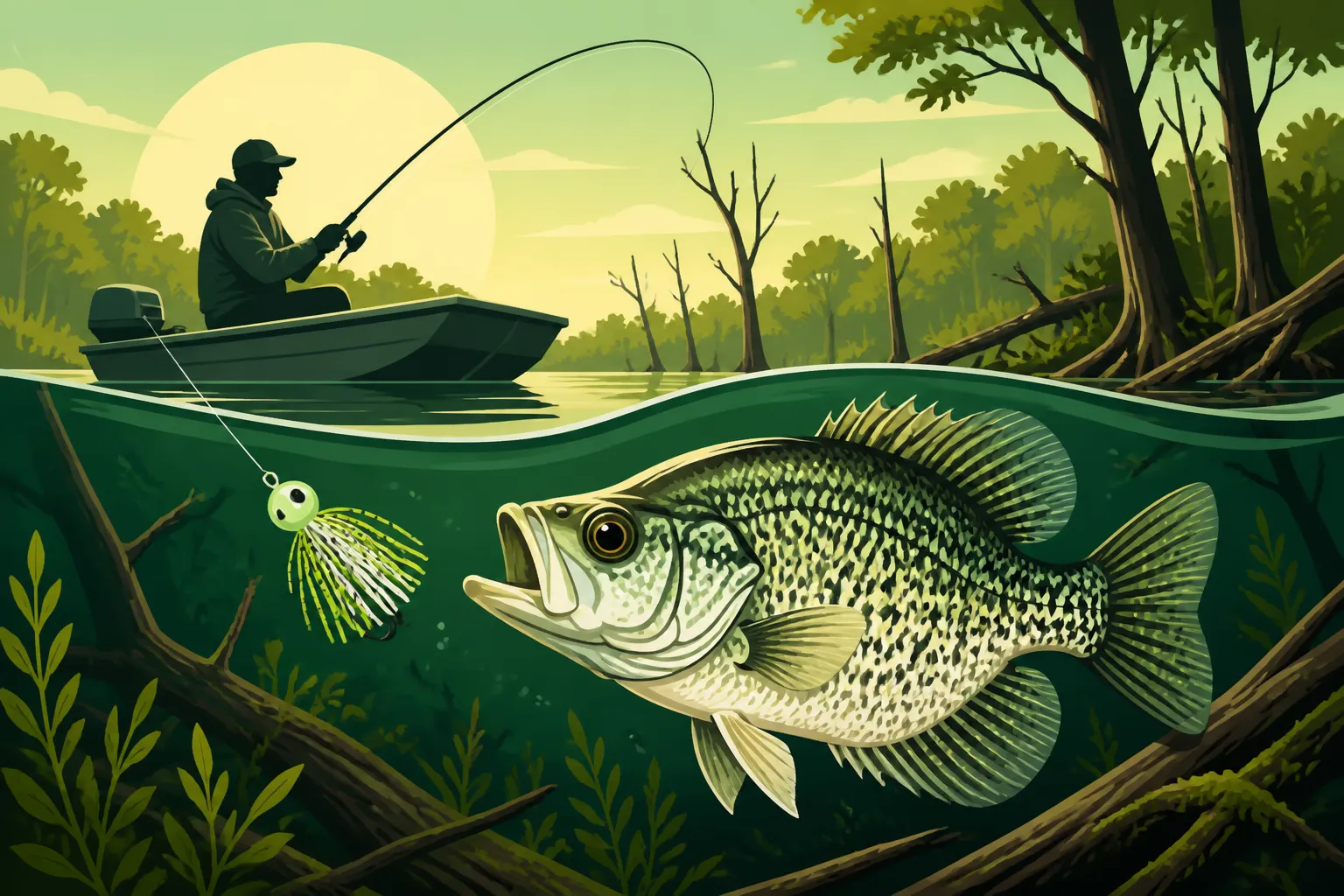
Crappie are ambush predators, and backwaters provide an endless buffet of hiding spots. Your mission is to identify these high-percentage areas. Look for fallen trees, submerged brush piles, standing timber, thick aquatic vegetation like lily pads or coontail, and even old dock pilings or submerged rock piles. Any structure that breaks the current or offers shade and protection is a potential crappie magnet. In shallower backwaters, even subtle depth changes, like a small ditch or an old creek bed winding through the flat, can concentrate fish.
Beyond the obvious, pay attention to current seams where a slough meets the main river. These transition zones often funnel baitfish and provide oxygen-rich water. Overhanging trees along the banks also create shade, attracting both crappie and their prey, especially on sunny days. If you find a dense patch of cover with slightly deeper water nearby, you've likely found a crappie hotspot. Remember that Illinois Black Crappie Fishing in Backwater Sloughs often means targeting these exact kinds of submerged structures, as they provide both shelter and feeding opportunities.
Water Conditions to Look For
Crappie, especially in backwaters, are quite sensitive to water conditions. Ideal water clarity is usually stained but not muddy. If the water is too clear, crappie can be very skittish; if it's too muddy, they struggle to see their prey. Look for that "tea-stained" or slightly murky clarity. Water temperature is also a huge factor. In spring, crappie will flock to backwaters that warm up quickly, often just a few degrees warmer than the main lake, to stage for spawning. You can learn more about this in our Illinois Crappie Spawn Season Guide.
Later in the year, cooler, deeper pockets within the backwater or areas with subtle current can become attractive. After heavy rains, runoff can make backwaters muddy and less appealing, but as the water settles and clears, crappie will move back in. Stable weather patterns are usually best, as sudden drops in temperature or significant changes in water level can send crappie deeper or scatter them. Always check recent conditions before you head out, and don't be afraid to move around until you find that sweet spot of temperature and clarity.
Essential Gear and Bait for Backwater Crappie
Having the right tools for the job makes all the difference, especially when you're navigating the often snag-ridden waters of backwater lakes and sloughs. We're talking about finesse and precision here, not heavy-duty bass gear.
Rods, Reels, and Line for Finesse Fishing
For crappie in backwaters, light tackle is your best friend. A good setup typically involves a sensitive, lightweight spinning rod, usually 5 to 7 feet long, with a fast or moderate-fast action. This sensitivity allows you to feel those subtle crappie bites, which can sometimes be nothing more than a slight tick or the feeling of your line going slack. Pair this with a small spinning reel, size 500 to 1000, spooled with 4 to 6-pound test monofilament or fluorocarbon line. Monofilament offers a bit more stretch, which can be forgiving with crappie's papery mouths, while fluorocarbon is nearly invisible underwater and has less stretch for better feel.
Some anglers even prefer a super-light braided line with a fluorocarbon leader for ultimate sensitivity and strength, especially when fishing around heavy cover where snags are inevitable. The braided line cuts through vegetation and helps you retrieve snagged jigs with less fuss. Investing in a good quality, sensitive rod makes a huge difference in detecting light bites and managing fish around structure, and you can find a great selection of Best Rods for Illinois Largemouth Bass and panfish on platforms like Amazon.
Best Baits: Live Minnows and Jigs
When it comes to bait, live minnows are often king for crappie, particularly in backwaters where they are a natural food source. Small shiner minnows, fathead minnows, or rosy reds are all excellent choices. You can fish them under a bobber or simply on a plain hook with a small split shot weight. However, artificial jigs are incredibly effective too, offering versatility and the ability to cover more water. Small jigs, typically 1/32 to 1/8 ounce, in various colors are essential. Popular colors include chartreuse, white, black, pink, and various combinations of these.
Plastic curly-tail grubs, tube jigs, and small paddle-tail swimbaits are all fantastic options. Tip these jigs with a small piece of minnow or a crappie nibbler for added scent and appeal. Don't be afraid to experiment with size and color until you find what the crappie are biting on that particular day. Sometimes, a subtle change from a pink jig to a pink-and-chartreuse jig can make all the difference. When selecting your baits, consider what natural forage is present in the backwater area, as matching the hatch often yields the best results.
Other Must-Have Tackle and Accessories
Beyond your rod and reel, a few other items are indispensable for backwater crappie fishing. A good selection of small, sharp hooks (sizes 4 to 8 Aberdeen or specialized crappie hooks), an assortment of small split shot weights, and a variety of bobbers are critical. Slip bobbers are especially useful for presenting bait at a precise depth, as they allow you to easily cast into cover without the bobber getting tangled. For those tricky spots, a telescopic crappie pole can be incredibly useful for dabbling baits directly into dense brush piles.
Don't forget essentials like a pair of needle-nose pliers for hook removal, a small cooler to keep your minnows lively, and a stringer or livewell for your catch. A small tackle box setup, perhaps a compact one from Amazon, with separate compartments for jigs, weights, and hooks will keep you organized. A good pair of polarized sunglasses will help you spot submerged cover, and bug spray is often a necessity in these quiet, marshy areas. Having these accessories readily available means you can focus on the fishing rather than fumbling for gear.
Proven Techniques for Targeting Crappie in Sloughs
Crappie in backwater sloughs can be particular, requiring different approaches depending on the cover and their mood. Mastering a few key techniques will significantly boost your success.
Jigging and Vertical Presentation
Jigging is perhaps the most fundamental and effective technique for backwater crappie. This method involves presenting a small jig vertically, either directly over a brush pile, along a fallen log, or in a deep hole. The goal is to drop your jig to the suspected depth of the crappie and then use subtle rod tip movements to impart action. A gentle lift-and-drop, a slow twitch, or even just holding the jig perfectly still can trigger a bite. Crappie Jigging Techniques are varied, but the key is usually a slow, deliberate presentation.
When fishing heavy cover, try to drop your jig right alongside the structure, letting it fall naturally. Many bites occur on the initial fall, so pay close attention. If you're using a sensitive rod, you'll feel the slight "thump" or the line jump when a crappie takes the bait. This technique is especially effective when crappie are tightly schooled or holding close to specific pieces of cover. Move slowly from one piece of structure to the next, thoroughly working each spot before moving on.
Slow Trolling and Spider Rigging
While backwaters are often tight, some larger sloughs or more open sections can lend themselves to slow trolling or "spider rigging." This technique involves using multiple rods, often from the bow of the boat, to present several baits at different depths and distances simultaneously. You can use long rods (8-14 feet) set up like a spider's legs, each with a different jig or minnow rig. Slowly propel your boat using an electric trolling motor, moving at a snail's pace, often less than 0.5 mph.
This method allows you to cover more water and find active crappie, especially when they are suspended or scattered rather than tightly grouped on a single piece of structure. Pay attention to which rod gets the bite – that tells you the depth and presentation they prefer. Spider rigging can be particularly deadly during the pre-spawn and post-spawn periods when crappie might be cruising the edges of channels or flats within the backwater. It's a fantastic way to locate schools of fish quickly and efficiently.
Slip Bobber Tactics for Suspended Crappie
When crappie are suspended at a specific depth, especially around submerged brush or standing timber, a slip bobber rig is invaluable. Unlike fixed bobbers, a slip bobber allows your bait to be set at any depth while still allowing for easy casting. You simply slide a bobber stop onto your line, followed by the slip bobber, a small weight (like a split shot or an egg sinker), and finally your hook or jig. Adjust the bobber stop to position your bait just above or in the middle of the crappie school or cover.
Cast your rig near the target structure and let it settle. The bobber will "slip" down the line until it hits the bobber stop, suspending your bait precisely where you want it. This method is fantastic for those situations where crappie are picky or holding just outside heavy snags. The natural, slow fall of the bait combined with its ability to hover enticingly can be irresistible to crappie. It's also a great way to introduce beginners to fishing, as watching the bobber go down is an exciting visual cue that a fish is biting. When deciding on your setup, remember that Best Bait for Crappie Fishing often involves a lively minnow under a slip bobber.
Seasonal Considerations for Backwater Crappie Success
Crappie behavior in backwaters changes dramatically with the seasons. Knowing what to expect throughout the year is key to consistent success.
Spring Spawning Patterns
Spring is prime time for crappie in backwaters. As water temperatures rise into the 50s and 60s, crappie move from deeper wintering holes into the shallower, warmer backwater areas to spawn. This is when you'll find them concentrating around submerged brush, fallen trees, and aquatic vegetation in just a few feet of water. Their focus during this period is reproduction, so they can be aggressive and easier to catch. Learning How to Find Crappie Beds in Spring is crucial for maximizing your catch.
During the pre-spawn, crappie will stage on the deeper edges of these backwater flats, feeding heavily. As the water warms further, they move directly into the shallowest cover to build nests and spawn. After spawning, they might linger for a week or two before gradually moving back to slightly deeper, but still cover-rich, areas within the backwater. Small jigs, particularly tube jigs or curly-tail grubs in chartreuse or white, fished slowly and deliberately around this shallow cover, are exceptionally effective. Live minnows under a slip bobber also shine during this period.
Summer and Fall Tactics
As summer heats up and water temperatures soar into the 70s and 80s, crappie in backwaters will seek refuge in deeper, shadier areas. This might mean the deepest holes within a slough, under dense canopy from overhanging trees, or tight to the thickest, coolest submerged brush piles. They become less active during the heat of the day, so early mornings, late evenings, and even night fishing can be more productive. Focus on vertical presentations, dropping jigs or minnows directly into dense cover.
In the fall, as water temperatures begin to cool, crappie become much more active again. They'll start to school up and feed aggressively in preparation for winter. This is a fantastic time for slow trolling or spider rigging in larger backwater sections, as crappie will be moving and hunting. They'll still relate to cover but might be found suspended along channel edges or over submerged humps. Look for baitfish schools, as crappie will follow their food source. Using larger jigs or live minnows can entice these actively feeding fish. For more species-specific information, check out Black Crappie vs White Crappie: How to Tell Them Apart, as their habits can vary slightly.
Winter Crappie in Deeper Backwaters
When winter arrives and water temperatures drop into the 30s and 40s, crappie in backwaters become lethargic and seek the deepest, most stable water available. This means looking for those subtle deep holes, old creek channels, or the deepest sections of large brush piles within the backwater. They'll often school tightly together, making them challenging to locate but rewarding once found. Vertical jigging with very small jigs (1/32 to 1/64 ounce) or tiny ice fishing jigs tipped with a crappie nibbler or a single spike is the most effective approach.
The key is a slow, almost imperceptible presentation. Crappie won't chase bait in cold water, so you need to put it right in front of their faces. Your sensitive rod becomes crucial here to detect those extremely light bites. Patience is a virtue when winter crappie fishing in backwaters. If you can locate a school, you might be able to pick off several fish from the same spot before they wise up. Remember that a keen eye on your fish finder will be your best friend to pinpoint these deep schools.
| Season | Crappie Location in Backwaters | Key Techniques | Best Baits/Lures |
|---|---|---|---|
| Spring | Shallow brush, submerged logs, weed lines (2-6 ft) | Vertical jigging, slip bobbers | Live minnows, small jigs (1/32-1/8 oz) |
| Summer | Deeper holes, dense shade, thick cover (6-15 ft) | Vertical jigging, tightlining | Small jigs, minnows, crappie nibblers |
| Fall | Schooling along channels, humps, edges of deep cover (5-12 ft) | Slow trolling, spider rigging, jigging | Minnows, larger jigs (1/16-1/4 oz) |
| Winter | Deepest holes, tight to submerged structure (10-20+ ft) | Ultra-slow vertical jigging, dead sticking | Tiny jigs (1/32-1/64 oz), minnows, spikes |
Disclaimer
This article is for general informational purposes only and does not constitute professional advice. Laws, prices and regulations vary by location and change over time. Consult a qualified professional for guidance on your specific situation.