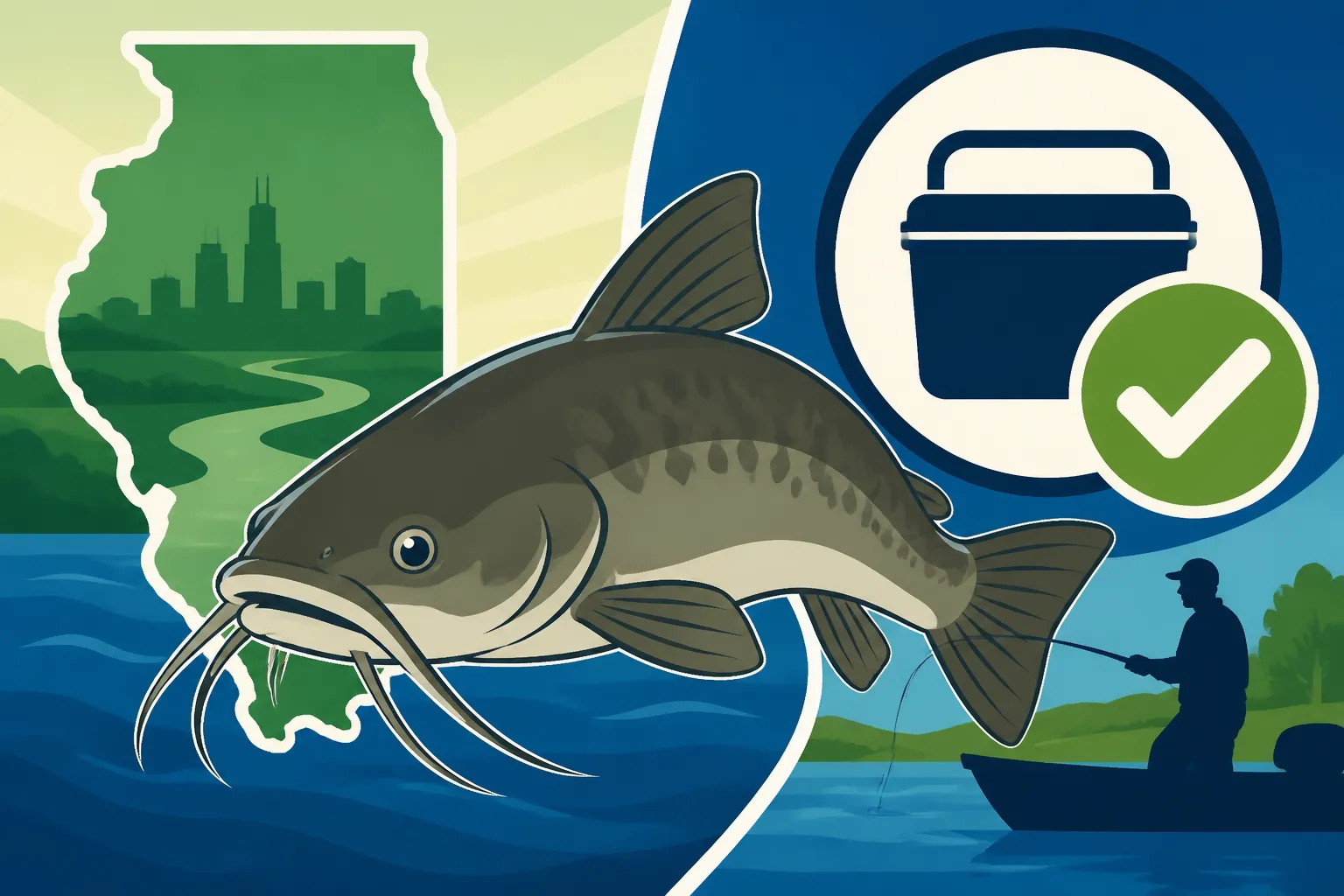
Illinois Flathead Catfish Daily Limit Rules
One of the trickiest parts of fishing in Illinois is keeping track of all the different rules and regulations, especially when it comes to species-specific limits. Many anglers, especially those new to chasing the mighty flathead, often wonder about the specific daily catch limits, which can feel a bit like navigating a maze. This comprehensive guide is here to clear up the confusion, explaining exactly what the Illinois Flathead Catfish daily limit rules are, how to correctly identify your catch, and what you need to know to stay on the right side of the law.
Understanding Flathead Catfish Daily Limits in Illinois
Chasing flathead catfish in Illinois is an exciting endeavor, whether you're after a trophy or just looking for a good fight. However, unlike some other popular species, flathead catfish have a very specific daily possession limit that every angler needs to be aware of. Getting this wrong can lead to serious headaches, so let's get right to it.
The Specific Daily Limit for Flathead Catfish
In Illinois, the statewide daily harvest limit for flathead catfish is 10 fish per day. This means that in most waters across the state, you can legally keep up to ten flathead catfish within a 24-hour period. It's a fairly generous limit, acknowledging the species' robust populations in many Illinois rivers and reservoirs, but it's still a firm number you cannot exceed. This limit is set to ensure sustainable fishing practices, allowing for plenty of fish to remain in the ecosystem for future generations of anglers. It’s not just about what you can catch, but what the resource can sustain. Remember, conservation is a collective effort, and adhering to these limits is a crucial part of that.
This 10-fish limit applies to the vast majority of public waters. However, and this is where it gets a little more complex, some specific lakes or river sections might have different rules. These site-specific regulations can either be more restrictive or occasionally more lenient, depending on the local fishery management goals. Always, always check the current Illinois Fishing Information Guide for the specific body of water you plan to fish. You can often find a physical copy at bait shops or sporting goods stores, or download a digital version. Ignoring these local variations is a common pitfall for even seasoned anglers.
Why Limits Are Important for Sustainable Fishing
You might wonder why these limits exist at all, especially when you're having a banner day and the fish are really biting. The truth is, fishing limits, including the Illinois Flathead Catfish Daily Limit of 10 Fish Per Day, are a cornerstone of responsible fisheries management. Flathead catfish, while resilient, are still a wild resource. Without limits, there's a risk of overfishing, which can deplete populations, especially larger, breeding-size fish. This isn't just about ensuring there are fish for tomorrow, but about maintaining a healthy, balanced aquatic ecosystem.
Consider the life cycle of a flathead. They can grow quite large and live for many years, but their reproductive success depends on a healthy population of mature adults. If too many of these larger fish are removed, it can impact the ability of the species to replenish itself. The Illinois Department of Natural Resources (IDNR) studies fish populations and habitat conditions to set limits that allow anglers to enjoy their sport while also protecting the future of the fishery. These aren't arbitrary numbers; they are based on scientific data and a deep understanding of the fish species and their environment. Adhering to these limits means you're actively contributing to the long-term health of Illinois' amazing fishing opportunities. It's a small price to pay for ensuring the thrill of catching a big flathead continues for years to come.
Flathead Limits Compared to Other Catfish Species
It's really important not to confuse the flathead catfish limits with those for other catfish species in Illinois, because they are distinct. Each species has its own set of rules, and mistaking one for another can land you in trouble.
For instance, the Illinois Channel Catfish Daily Limit of 20 Fish is double that of flatheads, and there's generally no size limit for channel cats either. Channel catfish are often more abundant and reproduce more quickly, so a higher limit is sustainable. Then there are blue catfish, which are also found in Illinois, primarily in larger rivers like the Mississippi. Their limits can sometimes vary by location, but the statewide rule aligns more closely with the flathead, often being 10 fish daily as well, but sometimes even more restrictive depending on the waterbody. You can dive deeper into these specifics by checking out Illinois Blue Catfish Rules and Daily Limits.
The table below provides a quick comparison of the general statewide daily limits for the three main catfish species in Illinois. Remember, these are general statewide rules; site-specific regulations always take precedence.
| Catfish Species | Statewide Daily Limit | Statewide Size Limit | General Abundance |
|---|---|---|---|
| Channel Catfish | 20 fish | None | High |
| Flathead Catfish | 10 fish | None | Moderate |
| Blue Catfish | 10 fish (often) | None (often) | Moderate |
Note: Always verify current regulations for specific waters you intend to fish, as these can change and local rules may supersede statewide guidelines.
It's your responsibility as an angler to correctly identify your catch before deciding whether to keep it. Many a game warden has heard the excuse, "I thought it was a channel cat!" and it rarely flies. Knowing your fish is as important as knowing your knots!
Identifying Flathead Catfish on the Water
Before you can confidently adhere to the Illinois Flathead Catfish Daily Limit of 10 Fish Per Day, you absolutely need to be able to tell a flathead from its whiskered cousins, the channel and blue catfish. While they all share a certain "catfishy" look, there are distinct features that will help you make the correct identification every time. Misidentification is a common reason for accidental violations, so pay close attention.
Key Physical Characteristics of Flathead Catfish
The name "flathead" isn't just for show; it's the most prominent identifying feature of this fascinating fish. Here’s what to look for:
- Head Shape: True to their name, flathead catfish have a noticeably flat, broad head. It's wider and flatter than that of a channel or blue catfish. Their eyes are relatively small and sit high on this flat head.
- Lower Jaw: A critical identifier is their protruding lower jaw. When you look at a flathead from the side, the lower jaw extends noticeably beyond the upper jaw, giving it a somewhat "bulldog" appearance. This is a tell-tale sign that differentiates it from channel and blue cats, where the upper jaw is either equal to or slightly extends over the lower jaw.
- Coloration: Flatheads typically have a mottled, olive-brown to yellow-brown body with darker spots and blotches, often appearing somewhat camouflaged. Their belly is usually yellow or cream-colored. This "blotchy" pattern is quite distinct and helps them blend in with the bottom structure where they ambush prey.
- Tail Fin: Unlike the deeply forked tails of channel and blue catfish, the flathead's tail fin is squarish or slightly rounded, with little to no fork. This is a dead giveaway once you get a good look.
- Body Shape: While they can get massive, their body tends to be more robust and less streamlined than a channel cat, and generally not as deep-bodied as a large blue cat.
Knowing these characteristics will allow you to quickly and accurately identify your catch, which is essential for compliance with daily limits.
Distinguishing Flatheads from Channel and Blue Catfish
Here's a breakdown to help you differentiate flatheads from their more common relatives:
- Flathead vs. Channel Catfish:
- Head: Flathead has a flat, wide head; Channel cat has a more rounded, cone-shaped head.
- Jaw: Flathead's lower jaw protrudes; Channel cat's upper jaw typically extends slightly over the lower.
- Tail: Flathead has a square or slightly rounded tail; Channel cat has a deeply forked tail.
- Color: Flathead is mottled brown/yellow with blotches; Channel cat is typically silvery-grey to olive, often with small dark spots when young (spots fade with age).
- Flathead vs. Blue Catfish:
- Head: Flathead has a very flat, wide head; Blue cat has a relatively smaller, humped head.
- Jaw: Flathead's lower jaw protrudes; Blue cat's upper jaw typically extends slightly over the lower.
- Tail: Flathead has a square or slightly rounded tail; Blue cat has a deeply forked tail.
- Color: Flathead is mottled brown/yellow; Blue cat is typically a uniform bluish-grey with a white belly, lacking the spots or mottling of the other two.
If you're still feeling unsure, a quick reference guide on your phone or even a laminated card can be a lifesaver. You can even find great identification charts available on sites like Amazon that you can print out and keep in your tackle box. Understanding the differences, as detailed in our guide on Flathead Catfish vs Channel Catfish: Key Differences, is crucial for any responsible angler.
Where These Rules Apply and How to Stay Informed
It's not enough to just know the number "10 fish." You also need to understand where those rules apply and, more importantly, how to ensure you're always using the most up-to-date information. Fishing regulations are dynamic; they can and do change, and what was true last year might not be true today.
Statewide Rules Versus Site-Specific Regulations
The 10-fish daily limit for flathead catfish is generally a statewide regulation in Illinois. This means that if you're fishing in a common river or lake that doesn't have any special provisions listed, this is the rule you should follow. However, Illinois is home to an incredible diversity of waterways, from vast reservoirs to intricate river systems and smaller lakes, and many of these have their own unique, site-specific regulations.
These localized rules are often put in place by the IDNR to address specific conservation needs or management goals for that particular body of water. For example, a lake that has been recently stocked might have a "no harvest" rule for a period, or a particularly popular stretch of river might have a reduced limit to ease fishing pressure. These site-specific rules always take precedence over the general statewide rules. It's a critical distinction to grasp. You can read more about why these rules vary by location in Why Fishing Rules Vary by Lake and River.
Never assume that because the statewide limit is 10, it's 10 everywhere. Always verify. This due diligence is part of being a responsible angler.
Importance of the Illinois Fishing Information Guide
Your absolute best friend for staying informed about current regulations is the official Illinois Fishing Information Guide. This guide, published annually by the IDNR, is the authoritative source for all fishing rules and limits in the state. It outlines everything from general statewide regulations to very specific rules for individual lakes, rivers, and even sections of rivers.
You can usually pick up a physical copy of this guide for free at any Illinois fishing license vendor, bait shop, or IDNR office. It’s also available as a digital download on the IDNR website. Before every fishing trip to a new or unfamiliar body of water, and even at the start of each new license year (which begins on March 1st in Illinois), you should consult this guide. Seriously, keep it in your tackle box, glove compartment, or downloaded on your phone. You can find detailed instructions on how to locate these regulations in How to Find the Rules for a Specific Illinois Fishing Spot. This guide will also clarify any specific bait restrictions, length limits (though generally not for flatheads), or other unique rules that might apply to your chosen fishing spot. Don't risk a citation because you didn't take five minutes to check the latest guide.
Penalties for Exceeding Your Daily Catch Limit
Ignoring or simply not knowing the rules, especially when it comes to daily catch limits, can have real consequences. Illinois game wardens are out there to protect the state's natural resources, and they take violations seriously. If you're caught with more than the legal daily limit of flathead catfish, you're likely facing a citation.
The specific penalties can vary depending on the severity of the violation, your history of offenses, and the discretion of the issuing officer and the courts. However, common consequences include:
- Fines: You'll almost certainly face a monetary fine, which can range from a couple of hundred dollars to much higher amounts, especially for repeat offenses or egregious violations.
- Confiscation: The fish you illegally harvested will be confiscated. Your fishing gear might also be temporarily or permanently confiscated.
- Loss of Privileges: More severe penalties can include the suspension or revocation of your fishing license for a period of time. This means you won't be able to legally fish in Illinois at all, which is a tough pill to swallow for any avid angler.
- Court Appearances: Many citations require a mandatory court appearance, which means time off work and additional legal costs.
It's far easier and much cheaper to simply know and follow the rules. As our guide on Penalties for Exceeding Your Daily Catch Limit explains, ignorance is rarely an acceptable defense in the eyes of the law. Always count your catch, and if you're not planning to keep them, practice good catch-and-release techniques.
Practical Tips for Adhering to Flathead Catfish Limits
Beyond simply knowing the rules, there are practical steps you can take on the water to ensure you're always adhering to the 10-fish daily limit for flathead catfish. Responsible angling isn't just about what you catch, but how you manage your catch and interact with the resource.
Counting Your Catch Accurately
This might sound obvious, but in the excitement of a good fishing day, it's easy to lose track. If you plan on keeping fish, make it a habit to count them as soon as they hit your cooler or livewell. Don't wait until the end of the day. A small notepad and pencil, or even just using a mental tally, can prevent an accidental over-limit.
For flathead catfish, in particular, which can sometimes be caught in quick succession, it's crucial to be vigilant. If you're fishing with others, make sure everyone in your group understands the individual limit and that you're not pooling your catch to exceed the group's legal possession limit. Each licensed angler has their own limit, and possession limits often apply to fish in your possession wherever you are, not just on the water. This means if you have 10 flatheads at home in the freezer from a previous trip, you can't keep 10 more today if the "possession limit" is the same as the daily limit. Always read the guide carefully for these nuances.
Responsible Catch-and-Release Practices
What happens when you've already kept your 10 flathead catfish for the day, but the bite is still on fire? This is where responsible catch-and-release comes into play. If you've reached your legal limit and still want to keep fishing, you must be prepared to release any additional flatheads you catch.
To maximize the survival rate of released fish:
- Handle with Care: Support the fish horizontally, especially large ones, to protect internal organs. Avoid holding them vertically by the jaw if they are heavy.
- Minimize Air Exposure: Keep the fish in the water as much as possible. A quick photo is fine, but don't keep them out of water for extended periods.
- Use Proper Tools: A net that doesn't damage scales or fins, and a good pair of pliers or a hook remover (available on Amazon for very reasonable prices) to quickly extract hooks, are essential. If a fish is deeply hooked, especially in the gills or gut, it might be better to cut the line as close to the hook as possible rather than trying to remove it and causing more damage.
- Revive If Needed: If a fish seems sluggish before release, hold it gently in the water, facing into the current, until it regains strength and swims away on its own.
Practicing good catch-and-release not only keeps you within the legal limits but also ensures that those fish can continue to grow and spawn, contributing to the health of the fishery. Many anglers choose to release bigger, older flatheads anyway, knowing that these are often the most important breeders.
Appropriate Gear and Bait for Target Fishing
While the rules focus on limits, your gear choices can actually help you adhere to them. Flathead catfish are aggressive predators, often preferring live bait. Using something like a live bluegill or bullhead (make sure they are legal baitfish in Illinois!) can be very effective. Our guide on Best Live Bait for Flathead Catfish has some excellent suggestions.
Using appropriate heavy-duty tackle, like a stout rod and reel combo with strong line, ensures you can quickly land a flathead. This minimizes the fight time, which is crucial for reducing stress on the fish if you plan to release it. A longer fight can exhaust a fish, making its survival post-release less likely. When buying new gear, check out reviews on sites like Amazon for catfish-specific rods, reels, and lines that are designed for handling these powerful fish efficiently. A quality fish scale and measuring tape are also helpful tools to ensure you're accurately tracking your potential keepers, even if there isn't a specific size limit for flatheads, it's good practice.
By combining knowledge of the rules with responsible fishing practices, you'll not only stay legal but also become a better, more ethical angler, helping to preserve the fantastic flathead catfish fishing Illinois has to offer.
Disclaimer
This article is for general informational purposes only and does not constitute professional advice. Laws, prices and regulations vary by location and change over time. Consult a qualified professional for guidance on your specific situation.