Best Catfish Gear for Illinois’s Lake Shelbyville
If you've ever tried to land a monster catfish on Lake Shelbyville with gear that wasn't up to the task, you know the frustration. Snapped lines, bent hooks, and reels screaming out of control are common rites of passage for unprepared anglers. This guide is here to ensure your next trip to Shelbyville for whiskered giants is equipped for success, detailing the best rods, reels, terminal tackle, and baits that will make a real difference.
Understanding Lake Shelbyville's Catfish
Lake Shelbyville is a fantastic fishery, but it’s not just one type of catfish you'll encounter. Knowing your target species and their habits is the first step to choosing the right gear. Without this foundational knowledge, you might find yourself under-gunned for a trophy blue cat or over-rigged for a fun-sized channel cat.
The Different Catfish Species You'll Encounter
Lake Shelbyville is home to three main species of catfish: Channel Catfish, Blue Catfish, and Flathead Catfish. Each has its own personality, size potential, and preferred dining habits, which directly influences the gear you should bring.
Channel catfish are probably the most common and widespread. They're often found in good numbers and can range from a pound or two up to double-digit weights. A ten-pound channel cat from Shelbyville is a respectable fish, and they put up a surprisingly strong fight. They're opportunistic eaters, happy to munch on anything from prepared stink baits to cut shad. Because of their prevalence and willingness to bite, many anglers start their catfish journey here.
Blue catfish are the true heavyweights of Lake Shelbyville. While not as abundant as channel cats, their numbers are certainly increasing, and they have the potential to grow absolutely enormous. We're talking fish that can push 30, 40, or even 50 pounds here, making them a serious challenge. These beasts prefer fresh cut bait, like shad or skipjack, and will often hold in deeper water or strong currents. If you're chasing a true trophy, blue cats are your quarry.
Flathead catfish are the stealthy predators of the catfish world. Unlike channels and blues that scavenge, flatheads prefer live bait – think live bluegill or green sunfish. They're often found hiding in heavy cover like submerged timber, rock piles, or old creek channels, ambushing unsuspecting prey. A big flathead can also reach impressive sizes, often topping 20-30 pounds, and their powerful,bulldog-like fight in heavy cover demands robust gear. Knowing the difference between these species will help you tailor your approach, making sure you're not trying to land a 40-pound blue cat with a crappie rod!
Key Catfish Habitats in Lake Shelbyville
Lake Shelbyville is a reservoir, which means it has a lot of varied structure that catfish absolutely love. Understanding where these different species prefer to hang out will help you position your boat or set up your bank fishing station for maximum success. This also dictates the kind of rigs you'll need to prevent constant snags.
The main river channel and its associated creek channels are prime real estate, especially for blue and channel cats. These deeper sections often have current, which blues in particular appreciate, and they act as highways for fish movement. Look for bends in these channels, submerged humps, or any kind of deep structure. Illinois Catfish Season at Rend Shelbyville and Carlyle Lakes covers some similar dynamics in other big lakes.
Submerged timber, brush piles, and fallen trees are flathead magnets. These areas provide excellent ambush points and protection. If you're targeting flatheads, you'll want to get as close to this cover as possible without getting constantly snagged. This means using heavier line and often a slightly different rig to help pull fish out of the nastiness. The dam area and riprap banks can also be productive, offering current breaks and plenty of rocky cover where baitfish congregate, attracting all three species. Look for areas where the main lake transitions into shallower flats or points, especially during feeding times.
Finally, the expansive flats on Lake Shelbyville can also hold catfish, particularly channel cats, especially when they're feeding on schooling baitfish or during warmer months when they spread out more. During the night, these shallower areas often become feeding grounds. Understanding these diverse habitats is crucial for consistent success, allowing you to adapt your strategy whether you're anchored in a deep channel or pitching baits to submerged wood.
Essential Rods and Reels for Shelbyville Catfish
Trying to fight a strong catfish with inadequate tackle is like bringing a butter knife to a sword fight – you’re going to lose. The right rod and reel combination provides the backbone, leverage, and power needed to turn a powerful fish away from snags and bring it to the net.
Rod Selection: Power, Length, and Action
When it comes to catfish rods for Lake Shelbyville, you need something that can handle heavy weights, powerful runs, and potentially heavy cover. You're not just casting a small lure; you might be throwing 4-8 ounces of lead and a big piece of bait.
Power: This refers to how much force it takes to bend the rod. For Lake Shelbyville catfish, you'll generally want medium-heavy to heavy power rods. A medium-heavy rod (rated for 15-40 lb line) is a good all-around choice for channel cats and smaller blue/flathead catfish. If you're seriously targeting trophy blue or flathead catfish, especially in heavy current or timber, a heavy power rod (rated for 30-80 lb line) is a better choice. These rods have the backbone to horse a big fish out of thick cover.
Length: Rod length plays a role in casting distance and leverage. A good range for Shelbyville catfishing is typically 7 to 9 feet.
- 7 to 7.5-foot rods are versatile, offering good casting distance from a boat and easier handling. They provide solid leverage for fighting fish.
- 8 to 9-foot rods excel at casting heavier baits long distances, which can be crucial when fishing from the bank or trying to reach specific spots from a boat without spooking fish. The added length also gives you more leverage over larger fish and helps keep your line out of snags when fishing around structure. You can find excellent options from reputable brands like Bass Pro Shops, which offers a wide selection designed for various catfishing scenarios.
Action: This describes where the rod bends. For catfishing, a moderate-fast action is often ideal. This means the rod bends mostly in the top third or quarter of the blank.
- A moderate-fast action provides enough tip flexibility for good casting performance and to absorb the initial shock of a catfish bite, preventing line breaks.
- It then transitions into a strong backbone, giving you the power to set the hook firmly and control a fighting fish. A rod that is too fast (bends only at the very tip) might pull hooks out of a catfish's tough mouth, while one that is too slow (bends throughout the whole blank) won't have the power to move a big fish.
Reel Selection: Spinning vs. Baitcasting and Drag Power
Just like rods, your reel needs to match the task. The choice between spinning and baitcasting often comes down to personal preference, the size of fish you're targeting, and the specific techniques you're employing.
Spinning Reels: These are generally easier to cast, especially with lighter baits or in windy conditions, making them a good choice for beginners or those targeting smaller channel cats.
- Look for a larger size spinning reel, typically in the 6000-8000 series, with a robust all-metal body and a strong, smooth drag system.
- Ensure it has a good line capacity to hold plenty of heavy monofilament or braided line. Spinning reels are excellent for Bank Fishing Tips for Beginners as they are less prone to backlashes.
Baitcasting Reels: These are the workhorses for serious catfish anglers, particularly when targeting trophy blue or flathead catfish with heavy lines and baits.
- Baitcasters offer more cranking power, better control over heavy lures, and typically superior drag systems capable of handling powerful runs.
- Look for round profile baitcasting reels (not low-profile bass fishing reels) in sizes like 5000, 6000, or 7000. Brands like Abu Garcia or Penn offer popular choices.
- The most critical feature is a strong, smooth, and consistent drag system. A big catfish will test your drag to its limits, so it needs to pay out line without sticking or jerking, which can lead to snapped lines or pulled hooks.
- Line capacity is also paramount; you need enough space to spool 200-300 yards of heavy monofilament or braided line. A good gear ratio (around 4.1:1 to 5.3:1) provides a balance of cranking power and retrieval speed. You can find a vast array of high-quality baitcasting reels on Amazon that are perfectly suited for hauling in trophy catfish.
Ultimately, the best reel for you is one that feels comfortable, balances well with your rod, and can reliably handle the kind of catfish you expect to encounter in Lake Shelbyville. Don't skimp on the reel; it's often the weakest link in a catfishing setup.
Terminal Tackle for Lake Shelbyville Catfish Success
Once you have your rod and reel, the next crucial components are the line, hooks, sinkers, and swivels. These seemingly small details are what connect you directly to the fish, and failure in any one of them can mean a lost trophy.
Line Choices: Monofilament, Fluorocarbon, and Braided
The right fishing line is your direct connection to the fish, and each type has its advantages and disadvantages for catfishing on Lake Shelbyville.
Braided Line: This is often the preferred choice for serious catfish anglers due to its incredible strength-to-diameter ratio and zero stretch.
- Pros: Its strength allows you to use lighter test lines than monofilament for the same breaking strength, which can improve casting. The lack of stretch provides excellent sensitivity, letting you feel even the most subtle bites, and delivers powerful hook sets. It also has great abrasion resistance, which is important around Shelbyville's submerged timber.
- Cons: Braided line can be more expensive, and its lack of stretch means it transmits every head shake directly to your rod, requiring a good drag setting to prevent pulled hooks. It can also be harder to cut and tie knots in for some anglers.
- Recommendation: For main line, consider 30 to 65-pound test braided line. If you're targeting bigger blues and flatheads in heavy cover, you might even bump up to 80-pound.
Monofilament Line: A classic for a reason, monofilament (mono) is a good all-around choice, especially for channel cats or those new to catfishing.
- Pros: It's less expensive than braid, easier to tie knots, and its inherent stretch acts as a shock absorber, helping to prevent pulled hooks on a hard strike. It's also less visible underwater, though visibility isn't always a huge factor for catfish.
- Cons: It has lower abrasion resistance than braid and significantly more stretch, which reduces sensitivity and hook-setting power over long distances.
- Recommendation: For channel cats, 15 to 25-pound test mono is a good start. For bigger fish, you might go up to 30-40 pound, but you'll sacrifice some strength compared to braid of the same diameter.
Fluorocarbon Line: While excellent as a leader material for its invisibility and abrasion resistance, fluorocarbon is rarely used as a main line for catfishing due to its stiffness, cost, and stretch characteristics.
- Recommendation: Use a 30 to 50-pound fluorocarbon leader, a few feet long, when fishing braided main line, especially in clear water or around sharp structure, to provide an extra layer of stealth and abrasion resistance.
Many anglers will spool their reels with braided main line and then attach a 2-4 foot leader of heavy monofilament or fluorocarbon to the end for added abrasion resistance or stretch.
Hooks, Sinkers, and Swivels
The right terminal tackle ensures your bait stays on, your line doesn't twist, and your hook sets solidly.
Hooks: For catfishing, strong, sharp hooks are non-negotiable.
- Circle Hooks: These are widely recommended, especially for catch-and-release, as they are designed to hook fish in the corner of the mouth, minimizing gut-hooking. When a fish bites, don't set the hook; instead, just reel tight until the line comes taut and the fish pulls the hook into place. Sizes range from 5/0 to 10/0, depending on the size of your bait and the catfish you're targeting. For most channel cats and smaller blues/flatheads, 5/0 to 8/0 are good. For trophy fish, 9/0 or 10/0.
- J-Hooks: If you prefer a traditional hook set, sturdy J-hooks (octopus or Kahle style) can work. Ensure they are heavy-duty and very sharp.
- Material: Look for hooks made from high-carbon steel, which are incredibly strong and less likely to straighten under pressure.
Sinkers: You need enough weight to get your bait down to the bottom and hold it there against current and wind.
- Sizes: Expect to use sinkers ranging from 1 ounce up to 8 ounces or more, depending on the depth and current you're fishing. It's wise to carry an assortment.
- Types:
- No-Roll Sinkers: Flat-sided, these are excellent for preventing your rig from rolling in current, making them ideal for river channels.
- Pyramid Sinkers: Also good in current, they dig into the bottom.
- Egg Sinkers/Slip Sinkers: These allow the line to slide through, letting the fish pick up the bait without feeling the weight immediately, which can be crucial for finicky bites.
- Bank Sinkers: A versatile bell-shaped sinker that works well in many situations.
Swivels: Heavy-duty swivels are essential for preventing line twist, especially when fishing with cut bait that can spin in the current.
- Barrel Swivels/Ball Bearing Swivels: Choose strong, appropriately sized swivels. A 75-pound test or higher is a good baseline for most catfishing. Many anglers prefer heavy-duty barrel swivels or ball bearing swivels for their strength and smooth rotation, helping to eliminate twist from current or struggling bait. Catfish Bottom Fishing Techniques often rely on robust swivels.
Rigging Strategies for Different Conditions
Understanding how to set up your terminal tackle into effective rigs is what puts bait in front of fish. Different situations on Lake Shelbyville call for different rigging approaches.
The Santee Cooper Rig: This is a fantastic rig for keeping your bait off the bottom, especially useful when fishing over soft mud or snags, or when trying to present cut bait just above the bottom where catfish can easily find it.
- Setup: It uses a slip sinker above a swivel, followed by a leader and a hook. The key is a small float (often called a peg float or cigar float) placed on the leader, 6-12 inches above the hook, to suspend the bait.
- When to Use: Excellent for fishing flats, main lake channels, or anywhere you want to elevate your bait slightly to improve visibility and avoid bottom debris.
The Carolina Rig (Slip Sinker Rig): A tried-and-true classic, this rig allows the fish to pick up the bait and move off without feeling the weight of the sinker.
- Setup: A slip sinker (egg sinker is common) is threaded onto the main line, followed by a bead (to protect the knot), and then tied to a heavy-duty swivel. A leader of 12-36 inches is then tied from the other end of the swivel to your hook.
- When to Use: Highly versatile, it works well in most situations, from still water to moderate current. It's particularly effective when catfish are finicky, as they don't immediately feel resistance. How to Bottom Fish for Catfish details this setup.
The Three-Way Rig (Drop Sinker Rig): Ideal for fishing in strong currents or when you want to present multiple baits at different depths.
- Setup: A three-way swivel is tied to the main line. To one eye, a leader with a sinker is tied (the dropper leader). To the third eye, a leader with your hook and bait is tied.
- When to Use: Best for strong currents, such as near the dam or in deeper river channels, where you need to hold your bait firmly in place. You can vary the length of your dropper leader to adjust how high off the bottom your bait sits.
Experimenting with these different rigs based on the conditions and the specific catfish species you're targeting will dramatically increase your success rate on Lake Shelbyville.
Bait and Accessories: Rounding Out Your Catfish Arsenal
Having the right rods, reels, and terminal tackle is critical, but without the right bait and essential accessories, your efforts might be in vain. Lake Shelbyville offers diverse feeding opportunities for catfish, and being prepared with various baits is a smart strategy.
Best Baits for Shelbyville Catfish
Catfish are known for their strong sense of smell and their willingness to eat a variety of foods. However, certain baits are undeniably more effective than others for specific species and conditions on Lake Shelbyville.
Cut Bait: This is perhaps the most universally effective bait for blue and channel catfish, especially the bigger ones.
- Shad: Skipjack herring and gizzard shad are local favorites and are incredibly effective. Cut into chunks or strips, the oily scent trail they release in the water is irresistible to catfish. You can often net shad in shallower areas of the lake or purchase them from local bait shops.
- Other Oily Fish: Drum, carp, or even small pieces of suckers can also make excellent cut bait. The fresher, the better!
Live Bait: Essential for flathead catfish and highly effective for trophy blue cats.
- Bluegill/Sunfish: Live bluegill, green sunfish, or small carp are prime choices for flatheads. These fish need to be kept alive and active on your hook to attract the predatory flathead. Be sure to check local regulations on using live baitfish and their size limits.
- Small Shad: Live gizzard shad can also be incredibly effective for blue cats.
Prepared Baits (Stink Baits/Punch Baits): While not typically the choice for trophy blue or flathead catfish, these are absolute magnets for channel catfish and offer a convenient, less messy option for general catfishing.
- Brands: There are many commercial stink baits available that come in various consistencies, from dip baits to punch baits. Look for brands known for their strong odors.
- When to Use: Great for targeting channel cats in smaller numbers, or for introducing kids to catfishing due to their ease of use. You can even find these at Bass Pro Shops or your local sporting goods store.
Nightcrawlers/Worms: Good for smaller channel cats and also effective for many other species you might encounter while catfishing. While not typically a trophy catfish bait, they can lead to a lot of action.
Always carry a variety of baits if possible. What works one day might not work the next, and different species have different preferences. A cooler full of fresh cut bait can make all the difference.
Must-Have Accessories for Serious Catfishing
Beyond rods, reels, and tackle, a few key accessories will significantly improve your comfort, safety, and success rate while catfishing on Lake Shelbyville.
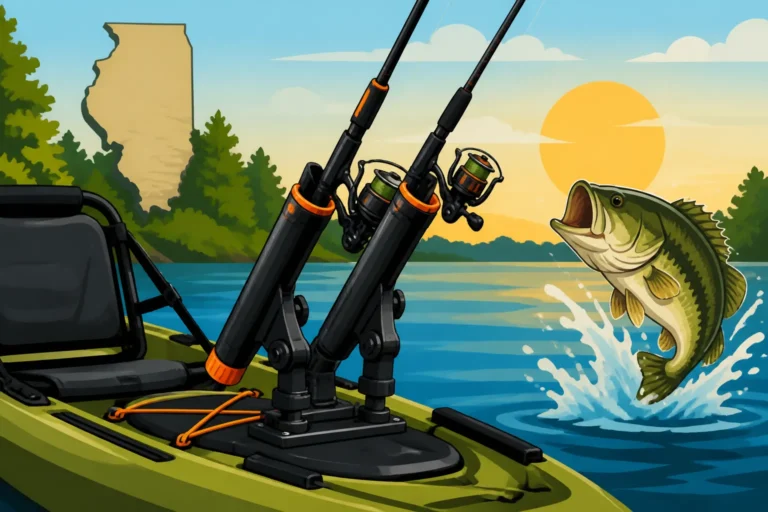
Rod Holders: Absolutely essential, whether you're fishing from the bank or a boat. Catfish strikes can be incredibly powerful, and a good rod holder will prevent your rod from being pulled into the water.
- Bank Fishing: Sturdy spike-style rod holders that push into the ground.
- Boat Fishing: Heavy-duty clamp-on or flush-mount rod holders that can withstand a powerful bite from a large blue or flathead. You can find these on Amazon with various mounting options.
Heavy-Duty Net: Don't try to hand-land a big catfish. A large, strong landing net with a wide hoop and sturdy handle is crucial for safely landing and handling big fish. Make sure the net material is durable and won't tangle easily.
De-Hooker/Pliers: Catfish have sharp spines and tough mouths. A long-nosed de-hooker or sturdy pair of pliers will allow you to safely remove hooks without risking injury to yourself or the fish.
Gloves: Catfish have rough skin and those infamous spines. A pair of sturdy, comfortable gloves (even gardening gloves or special fishing gloves) will protect your hands when handling fish.
Cooler: Not just for your drinks! A dedicated cooler filled with ice is essential for keeping your bait fresh throughout the day, and for properly storing any fish you plan to keep for the dinner table.
Portable Fish Finder: While not strictly necessary for bank fishing, a portable fish finder can be a game-changer for boat anglers, helping you locate structure, channels, and baitfish schools where catfish are likely to be lurking. Fish Finders for Illinois Lake Fishing can help you choose the right one.
Headlamp/Lantern: If you plan on night fishing (which can be incredibly productive for catfish), a reliable headlamp and a lantern are crucial for tying knots, baiting hooks, and safely navigating in the dark.
Having these accessories at the ready ensures your Lake Shelbyville catfishing experience is both productive and enjoyable.
| Gear Category | Recommended Item | Why It's Best for Lake Shelbyville Catfish |
|---|---|---|
| Rods | 7-9 ft Medium-Heavy to Heavy Power, Moderate-Fast Action | Provides leverage for big fish, casts heavy bait, absorbs shock, and has backbone for hook sets. |
| Reels | 6000-8000 Series Spinning or Round Baitcaster (5000-7000) | High line capacity, strong, smooth drag, and cranking power for powerful catfish runs. |
| Main Line | 30-65 lb Braided Line | Zero stretch for sensitivity & hook sets, incredible strength, and good abrasion resistance for structure. |
| Leader Line | 30-50 lb Fluorocarbon or Monofilament | Adds stealth and extra abrasion resistance, especially in clear water or around snags. |
| Hooks | 5/0-10/0 Circle Hooks (High-Carbon Steel) | Minimizes gut-hooking, promotes corner-of-mouth sets, and offers superior strength for tough mouths. |
| Sinkers | 1-8 oz Slip Sinkers, No-Roll, or Pyramid | Holds bait on bottom in current/wind, allows fish to take bait without feeling resistance. |
| Swivels | Heavy-Duty Barrel or Ball Bearing (75 lb+) | Prevents line twist, ensures smooth operation, crucial for cut bait in current. |
| Bait | Fresh Cut Shad, Live Bluegill/Sunfish, Stink Bait | Attracts diverse catfish species; fresh cut bait for blues/channels, live for flatheads, stink bait for channel cats. |
| Rod Holders | Heavy-Duty Spike (bank) or Clamp-on (boat) | Secures rods against powerful strikes, preventing them from being pulled into the water. |
| Landing Net | Large, Sturdy, Wide Hoop Net | Safely lands big fish, protects both angler and fish from spines and struggles. |
Successfully catfishing Lake Shelbyville means being prepared for anything, from feisty channel cats to monstrous flatheads. By investing in the right gear – a strong rod and reel, appropriate line and terminal tackle, and the most effective baits – you're not just buying equipment; you're buying confidence. So, get your gear dialed in, head out to those Shelbyville waters, and get ready to feel the thrill of a lifetime as you reel in your next trophy catfish!
Disclaimer
This article is for general informational purposes only and does not constitute professional advice. Laws, prices and regulations vary by location and change over time. Consult a qualified professional for guidance on your specific situation.