How to Catch Walleye From a Boat
There's nothing quite as frustrating as heading out onto your favorite Illinois lake or river in your boat, full of optimism, only to come back empty-handed when you know those elusive walleye are lurking somewhere beneath the surface. You've got the boat, you've got the gear, but connecting with those finicky fish from a moving platform can feel like a puzzle. This comprehensive guide is going to walk you through everything you need to know to effectively catch walleye from a boat in Illinois, helping you decode their habits and master the techniques that put fish in the livewell.
Understanding Walleye Behavior from Your Boat
Before you even drop a line, understanding how walleye behave and react to their environment is paramount, especially when you're trying to intercept them from a boat. They aren't just swimming around aimlessly; they're creatures of habit, driven by instinct, water conditions, and the search for food. Being able to predict their movements and preferred hangouts from a boater's perspective gives you a huge advantage.
Walleye Habitat and Structure from a Boater's View
Walleye are often referred to as structure-oriented fish, meaning they relate closely to changes in the lake or river bottom. From a boat, this means you're constantly scanning your electronics for those underwater features that scream "walleye." Think about how these features create ambush points or offer shelter.
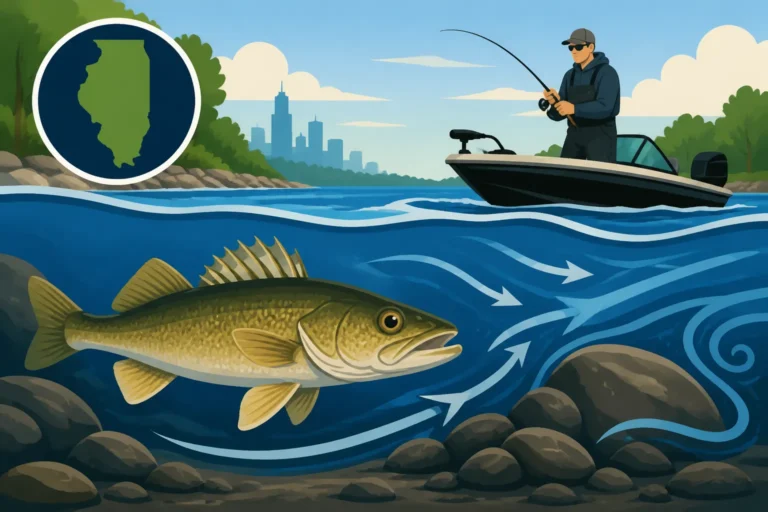
First, look for depth changes. Walleye frequently patrol breaklines, which are abrupt changes in depth where shallow water meets deep. These can be sharp drops, ledges, or shelves. Your boat allows you to parallel these breaklines, presenting your lures along their entire length. Humps and points, especially those extending into deeper water, are also prime real estate. These offer fish a commanding view of passing prey while providing easy access to different depths as conditions change. Don't forget submerged islands or rock piles; these provide excellent cover and attract baitfish, which, in turn, draws walleye. Lastly, in rivers, look for current breaks like eddies, seams where fast water meets slow, or the downstream side of wing dams and bridge pilings. The ability to anchor or use a trolling motor precisely to hold your boat on these spots is a game-changer.
Seasonal Movements and How to Adapt Your Boat Position
Walleye are migratory, moving through different parts of a lake or river depending on the season, primarily driven by spawning and feeding. Knowing these general patterns helps you target the right areas with your boat.
In early spring, as ice leaves the water, walleye will stage in deeper areas adjacent to their spawning grounds, which are typically rocky shoals, riprap, or tributary mouths. Your boat can position you right on these staging areas, often in 15-30 feet of water. As the water warms slightly, they move shallower to spawn. After spawning, which can be a bit of a tricky bite, they transition to post-spawn recovery, often moving back to slightly deeper, less pressured areas to recuperate before scattering to feed aggressively. During summer, walleye typically retreat to deeper, cooler water, often suspending over open water or relating to deep structure where oxygen levels are good. This is where your boat's ability to troll at specific depths becomes invaluable. Fall sees them moving shallower again as water temperatures drop, feeding heavily in preparation for winter. This fall feeding frenzy can offer some of the best opportunities for boat anglers, as walleye concentrate in predictable patterns on main lake points, large flats, and river channels. Understanding these seasonal shifts allows you to adjust your boat's location, ensuring you're fishing where the walleye are most likely to be.
Water Conditions and Walleye Activity
Walleye are notoriously sensitive to light, which is why they have those big, light-gathering eyes. This sensitivity heavily influences their activity levels and where they choose to position themselves. From your boat, you can observe these conditions and adjust your approach.
Clear water often pushes walleye deeper or into dense cover during the day, making them primarily low-light feeders around dawn, dusk, or at night. In these conditions, quieter approaches, lighter lines, and natural-looking baits presented subtly from your boat will be more effective. Conversely, in stained or murky water, walleye are more comfortable operating in shallower depths throughout the day, as the reduced light penetration acts like a natural filter. This can be fantastic for boat anglers who can cover large shallow flats. Temperature is another critical factor. Walleye are cool-water fish, generally preferring temperatures between 55 and 70 degrees Fahrenheit. Your boat's sonar or a handheld thermometer can help you find these optimal thermal bands. Sudden changes in weather, like a cold front, can shut down the bite, pushing walleye deeper and making them lethargic. Knowing How Water Temperature Affects Fish Activity is crucial for success. Your boat provides the mobility to search for more stable conditions or target areas where fish are less affected by these changes, such as deeper pockets or areas with consistent current.
Essential Gear and Boat Setup for Walleye Success
Having the right tackle and a properly outfitted boat can make all the difference when you're targeting walleye. It's not just about having any rod and reel; it's about having the right tools for the job, tailored to the specific techniques you'll be employing from your vessel.
Rods, Reels, and Line Choices for Boat Angling
When fishing for walleye from a boat, versatility is key, as you'll often be switching between techniques. You'll typically want a few different setups ready to go.
For trolling, which is a highly effective way to cover water from a boat, a medium-action rod, about 7 to 8 feet long, is ideal. These longer rods help absorb the shock of a strike and keep crankbaits running true behind the boat. Pair this with a baitcasting reel that has a reliable line counter; this is invaluable for consistently hitting the desired depth. For line, 10-12 pound monofilament or fluorocarbon is standard, though some anglers prefer braided line with a fluorocarbon leader for increased sensitivity and strength. Monofilament offers good stretch, which can be forgiving when trolling with crankbaits, while fluorocarbon's low visibility and abrasion resistance make it excellent in clear water. For jigging, a sensitive, medium-light to medium-action spinning rod, 6 to 7 feet long, is a go-to. A fast tip is crucial for detecting subtle walleye bites. Pair this with a smooth spinning reel spooled with 6-10 pound braided line, again with a fluorocarbon leader. The braid's no-stretch characteristic allows for incredible sensitivity, letting you feel even the lightest tap. When casting crankbaits or snap-jigging, a similar spinning or baitcasting setup, leaning towards a medium-heavy action for better lure control and hook-setting power, works well. Remember, having a few different Best Rods for Illinois Largemouth Bass and similar species will generally translate well for walleye, but fine-tuning for sensitivity is often a plus.
Must-Have Lures and Baits for Boat Fishing
The beauty of boat fishing is the ability to present a wide array of lures and baits effectively. Walleye can be picky, so having options is crucial.
Crankbaits are kings for trolling. Shad-style, minnow-style, and jointed crankbaits in various sizes and dive depths are essential. Brands like Rapala, Berkley, and Bandit offer a range of effective options. Colors can vary widely, from natural baitfish patterns in clear water to bright chartreuse or firetiger in stained conditions. Don't be afraid to experiment! Jigs are incredibly versatile and deadly when walleye are holding tight to structure or in current. ¼ to ½ ounce jigs, tipped with live bait like minnows, leeches, or nightcrawlers, are classic. Soft plastic paddle-tail or grub bodies can also be threaded onto jigs for added action. Bottom bouncers, paired with spinner rigs or snelled hooks tipped with worms or minnows, are excellent for covering bottom structure, especially in rivers or deeper lakes. These keep your bait just off the bottom where walleye feed. When you're stocking up or looking for specific colors and sizes, checking a large online retailer like Amazon can provide an extensive selection to ensure you have what you need.
Critical Boat Electronics and Accessories
Your boat isn't just a platform; it's a mobile fishing machine, and its technology can be your greatest asset in finding and catching walleye.
A high-quality fish finder is non-negotiable. Look for models with GPS, sonar (2D, Down Imaging, and Side Imaging are all fantastic), and mapping capabilities. This allows you to not only see fish and structure directly beneath and beside your boat but also to mark waypoints, create custom maps, and navigate confidently. Brands like Humminbird and Lowrance offer excellent options. A good GPS will help you stay on course while trolling or drift, and return to productive spots quickly. A reliable trolling motor, particularly an electric bow-mount model with GPS Spot-Lock or anchoring features, is a game-changer. This allows you to precisely hold your boat position over a specific piece of structure, follow contour lines hands-free, or silently approach a shallow flat. This precision boat control is critical for presenting your baits effectively to finicky walleye. A sturdy anchor system is also important for holding your boat in current or on specific humps, especially when drift fishing isn't an option. When you're considering major investments like a new fish finder or a powerful trolling motor, remember that Amazon is a great resource for comparing features, prices, and reading user reviews before making a purchase.
Top Techniques for Catching Walleye from a Boat
Once you've got your boat rigged and your tackle ready, it's time to put it all into action. Catching walleye from a boat opens up a whole world of techniques that are simply impossible or far less effective from shore. Each method has its time and place, and mastering a few will greatly increase your success.
Trolling for Walleye: Covering Water Efficiently
Trolling is arguably one of the most productive ways to catch walleye from a boat, especially on larger lakes and reservoirs. It allows you to cover vast amounts of water and present your lures to actively feeding fish.
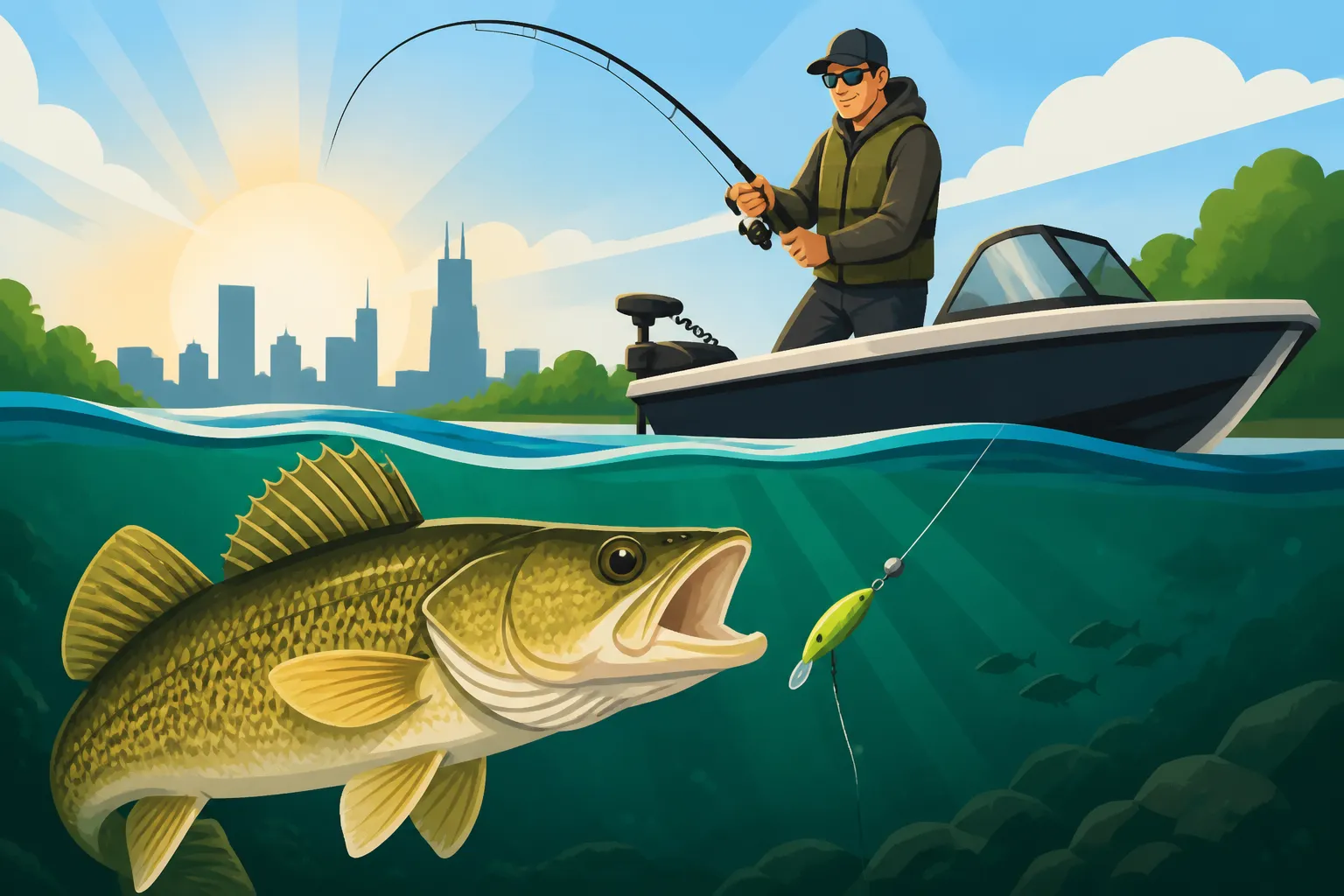
The basic idea of trolling is to pull lures behind your boat at a controlled speed and depth. Crankbaits are the most common choice for trolling, as they dive to specific depths based on their design, line diameter, and trolling speed. For deeper water, you might use planer boards to spread your lines out, preventing tangles and allowing you to cover a wider swath of water. This is particularly effective on expansive flats or along deep breaklines. Trolling speed is critical; generally, 1.5 to 2.5 miles per hour is a good starting point, but you'll need to experiment to find what the fish prefer on any given day. Your fish finder's speed-over-ground reading is essential here. Pay close attention to your electronics, looking for baitfish schools, individual walleye, and changes in bottom structure. When you mark fish or get a bite, slow down, turn the boat slightly, and try to make another pass through the exact same area. Knowing Walleye Trolling Techniques inside and out will lead to a lot more fish.
Jigging and Live Bait Rigs from a Boat
While trolling covers water, jigging and live bait presentations from a boat are about precision, targeting specific pieces of structure, or vertically presenting baits to walleye you've marked on your electronics.
Vertical jigging involves positioning your boat directly over a marked walleye or a productive piece of structure and dropping a jig straight down. This can be done by anchoring, using your trolling motor's Spot-Lock, or by slowly drifting. A ¼ to ½ ounce jig tipped with a minnow or soft plastic is standard. The technique is a series of lifts and drops, mimicking an injured baitfish. The bite is often subtle—a slight tap, a feeling of "weightlessness," or just a heavy feeling on the line. When drift fishing, you allow your boat to be pushed by the wind or current, dragging live bait rigs behind and beneath it. Bottom bouncers are excellent for this, keeping your bait just off the bottom. You can present a crawler harness, a live minnow, or a leech on a snelled hook behind the bouncer. This technique is fantastic for covering flats, humps, or channel edges, especially when you need to find scattered fish. For anglers wondering about Walleye Jigging Techniques, the key is often a light touch and paying attention to slight changes in line tension.
Casting to Structure and Cover
Sometimes, the most effective way to catch walleye from a boat is to cast lures to specific targets, much like bass fishing. This is particularly useful in shallower waters, around visible cover, or when fish are concentrated in small areas.
Target areas include submerged brush piles, weed lines, rocky shorelines, bridge pilings, or riprap banks. Shallow-diving crankbaits, lipless crankbaits, or even spinnerbaits can be highly effective when cast parallel to these features. Jigging raps or blade baits can be cast out, allowed to sink to the bottom, and then ripped up with a sharp rod snap before falling back down, enticing reaction strikes. When casting, use your boat's trolling motor to maintain stealth and position. Make accurate casts, let your lure reach the desired depth, and retrieve it with varying speeds and cadences until you find what the walleye are responding to. This technique is often more active and requires a keen eye for reading visible and subsurface structure.
Navigating Illinois Waters for Walleye from Your Vessel
Illinois offers a fantastic array of lakes and rivers where walleye thrive, and having a boat allows you to access the best of them. But simply having a boat isn't enough; you need to know how to navigate these specific waters and interpret what your electronics are telling you to truly unlock their potential.
Key Illinois Lakes and Rivers for Boat Walleye Angling
Illinois boasts several premier walleye fisheries that are best explored by boat, each offering unique challenges and opportunities.
For vast expanses of water where trolling shines, look no further than the "Big Three" reservoirs: Rend Lake, Lake Shelbyville, and Carlyle Lake. While famous for other species, these lakes hold solid populations of walleye, particularly along their main lake points, old creek channels, and submerged humps. Your boat's ability to cover ground and present deep-diving crankbaits is essential here. Lake Michigan, especially the southern basin off the Chicago lakefront, offers unique opportunities for giant walleye, though they are often bycatch for salmon and trout anglers. The Illinois River and Mississippi River are also incredible walleye fisheries, particularly in their northern stretches. The Mississippi River, in particular, offers fantastic fishing for both walleye and sauger. Knowing Illinois Walleye Fishing Season on the Mississippi River can help you time your trips perfectly. On these rivers, your boat allows you to navigate current, fish eddies, and target wing dams, all prime walleye habitat. Many smaller, intensively managed lakes across the state also receive regular stockings of walleye, and a boat can help you access mid-lake humps and deeper breaks that shore anglers can't reach. To get started, consider exploring Illinois Walleye Stocked Lakes: Where IDNR Puts Fish Each Year.
Reading the Water and Finding Walleye Hotspots
Your boat's electronics are your eyes underwater, and learning to interpret what they're showing you is a learned skill that pays huge dividends.
Start by systematically scanning areas known for holding walleye. Use your side imaging to sweep wide areas for structure like rock piles, timber, or subtle depth changes. Once you identify a promising area, switch to down imaging or 2D sonar to get a clearer picture of what's directly beneath your boat. Look for distinct arches (fish) or bait balls. Walleye will often appear as strong, elongated arches, sometimes suspended just off the bottom or nestled tight into cover. Pay attention to contour lines on your GPS mapping. Walleye love following these changes in depth. Mark any productive spots as waypoints on your GPS. This allows you to return to those specific locations in the future or make repeated passes while trolling or jigging. Remember, fish move, so be prepared to adapt. If you're not seeing fish or getting bites in one spot, move on and keep scanning. Finding How to Find Walleye in Current is particularly crucial in river systems, where current breaks are key.
Boat Control and Positioning for Optimal Walleye Presentation
The ability to control your boat precisely is as important as your lure selection. Good boat control ensures your bait is in the strike zone for as long as possible.
When trolling, maintaining a consistent speed and course is paramount. Use your main motor or kicker motor for propulsion, and your trolling motor for fine-tuning speed and steering, especially when following contour lines or making gentle turns. For jigging or drift fishing, your trolling motor with its Spot-Lock feature is your best friend. It allows you to virtually anchor your boat over a specific spot without actually dropping a physical anchor, which is noisy and can spook fish. This is especially useful in windy conditions or strong currents. If you don't have Spot-Lock, learning to use your anchor effectively, often deploying two anchors (one from the bow, one from the stern) in rivers to hold your boat steady and reduce swing, is crucial. When casting, use your trolling motor to keep your boat parallel to the structure you're targeting, allowing for longer, more accurate casts. Always try to approach a spot quietly, especially in shallow water, using your trolling motor instead of your main engine to avoid disturbing the fish. Mastering these boat control techniques will put your lures in front of more walleye, more often.
Walleye Fishing Season & Regulations from a Boat in Illinois
Understanding the regulatory landscape and how the fishing season impacts walleye activity is vital for any boat angler in Illinois. These rules and seasonal nuances directly affect when and where you can effectively target these prized fish.
Illinois Walleye Size and Catch Limits for Boat Anglers
Illinois has specific regulations in place to manage its walleye populations, ensuring sustainable fishing for years to come. These limits vary by water body, so always check the site-specific regulations for the lake or river you plan to fish from your boat.
Generally, there is a statewide minimum size limit for walleye, which means any fish caught under that length must be immediately released. Often, this is a 14-inch minimum, but it's not uncommon to find exceptions. For instance, some lakes might have a protected slot limit, where fish within a certain size range must be released, allowing smaller fish to grow and larger fish to contribute to spawning. There will also be a daily creel limit, dictating how many walleye you can keep per day. Exceeding these limits can result in penalties, so always be mindful. It's also important to know that Illinois Walleye Minimum Size Limit of 14 Inches is a general guideline, but specific waters might have more restrictive rules to manage their unique fisheries. Before heading out in your boat, always consult the current Illinois Fishing Information Guide for the specific body of water you intend to fish.
Illinois Fishing Season Calendar and Walleye Activity
While there isn't a closed season for walleye in most Illinois waters, certain times of the year offer better fishing opportunities from a boat due to the fish's natural lifecycle.
Spring, particularly post-spawn, is a prime time for walleye fishing. After they've completed their spawning rituals, walleye often go on a strong feeding binge to regain energy. Your boat can access the shallow spawning areas or the deeper breaks where they recover. Early summer can also be excellent, as fish settle into their summer patterns and feed actively before the water gets too hot. During the dog days of summer, walleye often move to deeper, cooler water, making them a challenge but not impossible to catch from a boat, especially with precision trolling or deep jigging. As mentioned, fall is another peak season. Best Time of Day to Catch Walleye can also shift throughout the year, with early morning and late evening often being most productive, especially during brighter days. Knowing the general patterns for Illinois Fishing Seasons Guide helps you decide when to launch your boat for the best chance at walleye.
| Technique | Ideal Conditions | Best Boat Setup | Preferred Lures/Baits | Key Advantage from Boat |
|---|---|---|---|---|
| Trolling | Large lakes, open water, searching for fish | Main motor/kicker, line counter reels, rod holders | Crankbaits (diving, jointed), spinner rigs | Covers vast areas, consistent depth presentation |
| Vertical Jigging | Over specific structure, marked fish, current | Trolling motor (Spot-Lock), sensitive rod/braid | Jigs (tipped with live bait/plastics), blade baits | Pinpoint accuracy, direct presentation |
| Drift Fishing | Wind/current present, scattered fish, flats | Trolling motor (speed control), bottom bouncers | Crawler harnesses, live minnows, leeches | Covers broad areas while maintaining bottom contact |
| Casting | Shallow cover, visible structure, river banks | Trolling motor (stealth), accurate casting setup | Shallow crankbaits, lipless cranks, spinnerbaits | Targets specific ambush points, reaction strikes |
Disclaimer
This article is for general informational purposes only and does not constitute professional advice. Laws, prices and regulations vary by location and change over time. Consult a qualified professional for guidance on your specific situation.