Best Crappie Jig Colors for Stained Water
We’ve all been there: you pull up to your favorite crappie spot, full of anticipation, only to find the water looks less like a clear, inviting pond and more like a chocolate milkshake. Stained water, whether it’s muddy after a heavy rain or tea-colored from tannins, can throw a real wrench in your crappie fishing plans. It leaves many anglers wondering what in the world crappie can even see down there, let alone what they’ll bite. This comprehensive guide is here to unravel the mystery, showing you precisely which crappie jig colors are your best bet when the water isn't as clear as you'd like, giving you actionable strategies to still fill your cooler.
Understanding Stained Water and Its Impact on Crappie Fishing
Before we dive into the rainbow of jig colors, it's really important to understand what "stained water" actually means for crappie. It's not just murky; it's about light penetration and how fish perceive their world in reduced visibility.
What "Stained Water" Really Means for Anglers
When we talk about stained water, it's a broad term that covers a few different scenarios, and each can present its own challenges. You might encounter water that's truly muddy, often after a good Illinois thunderstorm or significant river flow, where suspended sediment like clay and silt makes it opaque. This type of stain severely limits light penetration and visibility. Then there's tannin-stained water, which is common in many of our natural lakes, rivers, and backwater areas, especially those surrounded by cypress trees or peat bogs. This water often has a brownish, tea-like tint, but unlike muddy water, the particles are dissolved organic matter, not suspended solids. It's less opaque than muddy water but still filters light significantly. Finally, you might deal with algal blooms, where microscopic plant life gives the water a greenish or brownish hue. While this is a different kind of stain, it also reduces visibility for fish and anglers alike.
The critical factor across all these types is how much light makes it into the water column. Crappie are visual predators, and their ability to detect their prey largely depends on sight. In clear water, they can see fine details and subtle movements. In stained water, however, that visual range shrinks dramatically. They rely more on other senses, like the lateral line system, to detect vibrations and movement. But color, even in low light, still plays a significant role in making your jig stand out from the background and become something they can actively target. Thinking about Water Temperature and Fish Activity Guide can also give you insights into crappie behavior in different water conditions.
Why Color Matters So Much in Low Visibility
It might seem counterintuitive to obsess over color when the crappie can barely see, but believe me, it makes a huge difference. In stained water, the spectrum of light changes. Red light, for instance, is the first to be absorbed, meaning red jigs quickly appear dark or black at even shallow depths. Blue and green light penetrate further, but overall, there's just less light bouncing around.
What does this mean for crappie? They're looking for contrast and silhouette. A jig that stands out against the murky background is more likely to catch their eye. This could be a bright, fluorescent color that really "pops" in the available light, or it could be a dark color that creates a stark, easy-to-see silhouette against a lighter sky or the dim light coming from above. It’s less about a nuanced shade and more about making a statement that screams "eat me!" in a world of muted tones. Their vision is adapted for low light, but you still need to give them something distinct to hone in on.
The Best Crappie Jig Colors for Stained Water
When the water's murky, your tackle box should lean heavily towards a specific palette. Forget the subtle, natural colors you might use in gin-clear lakes; we're going for attention-grabbers.
High-Contrast and Bright Colors: The Visibility Kings
These are your go-to colors when light penetration is poor, because they simply show up better.
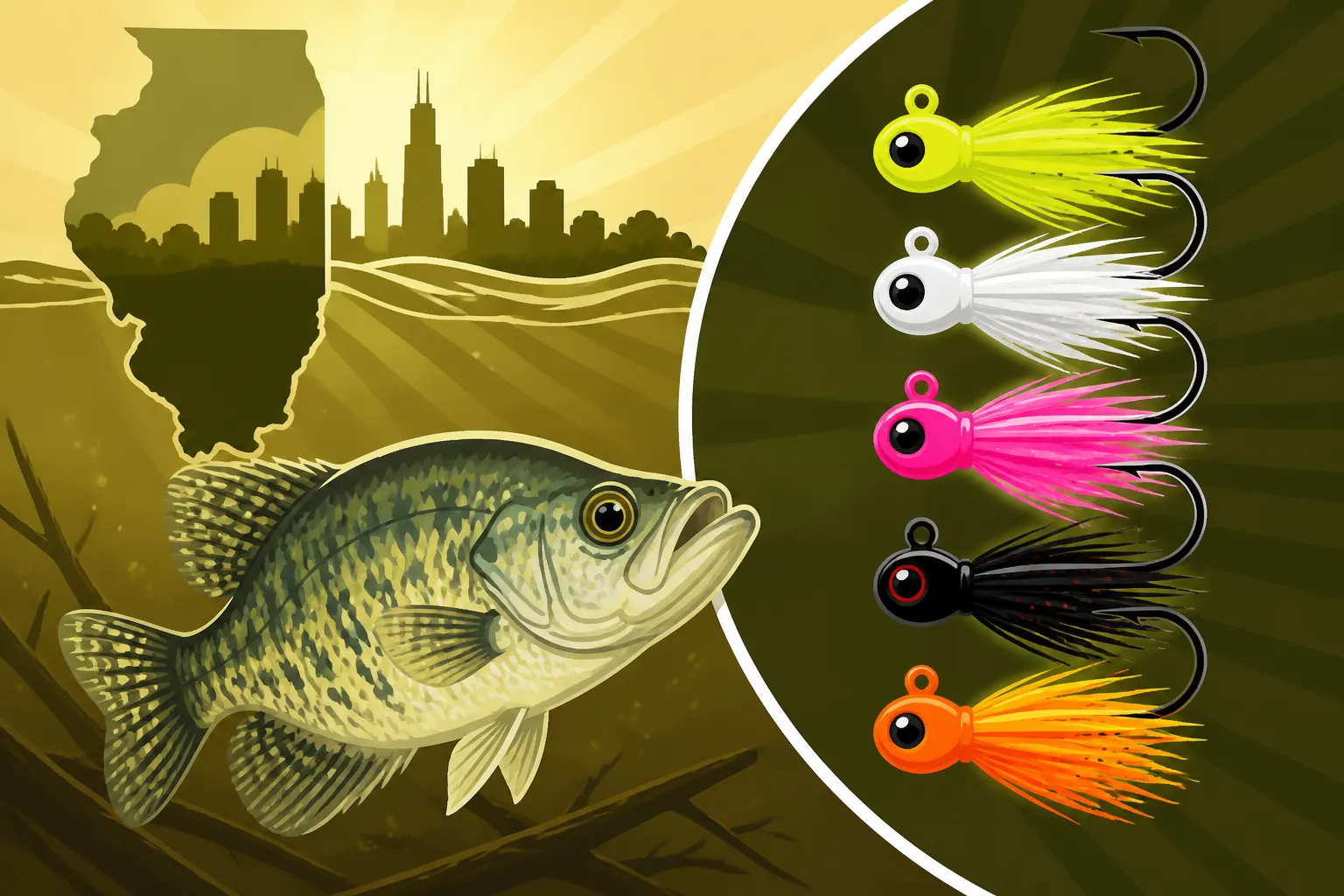
- Chartreuse: If there's one color that screams "stained water crappie magic," it's chartreuse. This vibrant yellow-green hue has an incredible ability to reflect and radiate what little light is available, making it highly visible to crappie. It creates a strong contrast against any dark or muddy background, effectively becoming a beacon in the murk. It's not just a popular color; it's a scientifically proven effective one because of its light-reflecting properties. Many anglers swear by a simple chartreuse jig body with a contrasting tail, or even an all-chartreuse plastic, especially when they're targeting crappie near structure in a tannin-stained river like the Kankakee. You can find excellent chartreuse crappie jigs on platforms like Amazon, often in multi-packs, making it easy to stock up.
- Orange/Hot Pink: These bright, almost fluorescent colors are also fantastic choices. Like chartreuse, they have a way of "glowing" in dim conditions. Hot pink, in particular, has seen a surge in popularity for crappie fishing in recent years, and for good reason – it flat out works. These colors provide a bold profile that crappie can spot from a distance, triggering their predatory instincts even when they can't make out fine details. Think about a hot pink jig dropped into a murky backwater slough on the Mississippi River; it stands out like a neon sign.
- White/Pearl: While not as "bright" as chartreuse or pink, white and pearl jigs offer a powerful contrast, especially on overcast days or in moderately stained water. They reflect available light, making them shimmer and appear larger. A white jig, often with a chartreuse or pink tail, can mimic many baitfish, providing both contrast and a natural profile. Many anglers prefer white or pearl when the water is stained but not completely opaque, offering a slightly more subtle yet still highly visible option. This is a common choice for How to Catch Crappie From the Bank when you're limited to simpler presentations.
Dark and Silhouetting Colors: Old Reliables
Sometimes, instead of trying to be seen with brightness, the trick is to create a clear, defined outline. This is where dark colors shine.
- Black: Yes, plain black can be incredibly effective in stained water. Why? Because it creates a perfect silhouette against the lighter sky above. When a crappie looks up from below, a black jig provides a sharp, easy-to-detect outline, even in very dark water. It's not reflecting light; it's absorbing it and creating a contrast that's undeniable. This is especially true on bright, sunny days when the sun might be piercing through the top layer of stained water, making lighter colors wash out but a black jig stands out sharply.
- Junebug/Dark Blue: Junebug, a very dark purple, or a deep dark blue offers a similar effect to black but with a subtle hint of color that can sometimes make a difference. These colors still create a strong silhouette but might offer a slightly different visual appeal if crappie are being finicky. They are excellent choices when the water has a moderate stain, such as the tea-colored waters found in parts of the Lake of Egypt, allowing for a defined profile that's not quite as stark as pure black.
Glow-in-the-Dark and UV Reactive Jigs
For those truly challenging conditions, or when you’re fishing deeper stained water, these specialized jigs can be game-changers.
- Glow-in-the-Dark: These jigs are designed to emit light, making them stand out in extremely low-light conditions, like early morning, late evening, or very deep, murky water. You "charge" them with a flashlight or UV light, and they'll glow for a period. This direct emission of light gives crappie a literal target to home in on. While they don't glow forever, a quick recharge can keep them active throughout your fishing session. This is particularly useful for Night Fishing Techniques for crappie, offering an unmistakable lure.
- UV Reactive: Many jigs on the market today incorporate UV-reactive pigments. This means they reflect ultraviolet light, which penetrates deeper into the water column than visible light. Even if humans can't see the UV "glow," fish often can, making these jigs appear brighter and more vibrant to crappie in stained or deeper water. Many of the chartreuse, pink, and white jigs you see on Amazon or at local bait shops are also UV reactive, giving you a double whammy of visibility. Always check the packaging for "UV" or "fluorescent" claims when shopping for jigs for stained water.
Here's a quick reference table for choosing jig colors in various stained water scenarios:
| Water Condition | Primary Recommended Colors | Secondary Options | Why They Work |
|---|---|---|---|
| Heavy Muddy Water | Chartreuse, Hot Pink, Black | Orange, Glow-in-the-Dark | High contrast, strong silhouette, light emission in extreme low visibility. |
| Tannin-Stained (Tea-Colored) | Chartreuse, White, Orange | Black, Junebug | Good light reflection, solid contrast, natural-looking silhouette. |
| Algae Bloom (Green Haze) | White, Chartreuse, Orange | Black, Pink | Stands out against green, offers contrast or bold silhouette. |
| Overcast/Low Light Stained | Chartreuse, Hot Pink, Black | Glow-in-the-Dark, White | Maximize visibility with brightness or sharp silhouette in reduced ambient light. |
| Deep Stained Water | Glow-in-the-Dark, UV Reactive, Black | Chartreuse, Hot Pink | Utilizes available light spectrum, emits light, or creates strong silhouette. |
Matching Jig Colors to Specific Stained Water Conditions
It’s not just about having the right colors; it’s about knowing when to use them. The type and degree of stain can dictate which color will perform best.
Post-Rain Runoff: Dealing with Muddy Waters
After a significant downpour, especially when rivers are high and lakes are getting a lot of runoff, the water can turn a soupy brown. This is perhaps the toughest condition for visual predators like crappie. In these scenarios, light penetration is minimal, and crappie are often hunkered down, feeling rather than seeing.
For freshly muddy water, your best friends are the most aggressive, high-contrast colors. Think nuclear chartreuse, super hot pink, or straight-up black. The goal is to create as much visual disturbance as possible. A chartreuse jig, particularly one with a white or orange accent, will offer the most visibility. If the mud is exceptionally thick, don’t hesitate to try glow-in-the-dark options, charging them frequently. The contrast of black can also be surprisingly effective, especially if you're fishing shallower waters where the faintest hint of light might still penetrate from above. Remember, in these conditions, crappie are often holding tight to cover, so you'll want to present your jig slowly and deliberately right in front of their faces. This is where mastering Crappie Jigging Techniques comes in handy.
Tannin-Stained Waters: The "Tea-Colored" Challenge
Many of Illinois' most productive crappie waters, particularly those in the southern part of the state like Rend Lake or parts of the Mississippi River backwaters, are naturally tannin-stained. This water often has a coffee-like or tea-colored appearance due to decaying organic matter. It's stained, but it's usually clearer than post-rain muddy water, allowing a bit more light penetration.
In tannin-stained water, you still want high-visibility colors, but you can sometimes get away with slightly less aggressive shades. Chartreuse remains a top contender, but white or pearl can also be incredibly effective, offering a clean, bright contrast against the brownish water. Orange is another strong performer here, mimicking some natural food sources. You might also find success with junebug or a dark blue if crappie are shying away from brighter colors. The key here is experimentation. Start with chartreuse, then try white, and if those aren't getting bites, switch to a darker silhouette. Understanding the Best Crappie Fishing Lakes in Illinois can often clue you into typical water conditions there.
Algae Bloom Waters: The Greenish Haze
Algae blooms can turn clear water into a cloudy green or brown soup, particularly in late summer or early fall. This type of stain can be tricky because the water itself isn't necessarily dirty with sediment; it's just teeming with microscopic plants.
When faced with an algae bloom, you generally want to select colors that will stand out against the greenish background. White and chartreuse are excellent choices because they provide a stark contrast. Bright orange or hot pink can also cut through the haze effectively. Sometimes, a jig that has a combination of colors, like a chartreuse head with a white body, can offer multiple points of visibility. You might also find that darker colors, like black, create a strong silhouette against the lighter, greenish water, making them visible to crappie from below. Because the algae can also affect oxygen levels and fish activity, sometimes a slower presentation is also needed here.
The Importance of Trial and Error and Jig Size
No matter how much science or anecdotal evidence points to a specific color, crappie can be fickle creatures. What worked yesterday, or even an hour ago, might not work now. That's why trial and error is your absolute best friend when fishing stained water.
- Experiment with Colors: Don't be afraid to change jig colors frequently if you're not getting bites. Start with your confidence color (probably chartreuse), and if nothing, switch to white, then hot pink, then black. Carry a good variety in your tackle box, maybe something like the Berkley Gulp! Alive! Minnows, which offers both visual and scent appeal. A well-stocked tackle box from Amazon, featuring a wide range of colors, is essential for adaptability.
- Varying Jig Size: In stained water, a slightly larger jig profile can sometimes be more noticeable to crappie. If a 1/32 oz jig isn't getting attention, try bumping up to a 1/16 oz or even a 1/8 oz jig head, especially if you're using a bigger soft plastic body. The increased bulk creates a bigger target for the crappie to see and feel. However, don't go too big; crappie have relatively small mouths, so you still need a hook they can easily inhale.
- Consider Jig Style: Beyond color, the style of your jig body can also play a role. A soft plastic with a paddle tail or a curly tail can create more vibration in the water, adding another sensory cue for crappie to detect. This is particularly useful in heavily stained water where visual cues are at their lowest.
Presentation is Key: Beyond Just Color
Even with the perfect jig color, your presentation can make or break your crappie day in stained water. Crappie might not be able to see as far, but they can certainly feel and react to what's happening nearby.
Speed and Action in Stained Water
When the water is murky, crappie's reaction time might be slower because they're relying on their lateral line more than their eyes. This means a slower, more deliberate presentation is usually more effective.
- Slow Down: Don't rip your jig through the water. Instead, try a slow, steady retrieve, or simply let the jig sit still for longer periods. Crappie need more time to locate and commit to your offering. If you're using a bobber, allow plenty of pause time between twitches. If you're jigging vertically, subtle lifts and drops are often better than aggressive snaps. This slow approach is often recommended for How to Find Crappie Beds in Spring when fish are still somewhat lethargic.
- Subtle Action: Instead of huge, sweeping rod movements, opt for small, gentle twitches. The goal is to make the jig appear like an easy meal that's struggling or meandering, not trying to escape quickly. A very slow, horizontal retrieve can sometimes be deadly, as the jig just slowly glides through their strike zone. Thinking about The Best Time of Day to Catch Crappie can also influence your presentation, as crappie are often more active during low light, which mimics stained water conditions.
Scent and Vibration: Boosting Your Appeal
Since visual cues are diminished, appealing to a crappie's other senses becomes crucial.
- Add Scent: This is a no-brainer for stained water. Many crappie soft plastics come pre-infused with scent, but you can always add more. Commercial crappie attractants, gels, or sprays can be applied directly to your jig. The scent trail gives crappie an additional way to locate your bait, guiding them to it even if they can't quite see it yet. Look for popular brands like Bobby Garland or Crappie Magnet, which often have excellent scent-infused options. You can easily find a variety of scent options for your crappie jigs on Amazon.
- Enhance Vibration: While jig color is key, movement creates vibration, and vibration is something crappie can detect with their lateral line. Using soft plastics with paddle tails, curly tails, or even adding a small spinner blade to your jig can increase the amount of vibration your lure emits. The subtle thump of a paddle tail or the flash and whirl of a blade can be enough to draw a crappie in from a surprising distance in murky water. These little extras can truly make a difference in getting those crucial bites when conditions are tough.
Remember that crappie will often move shallower in stained water to find better light conditions and warmer temperatures, especially during the Illinois Crappie Spawn Season Guide. This means your jig presentation might be effective closer to the banks or shallow cover. Don't be afraid to fish shallower than you normally would in clear water, and always keep an eye on your fish finder if you're on a boat; crappie will often show up as faint arches tight to structure.
By understanding how light behaves in different types of stained water and selecting the appropriate high-contrast or silhouetting jig colors, you can turn a challenging fishing day into a successful one. Combine that with a slow, deliberate presentation and a boost of scent and vibration, and you'll be well on your way to catching crappie, no matter how murky the water gets.
Disclaimer
Fishing conditions and regulations in Illinois can change. Always consult the latest Illinois Department of Natural Resources (IDNR) fishing guide for current rules, regulations, and specific site-specific advisories before heading out. The information provided in this guide is for general informational purposes only and does not constitute professional advice.