Best Windy-Day Bass Spots on Carlyle Lake
There’s nothing quite like the excitement of a planned fishing trip, only to wake up to a blustery, windy day. On a vast body of water like Carlyle Lake, that wind can feel like a real nemesis, making boat control a nightmare and seemingly scattering the fish. But don't let a stiff breeze dampen your spirits! This guide will break down exactly how to turn those windy conditions into a bass-catching advantage, helping you pinpoint the best spots and tactics on Carlyle Lake when the wind kicks up.
Understanding Carlyle Lake's Wind Dynamics for Bass Fishing
Wind isn't just an annoyance; it's a powerful force that fundamentally changes how fish behave and where they position themselves. On a lake as large and open as Carlyle, understanding these dynamics is paramount to finding success, especially when targeting bass.
Why Wind Matters for Bass Fishing
When the wind whips across the surface of Carlyle Lake, it creates a whole cascade of effects below. First and foremost, it pushes and concentrates baitfish. Think about it: tiny shad and minnows struggle to swim against a strong current created by the wind, so they naturally get blown into certain areas. Where the baitfish go, the bass usually follow, looking for an easy meal. This means a seemingly chaotic surface can actually be a sign of a feeding frenzy just beneath.
Beyond baitfish movement, wind also oxygenates the water, particularly in areas where waves crash against structure. This influx of fresh oxygen can invigorate bass, making them more active and willing to strike. It also creates a "current" effect, which bass use to their advantage, similar to how river smallmouth position themselves to ambush prey. The chop on the surface also breaks up light penetration, offering bass a sense of security and better ambush cover, making them bolder and less wary of shadows or your boat. Ignoring the wind's influence is like trying to find a needle in a haystack; embrace it, and you'll narrow down your search considerably.
Reading the Wind on Carlyle Lake
Carlyle Lake, being Illinois's largest man-made lake, has distinct features that influence how the wind impacts different areas. Knowing how to "read" the wind involves more than just noting its direction. You need to consider the fetch – the distance the wind travels over open water – and how that interacts with the lake's many points, coves, and rip-rap stretches. A strong southerly wind, for instance, might create significant chop on the main lake, pushing baitfish and oxygen along the northern shorelines, making them prime targets. Conversely, areas directly opposite the wind (the leeward side) will be much calmer, offering different but equally valuable opportunities.
Checking reliable weather forecasts for wind speed and direction before you even launch is non-negotiable. Look for sustained wind directions and gust predictions. Once on the water, observe the whitecaps, the direction of debris, and how your boat naturally drifts. These real-time observations, combined with your pre-trip research, will tell you exactly which parts of the lake are getting the most wind exposure and which are the most sheltered. Understanding these patterns is your first step to unlocking some of the best bass fishing spots.
Prime Windy-Day Bass Havens on Carlyle Lake
When the wind howls on Carlyle Lake, you don't just fish anywhere. You need to seek out specific features that either benefit from the wind's action or offer crucial protection. The lake's vastness provides a variety of options, from exposed points to calm, tucked-away coves.
Targeting Wind-Blown Shorelines and Points
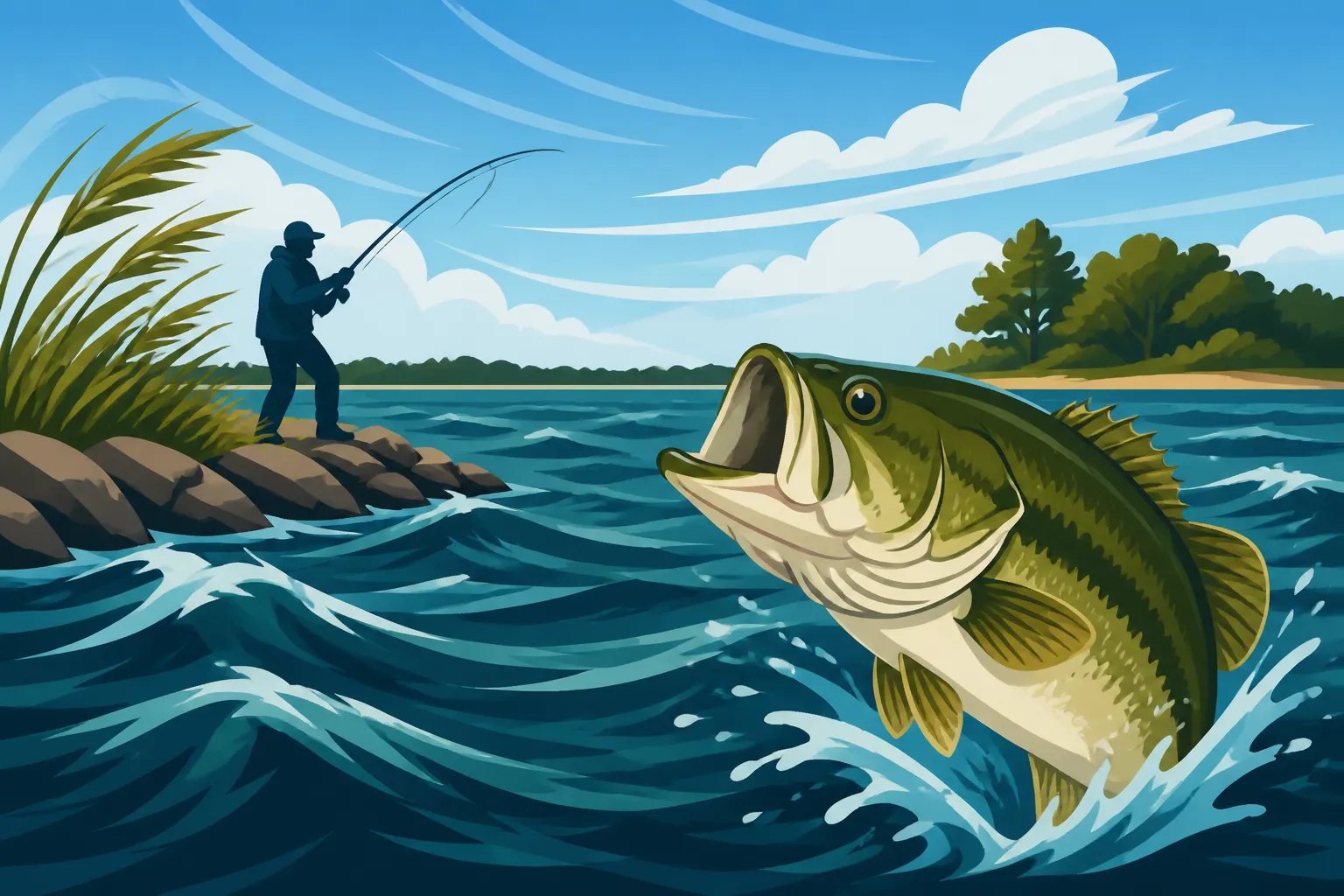
Wind-blown shorelines and points are often the absolute best places to start your search for active bass on Carlyle Lake. Why? Because the relentless pounding of waves against these structures dislodges baitfish, crawfish, and other forage, sending them tumbling into the water column. The turbulence also churns up the bottom, creating a murky "food cloud" that attracts smaller organisms, which in turn attract baitfish, and ultimately, hungry bass. This makes these areas dynamic feeding zones.
On Carlyle Lake, look for points that extend far out into the main lake, especially those with rock piles, rip-rap, or even submerged timber. The areas around the main lake points near Allen Branch or Keyesport, particularly where rip-rap provides ample cover, are excellent examples. These hard structures absorb the wave energy, creating current seams and eddies where bass can comfortably sit and ambush prey. Don't be afraid to fish directly into the waves, as this is often where the most aggressive fish are positioned, facing into the "current" and waiting for an easy meal. For information on specific access points, check out our guide on the Best Boat Ramps on Carlyle Lake.
When working these areas, presentation is key. You'll want lures that can be cast accurately into the wind and maintain their action in choppy water. Squarebill crankbaits that deflect off rocks, spinnerbaits with thumping Colorado blades, and even heavy jigs or Texas-rigged plastics are fantastic choices. The bass here are often not shy, so a slightly faster retrieve can trigger reaction strikes. Just remember that boat control can be a challenge, so consider using your trolling motor's spot-lock feature or a drift sock to keep your boat positioned correctly against the wind. For more general advice on how to improve your success, read up on Boat Fishing Techniques.
Finding Lee-Side Coves and Protected Areas
While wind-blown areas attract active bass, sometimes the bass (and the anglers!) seek refuge from the constant thrashing. This is where the "lee" side of structures comes into play. The lee side is the side of an island, point, or shoreline that is protected from the direct force of the wind, offering calmer water. These areas become magnets for bass looking to conserve energy or find clearer, more stable water conditions.
On Carlyle Lake, many coves and pockets tucked behind prominent points or islands can offer significant shelter from the prevailing winds. Think about the protected pockets within Allen Branch or the calmer stretches along the Eldon Hazlet State Park shoreline when the wind is blowing from the opposite direction. These areas might not have the same churning action as the wind-swept sides, but they often hold bass that are less aggressive but still willing to bite a well-presented lure. You might find bass relating to submerged brush piles, docks, or even simply the subtle depth changes in these calmer zones.
Fishing these protected areas often requires a different approach. Since the water might be clearer and the bass less frantic, a more subtle presentation might be in order. Wacky-rigged worms, shaky heads, or small jigs can be incredibly effective. Even slow-rolled spinnerbaits or subtle crankbaits can entice strikes. These spots are fantastic for when the wind is just too much to handle on the main lake, or when you want to switch tactics and target less aggressive, but still catchable, fish. Don't overlook them, as they can often produce surprisingly good catches, especially during Spring Bass Fishing Patterns or Fall Bass Fishing Patterns when bass might be transitioning.
Tactical Approaches for Windy Bass Fishing on Carlyle Lake
Successfully navigating windy conditions on Carlyle Lake requires more than just knowing where to go; it demands a strategic approach to your gear and how you manage your boat. Anglers who master these tactics will consistently out-fish those who let the wind dictate their day.
Lure Selection and Presentation in Windy Conditions
Choosing the right lure for windy conditions is crucial for maintaining control and getting bites. Heavy baits are your friend, as they cast further and more accurately into the wind. Think about lures that have a compact profile or significant weight. Lipless crankbaits, for example, cut through the air and water quickly, making them excellent search baits on windy flats or points. Blade baits and heavy jigs also work wonders, allowing you to maintain bottom contact even with significant line bow from the wind.
Beyond casting, consider lures that create a strong vibration or flash, as the chop and reduced visibility make it harder for bass to see subtle presentations. Large spinnerbaits with oversized Colorado or Indiana blades create a powerful throb that bass can feel from a distance, even in murky water created by the wind. Deep-diving crankbaits can also be effective, especially if you can get them to deflect off submerged structure. For clear water conditions, refer to our Best Bass Lures for Clear Water guide, and for murkier scenarios, consider the Best Bass Lures for Murky Water.
Finally, line choice is vital. Braided line has less stretch and a thinner diameter for its breaking strength, helping you maintain better contact with your lure in windy conditions. A fluorocarbon leader can still provide stealth in clearer water. Always remember to make shorter, more controlled casts when the wind is directly in your face or at your back, and use the wind to your advantage when it's blowing across your casting hand.
Here's a quick reference for common lure types and when to use them:
| Lure Type | Best Conditions | Presentation Tips |
|---|---|---|
| Spinnerbaits | Choppy, stained water; around cover | Thump through cover, slow roll, reaction strikes |
| Crankbaits | Open water, points, rip-rap, varying depths | Deflect off structure, vary retrieve speed |
| Lipless Cranks | Windy flats, sparse grass, reaction bites | Rip and pause, steady retrieve |
| Jigs/Texas Rigs | Bottom contact, heavy cover, calmer pockets | Slow hops, drag, pitch into cover, accurate casts |
| Bladed Jigs | Wind-blown grass, open water, reaction strikes | Steady retrieve, yo-yo retrieve |
Boat Control and Positioning Strategies
Boat control is perhaps the most challenging aspect of fishing on a windy Carlyle Lake. A strong wind can make it nearly impossible to hold your boat in position, drift too quickly, or make accurate casts. However, with the right techniques and equipment, you can turn this challenge into an advantage.
Modern trolling motors with GPS anchoring features, like Minn Kota's Spot-Lock or Lowrance's Ghost, are absolute game-changers. They allow you to hold your boat precisely on a spot, freeing you up to focus on casting and presentation. If you don't have this technology, or for added stability, drift socks (also known as sea anchors) are indispensable. Deploying one or two drift socks can significantly slow your boat's drift, allowing you to thoroughly fish a wind-blown bank or point without getting pushed off too quickly. Position them strategically to control your drift speed and angle.
When fishing wind-blown shorelines, try to position your boat slightly upwind of your target area and let the wind help you cast into the zone. Or, if you’re trying to fish parallel to a bank, try to quarter the wind with your trolling motor, constantly adjusting to maintain your desired speed and distance from the bank. Always remember to prioritize safety; if the waves become too large or dangerous, it's always better to seek sheltered water or call it a day. For more on safe practices, review the Illinois Boating Safety Equipment Checklist. If you're looking for new equipment, consider our guide on the Best Boats for Carlyle Lake Fishing.
Additional Tips for Success on Windy Days
Fishing in the wind on Carlyle Lake can be incredibly rewarding, but it pays to be prepared and observant. A few extra considerations can significantly improve your chances and ensure a more enjoyable day on the water.
Monitoring Weather and Water Conditions
Even after you've launched your boat, the weather on a large body of water like Carlyle Lake can change rapidly. Continuously monitoring weather conditions is vital, not just for safety but for adapting your fishing strategy. Keep an eye on cloud cover, wind direction shifts, and any approaching storm fronts. A sudden change in wind direction, for example, might mean that a previously unproductive spot is now getting the right amount of wave action to draw in bass.
Pay close attention to water temperature and clarity as well. Windy conditions can sometimes churn up sediment, leading to murkier water, which often favors darker, more vibrant lure colors and noisy presentations. Conversely, if the wind has been blowing consistently from one direction for several days, it might have cleared out baitfish and discolored water from a particular area, pushing bass elsewhere. Local knowledge is invaluable here; checking local fishing reports, often available through online platforms or even guide services like those listed on FishingBooker, can give you a real-time edge. These reports can provide insights into what the fish are currently biting and which areas are producing best under specific conditions.
Planning Your Trip and Gear Considerations
A successful windy-day trip to Carlyle Lake starts long before you even leave home. Thorough planning is key. This includes checking detailed wind forecasts, identifying potential wind-blown and lee-side areas on a map, and having a backup plan if conditions become too severe. If you're not confident in your ability to navigate the wind solo, considering a trip with a professional guide can be incredibly beneficial. Services like FishingBooker can help you find experienced local guides who specialize in bass fishing on Carlyle Lake and know exactly how to handle challenging conditions.
Beyond your standard fishing gear, a few items become essential for windy days. Heavier rods with stout backbones will give you more leverage for casting into the wind and fighting fish in choppy conditions. Braided line, as mentioned, is a huge advantage. A high-quality rain suit is also a must, as spray from waves can quickly soak you, even on a warm day. Polarized sunglasses will help you cut through the glare of the sun on the water, improving visibility. And don't forget a good marine radio or fully charged cell phone for emergencies. For an overall view of the fishery, check out our Carlyle Lake Fishing Guide. Remember, preparation allows you to focus on the fishing, not fighting the elements.
Disclaimer
Fishing conditions and regulations in Illinois can change. Always consult the latest Illinois Department of Natural Resources (IDNR) fishing guide and local advisories before heading out on the water. This information is for general guidance only and should not replace official regulations.