Carlyle Lake’s Best Catfish Spots Along the Dam
It's incredibly frustrating, isn't it, when you head out to a massive lake like Carlyle, hoping to reel in some hefty catfish, only to find yourself casting into seemingly barren waters? Many anglers know Carlyle Lake is a catfish haven, but figuring out exactly where those whiskered beauties hide, especially near the bustling dam area, can feel like a secret code only the locals know. This comprehensive guide is here to decode that mystery, pinpointing Carlyle Lake's best catfish spots right along the dam, equipping you with the knowledge, gear, and techniques to turn those frustrating outings into triumphant tales.
Why the Carlyle Lake Dam is a Catfish Magnet
Carlyle Lake, as Illinois’s largest man-made lake, offers incredible fishing opportunities, and the dam area, in particular, stands out as a prime location for catfish. It's not just a random coincidence; there are very specific reasons why channel, blue, and flathead catfish are drawn to this heavily engineered section of the lake. Understanding these dynamics is the first step to consistently finding success.
Structural Appeal and Food Sources
Think about it from a catfish's perspective. The Carlyle Lake dam isn't just a simple wall; it's a massive structure made of rock, concrete, and riprap that plunges into deep water. This creates a complex underwater landscape that catfish absolutely adore. The rough, rocky surfaces offer endless nooks and crannies for smaller baitfish to hide, providing a constant buffet for predatory catfish. These rocky areas also break up the current, creating eddies and slack water zones where catfish can rest and ambush prey without expending too much energy.
Beyond the physical structure, the dam area is a natural funnel for nutrients and bait. Water constantly flows through or over the dam, bringing with it a steady supply of food. Dead insects, plant matter, and stunned baitfish that pass through spillways or along the dam face become easy meals. This makes the entire vicinity a high-traffic dining area. Plus, the deeper water associated with the dam provides stable temperatures and oxygen levels, making it a comfortable home for catfish throughout the year. You'll often find these fish congregating around any significant change in depth or structure, and the dam provides that in spades, creating perfect ambush points for big, hungry cats.
Seasonal Patterns and Water Conditions
Just like us, catfish respond to the changing seasons and water conditions, and their behavior around the dam reflects this. In the spring, as water temperatures begin to rise, catfish become more active and start to move into shallower areas to feed heavily before the spawn. The dam area, with its varied depths and early warming pockets, becomes a hotspot. They'll often cruise the riprap edges, looking for emerging insects or stunned baitfish.
During the summer, when the main body of the lake might warm up considerably, the deeper sections near the dam can offer cooler, more oxygenated water, providing refuge for larger catfish, especially blue and flathead cats. Night fishing near the dam becomes exceptionally productive as catfish move into shallower feeding areas under the cover of darkness. Don't forget to check out the Best Time of Day to Catch Catfish for more insights on prime angling hours.
As fall approaches and water temperatures cool, catfish will again feed aggressively, bulking up for winter. They often stack up in deeper holes and along the dam's contours. Even in winter, when ice forms over much of the lake, areas near the spillway that remain open, or deeper sections beneath the ice, can hold concentrations of fish. Understanding these seasonal shifts, coupled with checking real-time water levels and discharge rates from the dam, will dramatically increase your chances of finding fish. A reliable source like FishingBooker often provides information about seasonal catches in specific lake sections, which can be invaluable for planning your trip.
Prime Catfish Hotspots Directly Along the Dam Structure
Now that we understand why the dam is so good for catfish, let's get down to the nitty-gritty of where to cast your line. The Carlyle Lake dam is a large area, but certain sections consistently produce more fish than others.
The Riprap Face of the Dam
The long stretch of riprap that forms the face of the Carlyle Lake dam is a fantastic spot for all three major catfish species, but particularly for channel catfish and smaller flatheads. These rocks provide excellent cover and hold warmth, attracting baitfish. Anglers often find success by fishing directly on the bottom, close to where the riprap drops off into deeper water.
From the east side near the Dam East Recreation Area all the way to the west side near the Dam West Recreation Area, the riprap is active. Look for subtle changes in the rock size or breaks in the uniformity, as these often indicate underwater structure where fish might hold. The base of the riprap, where it meets the softer lake bottom, is a critical zone. Often, there's a slight trench or deeper channel created here by currents, and catfish love to patrol these areas. When fishing from shore, try casting parallel to the dam rather than straight out, allowing your bait to sit longer in these productive zones. If you're in a boat, use your sonar to identify submerged rock piles or abrupt depth changes along the riprap, then anchor up-current and let your bait drift naturally into these holding areas. The sheer length of the dam means you can often find a quiet spot even on busy days.
Spillway Outflow and Tailwater Fishing
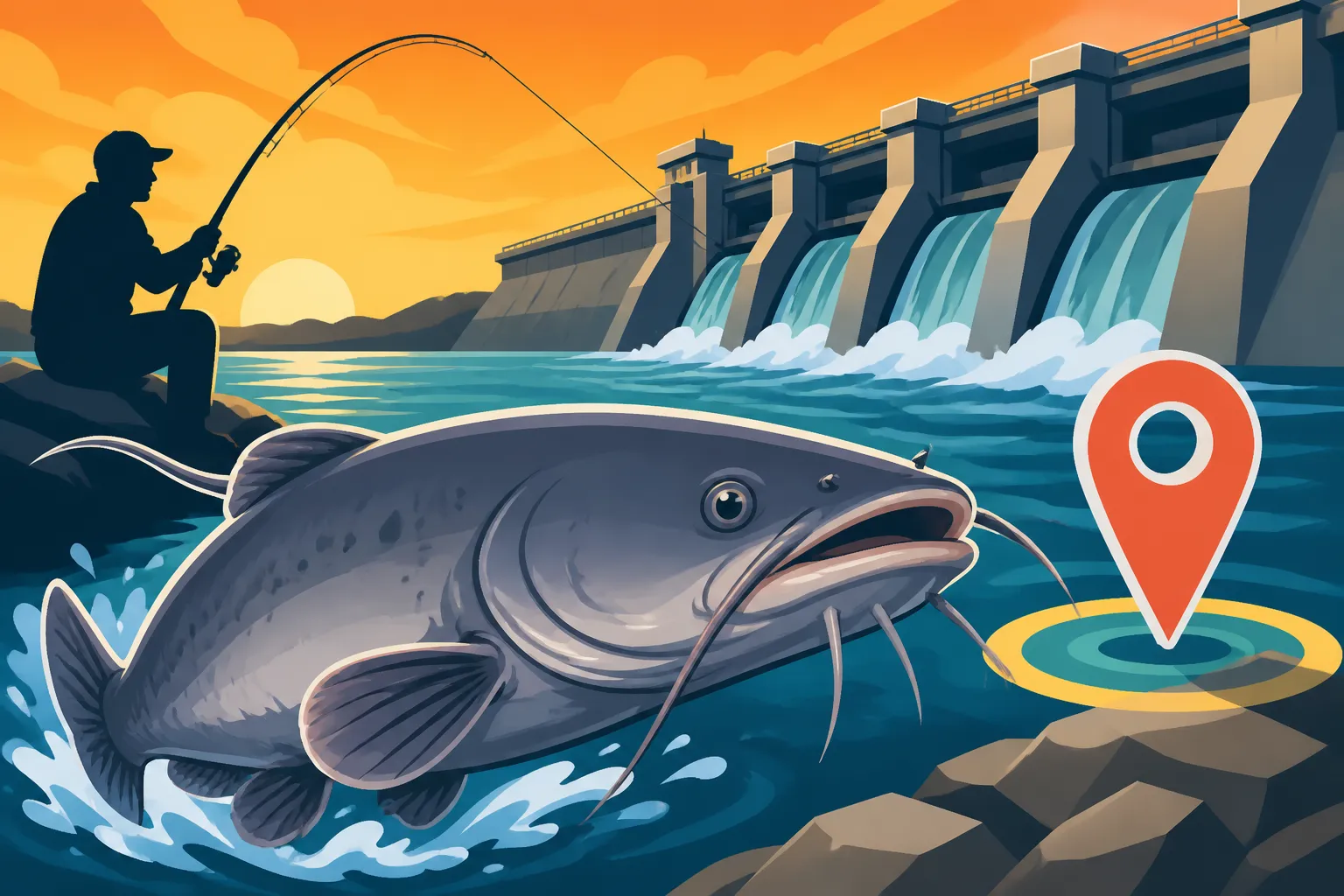
When the spillway gates at the Carlyle Lake dam are open, and water is being released into the Kaskaskia River, the tailwater area below the dam becomes an absolute magnet for catfish. This rushing water disorients baitfish and creates powerful currents that sweep food downstream, turning the area into a feeding frenzy for waiting catfish. This is where you'll often find some of the largest blue and flathead catfish in the system, taking advantage of the easy meals.
Fishing the tailwaters requires a bit more caution due to the strong currents, but the rewards can be immense. Look for eddies, current breaks, and seams where the fast water meets slower water. Catfish will often position themselves in these calmer zones, facing upstream, waiting for food to be carried to them. The area directly below the main discharge gates can be excellent, but also highly turbulent. Many anglers find success a bit further downstream, where the water begins to settle but still maintains a strong current. This is an ideal spot for strong bottom-fishing techniques. Be sure to check the Illinois Fishing Regulations Overview for any specific rules or restrictions on fishing very close to the spillway structures, as safety is paramount in these high-flow areas.
Near the Spillway Gates and Structures
Even when the spillway gates aren't actively discharging water, the concrete structures, bridge pilings, and associated riprap leading up to and immediately around the spillway gates themselves are excellent holding spots for catfish. These man-made features offer significant vertical structure and shade, which catfish appreciate, especially on sunny days. The corners and depressions where current might swirl or eddies form are prime ambush points.
You'll often find fish tucked in tight against the concrete abutments or under the bridges. While direct access might be restricted in some immediate spillway areas for safety, there are often designated fishing spots nearby that allow safe access to these productive zones. The deeper holes scoured out by historical water releases can hold significant numbers of larger fish. Consider using sonar if you're boating to identify these deeper pockets. For shore anglers, long casts targeting the edges of these structures are key. Remember that different species might prefer slightly different holding patterns; channel cats might roam more, while flatheads often prefer to hug tight to heavy cover.
Essential Gear, Bait, and Techniques for Dam Catfishing Success
Having the right gear and knowing how to use it effectively is crucial when targeting catfish, especially in the challenging environment of the Carlyle Lake dam area. Strong currents and potentially large fish demand specific tackle and refined techniques.
Recommended Tackle and Rigging
When fishing for catfish around the dam, you're going to need robust tackle. Forget your ultralight panfish setup; this calls for heavy-duty equipment.
- Rods: Look for medium-heavy to heavy-action rods, typically 7 to 10 feet long. Shorter rods (7-8 ft) are good for boat fishing, while longer rods (9-10 ft) are excellent for shore casting, helping you cast further and keep your line clear of obstructions. Brands like Ugly Stik or Berkley Big Game rods are popular for their durability and backbone.
- Reels: A stout spinning reel in the 6000-8000 series or a robust baitcasting reel (like an Abu Garcia Ambassadeur 6500 or a Penn Squall) with a smooth drag system is essential. You need something that can handle heavy lines and big fish.
- Line: Spool your reels with 20-50 lb test monofilament or braided line. Braided line offers superior sensitivity and strength for its diameter, which is great for feeling subtle bites in current and for setting the hook. However, its lack of stretch can be a disadvantage if you're not careful. Monofilament offers more stretch, which can act as a shock absorber. A 30-40 lb test monofilament is a solid all-around choice. For specific applications, heavier leaders of 50-80 lb fluorocarbon can prevent abrasion on rocks and resist sharp catfish teeth. Many anglers will find the Best Rods and Reels for Illinois Anglers article a valuable resource for selecting their gear.
For rigging, the slip-sinker rig (Carolina rig) is a perennial favorite for bottom fishing. It consists of an egg sinker or no-roll sinker above a swivel, followed by a leader (12-36 inches) and a hook. This allows the fish to take the bait without feeling the weight of the sinker. A three-way swivel rig is excellent in stronger currents, allowing you to present bait near the bottom while keeping your line away from snags. Simply tie your main line to one eye, a sinker leader to another, and your hook leader to the third.
Best Baits and Rigs for Carlyle Lake Catfish
The dam area's rich food sources mean catfish can be enticed by a variety of baits.
- Cut Bait: This is arguably the king of catfish baits, especially for blue and flathead catfish. Shad, skipjack herring, or even bluegill (where legal to use as bait) cut into chunks release strong scent trails that catfish can't resist. Fresh cut bait is always best. Look for articles on Best Bait for Channel Catfish From the Bank for more detailed rigging advice.
- Stink Baits/Prepared Baits: For channel catfish, especially, commercially prepared stink baits, punch baits, or dip baits like those from Sonny's or Catfish Charlie, can be incredibly effective. They come in various forms (dough balls, pastes) and are designed to leach scent into the water.
- Live Bait: Live shad, bluegill, or large shiners are excellent for trophy flathead catfish. Flatheads prefer live prey, so presenting a lively baitfish near their ambush points along the riprap or in current breaks can be deadly. Hook them through the back or lips.
- Nightcrawlers/Worms: While not as selective for big cats, a gob of nightcrawlers can attract plenty of channel catfish and other panfish, making them a good all-around option, especially for beginners or when fishing for smaller eats.
When it comes to hooks, circle hooks (sizes 5/0 to 10/0) are highly recommended. They are designed to hook the fish in the corner of the mouth, reducing gut-hooking and making for easier, safer releases, which is important for conservation. Plus, you generally just let the fish hook itself; no need for a hard hookset.
Techniques for Different Catfish Species
Each catfish species has its own preferences, and tailoring your technique can make a huge difference:
- Channel Catfish: These are opportunistic feeders and will hit a wide variety of baits. They are often found cruising the riprap edges and flatter areas near the dam. Use cut bait, stink baits, or nightcrawlers on a slip-sinker rig, casting into current breaks or along drop-offs. They tend to be more active and responsive to scent.
- Blue Catfish: Blues are powerful, schooling fish that often prefer deeper water and strong currents, making the spillway tailwaters a prime location for them. Use large chunks of fresh cut bait (shad or skipjack) on heavy tackle. Look for them in deeper holes or current seams. They are known to hit baits aggressively. You can learn more about finding these giants in Illinois Blue Catfish: Where to Find the Biggest Ones.
- Flathead Catfish: These are ambush predators that prefer live bait and heavy cover. They'll often hug tight to the dam's riprap, submerged logs (if any are present), or concrete structures. Live bluegill or shad, presented on a stout slip-sinker rig right next to cover, is your best bet. Flatheads are solitary and territorial, so if you catch one, it's worth thoroughly working that spot. They are less prone to chasing down bait and prefer it brought to them. Understanding Catfish Bottom Fishing Techniques will be very beneficial here.
Remember, patience is key with catfishing. These fish often take their time to find and commit to a bait, so let your bait soak.
Navigating Regulations and Enhancing Your Overall Fishing Experience
A successful and enjoyable fishing trip isn't just about catching fish; it's also about respecting the resource and staying safe. Carlyle Lake, like all public waters in Illinois, has specific rules and safety considerations, especially around large structures like the dam.
Understanding Carlyle Lake's Specific Fishing Regulations
Before you even make your first cast, it's vital to be familiar with the Illinois fishing regulations. The Illinois Department of Natural Resources (IDNR) publishes an annual fishing information guide that details statewide rules as well as site-specific regulations for individual lakes and rivers, including Carlyle Lake. You can often find a copy at bait shops, IDNR offices, or download it from their website.
For catfish, there are usually statewide daily limits, but these can sometimes be modified for specific bodies of water. For example, while the statewide daily limit for Channel Catfish is 20, always double-check for Carlyle Lake specifically. Blue Catfish and Flathead Catfish also have specific limits. The Illinois Channel Catfish Daily Limit Explained and Illinois Flathead Catfish Limit of 10 Fish Per Day articles provide excellent details on what to expect. There might also be length limits on certain species.
It's also crucial to have your current Illinois Fishing License Guide for 2026. Fishing without a valid license can result in hefty fines and even loss of fishing privileges. Always carry your license with you, whether in digital or physical form. Ignoring regulations not only harms the fish population but can also lead to unpleasant encounters with conservation officers. A quick check of the IDNR website or the FishingBooker platform for local rules before your trip can save you a lot of trouble and ensure a responsible fishing experience.
Safety First While Fishing Near the Dam
Fishing near a large dam and spillway involves unique safety considerations that every angler must be aware of. The power of water is immense, and it's easy to underestimate the dangers.
- Current Awareness: If the spillway is releasing water, the currents can be incredibly strong and unpredictable. Never wade into or fish from areas that are signed as restricted or appear dangerous. Strong currents can sweep you off your feet or pull your boat into dangerous zones.
- Boat Traffic: The dam area can see a lot of boat traffic, especially during peak seasons. If you're fishing from a boat, maintain a safe distance from other vessels and always be aware of your surroundings. Use appropriate navigation lights if fishing at dawn, dusk, or night.
- Weather Changes: Large bodies of water like Carlyle Lake can experience rapid weather changes. Pay close attention to forecasts and be prepared for sudden storms, strong winds, or lightning. Seek shelter immediately if conditions deteriorate.
- Slippery Surfaces: The riprap and concrete around the dam can be incredibly slippery due to algae, mist, or recent rain. Wear appropriate footwear with good traction.
- Life Jackets: Always wear a life jacket, especially if you're in a boat or fishing in areas with strong currents. It's not just a recommendation; it's often a legal requirement in many situations.
- Designated Fishing Areas: Stick to designated fishing areas. They are usually marked for safety and provide the best access without infringing on operational areas of the dam. Respect any signs indicating no-fishing zones.
By prioritizing safety and adhering to all regulations, you ensure not only a more enjoyable day on the water but also contribute to the long-term health and accessibility of Carlyle Lake for all anglers. The Carlyle Lake Fishing Guide provides a broader overview of the lake's offerings, but the dam area truly is a unique spot for catfish.
Here’s a quick overview of the prime dam-side spots and best practices:
| Spot Name | Best Catfish Species | Key Features | Recommended Bait & Rigging | Best Time of Year | Access |
|---|---|---|---|---|---|
| Dam Riprap Face | Channel Catfish, Smaller Flathead Catfish | Rocky banks, depth changes, current breaks | Cut Bait, Stink Baits, Worms; Slip-sinker rig | Spring, Summer, Fall | Shore (Dam West/East Rec Area), Boat |
| Spillway Outflow/Tailwater | Blue Catfish, Large Flathead Catfish, Channel Catfish | Strong currents, eddies, deep holes, abundant baitfish | Large Cut Bait (Shad); Heavy Slip-sinker/3-way rig | Summer, Fall | Shore (downstream from gates), Boat |
| Near Spillway Gates/Structures | Flathead Catfish, Blue Catfish | Concrete abutments, bridge pilings, submerged cover | Live Bait (Bluegill, Shad), Large Cut Bait; Stout Slip-sinker rig | Spring, Summer, Fall | Shore (designated areas), Boat (with caution) |
Disclaimer
Please remember that fishing conditions and regulations can change frequently. Always consult the latest Illinois Department of Natural Resources (IDNR) fishing guide or website for the most up-to-date information on licenses, limits, and specific site regulations before you head out. Safety is paramount; be aware of your surroundings and exercise caution, especially when fishing near powerful structures like dams or spillways.