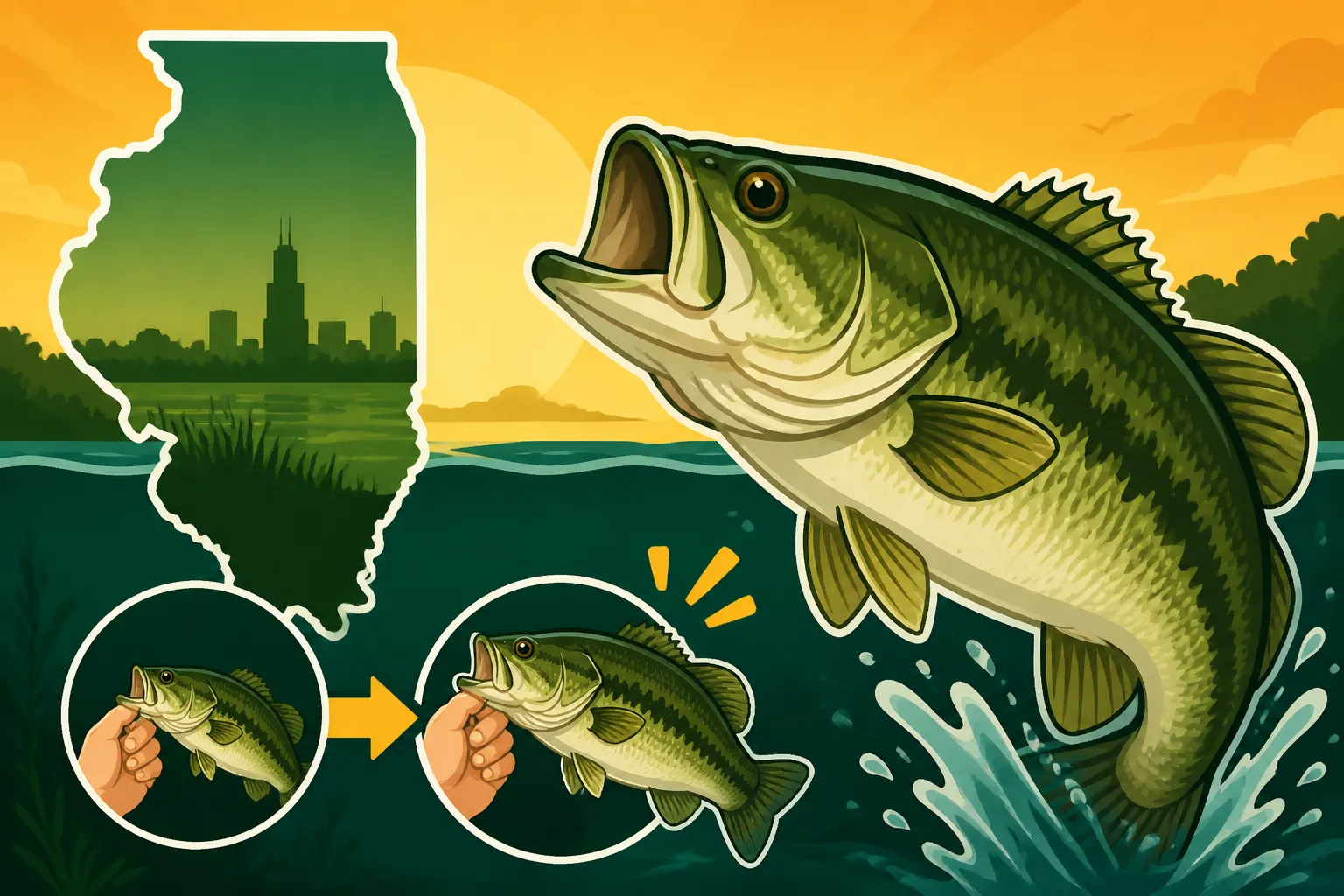
Is There a Minimum Size for Bass This Season?
It's a common question that haunts many Illinois anglers, especially when you're out on the water, rod in hand, and suddenly pull in a nice bass. You look at it, a flicker of uncertainty crosses your mind: "Can I keep this one? Is it big enough?" The truth is, fishing regulations can feel like a tangled mess of lines sometimes, especially when it comes to minimum size limits for different species and different bodies of water. This guide is here to untangle that confusion, specifically addressing whether there's a minimum size for bass this season in Illinois.
Understanding Illinois Bass Species and Their Regulations
Illinois is home to several bass species, but when most anglers talk about "bass," they're usually referring to largemouth bass. However, smallmouth bass and spotted bass also call our waters home, and their regulations, or lack thereof, can differ. It's crucial to understand which fish you've caught to comply with the rules.
Largemouth Bass Size Limits
Here's the often-surprising truth for many: there isn't a statewide minimum size limit for largemouth bass in Illinois. You read that right. In many general open waters across the state, you could, theoretically, keep a five-inch largemouth if you wanted to. This often catches folks off guard, as so many other states and even specific lakes within Illinois have strict length requirements. The Illinois Department of Natural Resources (IDNR) relies on site-specific regulations to manage bass populations effectively. This means that while a statewide minimum isn't in place, the specific lake, river, or pond you're fishing almost certainly has its own set of rules.
For example, many popular fishing destinations will implement a minimum length limit of 14 or 15 inches to protect younger fish and allow them to grow to maturity and reproduce. Other waters might have "slot limits," which dictate that you can keep fish below a certain size and above another, but not within a specific "slot" (e.g., no bass between 14 and 18 inches may be kept). These measures are designed to maintain a healthy population balance and ensure good fishing for years to come. It’s a bit of a jigsaw puzzle, but it’s done with good intentions. For more detail on the general rules, you might want to check out our article on No Minimum Size for Largemouth Bass in Illinois Waters.
Smallmouth Bass and Spotted Bass Regulations
When it comes to smallmouth bass and spotted bass, the situation is largely similar to their largemouth cousins. There isn't a universal statewide minimum size limit that applies to every single body of water in Illinois. Again, it all boils down to those site-specific regulations. Smallmouth bass, in particular, are often found in riverine environments or clear, rocky lakes, and these unique habitats might require different management strategies than a typical largemouth lake.
For instance, some rivers known for excellent smallmouth fishing might have a 14-inch minimum to protect the larger, more desirable fish, while other less pressured streams might have no length limit at all. Spotted bass, being less common and generally smaller than largemouths, are also typically managed with site-specific rules, if any. The key takeaway here is consistency: always assume there are rules for your specific location, rather than assuming a blanket statewide policy applies.
Why Regulations Vary by Water Body
It can be incredibly frustrating to keep track of different rules for every single lake or river, and many anglers wonder, "Why can't it just be one rule for everyone?" The reason for this localized approach is sound fishery management. Every body of water in Illinois is unique. It has different depths, varying habitat structures, different food sources, and experiences different levels of fishing pressure. A blanket statewide regulation simply wouldn't be effective for sustaining healthy fish populations across such diverse environments.
For example, a highly popular urban lake might need strict slot limits to prevent over-harvesting of medium-sized bass, ensuring that enough breeding stock remains. Conversely, a large, remote reservoir might have no length limits for certain species if the population is abundant and growth rates are slow, allowing anglers to harvest smaller fish to thin the population. This tailored approach allows the IDNR to be nimble and responsive to the specific needs of each fishery, a concept explored in depth in our guide, Why Fishing Rules Vary by Lake and River.
Navigating Site-Specific Bass Length Limits
Since the rules are mostly site-specific, your primary job as an angler is to know the regulations for the particular body of water you intend to fish before you even cast your first line. It might seem like extra homework, but it’s vital for staying legal and contributing to sustainable fishing.
Common Length Limit Formats
As mentioned, you'll encounter a few different ways that length limits are applied:
- No Length Limit: This is straightforward. If you catch a bass, you can keep it (up to the daily creel limit), regardless of its size. This is common in waters where bass populations are robust, or where growth rates are slow and harvesting smaller fish is encouraged.
- Minimum Length Limit: This is perhaps the most common. For example, a lake might have a 14-inch minimum length limit for largemouth bass. This means any bass you catch that is shorter than 14 inches must be immediately released. Only fish 14 inches or longer can be kept.
- Slot Limits: These are a bit more complex. A common slot limit might be "no harvest of bass between 14 and 18 inches." This means you can keep bass that are under 14 inches and bass that are over 18 inches, but any bass falling within that 14-18 inch slot must be released. These are usually designed to protect the prime breeding stock, allowing them to grow larger.
- Catch-and-Release Only: In certain sensitive areas or during specific times, some waters might be designated as catch-and-release only for bass, meaning no fish can be harvested at all. These periods, like Catch-and-Release Bass Seasons on Some Illinois Lakes, are crucial for protecting fish during vulnerable times.
When planning your trip, you need to be familiar with these specific rules. Imagine heading to Rend Lake expecting to keep a couple of 12-inch bass, only to find out there’s a 14-inch minimum. That’s a day of catch-and-release you didn't plan for, or worse, a potential ticket if you weren’t careful.
How to Find the Rules for Your Fishing Spot
So, how do you actually figure out these elusive site-specific regulations? Fortunately, the IDNR provides several reliable avenues:
- The Illinois Fishing Information Guide: This is your bible. The IDNR publishes a comprehensive guide annually, usually available both online on their official website and in print at most bait shops, sporting goods stores like those found on Amazon, and IDNR offices. This guide lists statewide regulations and then meticulously details site-specific rules for hundreds of Illinois lakes and rivers. Make sure you grab the current year's edition, as rules can change from season to season.
- IDNR Website: The Illinois Department of Natural Resources website (dnr.illinois.gov) has a dedicated section for fishing regulations. You can often search for specific lakes or counties to pull up the exact rules. This is incredibly convenient for planning trips on the fly.
- Local Bait Shops and Marinas: These local experts are invaluable resources. The folks working at your favorite bait shop usually know the ins and outs of local regulations by heart. They often have copies of the fishing guide and can answer specific questions about the waters they serve.
- On-Site Signage: Many state parks, conservation areas, and public access points for lakes and rivers will have signs posted at boat ramps or access areas detailing the specific fishing regulations for that water body. Always take a moment to read these signs, as they serve as a direct reminder of what’s allowed.
Always double-check, especially if it's been a while since you fished a particular spot, or if you're venturing to a new location. Rules can and do change.
Consequences of Misunderstanding the Rules
Let's be frank: ignorance of the law is no excuse. Fishing without the proper knowledge of regulations, especially size and catch limits, can lead to some pretty significant headaches. The Illinois Conservation Police officers are diligent in protecting our natural resources, and they regularly patrol waterways to ensure compliance.
If you're caught with undersized bass or exceeding the daily limit, you could face hefty fines. These fines can vary depending on the severity of the infraction and the number of fish involved, but they are rarely cheap. Beyond the financial penalty, you could also have your fishing license suspended, and in more serious cases, your gear could even be confiscated. It's a harsh reality, but it underscores the importance of being fully informed. Our article on Penalties for Fishing Without a License in Illinois gives a broader overview of enforcement, and these same principles apply to harvest limits.
Practical Tips for Bass Anglers in Illinois
Navigating the nuances of bass regulations means adopting some smart practices that will not only keep you legal but also make you a more responsible and successful angler.
Essential Gear for Measuring and Releasing
Even if you're fishing a "no minimum size" lake, having the right tools for measuring and, more importantly, safely releasing fish is crucial. Sometimes you'll catch a truly magnificent bass that you want to put back, or you'll catch one that's just shy of the legal limit in a regulated lake.
- Measuring Board or Tape: A rigid, flat measuring board is ideal for quickly and accurately measuring your catch without harming the fish. Soft tape measures can be prone to errors or can flap around, stressing the fish. You can find excellent, durable measuring boards on sites like Amazon, often made of plastic or even metal, with clear markings.
- Long-Nose Pliers or De-hooking Tool: These are indispensable for quickly removing hooks, especially if the fish has swallowed the bait or the hook is in a tricky spot. The less time a fish is out of the water, the better its chances of survival.
- Knotless Rubberized Net: If you're using a net, opt for one with knotless, rubberized mesh. Traditional knotted nylon nets can remove a fish's protective slime layer, making them susceptible to disease. Rubberized nets are much gentler.
- Forceps or Hemostats: For smaller hooks or delicate situations, a pair of fishing forceps (like those used in surgery) can be invaluable for precise hook removal.
When you've measured a fish and determined it needs to go back, make sure to handle it gently with wet hands, support its weight horizontally, and return it to the water quickly. For advice on putting fish back effectively, our guide on Catch-and-Release Bass Seasons on Some Illinois Lakes offers some great tips.
The Importance of the Illinois Fishing Information Guide
I cannot stress this enough: the Illinois Fishing Information Guide is your best friend when it comes to understanding all fishing regulations, including bass size limits. Think of it as your official, most up-to-date source for everything you need to know. It’s freely available, easy to navigate, and contains a wealth of information beyond just size limits, such as daily catch limits, statewide regulations, and specific rules for individual lakes.
This guide is updated annually, typically becoming available in late winter or early spring. Always make it a habit to pick up a new copy or download the latest PDF from the IDNR website before your first fishing trip of the season. The information within this guide supersedes any outdated information you might have heard or read elsewhere. It’s the ultimate authority, and referring to it is part of being a responsible angler in Illinois. You can even combine your fishing license purchase with grabbing a guide when you How to Buy an Illinois Fishing License Online.
Remember that the guide covers more than just bass. It's also where you'll find information on other species like walleye, crappie, and catfish, including specific limits like the Illinois Statewide Bass Daily Catch Limit of Six Fish.
Seasonal Considerations for Bass Fishing
While size limits are static once established, the behavior of bass changes with the seasons, influencing where you'll find them and how you might approach fishing for them. During the spring spawn, for instance, many anglers practice catch and release to protect the breeding fish, regardless of whether a length limit is in place. Understanding the Illinois Bass Spawn Timing Guide can help you plan your trips to either target active fish or to consciously avoid disturbing them during this crucial period.
Similarly, different seasons call for different techniques and gear. In the spring, you might be throwing spinnerbaits and jigs in shallow water, while in the heat of summer, bass might retreat to deeper, cooler waters, requiring different lures and presentations. Our guides on Spring Bass Fishing Patterns and Summer Bass Fishing Patterns can help you adapt your approach and ensure you’re using the right tackle, like the Best Rods for Illinois Largemouth Bass, regardless of the size regulations.
| Bass Species | Statewide Minimum Size Limit | Common Site-Specific Regulation Example | Typical Daily Creel Limit |
|---|---|---|---|
| Largemouth Bass | None | 14-inch minimum or 14-18 inch slot limit | 3-6 fish (site-specific) |
| Smallmouth Bass | None | 14-18 inch slot limit or 14-inch minimum | 3-6 fish (site-specific) |
| Spotted Bass | None | No length limit (most common) | 6-10 fish (site-specific) |
Disclaimer
Please note that fishing regulations, including size and catch limits, are subject to change by the Illinois Department of Natural Resources (IDNR). While this guide provides current and general information, it is your responsibility as an angler to consult the most recent official Illinois Fishing Information Guide or the IDNR website before each fishing trip to ensure compliance with all applicable rules and regulations for the specific body of water you intend to fish.