Tackle Box Essentials for Catfish Trips
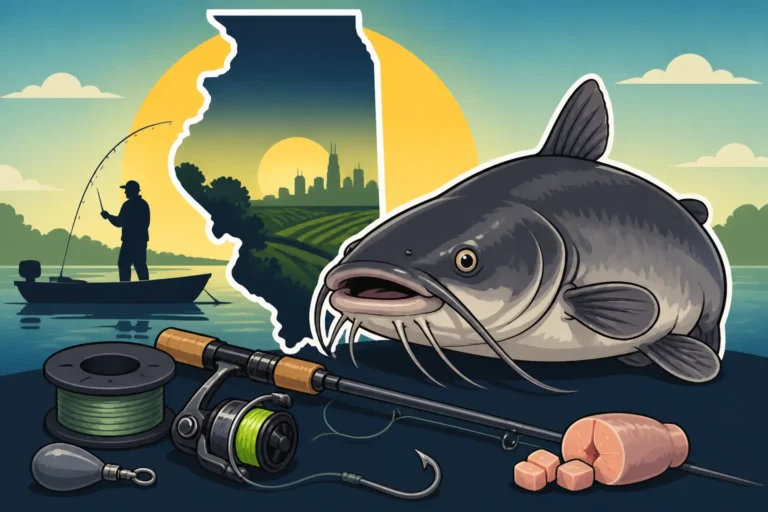
There's nothing quite like the thrill of a big catfish tugging on your line, but that excitement can quickly turn to frustration if you're not properly equipped. Many anglers, especially those new to chasing whiskers, find themselves overwhelmed by the sheer amount of gear available, leading to poorly stocked tackle boxes that don't quite cut it when the moment of truth arrives. This guide will walk you through the absolute essentials for your catfish tackle box, ensuring you're ready for anything the Illinois waters throw your way, from small channel cats to monster flatheads.
The Foundation: Rods, Reels, and Line for Catfish
Before you even think about hooks and bait, you need a solid foundation in your hands: a rod, a reel, and line that can stand up to the fight. Catfish aren't dainty, and neither should your primary gear be. Trying to land a hefty blue cat on a bass rod designed for finesse can quickly turn a potential trophy into a heartbreaking tale of "the one that got away."
Rod Selection: Power and Action for Different Catfish Species
When picking out a catfish rod, you're primarily looking at its power and action. Power refers to how much backbone the rod has—how much force it takes to bend it. For channel catfish, especially those under ten pounds, a medium-heavy rod often suffices. It gives you enough muscle to steer them out of cover but still offers some sensitivity for detecting lighter bites. However, if you're targeting bigger blue cats or flatheads in the bigger rivers like the Mississippi or Illinois, you'll want to step up to a heavy or even extra-heavy power rod. These beasts require serious leverage to turn their heads and keep them from wrapping you around submerged timber.
Rod action, on the other hand, describes where the rod bends. A moderate-fast action rod will bend through the top half, offering a good balance of casting distance, fish-fighting power, and shock absorption, which is great for keeping big fish hooked. Faster action rods, bending only at the tip, provide excellent sensitivity for feeling subtle bites and powerful hooksets, which can be crucial when catfishing in deeper water or strong currents. Consider a moderate-fast action for general catfishing, but a fast action might be preferred if you're primarily jigging for walleye and sauger on the Mississippi and happen to hook a bonus cat.
Reel Choice: Spinning vs. Baitcasting for Catfish
Your reel choice largely comes down to personal preference and the type of fishing you'll be doing. Spinning reels are often favored by beginners due to their ease of use, especially for casting lighter baits. They're also quite versatile and can handle a surprising amount of abuse. For channel cats or smaller flatheads, a sturdy spinning reel with a smooth drag system and good line capacity is a fantastic option. You can often find reliable models at outdoor retailers like Bass Pro Shops, which carry a range of options suitable for various budgets.
Baitcasting reels, however, are the workhorses for serious catfishing, particularly when targeting large blue and flathead catfish. They offer superior power, better casting accuracy with heavier baits, and unmatched control during a fight. The direct connection between your thumb on the spool and the line allows for precise bait placement and more robust drag systems that can truly lock down on a charging fish. You'll want a model with a high line capacity to accommodate heavy monofilament or braided line, which brings us to our next point.
Line Strength and Type: Mono, Braid, and Fluorocarbon
Choosing the right fishing line is absolutely critical for catfishing success. Monofilament (mono) is the traditional choice, offering good knot strength, stretch (which acts as a shock absorber during a fight), and is relatively inexpensive. For most channel catfishing, 15-20 lb test mono is a solid choice. However, in situations where you're battling strong currents or thick cover, that stretch can be a disadvantage, as it reduces sensitivity and makes powerful hooksets more challenging.
Braided line has become incredibly popular for catfishing, and for good reason. Its virtually no-stretch property means incredible sensitivity, allowing you to feel even the slightest tap. It also boasts superior strength-to-diameter ratio, meaning you can use a thinner, stronger line, and excellent abrasion resistance—a huge plus when fishing around rocks, stumps, or other snags. For big blue cats or flatheads, 50-80 lb test braid is not uncommon. While more expensive upfront, its durability and performance often justify the cost. Sometimes, combining the two by using a braided main line with a monofilament or fluorocarbon leader offers the best of both worlds, giving you the sensitivity of braid and the abrasion resistance or lower visibility of the leader. This combination is especially effective when fishing heavy cover or when dealing with finicky flatheads. Heavy Tackle for Mississippi River Catfish in Illinois details even more about line choices for those big river monsters.
Essential Terminal Tackle: Hooks, Weights, and Swivels
Once you have your rod, reel, and line sorted, it's time to stock up on the smaller but equally crucial components that directly interact with the fish. This is where your tackle box really starts to take shape, holding the bits and pieces that connect your line to your bait and, ultimately, to your catch. Skimping on terminal tackle can lead to lost fish, snapped lines, and general frustration, making a promising day on the water turn sour.
Hook Selection for Catfish: Circle, J-Hooks, and Trebles
The right hook is paramount for successful catfishing. For those aiming to release their catch or simply prefer an easier hookset, circle hooks are a game-changer. These hooks are designed to hook fish in the corner of the mouth, dramatically reducing gut-hooking and making de-hooking much simpler. They are often self-setting; the fish hooks itself as it swims away, requiring no aggressive hookset from the angler. Sizes typically range from 3/0 to 10/0, depending on the bait size and target species. For a detailed comparison, check out Circle Hooks vs J-Hooks for Illinois Catfishing.
Traditional J-hooks (also called octopus or kahle hooks) are excellent for their strong hook-setting power and versatility with various baits. Many experienced anglers prefer them for feeling the bite and setting the hook manually, especially when flathead fishing with live bait, where an instant, powerful hookset is key. Again, sizes from 3/0 to 10/0 are common. Treble hooks, while less common for general catfishing, might be used in specific situations, such as when baiting with dough balls or large chunks of cut bait where you want multiple points of contact. However, due to their potential for snagging and increased damage to fish, many anglers shy away from them for catfish.
Sinkers and Weights: Holding Your Bait in Place
Weights are essential for getting your bait down to where the catfish are and keeping it there, especially in current. Egg sinkers are round, bullet-shaped weights that slide freely on your main line above a swivel. This setup, known as a slip-sinker rig or Carolina rig for catfish, allows the fish to pick up the bait and swim away without immediately feeling the weight, leading to more natural presentations and confident bites. They are great for still water or moderate current.
For stronger currents, such as those found in the Mississippi or Illinois Rivers, you'll want to reach for pyramid or no-roll sinkers. Their flat sides or pyramid shapes help them dig into the bottom, preventing your bait from being swept downstream. The weight you choose will depend on the current speed and the size of your bait; it's always wise to carry a variety, from 1 ounce up to 8 ounces or even more for extreme conditions. Don't underestimate the power of river currents; it's better to be slightly over-weighted than to have your bait constantly rolling away from the strike zone.
Swivels and Leaders: Preventing Line Twist and Abrasion
Swivels are small but mighty components in your terminal tackle arsenal. Their primary job is to prevent line twist, which can weaken your line and lead to tangles, especially when using live bait that spins or fishing in heavy current. Heavy-duty barrel or ball-bearing swivels (rated for the strength of your line) are a must-have for catfishing. They connect your main line to your leader, allowing each section to rotate independently.
Leaders serve multiple purposes. They provide an extra layer of abrasion resistance against rough bottoms, rocks, and the abrasive mouths of catfish. They also act as a sacrificial line, meaning if you get snagged, you'll likely lose only the leader and hook, not your entire main line. Fluorocarbon leaders are popular because they are nearly invisible underwater and offer excellent abrasion resistance. For flathead catfish, some anglers even use short, heavy monofilament or braided leaders because flatheads can be notorious for cutting lighter lines with their powerful jaws. Always make sure your leader material is strong enough for the size of fish you're targeting; for big cats, 30-50 lb test leader is a common starting point.
Baits and Scents: What Catfish Can't Resist
Catfish are opportunistic feeders with an incredible sense of smell, making bait selection one of the most exciting and crucial parts of your trip. What works one day might not the next, and what entices a channel cat might be ignored by a flathead. Your tackle box needs to be a mini-pantry of enticing options.
Natural and Prepared Baits: A Catfish Feast
When it comes to catfish, few things beat natural baits. Cut bait, particularly from oily fish like shad, skipjack, or even common carp, is a go-to for many anglers chasing channel and blue catfish. The strong scent trail it leaves in the water is irresistible. Worms, especially nightcrawlers, are universal catfish attractants and are fantastic for channel cats and even a surprising number of flatheads. Crawfish are another prime natural bait, particularly effective for flatheads, as are live minnows or small bluegill. Keeping live bait requires a separate container, often an aerated bait bucket, but the effort is often rewarded with bigger fish.
Prepared baits, commonly known as "stink baits" or "dough baits," are highly effective for channel catfish. These come in various forms, from dips and pastes to pre-formed chunks, all designed to emit powerful, fish-attracting odors. While perhaps not as effective for the largest flatheads, they can fill a cooler with eater-sized channel cats on a good day. For tips on specific natural baits, you might find Best Bait for Channel Catfish From the Bank particularly helpful. Remember to bring a good pair of scissors or a sharp knife for cutting bait, and a rag to wipe down your hands after handling smelly attractants.
Scent Enhancers and Attractants: Giving You an Edge
Sometimes, your bait needs a little extra something to push it over the edge and trigger a strike. That's where scent enhancers and attractants come into play. These products come in gels, sprays, or liquids and are designed to be applied directly to your bait, lures, or even soft plastics. They mimic the natural odors of prey or contain powerful fish-attracting compounds that can draw in catfish from a distance.
For natural baits, a spray or dip that enhances their existing scent can make a big difference, especially in murky water where visibility is low. For prepared baits, adding an extra layer of attractant can amplify their effectiveness. You can find a wide variety of these products from major retailers like Amazon or your local bait shop. Experiment with different scents to see what the fish in your particular water body are responding to—sometimes a subtle change can yield significant results.
Bait Presentation: Keeping It Enticing
Having the right bait is only half the battle; presenting it effectively is just as important. The most common and versatile catfish rig is the slip-sinker rig (sometimes called a Carolina rig for catfish), which involves an egg sinker sliding freely above a swivel, with a leader connecting the swivel to your hook. This setup allows the fish to pick up the bait without feeling the weight of the sinker, leading to a more natural presentation and fewer dropped bites. It's excellent for fishing on the bottom in various conditions.
For fishing in heavy current or when targeting suspended fish, a three-way swivel rig might be more appropriate. This rig allows you to attach your main line to one eye, a leader with your bait to another, and a dropper line with a sinker to the third. This keeps your bait slightly off the bottom and in the strike zone. Regardless of the rig, always ensure your bait is fresh, properly secured to the hook, and presented in a way that looks natural to a cruising catfish. A good bait needle can assist in threading tougher baits for a more secure and natural presentation.
Beyond the Basics: Tools and Accessories
A truly complete catfish tackle box isn't just about fishing gear; it's also about the tools and accessories that make your trip safer, more comfortable, and ultimately more successful. These items might not directly catch fish, but they'll definitely make handling them easier and keep you on the water longer.
Essential Tools for Handling Catfish
Catfish, especially larger ones, can be quite formidable, with sharp fins and powerful jaws. A good pair of long-nose pliers or a hook remover is absolutely essential for safely extracting hooks, minimizing stress to the fish and protecting your hands. You'll also want a sturdy pair of fish grippers or a lip-grip tool to safely handle larger fish for photos or de-hooking, without having to risk a fin jab. Don't forget heavy-duty gloves, ideally puncture-resistant ones, to protect your hands from spines, hooks, and even teeth, particularly when dealing with flatheads.
A measuring tape and a portable scale are also invaluable tools. Many Illinois waters have specific length and catch limits for various species, and having these tools ensures you stay compliant with regulations. For example, knowing the Illinois Flathead Catfish Daily Limit Rules is crucial, and a tape helps you measure quickly and accurately. These tools also allow you to document your catches, which is always fun for bragging rights and tracking your progress as an angler.
Lighting and Storage for Night Fishing and Convenience
Catfish are often most active after dark, making night fishing a popular and productive pursuit. If you plan on hitting the water after sunset, a reliable headlamp or a portable lantern is a non-negotiable item. A headlamp keeps your hands free for baiting hooks, tying knots, and handling fish, while a lantern can illuminate your entire fishing area. For more specific guidance, read up on How to Set Up for Night Fishing. Always pack extra batteries!
Proper storage is also key. Beyond the main tackle box, consider smaller, specialized organizers for different types of terminal tackle, hooks, and weights. This keeps everything neat, easily accessible, and prevents rusty hooks from contaminating other gear. A sturdy cooler is also essential, not just for keeping your drinks cold, but also for preserving live bait and storing your catch on ice to maintain freshness. A dedicated bait cooler with an aerator is ideal for live bait.
Comfort and Safety Items
Fishing should be enjoyable, and that means being prepared for the elements and any minor mishaps. Always include insect repellent in your tackle box, especially during the warmer months when mosquitoes and gnats can be relentless. Sunscreen and a wide-brimmed hat are crucial for protecting yourself from the sun's harmful rays during long days on the water. A basic first-aid kit with bandages, antiseptic wipes, and pain relievers can handle minor cuts, scrapes, or hook pokes.
Finally, for those long waits for a bite, a comfortable folding chair can make all the difference, especially if you're bank fishing. And if you're venturing out on a boat, remember that safety gear isn't just a recommendation, it's a requirement. Double-check your Illinois Boating Safety Equipment Checklist for New Owners to ensure you have all the necessary PFDs, fire extinguishers, and other items on board. Being comfortable and safe allows you to focus on the fishing, which is what it's all about!
Catfish Tackle Box Checklist
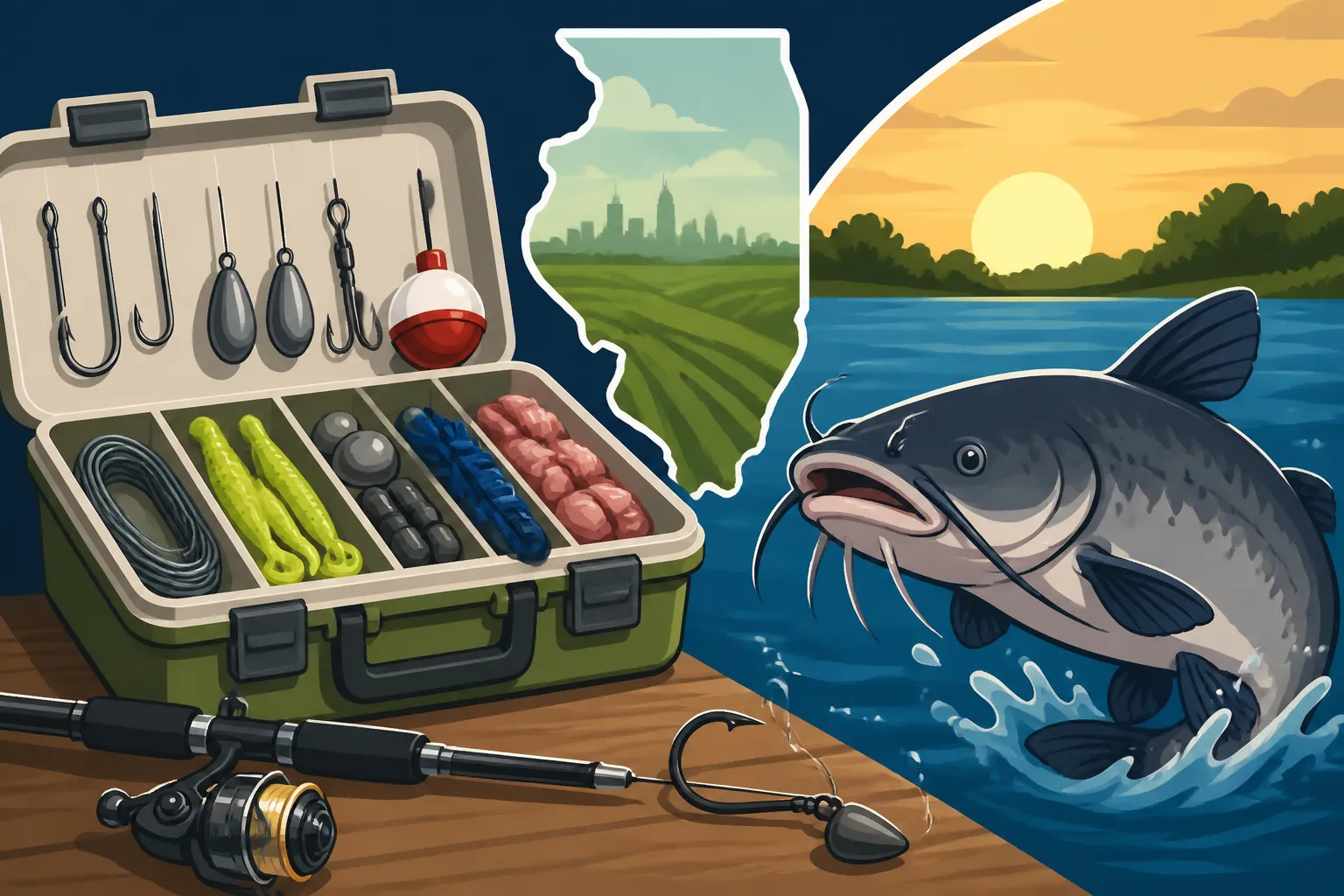
To help you get organized, here's a quick rundown of the essential items to pack for your next catfish adventure in Illinois. This table covers common gear, but remember to tailor it to your specific fishing style and target species.
| Category | Essential Items | Notes |
|---|---|---|
| Rods & Reels | Medium-heavy to Heavy Power Rods | Match power to target species (e.g., heavy for big flatheads). |
| Spinning or Baitcasting Reels | Spinning for versatility, baitcasting for power and control. Ensure good drag and line capacity. | |
| Line | Monofilament Line (15-30 lb) | Good all-around, some stretch. |
| Braided Line (30-80 lb) | High sensitivity, strength, and abrasion resistance, especially for bigger fish. | |
| Fluorocarbon/Mono Leader Material (30-60 lb) | For abrasion resistance and stealth. | |
| Hooks | Circle Hooks (3/0 – 10/0) | Best for self-setting and catch & release. |
| J-Hooks (3/0 – 10/0) | Strong hooksets, versatile. | |
| Weights | Egg Sinkers (1/2 oz – 4 oz) | For slip-sinker rigs in still or moderate current. |
| Pyramid/No-Roll Sinkers (2 oz – 8+ oz) | For strong currents in rivers. | |
| Swivels | Heavy-duty Barrel/Ball-Bearing Swivels | Prevents line twist, connects main line to leader. |
| Three-Way Swivels | For specific rigs, especially in current to keep bait off bottom. | |
| Bait & Scents | Variety of Natural Baits (cut bait, worms, minnows) | Depends on target species; keep fresh in a cooler. |
| Prepared/Stink Baits | Effective for channel catfish. | |
| Scent Enhancers/Attractants | Liquids, gels, or sprays to boost bait appeal. | |
| Tools & Misc. | Long-nose Pliers / Hook Remover | Essential for safe hook removal. |
| Fish Grippers / Lip-Grip Tool | For safely handling fish. | |
| Heavy-duty Gloves | Protect hands from spines and hooks. | |
| Measuring Tape & Portable Scale | For regulations and bragging rights. | |
| Headlamp / Lantern & Extra Batteries | Crucial for night fishing. | |
| Cooler (for bait and catch) | Keep bait lively and fish fresh. | |
| Scissors / Knife | For cutting line and bait. | |
| Tackle Organizers | Keeps small items neat and accessible. | |
| First-Aid Kit | For minor cuts and scrapes. | |
| Insect Repellent & Sunscreen | For comfort and protection from elements. | |
| Comfortable Chair (for bank fishing) | Improves the overall experience during long waits. |
Remember, this list is a starting point. As you gain experience, you'll fine-tune your tackle box to perfectly suit your preferred catfishing locations and techniques in Illinois.
Disclaimer
This article is for general informational purposes only and does not constitute professional advice. Laws, prices and regulations vary by location and change over time. Consult a qualified professional for guidance on your specific situation.