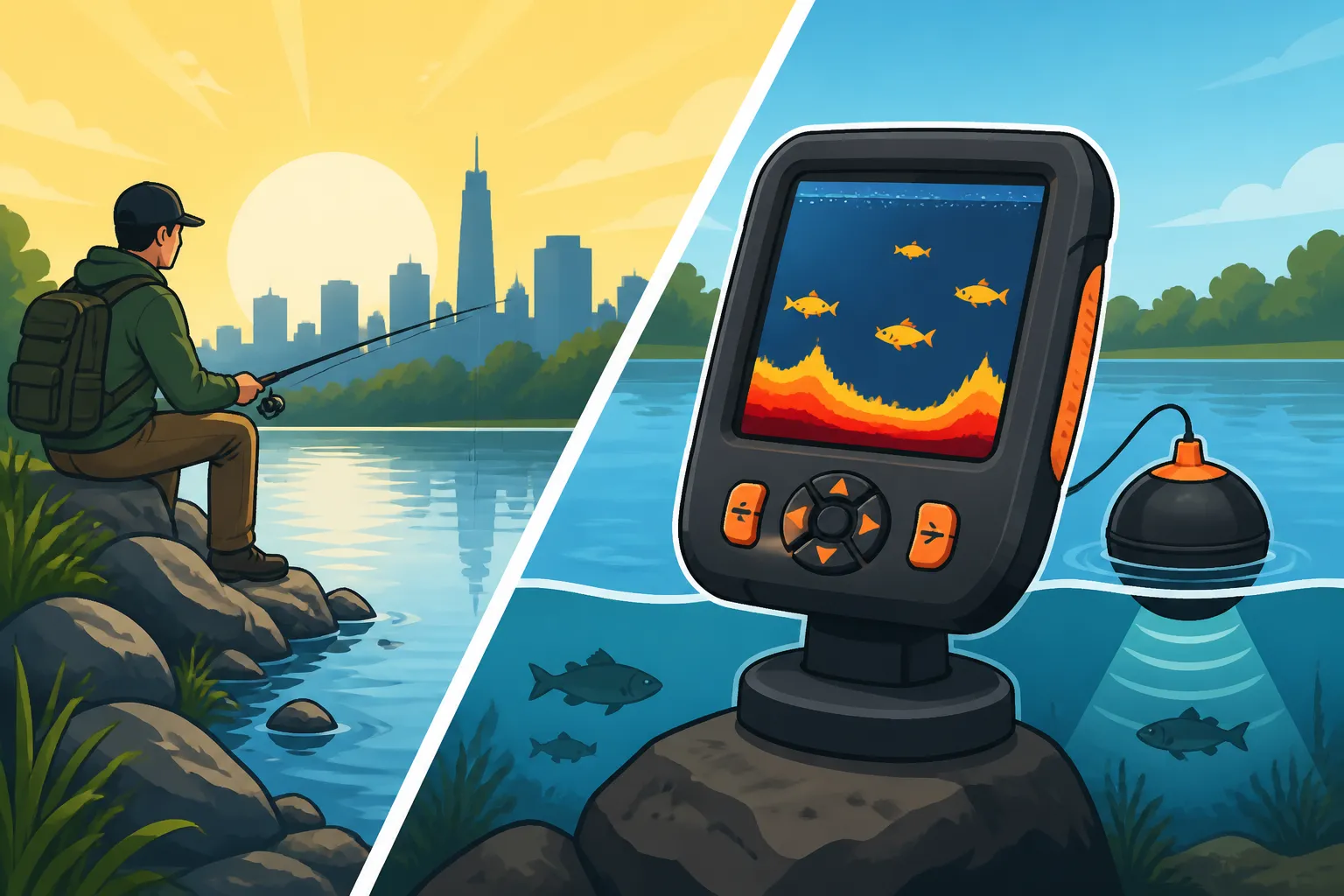
Best Budget Fish Finder for Bank Fishing
It's a common frustration for many of us who love to hit the water: you're standing on the bank, casting into what feels like an endless void, wondering if there's anything out there beneath the surface. You know there are fish, but without seeing what's down there, it often feels like pure guesswork. This guide is all about empowering bank anglers, showing you how to pick the best budget-friendly fish finder to take some of that mystery out of the water, making your next outing more successful and a whole lot more fun.
Why Bank Anglers Need a Fish Finder on a Budget
Let's be honest, bank fishing can sometimes feel like you're at a disadvantage compared to your buddies out on boats with all their fancy electronics. You're limited to casting distance, and you can't exactly motor around looking for structure or schools of fish. This feeling of "fishing blind" is what often discourages folks from sticking with bank fishing, even though it's accessible and incredibly rewarding.
The Frustration of Fishing Blind
Imagine you've driven out to one of Illinois's beautiful state park lakes, like Lake Shelbyville or Rend Lake, determined to catch some crappie or bass. You find a promising spot with some downed trees or a noticeable drop-off, but you still can't see what's actually happening beneath the surface. Are those logs holding fish? Is there a subtle hum of baitfish just out of reach? Without a fish finder, you're relying purely on instinct, past experience, and a bit of luck. It's frustrating to cast repeatedly into an empty zone or miss a key structure just a few feet from where your bait is landing. This lack of information can lead to wasted time, wasted bait, and ultimately, a less enjoyable day on the water.
Unlocking Underwater Secrets Without Breaking the Bank
A budget fish finder changes this whole dynamic. Suddenly, you're not just guessing anymore. You're getting a real-time peek into the underwater world. You can identify submerged brush piles, weed lines, rock formations, and even schools of baitfish or larger game fish like Illinois Walleye Size and Catch Limits. This information is gold, helping you cast more accurately and understand why fish might be holding in certain areas. It allows you to quickly assess a new spot without committing hours to it. Plus, understanding the bottom contour and depth variations helps you present your bait more effectively, matching the environment. It truly levels the playing field, giving you more confidence and making every cast more strategic, all without having to invest in a full-blown boat setup.
Key Features to Look For in a Budget Bank Fishing Fish Finder
When you're trying to find a good fish finder that won't cost an arm and a leg, especially for bank fishing, you need to focus on portability, ease of use, and the most essential features. You're not trying to equip a tournament bass boat here; you're looking for a reliable tool that fits your style of fishing.
Portability and Power Source
For bank fishing, portability is king. You need something lightweight, compact, and easy to carry along with your rods, tackle box, and a cooler. This means looking for devices that are either small, handheld units or, more commonly, castable transducers that link to your smartphone. The power source is also crucial. You won't have a boat battery to tap into, so long-lasting, rechargeable internal batteries or easily replaceable standard batteries are essential. A device that can last a full day of fishing on a single charge is ideal. Nobody wants their fish finder dying just as the bite turns on, especially when you've hiked a ways to get to that secluded spot. Many of these units charge via USB, making it convenient to juice them up in the car or with a portable power bank, just like you would your phone.
Display and Transducer Type
The display on a budget fish finder often comes in two main forms: either a small, built-in screen on a dedicated unit, or your smartphone acting as the display for a castable device. For dedicated units, look for clear, easy-to-read screens, even if they're monochromatic. You want to distinguish between bottom structure, baitfish, and larger targets. Contrast and backlight are important for visibility in various lighting conditions.
When it comes to the transducer – the part that actually sends and receives the sonar waves – you'll primarily encounter single or dual-beam options in the budget range.
- Single-beam transducers are simpler and typically found on the cheapest models. They give you a cone-shaped view directly below, good for basic depth and temperature.
- Dual-beam transducers offer a wider and a narrower cone, giving you a better understanding of the area beneath the surface. The wider cone is great for searching, while the narrower one provides more detail.
Castable fish finders typically use a single, wide-angle cone that you cast out and retrieve, giving you a scan of the water column as it moves. The transducer material and overall robustness are also key considerations, as it will inevitably take some bumps and knocks while you're out there.
Durability and User-Friendliness
A budget fish finder needs to be tough enough to handle the realities of bank fishing. That means it should be water-resistant, if not fully waterproof, and able to withstand accidental drops or splashes. Check for robust housing and secure connections. You'll be using this gear outdoors, often in less-than-ideal conditions, so flimsiness is a deal-breaker.
User-friendliness is another huge factor, especially if you're new to fish finders. You don't want to spend half your fishing trip fiddling with complicated menus. Look for intuitive controls, clear icons, and straightforward operation. Castable units that pair with a smartphone app often excel here, as most people are already comfortable navigating a phone interface. The app should be easy to download and connect, and the on-screen display should quickly tell you what you need to know: depth, water temperature, and fish arches or icons. Some of the simpler units might just have a couple of buttons, making them incredibly easy to operate even with cold, wet hands. You want to spend your time fishing, not troubleshooting your electronics.
Types of Budget Fish Finders Suitable for Bank Fishing
The market for budget-friendly fish finders has really opened up, offering some fantastic options for bank anglers. Gone are the days when you needed a boat to get a glimpse beneath the surface. Now, there are several types designed with portability and affordability in mind, and you can find a good selection from retailers like Bass Pro Shops or online through Amazon.
Castable Fish Finders
These are arguably the most popular choice for bank anglers, and for good reason. Castable fish finders are compact, spherical or egg-shaped devices that you literally cast out into the water using a standard fishing rod. Once in the water, they float and send sonar signals back to an app on your smartphone or tablet, which acts as your display. The connection is typically made via Bluetooth or Wi-Fi. As you slowly retrieve the device, it scans the water column, showing you depth, water temperature, bottom contour, and any fish or structure it detects.
The beauty of castable units is their sheer convenience. They require minimal setup, integrate with technology you likely already carry, and are incredibly versatile. You can cast them into brush piles, along drop-offs, or across open water to scout an area quickly. Brands like Deeper and Lowrance offer excellent castable models with varying features and price points. While they won't give you the same continuous, high-definition view as a boat-mounted unit, for quick reconnaissance from the bank, they are absolutely invaluable. Just remember to tie them on securely – losing your new gadget to the depths would certainly put a damper on your fishing trip!
Portable Handheld Units
Another solid option for bank fishing are dedicated portable handheld fish finders. These units have their own built-in screen and a transducer that either dangles from a cable into the water or is designed to float. Unlike castable models, you typically don't cast the transducer out; instead, you lower it directly into the water from a pier, dock, or even the bank edge if the water is deep enough. Some even come with clamps to attach to the side of a small boat or a kayak if you happen to borrow one.
These units are often robust, with durable casing and water-resistant designs. They tend to have simpler, often monochromatic displays, but they provide clear, essential information: depth, water temperature, and fish arches. They also tend to have longer battery lives than constantly running a smartphone app. For example, if you're fishing a long pier on Lake Michigan or wading into a shallow stream to find a good bass spot, a portable handheld unit can be incredibly practical. You can even find combination models that offer GPS functionality, helping you mark those secret spots you discover. Many anglers appreciate these because they don't rely on a phone and often offer a more dedicated, rugged experience.
Comparing Budget Bank Fishing Fish Finder Options
To help you decide which type might be best for your fishing style and budget, here's a quick comparison of the common options:
| Feature | Castable Fish Finders (e.g., Deeper, some Lowrance) | Portable Handheld Units (e.g., Vexilar, some Garmin) |
|---|---|---|
| Portability | Excellent (small, fits in pocket) | Good (compact, usually has lanyard) |
| Display | Smartphone/tablet app (color, customizable) | Built-in screen (often mono, dedicated) |
| Transducer | Integrated into castable buoy | Separate transducer on a cable or built-in float |
| Power Source | Rechargeable internal battery (USB charging) | Rechargeable or standard AA/AAA batteries |
| Scanning Method | Cast and retrieve for horizontal scan | Lower into water for vertical scan below transducer |
| Connectivity | Bluetooth/Wi-Fi to smartphone | Self-contained (no external connectivity needed) |
| Typical Cost | Mid-range budget to higher-end budget | Lower-end budget to mid-range budget |
| Pros | Wide scanning area, uses familiar phone screen | Rugged, dedicated device, no phone dependency |
| Cons | Relies on phone battery, potential signal issues | Limited scanning area, smaller screen |
This table should give you a clearer picture of the trade-offs. If you already carry your smartphone everywhere, a castable unit might be a natural fit. If you prefer a simpler, more rugged, standalone device, a portable handheld could be the way to go. No matter which you choose, equipping yourself with one of these tools will dramatically improve your ability to find fish from the bank.
Making the Most of Your Budget Fish Finder
Having a budget fish finder is one thing; truly understanding how to use it to your advantage is another. It’s not just about seeing fish icons on a screen; it’s about interpreting the data to make smarter decisions about where and how you’re fishing. Think of it as your secret weapon for Shore Fishing Gear for Illinois Anglers.
Understanding What You See on the Screen
Once you've got your fish finder humming, whether it's displaying on your phone or a small screen, the real learning begins. Don't just look for those little fish icons! While helpful, they're often a simplified representation. Pay attention to the raw sonar returns, which usually appear as arches or blobs. A strong, clear arch typically indicates a fish. Smaller, fainter marks might be baitfish.
More importantly, look at the bottom contour. Is it flat and featureless, or are there sudden drops, humps, or rises? These changes in depth and structure are prime hiding spots for fish. Your fish finder will also show you the water temperature, which is a critical piece of information for understanding How Water Temperature Affects Fish Activity. Different fish species prefer different temperature ranges, and knowing this can help you target specific fish like Illinois Walleye Stocked Lakes: Where IDNR Puts Fish Each Year or Best Bait for Crappie Fishing. For example, if you see a sudden drop-off into deeper, cooler water on a hot summer day, that's often where bigger fish will be holding.
Tips for Effective Bank Angling with a Fish Finder
Using your budget fish finder effectively from the bank takes a little practice and some smart strategies. Here are a few pointers to help you get the most out of your new gadget:
- Scout First, Fish Later: Before making your first cast, use your fish finder to scout the area. If it's a castable unit, fan-cast it across the water to get a broad overview of the bottom. If it's a handheld, slowly move along the bank or pier, dropping the transducer into different spots. Look for structure, changes in depth, and signs of baitfish or larger game fish. This preliminary scouting can save you a lot of wasted casts.
- Identify Structure: Fish love structure – anything that breaks up the uniform bottom. This could be submerged trees, rock piles, ledges, or even thick weed beds. Your fish finder will reveal these hidden gems. Once you locate a promising piece of structure, focus your casts around it. Remember, fish will often hold on or just off the structure, using it for cover or as an ambush point. This is crucial for improving your chances, whether you're using Best Bait for Largemouth Bass Fishing in Spring or targeting catfish.
- Mind the Depth: Don't just cast randomly. If your fish finder shows a consistent depth, but you notice a sudden five-foot drop-off just twenty feet out, that's where you want your bait to be. Fish often relate to these depth changes, especially during certain times of the day or year. Knowing the precise depth also helps you select the right lure or bait presentation to get it into the strike zone.
- Track Water Temperature: As mentioned, water temperature is a huge factor. Use your fish finder's temperature reading to your advantage. If you're looking for Best Time of Year to Catch Walleye, you'll know they prefer cooler water, so finding a thermocline or deeper, cooler pockets could be key. Conversely, during colder months, slightly warmer pockets of water might hold more active fish.
- Adapt Your Approach: The beauty of a fish finder is that it provides real-time feedback. If you're not seeing fish in one area, or the structure isn't what you expected, don't be afraid to move! Bank fishing allows for mobility, so use your fish finder to quickly assess a spot, and if it's not productive, move on to the next potential hot spot. You'll be surprised how much more ground you can cover effectively with this tool.
By focusing on these practical applications, your budget fish finder will quickly become an indispensable part of your Best Gear for Bank Fishing arsenal, leading to more productive and enjoyable days on the water.
Disclaimer
This article is for general informational purposes only and does not constitute professional advice. Laws, prices and regulations vary by location and change over time. Consult a qualified professional for guidance on your specific situation.