Fish Finder Buying Guide for Beginners
Many new anglers feel a bit lost in the tackle shop or browsing online, especially when it comes to electronics. The idea of a "fish finder" sounds amazing, but then you see all the jargon—CHIRP, DownScan, Side Imaging, transducers, GPS mapping—and it quickly becomes overwhelming. It's tough to know what you really need to catch more fish in Illinois waters versus what's just a fancy bell and whistle. This guide aims to demystify the world of fish finders, helping you understand the basics and confidently choose your first unit to enhance your fishing success.
What Even Is a Fish Finder and Why You Might Want One
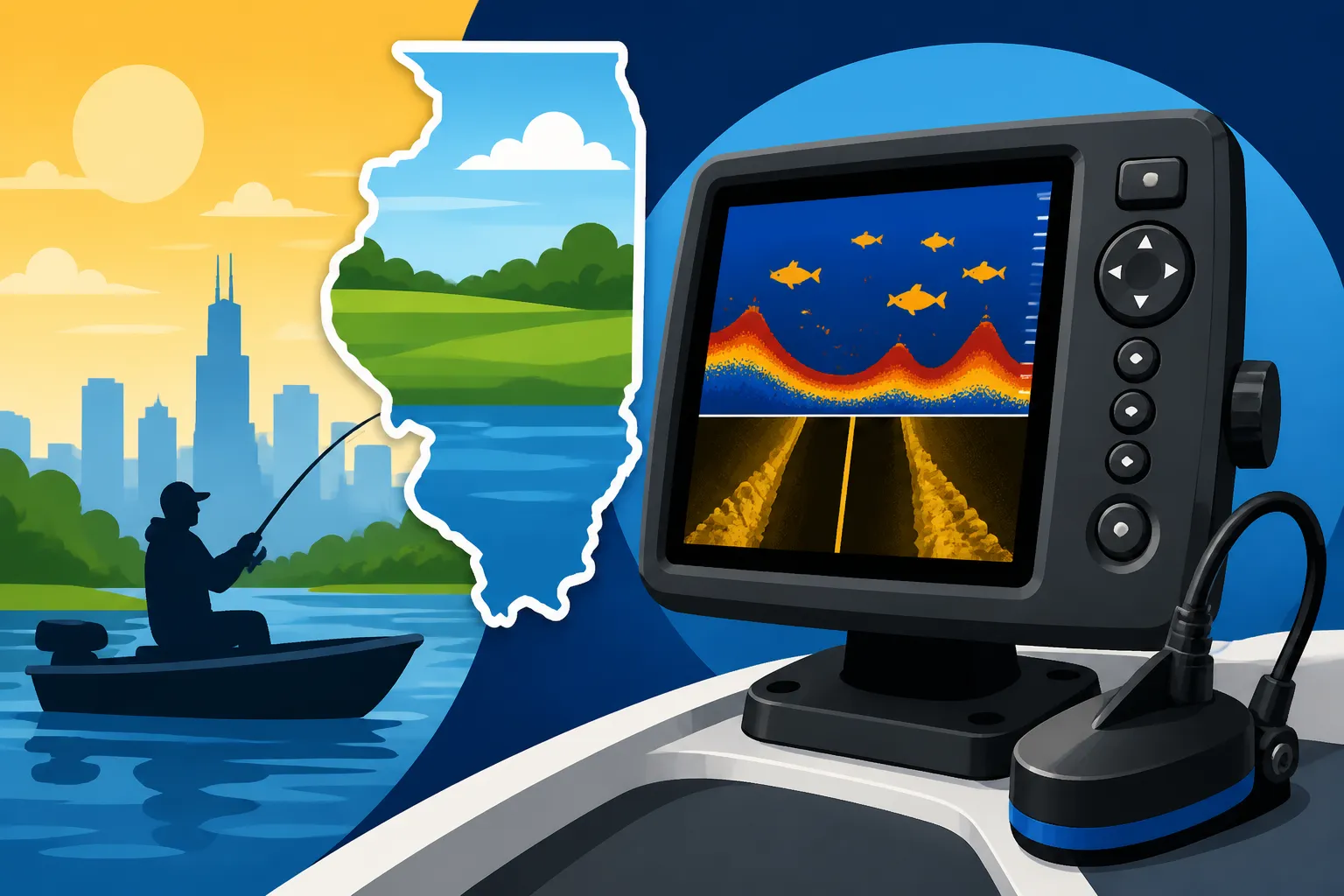
For many years, anglers relied purely on instinct, local knowledge, and maybe a depth map if they were lucky. While those elements are still incredibly important, a fish finder acts as your eyes beneath the surface, giving you an immediate, real-time snapshot of the underwater world. It's not just about seeing cartoon fish icons; it's about understanding the environment fish call home, which is invaluable for any angler looking to improve their game.
Beyond Just "Seeing Fish"
Think of a fish finder less as a "fish detector" and more as an "underwater terrain mapper." Yes, it can show you fish, often as arches or small symbols depending on your settings, but its true power lies in revealing structure, depth changes, and bottom composition. Imagine you're on a vast Illinois lake, say Rend Lake, known for its submerged timber. Without a fish finder, you're essentially blind casting into open water. With one, you can pinpoint those brush piles and sunken trees where crappie or bass are likely hiding. Similarly, if you're targeting walleye on Lake Shelbyville, a fish finder will help you locate rock humps and ledges that are prime ambush points. For catfish anglers on the Mississippi River, knowing the depth of a channel or the presence of a deep hole can be the difference between an empty cooler and a full stringer.
This deeper understanding means you spend less time guessing and more time fishing in productive areas. It helps you build a mental map of what's below, allowing you to interpret why fish might be in a certain spot. Are they relating to a sharp drop-off? Are they suspended over a creek channel? Is the bottom hard and rocky, or soft and muddy? These are all critical pieces of the puzzle that a fish finder provides, turning guesswork into informed decisions.
The Advantages for the Beginner Angler
As a beginner, you're already learning so much – casting techniques, knot tying, lure selection, and understanding different species. Adding the challenge of "finding" the fish can feel like an insurmountable hurdle. This is where a fish finder truly shines for new anglers. It significantly reduces the frustration of blind casting and helps build your confidence by showing you something is down there, even if you're not getting bites.
Consider a family outing to one of the Illinois State Park Lakes Worth the Drive. Instead of simply picking a random spot on the bank, a portable fish finder can quickly tell you if there are any interesting features nearby, like a weed line or a slight depth change, that might hold panfish for the kids. Beyond just finding fish, it's an incredible learning tool. You'll start to associate certain types of sonar readings with actual underwater features, gradually developing an intuitive sense for where fish might congregate. Plus, for those venturing out in a small boat or kayak, a fish finder often includes basic GPS, which provides a layer of safety by helping you know your current depth and navigate back to the launch, especially in unfamiliar waters or changing conditions.
Essential Features for Your First Fish Finder
When you first start looking at fish finders, the options can seem endless, and the price tags can certainly make your wallet nervous. But for a beginner, the good news is that you don't need every single cutting-edge technology to get started. Focusing on a few core features will provide immense value without breaking the bank.
Display Size and Resolution: See the Whole Picture
The display is your window into the underwater world, so its quality is paramount. You need a screen that's large enough to clearly see the details and bright enough to read in direct sunlight, which is a common challenge on bright Illinois summer days. Imagine trying to decipher faint arches on a tiny, low-resolution screen while the sun glares off the water – it's a recipe for frustration. A good display size for a first-time boat-mounted unit is typically 5 to 7 inches. This provides a decent viewing area without being overly bulky or expensive.
Resolution, measured in pixels, dictates how sharp and clear the image will be. Higher resolution means more detail, less pixilation, and easier interpretation of what you're seeing. While a super high-definition screen can be pricey, a moderate resolution is perfectly sufficient for a beginner. Prioritizing a color screen is also a smart move, as different colors can help distinguish between bottom hardness, vegetation, and fish returns much more easily than a monochrome display. Remember, you'll be spending a lot of time looking at this screen, so ease of viewing is a major factor in user satisfaction.
Transducer Technology: The Eyes Underwater
The transducer is the unsung hero of your fish finder; it's the part that actually sends and receives the sonar waves. For beginners, the most important technology to understand is traditional 2D sonar. This is what creates those classic fish arches and shows you basic depth and structure. Look for a unit that offers good 2D sonar performance, often with dual-beam or wide-angle cone options, which give you better coverage of the water column.
Many entry-level and mid-range fish finders now also include "Down Imaging" (often called DownScan by Lowrance or ClearVü by Garmin). This technology provides a picture-like view directly below your boat, making it much easier to identify submerged objects like fallen trees, rock piles, or bridge pilings – all fantastic targets for species like crappie and bass in Illinois waters. While Side Imaging is incredible for advanced anglers covering large areas, it's often an extra expense and can be more complex to interpret for a beginner. Starting with solid 2D sonar and good Down Imaging capability provides a fantastic foundation. Most transducers for small boats or kayaks will be transom-mounted, meaning they attach to the back of your boat, which is generally straightforward to install.
GPS and Mapping: Knowing Where You've Been and Where You're Going
In today's world, a fish finder without GPS is like a car without a speedometer – it just feels incomplete. For any serious angler, GPS functionality is practically non-negotiable, even on an entry-level unit. The ability to mark waypoints – specific spots where you caught fish, found interesting structure, or even dropped a valuable lure – is incredibly powerful. Imagine catching a keeper walleye on a deep hump in Lake Shelbyville Fishing Guide, hitting the waypoint button, and then being able to return to that exact spot later in the day or on your next trip. This feature alone can dramatically increase your success rate.
Beyond marking individual spots, many fish finders come with preloaded base maps or offer the option to purchase detailed mapping cards. These maps often show depth contours, navigation aids, and other critical information for major bodies of water like Carlyle Lake Fishing Guide or the Mississippi River. Having these maps on your screen, combined with your current location via GPS, helps you navigate safely, understand the overall topography of the lake, and plan your fishing strategy more effectively. For safety, especially on larger, unfamiliar lakes, knowing your position and how to get back to the ramp is priceless, especially if weather conditions change unexpectedly. Exploring options on "Amazon" or at "Bass Pro Shops" will reveal many units that combine excellent sonar with reliable GPS and mapping capabilities right out of the box.
Types of Fish Finders for Different Illinois Anglers
The beauty of modern fish finders is that there's truly something for everyone, regardless of your primary fishing method. From bank anglers to serious boaters, you can find a unit that fits your style and budget. Understanding these different types will help you narrow down your choices.
Portable and Castable Options: Fishing on the Go
If you're primarily a bank angler, a kayak enthusiast, or someone who fishes from a variety of small, non-motorized boats, portable and castable fish finders are a fantastic starting point. These devices are designed for ultimate convenience and flexibility. Castable units, like those from Deeper or Garmin's Striker Cast series, connect wirelessly to your smartphone or tablet. You literally cast them out with your rod, and they send sonar data back to your phone, showing you depth, structure, and fish. They're incredible for scouting new areas from shore, say along the banks of the Kankakee River, or for easily switching spots in your kayak. They are battery-powered and incredibly compact.
Portable units often consist of a small screen and a compact transducer that can be temporarily mounted to a boat, a float tube, or even used for ice fishing. They usually have their own self-contained power source, making them ideal for small Jon boats that might not have a dedicated 12V battery, or for when you're fishing different rental boats. They're a great way to explore new Best Bank Fishing Spots in Illinois or when you simply don't want to commit to a permanent installation on a boat you might not own forever. These are typically the most budget-friendly options, making them a low-risk entry into the world of sonar.
Mounted Units: For the Dedicated Boat Angler
For those who fish primarily from a boat with a permanent power source, a mounted fish finder is the way to go. These units offer larger, more robust displays, more powerful transducers, and often a wider array of advanced features. Mounted units typically consist of a main "head unit" (the screen) that attaches to your boat's console or bow, and a transducer permanently mounted to the transom or through the hull. They draw power directly from your boat's 12V battery, ensuring consistent performance throughout the day.
This category includes everything from basic combination units (sonar + GPS) with 5-inch screens to sophisticated multi-function displays (MFDs) that integrate with trolling motors, radar, and engine data. For a beginner, a mid-range combo unit with a 5- to 7-inch screen offering good 2D sonar and Down Imaging is usually the sweet spot. Brands like Humminbird, Lowrance, and Garmin dominate this space, offering a wide range of options that balance features and price. These are the most popular choice for those with a more permanent fishing platform, whether it's a bass boat on Rend Lake Fishing Guide for Illinois Anglers or a larger craft suited for Lake Michigan. They offer the best balance of visibility, power, and feature set for consistent performance on the water.
Considering Your Budget and Needs
Let's be real: fishing gear can get expensive, and fish finders are no exception. But the good news is you can get a truly effective unit without emptying your wallet. When budgeting, think about the type of fishing you do most. If you're primarily panfishing on small local ponds from shore, a castable unit in the lower price range will likely exceed your expectations. If you've just invested in one of the Best Fishing Boats for Illinois Lakes and plan on chasing bass or walleye on larger reservoirs, a 5-7 inch mounted combo unit with GPS and Down Imaging will be a fantastic investment.
It's wise to prioritize core features like reliable 2D sonar and accurate GPS over advanced imaging (like Side Imaging) for your first purchase. You can always upgrade later as your skills and needs evolve. Check out options at your local "Bass Pro Shops" or browse the extensive selection on "Amazon" to get a feel for current prices and available models. Don't be afraid to look at last year's models, as they often offer great value. Many units come preloaded with basic maps, but factor in the potential cost of detailed mapping cards if you plan to fish specific, larger Illinois lakes that benefit from them.
Getting Started with Your New Fish Finder
So you've chosen your fish finder – congratulations! Now comes the exciting part: getting it installed and learning how to use it. Don't let the wires and settings intimidate you. Most modern fish finders are designed with user-friendliness in mind, and a little bit of patience will have you reading the water like a pro in no time.
Installation Simplified
If you've opted for a portable or castable unit, installation is minimal or non-existent. You simply charge it up, download the app (if it's castable), and you're ready to go! For a mounted unit, the process involves a few key steps. The most common setup is a transom-mounted transducer. This involves attaching the transducer to the back of your boat, below the waterline, in a spot that gets clean water flow. The unit will come with mounting brackets and instructions, and many anglers find it quite manageable to do themselves with basic tools. Just make sure it's clear of obstructions like your motor or other accessories.
Next is wiring the power. Your fish finder will typically connect directly to your boat's 12V battery. It's crucial to install an inline fuse for protection, and most units will include one in the box. Run the power cable safely and securely to your battery. Finally, mount the head unit (the screen) in a location that's easy to see while you're fishing, but also protected from excessive spray and vibration. There are many great mounting options, from RAM mounts to flush-mount kits. If you're feeling really unsure, your local tackle shop or a marine mechanic can often help with installation, but don't be afraid to tackle it yourself – many manufacturers provide excellent step-by-step videos online.
Learning to Read the Screen: From Arches to Arches
This is where the real learning begins! When you first turn on your fish finder, it might look like a jumble of lines and colors. The most fundamental display is the 2D sonar, which shows you the bottom as a solid line and anything in the water column above it. Fish will typically appear as arches or boomerang shapes. While most units have a "Fish ID" feature that tries to interpret these arches into fish icons, it's generally recommended to turn this off and learn to read the raw arches. Why? Because an arch tells you more – it indicates a fish passing through the sonar cone, and a strong, well-defined arch usually means a larger fish or one directly under the transducer.
Beyond fish, focus on the bottom. A hard, rocky bottom will often show up as a thick, intense band of color, while a soft, muddy bottom will appear thinner and less defined. Look for structure: sharp points where the bottom changes depth, humps, ledges, and submerged cover like brush piles. On your Down Imaging screen, these structures will look almost photographic, revealing branches on a tree or distinct rocks. The best way to learn is to simply spend time on the water driving around, observing what your fish finder shows, and then comparing it to what you know about the area. Drive over a known brush pile or a bridge piling, and see how it appears on your screen. This hands-on experience is invaluable for connecting the dots.
Maximizing Your Investment: Tips for Beginners
To truly get the most out of your first fish finder, remember these tips:
- Start Simple: Don't try to master every single setting on day one. Get comfortable with the basic 2D sonar and GPS functions first. Learn how to adjust sensitivity and range.
- Use it as a Learning Tool: Your fish finder isn't just for finding fish; it's for understanding why fish are where they are. Pay attention to how Water Temperature and Fish Activity Guide changes impact what you see, or how fish relate to certain structures. This knowledge will make you a better angler in the long run, even without the electronics.
- Don't Stare, but Scan: It's easy to get mesmerized by the screen, but remember to keep an eye on your surroundings. Use the fish finder to identify potential areas, then put your lures in the water. It's a tool to guide your Boat Fishing Techniques, not replace the act of fishing itself.
- Mark Waypoints Liberally: When you get a bite, see a school of baitfish, or spot an interesting piece of structure, mark it! These waypoints will build a personal fishing map that’s invaluable.
- Experiment with Settings: Over time, play with settings like sensitivity, scroll speed, and color palettes. Different conditions (shallow vs. deep water, clear vs. muddy water) might call for different adjustments. There’s no single “best” setting; it’s about what works for you and the conditions.
- Stay Updated: Many fish finder brands offer software updates that can improve performance, add new features, or fix bugs. Check the manufacturer's website periodically and update your unit when available.
Using your fish finder in conjunction with your knowledge of Seasonal Bait Selection Guide and understanding fish behavior will dramatically improve your success on the water. It's an investment that pays dividends in both fish caught and the enjoyment of truly understanding the aquatic environment you're exploring.
| Feature | Portable/Castable Unit | Mounted Unit (Basic/Mid-Range) |
|---|---|---|
| Best Use Case | Bank, Kayak, Small Boat, Ice Fishing | Dedicated Boat Anglers, All-Around Fishing |
| Price Range | Lower | Mid to Higher |
| Display | Smartphone/Small Integrated Screen | Dedicated Color Screen (5-9 inches common) |
| Sonar Type | 2D Sonar, some Down Imaging | 2D Sonar, Down Imaging (often standard) |
| GPS/Mapping | Basic GPS, phone maps often used | Standard GPS, often with preloaded maps |
| Installation | None (castable) / Simple (portable) | Permanent Transom Mount, Wiring Required |
| Power Source | Internal Battery, USB Chargeable | Boat Battery (12V) |
| Portability | Very High | Low (fixed installation) |
Disclaimer
This article is for general informational purposes only and does not constitute professional advice. Laws, prices and regulations vary by location and change over time. Consult a qualified professional for guidance on your specific situation.