Does a 12-Foot Sailboat Need Illinois Boat Registration?
It can be genuinely confusing trying to figure out which boats need to be registered in Illinois, especially when you’re talking about smaller, seemingly simple vessels like a 12-foot sailboat. Many of us just want to enjoy the peaceful waters without getting tangled in a web of bureaucracy, and the last thing anyone wants is an unexpected fine. This guide is here to clarify whether your beloved 12-foot sailboat requires official registration in Illinois, cutting through the jargon to give you the clear answers you need to stay compliant and enjoy your time on the water.
The Core Question: Does Your 12-Foot Sailboat Need Registration in Illinois?
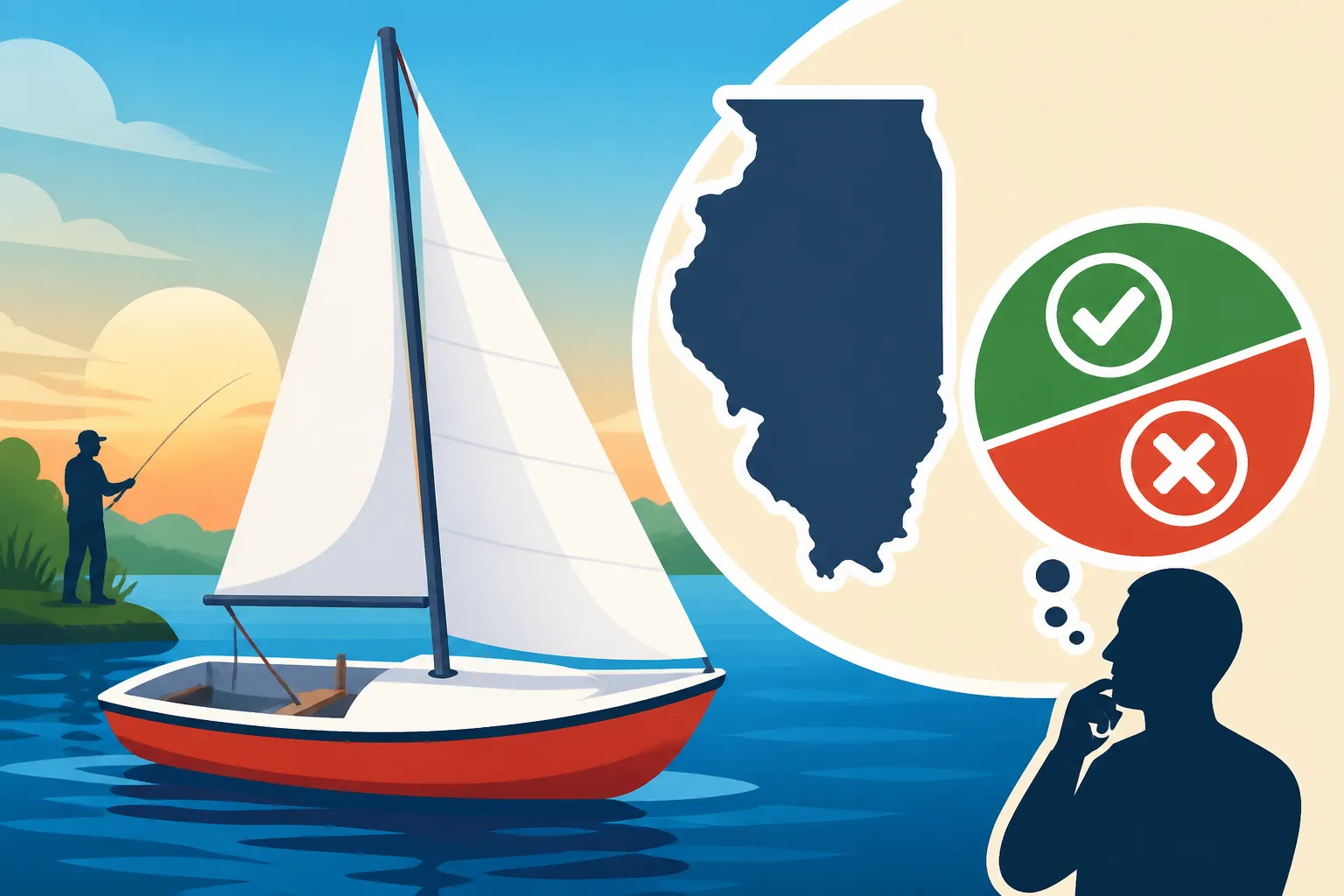
Let's cut right to the chase because this is usually the first question on everyone's mind. The short answer to whether a 12-foot sailboat needs Illinois boat registration boils down to one critical factor: its propulsion. Is it exclusively powered by the wind in its sails, or does it have any kind of mechanical assistance? This distinction is the bedrock of Illinois's vessel registration laws.
Understanding Illinois's Definition of a Vessel
In Illinois, the Department of Natural Resources (IDNR) defines a "vessel" that requires registration as virtually any watercraft, regardless of its length, that uses a motor for propulsion. This is where many small boat owners get tripped up. You might think your little 12-foot sailboat is exempt because it's not a big powerboat, but the moment you attach an auxiliary motor—even a tiny electric one—it often falls under the registration umbrella. The law is designed to cover vessels capable of mechanical movement, not just those that are large or fast. This means a purely wind-driven sailboat, no matter its size, generally operates under a different set of rules when it comes to the initial registration hurdle.
This can feel a bit counterintuitive for sailboat enthusiasts who pride themselves on eco-friendly, wind-powered navigation. You might feel like you're being lumped in with much larger, gas-guzzling boats, and it's a valid frustration. However, the state's intent is to keep track of all mechanically propelled vessels for safety and regulatory purposes, regardless of their primary mode of operation. It's not about how much power your motor has, but simply if it has one at all.
The Key Exemption: Manual Power Alone
Here's the good news for traditional sailors: if your 12-foot sailboat is solely propelled by wind in its sails, or perhaps by oars if you're using it as a dinghy, then it is typically exempt from Illinois boat registration requirements. This means no annual sticker fees, no registration numbers to affix, and a little less paperwork to worry about. This exemption extends to canoes, kayaks, paddleboards, and similar vessels that rely purely on human or wind power. It's a nod to the simpler joys of being on the water, where your own effort or nature's breath is your only engine.
This exemption is a huge relief for many weekend warriors and casual anglers who prefer the quiet of a manually propelled craft. Imagine launching your sailboat for a peaceful afternoon on Clinton Lake or a smaller reservoir, enjoying the breeze without the constant hum of a motor or the worry of registration papers. This is the freedom the exemption offers. However, it’s crucial to be honest with yourself about any auxiliary propulsion. If you have even a small "kicker" motor for those times the wind dies, then the exemption probably doesn't apply to you.
When a Sailboat Does Need to Be Registered in Illinois
Now, let's talk about the scenarios where your 12-foot sailboat, despite its size and primary sail power, will definitely need to be registered. This is where most confusion arises, and it's essential to understand these nuances to avoid issues with local authorities or the IDNR.
Auxiliary Motors and the Horsepower Threshold
The moment you attach any form of mechanical propulsion to your 12-foot sailboat, regardless of its primary sail function, it typically triggers the Illinois boat registration requirement. This includes small gasoline outboards, electric trolling motors, or any other engine designed to move the vessel. Illinois law does not specify a minimum horsepower that requires registration; rather, it looks at the presence of a motor itself. So, even if you have a tiny 2-horsepower gas motor for emergencies, or a quiet electric trolling motor from Bass Pro Shops to help you get out of the harbor on a calm day, your boat will likely need to be registered.
This can feel like an unfair burden, especially for those who only use their motors for brief periods or in specific situations. You might think, "It's just a little motor, it barely pushes the boat!" But the law isn't concerned with the extent of its use or its power. It's about the capability. If your sailboat can be mechanically propelled, it usually must be registered. This rule is consistent across many types of small watercraft; for example, you might be surprised to learn that Do Kayaks With Trolling Motors Need to Be Registered? in Illinois. It's a common point of contention, but one that is firmly enforced for safety and identification purposes on Illinois's busy waterways.
Length Matters… But Not Always How You Think
While the 12-foot length of your sailboat might feel small enough to be overlooked, for registration purposes, the length itself is less of a factor than the presence of a motor. For purely human-powered or wind-only vessels, length rarely matters for registration. However, once you introduce a motor, the boat's length then dictates its "class," which in turn affects the registration fees. Illinois categorizes boats based on their length, with different fee structures for each class. Your 12-foot sailboat, once motorized, would fall into one of the smaller vessel classes, generally meaning lower fees compared to a much larger yacht.
It's important to understand this distinction: length determines the fee structure once registration is required, but the presence of a motor determines if registration is required at all. So, don't let the small size lull you into a false sense of security if you've got a motor onboard. Even if it's compact and easily removed, if it's intended for propulsion, it counts. If you're looking for more details on how these length classifications work, checking out the specifics of Illinois Boat Registration Fees by Boat Class can provide a clearer picture of how your 12-foot motorized sailboat would fit in.
The Registration Process If Your Sailboat Qualifies
If you've determined that your 12-foot sailboat, due to an auxiliary motor, indeed needs to be registered in Illinois, don't fret. The process is straightforward, though it does require a bit of attention to detail. Just like with any other vessel, the goal is to ensure your boat is legally recognized and that you're prepared for the water.
Gathering Your Documents and Information
Before you can register your sailboat, you'll need to gather a few essential documents. This generally includes proof of ownership, such as a bill of sale or a manufacturer's statement of origin (MSO) if the boat is new. You'll also need personal identification and the necessary funds for the registration fees. If you purchased your sailboat secondhand, ensure you have a clear, signed bill of sale that includes the boat's description, hull identification number (HIN), and the names and addresses of both the buyer and seller. Without proper documentation, the registration process can hit snags, so it’s always better to be over-prepared.
Think of it like registering a car; you need to prove it's yours and that you're a legitimate owner. The IDNR uses this information to keep track of vessel ownership and ensure compliance. This initial step is crucial for establishing your boat's identity in the state's system. For a more comprehensive overview of what to expect, you might find our guide on Illinois Boat Registration Basics for First-Time Owners particularly helpful, as it walks through the common requirements for any new registration.
Where and How to Register Your Boat
Illinois offers several convenient ways to register your vessel. You can typically do so online through the official IDNR website, by mail, or in person at authorized vendor locations such as bait shops, sporting goods stores like Bass Pro Shops, or certain IDNR offices. The online option is often the quickest and most efficient way to complete the process, allowing you to submit your information and pay fees from the comfort of your home. If you prefer a more personal touch or have questions, visiting an authorized vendor can be beneficial. They can often help you fill out the forms correctly and ensure you have all the necessary paperwork.
When registering, you’ll fill out a Vessel Registration and Titling Application. This form will ask for details about your sailboat, including its make, model, length, hull material, and any motor information. Be sure to double-check all information for accuracy to avoid delays. Remember, the goal is to get your boat registered and legal so you can focus on enjoying the water.
Displaying Your Registration and Stickers
Once your registration is approved, the IDNR will issue your unique registration number and validation decals. These aren't just decorative; they're your boat's legal identifier on the water. The registration number must be properly displayed on both sides of the bow in block letters, at least three inches high, in a color that contrasts with the hull. The validation decals, usually showing the current year, are placed to the immediate right of the registration number. This ensures that your sailboat is easily identifiable by law enforcement and other boaters, contributing to overall safety on the water.
Failing to properly display your registration numbers and decals can lead to citations, even if your boat is technically registered. It’s like having a license plate on your car; it needs to be visible and correct. Always make sure your numbers are clean, intact, and legible. The registration process itself is a one-time setup, but maintaining clear visibility of your numbers and renewing your decals annually are ongoing responsibilities. To help visualize how different boat types might encounter these rules, here's a general table of common vessel types and their likely registration status:
| Vessel Type (Example) | Key Factor for Registration | Likely Registration Requirement (Illinois) |
|---|---|---|
| 12-foot sailboat (sail only) | Propulsion Type (No motor) | No |
| 12-foot sailboat (with electric trolling motor) | Propulsion Type (Motor present) | Yes |
| 16-foot canoe (no motor) | Propulsion Type (No motor) | No |
| 14-foot Jon boat (with gas outboard) | Propulsion Type (Motor present) | Yes |
| Kayak (paddle only) | Propulsion Type (No motor) | No |
| Kayak (with electric trolling motor) | Propulsion Type (Motor present) | Yes |
Other Important Rules for Small Sailboats
Even if your 12-foot sailboat is exempt from registration, or if it is registered, there are other crucial rules you need to be aware of. Illinois boating laws aren't just about registration; they encompass safety, education, and proper conduct on the water, all designed to protect everyone.
Life Jacket and Safety Gear Requirements
This is a big one, and it applies universally: life jackets (Personal Flotation Devices, or PFDs) are absolutely essential, regardless of your boat's registration status or size. Every vessel, including your 12-foot sailboat, must have at least one readily accessible, U.S. Coast Guard-approved wearable PFD for each person on board. For children under 13, the rules are even stricter: they must wear an approved PFD at all times while on any vessel underway in Illinois waters, unless they are below deck in an enclosed cabin. This is not a suggestion; it’s the law, and it saves lives.
It’s tempting to think that because you’re on a small, relatively slow sailboat, you don’t need a life jacket, but accidents can happen to anyone. A sudden gust of wind, a rogue wave, or an unexpected capsize can turn a pleasant outing into a dangerous situation in moments. Investing in good quality, properly fitting life jackets from a reputable retailer like Bass Pro Shops or even online through Amazon is a non-negotiable part of safe boating. Make sure they are the correct size for each passenger and in good condition. For more details on specific requirements, our guide on Illinois Life Jacket and PFD Rules is an invaluable resource.
Boater Education for Certain Operators
While your 12-foot sailboat might not require registration, the person operating it might still need a boater education card if it has an auxiliary motor above a certain horsepower. In Illinois, anyone born on or after January 1, 1998, is generally required to possess a valid Boating Safety Certificate when operating a motor-driven vessel with a motor of 10 horsepower or more. This means if you have a larger auxiliary motor on your 12-foot sailboat, or if a younger family member is at the helm, this requirement could apply. Even if your motor is smaller, taking a boater safety course is always a good idea. It teaches you crucial navigation, safety, and rules-of-the-road knowledge that can prevent accidents and ensure a more enjoyable experience for everyone.
Think of it as driver's education for the water. Just because you're in a smaller boat doesn't mean you're exempt from understanding how to safely share the waterways with others. These courses cover everything from navigational markers to emergency procedures. For those who fall under the age requirement or simply want to be better-informed boaters, exploring our Illinois Boater Education Card Requirements post can help you understand how to obtain this important certification. Being responsible on the water is a shared commitment, and education is a significant part of that.
Ultimately, navigating the waters of Illinois with your 12-foot sailboat should be a joyful and stress-free experience. By understanding these key regulations, especially concerning auxiliary motors and safety gear, you can ensure that your time on the water is not only fun but also fully compliant with state law. Happy sailing!
Disclaimer
This article is for general informational purposes only and does not constitute professional advice. Laws, prices and regulations vary by location and change over time. Consult a qualified professional for guidance on your specific situation.