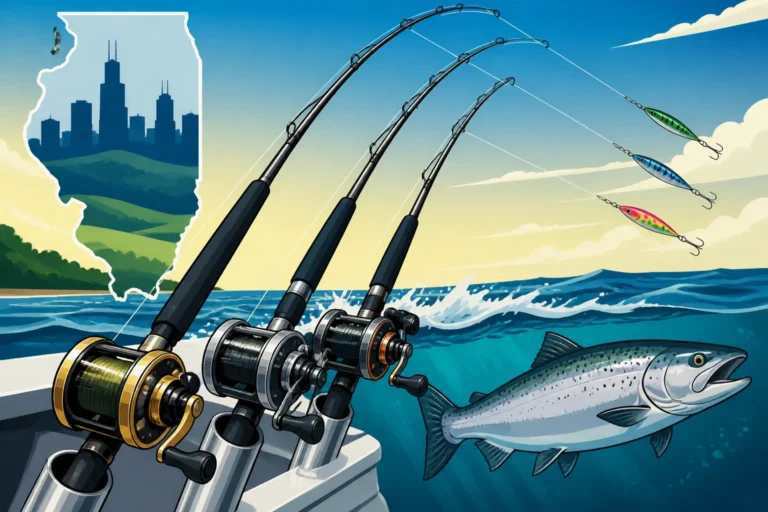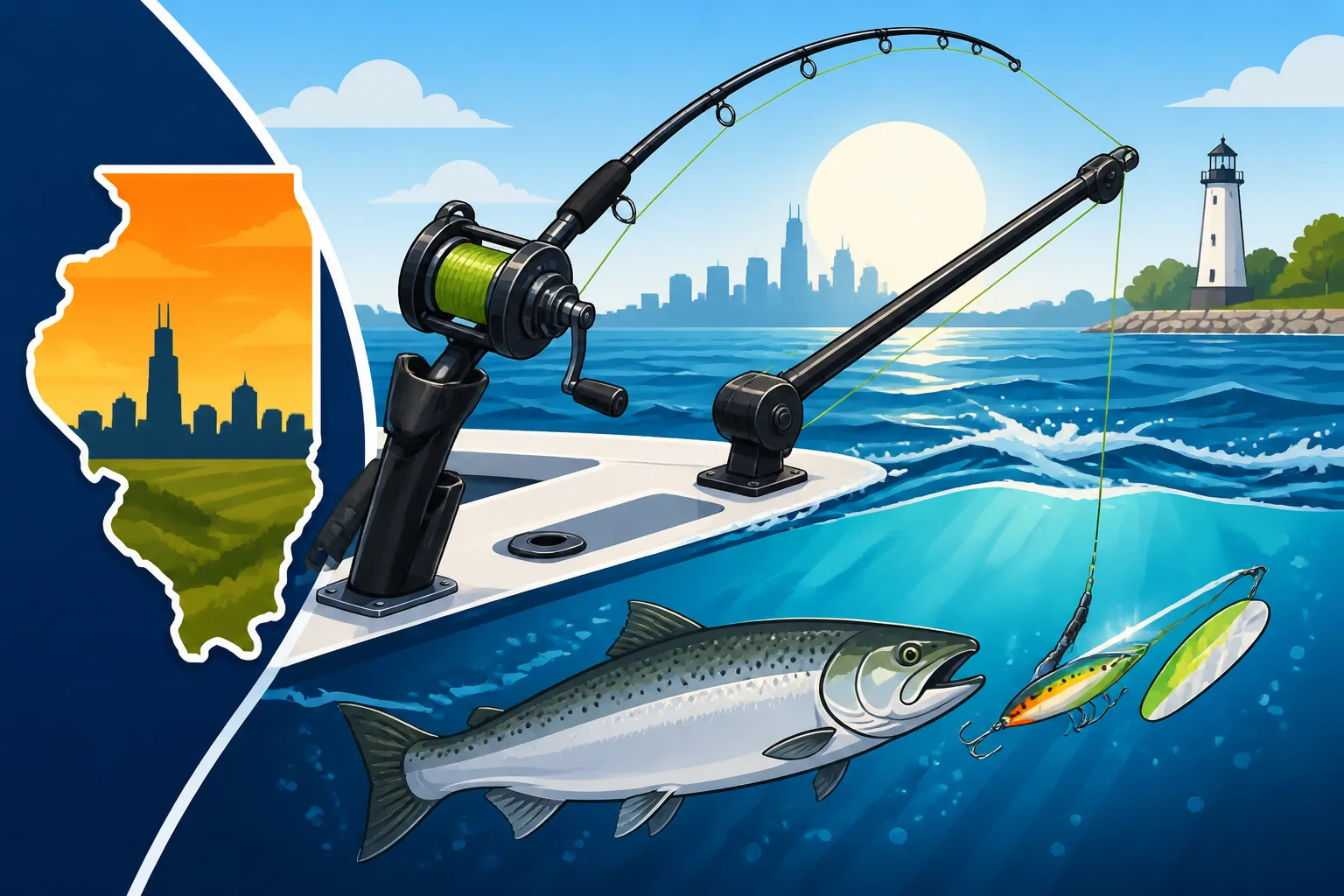
Illinois Lake Michigan Salmon Trolling Setup
Oh, the thrill of chasing salmon on Lake Michigan! It's an incredible experience, but if you're new to it, or even if you've been out a few times, the sheer amount of gear and the endless variations in setup can feel completely overwhelming. You might find yourself staring at rows of lures at the tackle shop or scrolling through endless options online, wondering where to even begin. This comprehensive guide is here to cut through the confusion and walk you through everything you need to know to assemble a top-notch trolling setup for Lake Michigan salmon right here in Illinois.
Understanding Lake Michigan Salmon Trolling Dynamics
Fishing Lake Michigan, especially for salmon and trout, isn't like casting a line into your local farm pond. This is big water, deep water, and often very cold water. Success often hinges on your ability to present your bait or lure at the precise depth where the fish are holding and to cover enough territory to find them. Trolling, which means dragging lures behind a moving boat, is the tried-and-true method for cracking the code of this vast and productive fishery. It allows you to search large areas and keep your offerings in the strike zone for extended periods, maximizing your chances of a hook-up.
The challenges are real: wind, waves, strong currents, and a constantly shifting thermocline can make it feel like you're fishing a different lake every day. But with the right gear and a solid understanding of how these factors influence fish behavior, you'll be well on your way to a successful day on the big lake.
The Deep Water Game: Why Trolling Works
Lake Michigan is incredibly deep, and salmon and trout species often suspend themselves in the water column, following baitfish like alewives. They're particularly drawn to the thermocline, which is a layer of water where the temperature changes rapidly. This layer often concentrates baitfish and, consequently, the predatory salmon and trout. Since these fish are constantly on the move, actively hunting for food in vast expanses of water, sitting still and waiting for them to come to you is usually not an effective strategy.
Trolling allows your boat to act like a giant, slow-moving net, pulling multiple lines at different depths and distances. This means you can effectively "sweep" through various parts of the water column, increasing your odds of encountering active fish. The speed and direction of your troll also impart a lifelike action to your lures, mimicking swimming baitfish, which is crucial for enticing a strike from these often finicky predators. It's about bringing the lure to the fish, rather than waiting for the fish to find a stationary lure.
Key Species and Their Habits
When you're trolling on Lake Michigan, you're primarily targeting several fantastic species, each with its own quirks and preferences. Knowing what you're after can help you tailor your setup and presentation.
Coho salmon are often found shallower than Chinook, especially in the spring and early summer, and they tend to be aggressive biters. They're known for their acrobatic fights and are a favorite among many anglers. Chinook salmon, often called King salmon, are the heavyweights. They fight with incredible power and often hold deeper, especially as the water warms up in summer. Landing a big King is a bucket-list experience for many. Lake trout are native to Lake Michigan and prefer colder, deeper water, often hugging the bottom or structure. They put up a strong, dogged fight. Finally, steelhead, or rainbow trout, are incredibly exciting. They’re often found in the upper parts of the water column and are famous for their aerial jumps and blistering runs. Understanding these different behaviors will inform your choice of lures, trolling speed, and the depths you target.
Seasonal Considerations for Salmon
The time of year dramatically impacts where salmon and trout will be in Lake Michigan and what kind of trolling setup will be most effective. This isn't a static fishery, and adapting to the seasons is crucial for consistent success.
In early spring, when the nearshore waters are still cold, coho salmon often stage closer to shore in shallower depths, sometimes as shallow as 10-30 feet. This is a prime time for small boats and simple setups, as the fish haven't spread out into the vastness of the lake yet. As summer progresses, the thermocline sets up, and both Coho and Chinook salmon will typically follow this temperature break, moving to deeper offshore waters, often 50-150 feet down, over even deeper water. This is when your full arsenal of downriggers and divers becomes indispensable. Finally, in the fall, as salmon prepare for their spawning runs, they might again move closer to the river mouths, and their feeding patterns can become more erratic. Adjusting your tactics and depths to these seasonal migrations is a key part of the Illinois Fishing Seasons Guide.
Essential Trolling Rods and Reels for Lake Michigan
Having the right rod and reel setup is paramount for Lake Michigan salmon trolling. You're not just casting; you're often fighting big, powerful fish in deep water, and your gear needs to be up to the task. It's not just about strength, but also about the right action, length, and line capacity to handle specific trolling presentations. Skimping on this foundational equipment can lead to frustration and lost fish, so it's worth investing in reliable gear that can withstand the demands of the big lake.
The Right Rod for the Job
Trolling rods for Lake Michigan salmon fishing are specifically designed to handle the stresses of pulling heavy weights (like downrigger balls and divers) and absorbing the powerful strikes of big fish. They are generally longer and have a more moderate action than typical casting rods. For downriggers, you'll want rods with a softer tip to absorb the shock of a strike when the line releases from the clip, but a strong backbone to horse in a powerful Chinook. These might be around 8 to 10 feet in length.
For planer boards or Dipsy Divers, you'll need a stiffer, often longer rod—sometimes 9 to 12 feet—to provide leverage and keep multiple lines separated. The longer length helps keep lines clear of the boat and each other, especially when running multiple boards. The extra leverage also helps when fighting a fish that's far out on a planer board. Look for rods made of durable graphite or fiberglass composites that can handle constant stress without fatiguing.
Line Counter Reels: Your Best Friend
Perhaps the most critical piece of your Lake Michigan trolling reel setup is the line counter feature. These specialized baitcasting reels have a mechanical counter that tells you exactly how much line you've let out. This is absolutely invaluable when you're trying to replicate a successful depth or presentation, or when you need to know precisely how far back your lure is running behind a planer board or diver. Without a line counter, you're essentially guessing, and consistency, which is key in trolling, goes out the window.
Imagine you get a strike on a spoon running 150 feet back behind a Dipsy Diver. With a line counter, you can instantly replicate that exact setup on another rod, doubling your chances. Reliable line counter reels can be found from many reputable brands, and you can explore a wide range of options at a dedicated outfitter like Bass Pro Shops or even conveniently order them online through Amazon. Make sure they have a smooth drag system and sufficient line capacity for 200-300 yards of your chosen mainline.
Line Choices and Leaders
The lines you choose for Lake Michigan trolling will vary depending on the specific application. For your main line, many anglers opt for a monofilament line in the 15-25 pound test range for its stretch, which acts as a shock absorber during violent strikes and head shakes. However, some prefer braided line for its zero stretch, offering maximum sensitivity to detect subtle bites and feel the action of lures. If using braid, you’ll typically want a fluorocarbon leader.
Fluorocarbon leaders are a game-changer for stealth and abrasion resistance. They are nearly invisible underwater, which can make a huge difference with pressured salmon. They also stand up well to the sharp teeth of a thrashing Chinook. For downriggers and divers, a 20-30 pound fluorocarbon leader of 6-10 feet is common, connected to your main line with a strong swivel or knot. The specific pound test of your main line and leader will depend on the size of fish you expect to encounter and the strength of the currents you are fishing, but err on the side of slightly heavier for increased durability. You can find more specific advice in our guide on Best Trolling Techniques for Illinois Lake Michigan Salmon and Trout.
Downriggers and Planer Boards: Depth and Spread Control
Once you've got your rods and reels, the next crucial components of a successful Lake Michigan salmon trolling setup are the tools that get your lures to the fish's depth and spread them out horizontally. Without these, you're severely limiting your ability to cover water and present your offerings effectively to salmon and trout that might be holding anywhere from just below the surface to over 100 feet down. These devices are truly the workhorses of the trolling spread, allowing you to fine-tune your presentation with incredible precision.
Mastering Downriggers for Deep Salmon
Downriggers are ingenious devices that allow you to precisely control the depth of your lures. They consist of a heavy cannonball-like weight (typically 8-15 pounds) attached to a steel cable, which is then lowered into the water using a winch system. Your fishing line is then clipped into a release mechanism on the downrigger cable, allowing your lure to run freely at the exact depth of the cannonball. When a fish strikes, the line pops free from the clip, and you're fighting the fish directly on your rod and reel, without the added weight of the cannonball.
This precision is vital because salmon and trout often hold in a very specific temperature band (the thermocline) or at a particular depth where baitfish are concentrated. Being able to drop a lure to, say, 73 feet and keep it there consistently as you troll is a huge advantage. Downriggers allow you to run multiple lines at different depths, effectively probing the entire water column. Regular maintenance, like checking cables for fraying and ensuring release clips are functioning correctly, is essential for avoiding lost fish and gear. For a deeper dive into this specific gear, check out Downriggers and Planer Boards for Lake Michigan.
Utilizing Planer Boards for Wide Spreads
While downriggers tackle vertical depth, planer boards handle horizontal spread. These are essentially small, buoyant boards that "plane" out to the side of your boat when trolled, carrying your fishing lines far away from the boat's wake. This allows you to effectively widen your trolling spread, presenting lures in undisturbed water that might be less spooked by your boat's presence. There are two main types: in-line boards, which attach directly to your fishing line and run out one by one, and mast systems, which use a central mast on the boat to deploy larger boards that carry multiple lines.
Using planer boards means you can run many lines simultaneously without tangling. A typical setup might involve running two or three boards off each side of the boat, each carrying a different lure or presentation. This dramatically increases the amount of water you can cover and allows you to test different depths and colors simultaneously. It's a fantastic way to locate active fish, especially when they are scattered or cruising in shallower water. Learning to deploy and retrieve them efficiently takes a bit of practice but pays off immensely in terms of increased catches.
Divers and Lead Core: Alternative Depth Seekers
Beyond downriggers and planer boards, other tools help achieve depth and spread. Dipsy Divers are disc-shaped devices that attach to your main line and dive when trolled. They also have an adjustable fin that allows them to "divert" out to the side of the boat, similar to a mini planer board, but also achieve depth. You can set them to run straight back or angle out to the left or right, adding more spread to your presentation. They come in various sizes, with larger ones diving deeper.
Lead core line is another popular option, especially for presenting lures in the mid-depth range. This fishing line has a lead core wrapped in a braided sheath, which causes it to sink. The line is typically color-coded every 10 yards, with each color representing roughly 5-7 feet of depth at a standard trolling speed. By letting out a certain number of colors, you can achieve a desired depth without additional weights. Copper line works on a similar principle but is denser, allowing for even deeper presentations with less line out. Both lead core and copper provide a unique, often subtle, S-curve action to lures as the boat turns, which can be irresistible to salmon.
Lures and Baits for Lake Michigan Salmon
The vast array of lures available for Lake Michigan salmon fishing can be daunting. Walk into any tackle shop or browse online, and you’ll see walls covered with spoons, dodgers, flies, and crankbaits in every color imaginable. However, understanding the core types and knowing when and why to use them can significantly simplify your choices and increase your success. The goal is to mimic the natural forage (primarily alewives and smelt) or to trigger an aggressive reaction strike from a hungry salmon.
Spoons: The Versatile Salmon Killer
Spoons are arguably the most popular and versatile lure for Lake Michigan salmon and trout. Their unique shape causes them to flutter and wobble when trolled, imitating a wounded baitfish. They come in various sizes, weights, and thicknesses. "Flutter spoons" are lighter and thinner, designed for slower trolling speeds and a wider, more erratic action. Heavier, thicker spoons are better for faster speeds or deeper presentations where they maintain their action without spinning out.
Color is incredibly important with spoons. Common patterns include silver, gold, copper, chartreuse, blue, green, and combinations thereof. Many also feature UV or glow finishes, which can be crucial in deeper or darker water conditions. Matching the hatch (using colors that resemble the local baitfish) is always a good starting point, but don't be afraid to experiment. Sometimes, a bright, unnatural "attractor" color can trigger a strike when fish are finicky. Keep a diverse selection of spoons in your tackle box to cover various conditions, from sunny days to overcast skies, and clear water to more turbid conditions.
Dodgers and Flies: Attractors and Imitators
Dodgers and flies work together as an incredibly effective system for salmon. The dodger is not a lure itself but an attractor. It's a large, often oval or rectangular piece of metal or plastic that wobbles vigorously when trolled. This erratic action creates vibrations and flashes of light in the water, mimicking a school of baitfish or simply drawing the attention of predatory salmon. The "fly" (which is actually a small, skirted artificial lure, often resembling a squid or minnow) is then tied on a short leader, typically 12-30 inches, behind the dodger. The dodger's action imparts a darting, lifelike movement to the fly, making it irresistible.
This combo is particularly deadly for Coho and Chinook salmon. Colors for dodgers and flies often follow similar principles to spoons, with bright fluorescent colors, metallic finishes, and UV patterns being popular. "Meat rigs," which combine a dodger and a fly with a piece of cut bait (like an alewife fillet), add scent to the equation, making them even more potent, especially for larger Chinook salmon. It’s a great way to combine visual attraction with natural scent.
Understanding Color and Action
Beyond the type of lure, understanding how color and action play a role in salmon fishing can elevate your game. Salmon's vision changes with light penetration and water clarity. On bright, sunny days and in clear water, naturalistic colors and subtle actions might be best. On overcast days, or in deeper, darker water, brighter colors, UV finishes, or glow lures can be more effective as they stand out more. The action of a lure, whether it's a wide wobble, a tight dart, or a quick flutter, also needs to match the mood of the fish. Sometimes, an aggressive, fast-moving lure will draw strikes, while other times, a slow, methodical presentation is key.
Experimentation is key, and it’s wise to start with a diverse spread of colors and actions until the fish tell you what they prefer. Keep an eye on the water temperature and clarity, as these factors often correlate with certain color preferences. Don’t be afraid to try something completely different if the bite is slow! You can often find a wide variety of these specialized lures and baits at competitive prices, whether you're stocking up at a local Bass Pro Shops or browsing the extensive selection available on Amazon. For more on selecting baits, refer to Seasonal Bait Selection Guide.
Essential Electronics and Safety Gear
Venturing out onto Lake Michigan for salmon trolling is an exciting endeavor, but it's also a serious one. The lake can be unpredictable, and conditions can change rapidly. Beyond your fishing tackle, having reliable electronics for navigation and fish finding, as well as a comprehensive array of safety gear, is not just recommended—it's absolutely essential. These items provide peace of mind, ensure you can navigate safely, and drastically increase your chances of finding and catching fish.
Navigating and Locating Fish with Electronics
Modern marine electronics have revolutionized Lake Michigan salmon fishing. A high-quality fish finder is your window into the underwater world. It allows you to see the thermocline, identify baitfish schools, and even mark individual salmon or trout as "arcs." Learning to interpret these readings is crucial for positioning your lures in the strike zone. You'll want a unit with good resolution and the ability to distinguish between different types of targets.
GPS is equally vital. It allows you to precisely navigate to your favorite fishing grounds, mark productive trolling passes as waypoints, and track your boat's speed and direction with pinpoint accuracy. This helps you replicate successful patterns and avoid running over already-fished water. A marine radio (VHF) is also a non-negotiable piece of equipment. It allows you to communicate with other boats, monitor weather broadcasts, and, most importantly, call for help in an emergency. In the vastness of Lake Michigan, cell phone service can be unreliable, making a marine radio your primary link to safety.
Crucial Safety Equipment for Big Water
Safety on Lake Michigan cannot be overstated. Personal Flotation Devices (PFDs), or life jackets, are at the top of the list. You must have a Coast Guard-approved PFD for every person on board, and children under a certain age (typically 13 in Illinois) must wear them while the boat is underway. Beyond simply having them, ensure they are in good condition and readily accessible. A throwable Type IV PFD is also required for boats 16 feet or longer.
Other critical safety items include visual distress signals (flares or an electronic strobe light) and an audible signaling device (a horn or whistle). A well-stocked first aid kit is a must for any minor injuries. It's also wise to have a basic emergency kit with a spare knife, flashlight, duct tape, and some basic tools. Always tell someone on shore your float plan – where you're going, who's with you, and when you expect to return. This simple step can be a lifesaver. For detailed information on these requirements, consult Illinois Life Jacket and PFD Rules and Illinois Boater Education Card Requirements.
Weather Monitoring and Preparedness
Lake Michigan is notorious for its rapidly changing weather. A calm morning can quickly turn into a rough and dangerous afternoon. Always check the marine weather forecast before you leave the dock and continue to monitor it throughout the day using your marine radio or weather apps. Pay close attention to wind speed and direction, wave heights, and any special marine warnings.
Never push your luck if the forecast looks questionable or if conditions start to deteriorate. It's far better to err on the side of caution and head back to shore early than to risk your safety and your boat. Dress in layers, even on warm days, as temperatures can drop significantly when you're offshore. Being prepared for unexpected shifts in weather is a hallmark of a responsible Lake Michigan angler, ensuring that your pursuit of salmon remains a safe and enjoyable adventure.
Putting It All Together: A Typical Trolling Spread
Alright, you’ve got the rods, reels, depth control, and lures. Now comes the art of putting it all together into an effective trolling spread. This is where experience and a keen understanding of fish behavior really shine. The goal is to deploy multiple lines at various depths and distances, creating a "net" in the water that maximizes your chances of intercepting active salmon and trout. It’s a dynamic process, often requiring constant adjustment as you read your electronics and observe what the fish are doing.
Developing Your Trolling Strategy
Before you even drop a line, think about your strategy. What species are you primarily targeting? What depth is the thermocline at? Where are you seeing baitfish on your sonar? Start with a varied spread, often referred to as a "search pattern," which involves deploying different lures at different depths and distances. This allows you to quickly figure out what the fish are keying in on regarding depth, color, and lure action.
As you troll, pay close attention to your fish finder. Are you seeing baitfish schools? Are there arches indicating larger fish? If you get a strike, immediately note the depth, the lure, and the amount of line out. This information is gold and should be used to replicate the successful setup on other rods. Don't be afraid to adjust your speed, make S-turns, or even change direction entirely if you're not getting bites. Flexibility and a willingness to adapt are crucial for consistent success on Lake Michigan.
Example Spread for Diverse Depths
A typical Lake Michigan salmon trolling spread usually involves a combination of different tools to cover various parts of the water column. Here’s a hypothetical example of a spread designed to probe multiple depths, assuming a thermocline around 50-70 feet:
- Top Lines (Surface to 20 feet): Use large planer boards to get lines far out from the boat. These might be rigged with shallow-diving crankbaits or spoons on light lead core, targeting active Coho or Steelhead near the surface.
- Mid-Depths (20-50 feet): Dipsy Divers are excellent here. Run them straight back or angled out to the sides, with spoons or dodger-and-fly combos. Experiment with different leader lengths behind the diver. You might also run some medium-length lead core lines in this zone.
- Deep Water (50-100+ feet): This is where your downriggers shine. Deploy two or three downriggers, staggering them at different depths within the thermocline or just above it. For example, one might be at 55 feet, another at 65 feet, and a third at 75 feet. Rig them with spoons, dodger-and-fly combos, or meat rigs.
Here’s a quick overview of a potential spread:
| Position | Device | Target Depth (ft) | Lure Type | Primary Target | Notes |
|---|---|---|---|---|---|
| Outermost (Port/Starboard) | Planer Board | 0-15 | Shallow Crankbait | Coho, Steelhead | Farthest from boat, often unspooked fish |
| Mid-Out (Port/Starboard) | Planer Board / Lead Core | 10-25 | Spoon / Fly | Coho, Steelhead | Mix of surface and slightly deeper |
| Diver (Port/Starboard) | Dipsy Diver | 20-50 | Spoon / Dodger & Fly | Coho, Chinook, Lakers | Angled out, good search bait |
| Downrigger 1 | Downrigger | 50-60 | Spoon | Chinook, Coho | Top of thermocline |
| Downrigger 2 | Downrigger | 60-70 | Dodger & Fly | Chinook, Lakers | Middle of thermocline |
| Downrigger 3 | Downrigger | 70-85 | Meat Rig | Chinook, Lakers | Deeper thermocline/near bottom |
Remember, this is just a starting point. The best spread for you will depend on the conditions, species, and your specific boat setup.
Fine-Tuning Your Presentation
Once your spread is out, the work isn't over. Small adjustments can make a huge difference. Your boat speed is critical. Different lures have optimal speeds at which they exhibit their best action. Spoons might prefer 2.0-2.5 mph, while dodgers and flies often perform better at slightly slower speeds. Watch your downrigger cables; if they're vibrating too much, you might be going too fast for that specific lure.
Making subtle turns (S-curves) with your boat can also be incredibly effective. As your boat turns, the lures on the inside of the turn will slow down and drop, while those on the outside will speed up and rise. This change in speed and depth can often trigger a hesitant fish to strike. Continuously observe your setup, watch for patterns, and don't be afraid to change out a lure or adjust a depth if a particular presentation isn't producing. Learning to read the water, your electronics, and the fish themselves is the ultimate goal in mastering the Illinois Lake Michigan Salmon Trolling Setup.
The thrill of hearing a reel scream as a powerful salmon takes your bait, knowing you’ve carefully assembled your gear and strategically presented your offerings, is truly one of the most rewarding experiences in Illinois fishing. While the initial setup for Lake Michigan salmon trolling might seem like a lot, each piece of equipment plays a vital role in connecting you with these incredible fish. Don't be afraid to start simple, learn from every trip, and gradually expand your arsenal and techniques. The big lake offers endless opportunities for discovery, and with a solid trolling setup, you're ready to embrace the adventure.
Disclaimer
This article is for general informational purposes only and does not constitute professional advice. Laws, prices and regulations vary by location and change over time. Consult a qualified professional for guidance on your specific situation.