Coho Salmon Fishing in Illinois: What to Expect
For many Illinois anglers, the dream of hooking into a powerful, acrobatic salmon isn't just a fantasy reserved for coastal states; it's a vibrant reality on Lake Michigan. Coho salmon fishing in Illinois offers an exhilarating challenge, from battling these silver rockets near the shore in early spring to pursuing them offshore during the warm summer months. This guide is designed to set your expectations straight, walking you through the seasons, the gear, the best spots, and the responsible practices that make a successful coho salmon outing a truly memorable experience.
The Allure of Coho Salmon in Illinois Waters
There’s something undeniably special about chasing coho salmon in Illinois. For many, it’s the combination of their spirited fight, their delicious flavor, and the sheer accessibility of a world-class fishery right here in the Midwest. These aren't just any fish; they’re an integral part of the Lake Michigan angling scene.
Why Coho Salmon are a Favorite Target
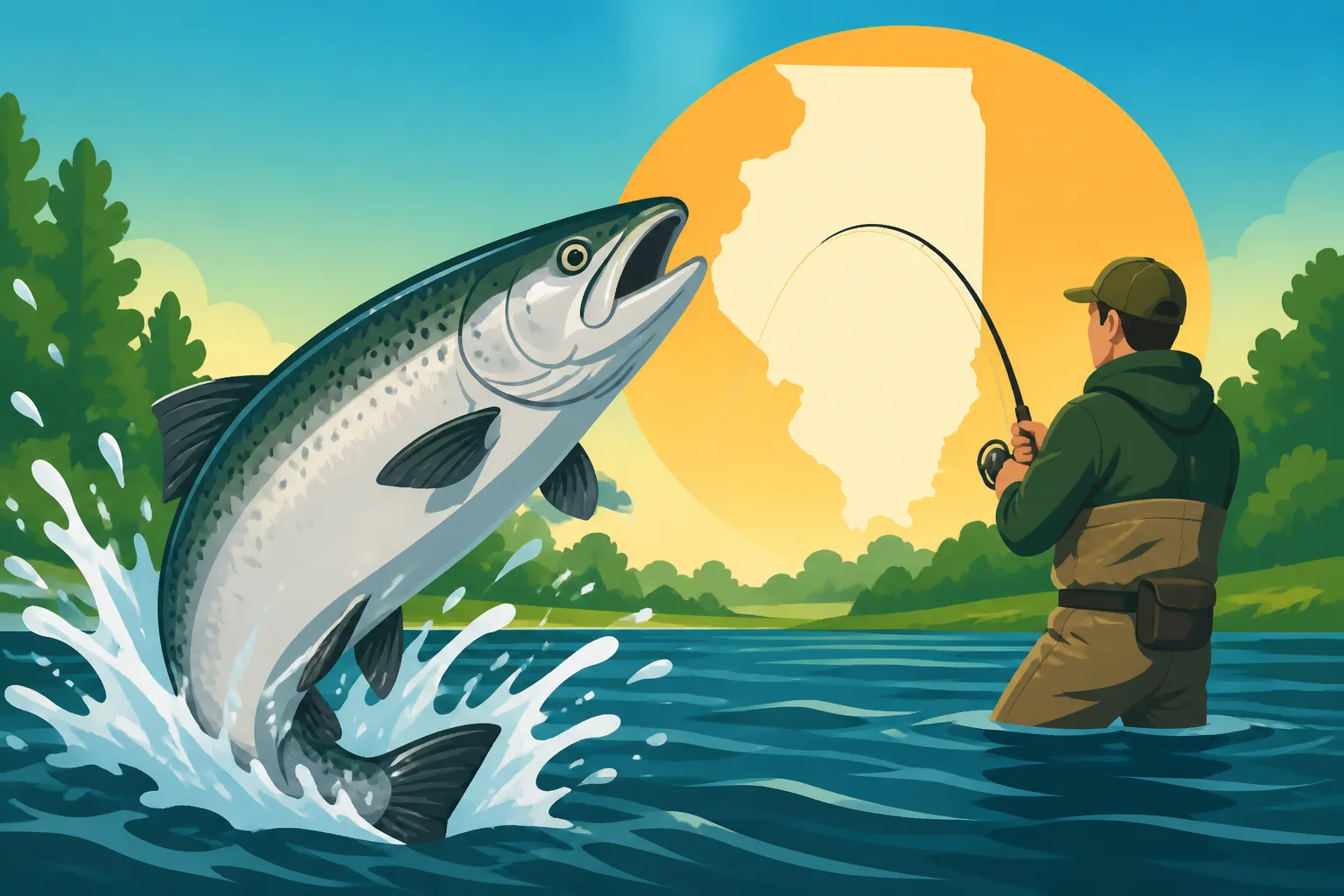
When a coho salmon hits your line, you know it. They're known for their aggressive strikes, blistering runs, and impressive aerial acrobatics. Unlike some other species that might just offer a heavy tug, a coho will often leap clear of the water, shaking its head in an attempt to throw the hook. This makes for an incredibly exciting and visually dramatic fight that keeps anglers coming back year after year. Beyond the fight, coho salmon are highly regarded for their rich, flavorful meat, making them a fantastic catch for the dinner table. Whether you're smoking them, grilling them, or pan-searing a fresh fillet, the reward of a fresh coho is hard to beat. The opportunity to experience such a powerful freshwater game fish, often within a short drive of major metropolitan areas, is truly a gift.
A Brief History of Coho in Lake Michigan
The presence of coho salmon in Lake Michigan is actually a testament to successful fishery management. These Pacific salmon species weren't originally native to the Great Lakes. They were first introduced in the mid-1960s, primarily to help control burgeoning populations of alewife, an invasive baitfish that was causing ecological imbalances and die-offs in the lake. The program was a resounding success. Coho salmon quickly established themselves, finding abundant food sources in the alewife and thriving in the cold, deep waters of Lake Michigan. Today, the Illinois Department of Natural Resources (IDNR) continues to manage the coho population through stocking programs, ensuring a consistent and healthy fishery for anglers. It’s a remarkable example of how thoughtful intervention can create an incredible fishing resource, offering generations of anglers the chance to chase these magnificent fish.
Prime Time for Coho: Understanding the Seasons
Coho salmon fishing in Illinois is very much a seasonal pursuit. Knowing when and where to target them can make all the difference between a slow day and a banner day on the water. Their movements are largely dictated by water temperature and food availability, leading to distinct patterns throughout the year.
Early Spring: The Shoreline Bonanza
As winter's grip begins to loosen and water temperatures in Lake Michigan slowly creep up, typically in late March and April, coho salmon move into the shallower, warmer nearshore waters. This is often referred to as the "shoreline bite" or "skokie" season, and it's a phenomenal time for both boat and pier anglers. The fish are actively feeding on baitfish that are also drawn to these warmer zones. For shore anglers, this means opportunities from piers, jetties, and breakwalls along the Chicago lakefront, Waukegan, and other harbors. Small boats can also find excellent action close to shore, often in water as shallow as 10-20 feet. Casting spoons, small crankbaits, or even bobber fishing with minnows or spawn sacs can be incredibly effective. Anglers often find their success peaking when the surface water temperatures reach the high 30s to low 40s Fahrenheit. Understanding these temperature triggers is crucial for predicting the bite. For more details on this peak time, check out Best Time of Year for Lake Michigan Salmon in Illinois.
Summer: Offshore Trolling Adventures
As spring gives way to summer and Lake Michigan's surface waters warm considerably, coho salmon retreat to the cooler, deeper waters offshore. This is when the serious boat anglers head out, often traveling several miles from shore to find the fish congregating in the thermocline—the layer of water where temperature changes rapidly. Summer coho fishing is almost exclusively a trolling game. Anglers deploy a spread of lines at various depths using specialized gear like downriggers, Dipsy Divers, and lead core line to present lures to fish holding anywhere from 30 to 80 feet deep or more, depending on the thermocline. Spoons in vibrant colors, often run behind dodgers or flashers, are perennial favorites. The key during summer is covering a lot of water and experimenting with depths until you locate active fish. This period can offer incredible limits of coho, often mixed with other salmon and trout species.
Fall: The Pre-Spawn Rush and River Runs Limited
As the cooler temperatures of autumn begin to settle in, coho salmon once again start to move closer to shore. This "fall run" is driven by their biological imperative to spawn. While Illinois has very limited natural spawning rivers that coho can access from Lake Michigan, anglers can still find fish congregating in and around harbors, mouths of rivers, and nearshore areas as they stage before their final, often fruitless, attempts to reproduce. The fall bite can be a mix of trolling and casting, similar to spring, but often with larger, more mature fish. While some coho may enter larger rivers like the Illinois River or the Fox River, they typically do not successfully spawn there due to habitat limitations and barriers. Therefore, the primary fall action remains centered on the lakefront itself. The fish can be incredibly aggressive during this pre-spawn period, making for some exciting battles, but remember that these fish are nearing the end of their life cycle.
Essential Gear and Techniques for Coho Success
To consistently catch coho salmon, you'll want to have the right tools for the job and a good understanding of how to use them. Whether you're casting from a pier or trolling from a boat, having appropriate gear is paramount.
Rods, Reels, and Line for Coho
For shore and pier fishing, a medium-heavy spinning rod, typically 8 to 10 feet long, is an excellent choice. This length provides the casting distance needed to reach active fish and the backbone to handle a fighting coho. Pair it with a sturdy spinning reel capable of holding at least 150-200 yards of 10-15 lb test monofilament or braided line. Braided line offers superior sensitivity and casting distance, but you'll want to tie on a 2-3 foot fluorocarbon leader (10-12 lb test) to provide invisibility and abrasion resistance. When it comes to boat fishing and trolling, specialized gear is the name of the game. Trolling rods are generally shorter and more parabolic, designed to handle the constant pressure of a trolled lure and the shock absorption needed for strong salmon runs. They typically range from 7 to 9 feet in length, often with a medium to medium-heavy action. These are usually paired with baitcasting reels spooled with heavier mono, braided, or even lead core line. When selecting your reel, look for models with a smooth drag system, which is critical for preventing break-offs during those sudden coho surges. You can find a wide array of reliable rods, reels, and lines for both shore and boat fishing on platforms like Amazon, offering convenience and variety.
Lures and Baits That Coho Can't Resist
Coho salmon are opportunistic feeders, but certain lures consistently produce results. Spoons are arguably the most popular and effective lures for coho. Popular choices include Michigan Stinger spoons, Luhr Jensen Kwikfish, and Dardevle spoons. Colors often vary based on water clarity and sunlight, but bright colors like chartreuse, orange, and hot pink, often with silver or gold backs, are fantastic in cloudy water or low light. In clear water, natural baitfish patterns like blue/silver or green/silver can be deadly. Small crankbaits, particularly those with a tight wobble like Rapala Shad Raps or Berkley Flicker Shads, are also very effective, especially for spring shore fishing or when fish are suspended shallower. Many anglers also have great success with dodgers and flies. A dodger acts as an attractor, creating a wobbling action that draws fish in, while the fly, tied a short distance behind, provides the actual bait imitation. Lastly, for those open to bait, cut bait (like pieces of herring or alewife) or even live smelt can sometimes tempt reluctant coho, though lures are generally preferred for their active presentations.
Trolling Setups for Lake Michigan
For boat anglers, mastering the art of trolling is essential for consistent coho success in Lake Michigan. This involves deploying multiple lines at various depths and distances behind the boat. Lake Michigan Salmon Trolling Setup dives deeper into this, but here's a quick overview. Downriggers are hydraulic or electric devices that use a heavy weight (called a cannonball) to take your lure down to a precise depth. The fishing line is attached to the cannonball with a release clip, which pops off when a fish strikes. Planer boards are another crucial tool, especially for spreading out lines horizontally, away from the boat, to cover a wider area and avoid spooking fish. Inline planer boards are smaller and attach directly to the main fishing line, while larger mast-and-board systems are used by more dedicated charter operations. For those without downriggers, lead core line is an excellent alternative. This specialized line is weighted, allowing your lure to sink to various depths depending on how much line you let out and how fast you're trolling. Diving planers like Dipsy Divers also help achieve depth without a heavy cannonball. The goal with all these setups is to present your chosen lure or bait directly in front of active fish, typically in or around the thermocline, or in the shallower zones during spring. Having a variety of trolling gear, which can be easily sourced from outdoor retailers or online platforms such as Amazon, allows you to adapt to changing conditions and fish movements. For a comprehensive look at the equipment, refer to Lake Michigan Trolling Gear for Salmon and Trout.
Where to Find Coho in Illinois: Top Fishing Spots
Knowing the general seasons is one thing, but knowing the specific spots can make all the difference. Illinois offers several fantastic locations along its Lake Michigan shoreline where coho salmon can be found, catering to both boat and shore anglers.
Lake Michigan Harbors and Piers
For many shore-bound anglers, the numerous harbors and piers along the Illinois Lake Michigan coastline are the prime locations for targeting coho, especially in early spring and fall. These areas provide easy access to deeper water and often hold baitfish, which in turn attract hungry salmon. The Chicago Lakefront is perhaps the most famous, with key spots like Montrose Harbor, Belmont Harbor, and Navy Pier. Anglers here often cast spoons or crankbaits from the breakwalls and jetties. Further north, Waukegan Harbor is another extremely popular coho hotspot, known for its consistent action, especially in the spring. South of Chicago, areas around Calumet Park also offer opportunities. The deeper water close to the shore in these protected harbor areas acts as a refuge for baitfish, which then draws in the coho. These locations are particularly effective during the spring when the warmer shallow water attracts both bait and salmon. For specific advice on these areas, consult Chicago Pier Spots for Lake Michigan Salmon.
Offshore Hotspots and Structures
For boat anglers, the vastness of Lake Michigan opens up a world of offshore possibilities. While specific "hotspots" can change daily based on fish movement, there are general areas and conditions that consistently attract coho. Look for temperature breaks, which are abrupt changes in water temperature, as these often concentrate baitfish and salmon. Underwater structures like cribs, reefs, or even subtle changes in bottom contour can also hold fish. These aren't always visible on the surface, making a good fish finder an invaluable tool for locating these features and the fish holding around them. Often, anglers will target offshore areas that are 20-60 feet deep in spring, moving to 60-150+ feet in summer, always focusing on where the thermocline is present and where baitfish schools are showing up on their electronics. Sometimes, even finding a large congregation of gulls diving on baitfish can point you to an active coho bite.
Understanding Coho Movement
Successful coho fishing on Lake Michigan isn't just about showing up; it's about understanding why the fish are where they are. Their movements are largely dictated by a few key factors: water temperature, baitfish location, currents, and weather patterns. Coho are cold-water fish, preferring temperatures in the 40s and 50s Fahrenheit. If the surface water is too warm, they'll seek deeper, cooler water. Conversely, in early spring, they'll seek out the warmest available water near shore. Baitfish, primarily alewives and smelt, are their main food source, so finding schools of bait on your fish finder is often the first step to finding coho. Strong currents can concentrate bait and fish in certain areas, and sudden weather changes, like cold fronts, can often make fish more lethargic or move them entirely. Being adaptable and willing to experiment with different depths, lures, and locations based on current conditions is the hallmark of a successful coho angler.
Regulations, Safety, and Ethical Angling
Fishing for coho salmon in Illinois is not just about the catch; it’s also about respecting the resource, ensuring your safety, and adhering to the rules. Being a responsible angler contributes to the longevity of this incredible fishery for everyone.
Illinois Coho Salmon Regulations
Like all fishing in Illinois, coho salmon fishing is subject to specific regulations designed to manage fish populations and ensure sustainable angling opportunities. While the general rules for salmon and trout in Lake Michigan are fairly consistent, it is absolutely critical to consult the most current Illinois Department of Natural Resources (IDNR) Fishing Information Guide before each season or trip. This guide will detail specific daily creel limits (the number of fish you can keep), possession limits (the total number you can have in your possession), and any minimum length limits that may be in effect. For example, there might be a combined daily limit for all salmon and trout species, with specific minimum sizes for each. These rules can change, so always check the latest information. Additionally, you will need a valid Illinois fishing license, and if you're fishing for salmon or trout, you'll also need a Lake Michigan Salmon Stamp. Ignoring these regulations can lead to significant penalties. For a broader understanding of statewide rules, refer to Illinois Fishing Regulations Overview.
Staying Safe on Lake Michigan
Lake Michigan is a magnificent body of water, but it demands respect. Safety should always be your number one priority, especially when heading offshore in a boat. The weather can change rapidly on the Great Lakes, turning calm waters into dangerous waves in a matter of minutes. Always check the marine weather forecast before you go and be prepared to cut your trip short if conditions deteriorate. Essential safety gear includes properly fitting life jackets for everyone on board (Illinois Life Jacket and PFD Rules), a marine radio or fully charged cell phone for communication, visual distress signals, a sound-producing device (like a horn or whistle), and navigation lights if fishing after dark. File a float plan with someone on shore, letting them know where you're going and when you expect to return. Even in calm conditions, things can go wrong, so being prepared can be the difference between a minor inconvenience and a serious emergency.
| Season | Primary Location | Common Techniques | Essential Gear | Key Considerations |
|---|---|---|---|---|
| Early Spring | Nearshore, Harbors, Piers | Casting spoons/crankbaits, Bobber fishing | Long spinning rod, Medium spinning reel, Spoons, Crankbaits | Water temperature (38-45°F), Baitfish presence, Wind direction |
| Summer | Offshore (Thermocline) | Trolling spoons/flies with attractors | Trolling rods, Baitcasting reels, Downriggers, Planer boards, Dipsy Divers, Spoons, Flies, Dodgers | Locating thermocline, Baitfish schools, Covering water |
| Fall | Nearshore, Harbors | Casting spoons, Trolling close to shore | Same as early spring/summer, but heavier gear | Pre-spawn staging, Cooler water, Limited river access |
Practicing Ethical Angling
As stewards of our natural resources, ethical angling practices are crucial for maintaining a healthy and enjoyable fishery. If you're practicing catch and release, handle fish carefully and release them quickly to maximize their survival chances. Minimize air exposure, use wet hands when handling, and consider de-hooking tools. For fish you intend to keep, dispatch them quickly and humanely. Always dispose of fishing line, bait containers, and any other trash properly. Never leave it on shore or throw it into the water. Respect private property and other anglers, giving them plenty of space. By adhering to regulations and practicing responsible angling, you help ensure that coho salmon fishing remains a thrilling and sustainable pursuit for generations to come in Illinois. It's about preserving the experience for everyone.
Disclaimer
This article is for general informational purposes only and does not constitute professional advice. Laws, prices and regulations vary by location and change over time. Consult a qualified professional for guidance on your specific situation.