Best Bait for Blue Catfish
If you've ever cast a line hoping to land one of Illinois's truly giant catfish, you know the frustration when the smaller channel cats keep biting, or worse, nothing hits at all. Blue catfish are a different beast entirely, requiring a nuanced approach, especially when it comes to what you put on your hook. This guide is all about cutting through the noise and equipping you with the real-world bait strategies that will give you the best shot at hooking into those elusive, massive blue cats in our Illinois waters.
Understanding Blue Catfish and Their Diet in Illinois Waters
Before we even talk about specific baits, it's crucial to understand the magnificent creature you're targeting. Blue catfish aren't just bigger versions of their channel cat cousins; they have distinct preferences and habits that dictate what bait will be most effective. Ignoring these fundamental differences is often why anglers struggle to consistently find success with these incredible fish.
What Makes Blue Catfish Different from Other Catfish?
Think of blue catfish as the powerful, deep-water predators of the catfish family. While channel cats are more common in a wider variety of habitats and flatheads are ambush predators usually found near structure, blue catfish often prefer the main channels of large rivers and sprawling reservoirs, gravitating towards deeper water with good current. They are built for power and sustained fighting, and their diet reflects this. Unlike the more omnivorous channel cat or the purely live-bait-eating flathead, blue catfish have a strong preference for fish, making them primarily piscivorous. They're also known to school up, particularly the larger ones, which means if you find one, you might find many! For a deeper dive into how these species compare, you might want to check out our guide on Channel Catfish vs Blue Catfish vs Flathead Catfish in Illinois. Understanding these distinctions is your first step to better bait selection.
General Feeding Habits and Preferences
Blue catfish are equipped with an incredible sense of smell, which they use to track down food, especially in the often turbid waters they inhabit. Their barbels are essentially highly sensitive chemical detectors, allowing them to follow a scent trail from a considerable distance. While they primarily feast on other fish, they are opportunistic and won't turn down a good meal. This means that while fresh cut bait is almost always king, they'll scavenge on dead or dying fish, mussels, and even crayfish if the opportunity arises. This keen sense of smell, combined with their tendency to roam deeper water, means your bait needs to put out a serious aroma and be presented where they're actively hunting. The biggest blue catfish are almost always found on the hunt for a protein-packed meal, not nibbling on worms. In places like the Mississippi River Catfish: Why Southern Illinois Waters Produce So Many, these feeding habits are particularly pronounced due to the abundance of baitfish.
The Best Natural Baits for Blue Catfish in Illinois
When it comes to blue catfish, especially those trophy-sized monsters, natural bait is almost always the superior choice. Forget about most of the fancy, pre-packaged stuff; these fish are tuned into the scents and textures of real food found in their environment. Your goal is to replicate that as closely as possible.
Cut Bait: The Undisputed King
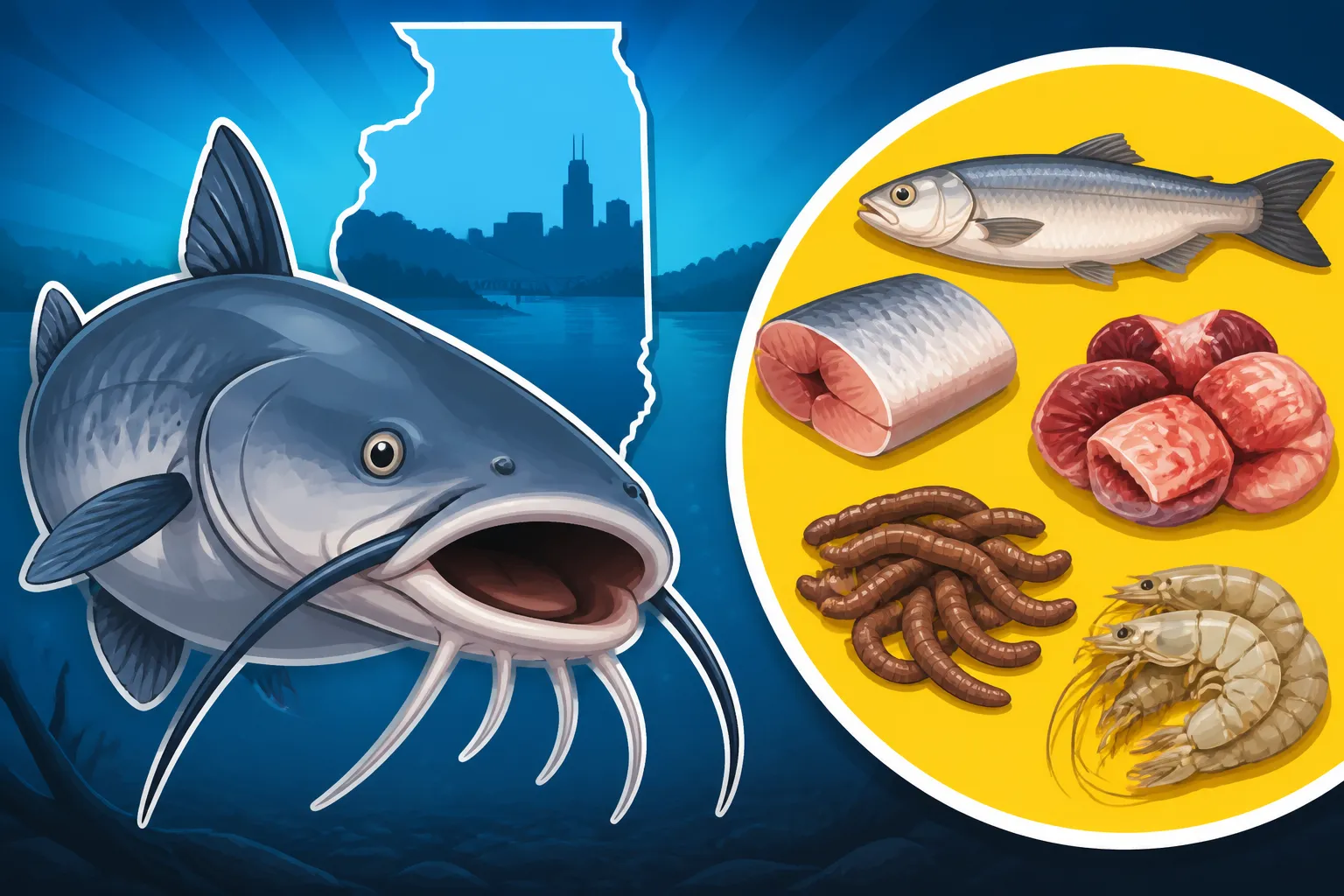
If there's one bait that consistently outshines all others for blue catfish, it's fresh cut bait. The reason is simple: it bleeds and emits a strong, natural scent trail that calls to blue catfish from afar. They are wired to detect and home in on distressed or dead fish, and cut bait perfectly mimics this. The fresher the bait, the better, as the scent is more potent.
Best Species for Cut Bait:
- Shad (Gizzard and Threadfin): These are often considered the gold standard. They are oily, abundant in many blue catfish waters, and emit a fantastic scent. If you can net some fresh shad, you're already ahead of the game.
- Skipjack Herring: A favorite on the Mississippi and Ohio rivers, skipjack are incredibly bloody and oily, making them irresistible to big blues. They can be harder to find in some parts of Illinois but are worth the effort if available.
- Common Carp: Don't overlook the humble carp! They're readily available, often considered a nuisance fish, and make excellent cut bait. They are tough, stay on the hook well, and produce a strong scent.
- Drum (Sheepshead): Another highly effective cut bait, especially for larger blues. Drum have oily flesh and tough scales, making them durable on the hook.
- Asian Carp (Bighead, Silver, Grass Carp): While invasive, these carp are becoming increasingly common and can be a surprisingly good cut bait due to their oiliness and availability. Just make sure you're familiar with regulations regarding their use as bait.
How to Prepare Cut Bait:
The preparation depends on the size of the baitfish and the size of the blue catfish you're targeting.
- Chunks: For medium-sized blue cats, or when using smaller baitfish like shad, cutting the fish into 1-2 inch chunks works great. Make sure each chunk has some skin and guts exposed for maximum scent dispersal.
- Fillets: For larger baitfish like carp or drum, filleting a side off and then cutting that fillet into strips (say, 1×4 inches) can be effective. The strips will flutter in the current, adding an enticing visual element.
- Head Sections: The head of a larger baitfish (like a carp or a larger shad) can be incredibly effective for targeting monster blue cats. There's a lot of scent in the head, and it presents a substantial meal.
Remember, the goal is to create a strong scent plume in the water. Fresh, oily, bloody cut bait is your absolute best friend when chasing blue catfish in Illinois. You can find specialized knives for preparing bait, as well as bait buckets and coolers, on sites like Amazon to keep your bait fresh and ready.
Live Bait: When and Why to Use It
While cut bait is often number one, there are times when live bait can outproduce it, especially when targeting truly colossal blue catfish. Live bait provides movement and a distress signal that no cut bait can fully replicate, often triggering an aggressive strike from a predatory blue.
Species for Live Bait:
- Small Shad: A live gizzard or threadfin shad (3-6 inches) can be deadly. Their natural movements are irresistible to hungry blue cats.
- Bluegill/Sunfish: Small bluegill or other sunfish species (again, check your local Illinois fishing regulations on using game fish as bait) are fantastic live bait. They are hardy and provide plenty of action in the water.
- Perch: If available and legal, small yellow perch can also be excellent live bait.
Techniques for Rigging Live Bait:
When using live bait, you want to keep it lively!
- Through the Back: Hooking the baitfish lightly through the back, above the lateral line but avoiding the spine, allows it to swim naturally.
- Through the Lips: Hooking through both lips can be good for cast-and-retrieve scenarios or when you need the bait to stay put in heavy current.
- Size Matters: Match your live bait size to the size of fish you're hoping to catch. A 4-inch bluegill might attract a 20-pound blue, but a 6-inch shad could tempt a 50-pounder.
It’s crucial to understand the rules. For instance, in Illinois, you generally cannot use live game fish (like bass or crappie) as bait, but common forage fish like shad or non-game panfish (where allowed) are fair game. Always check the current Illinois Fishing Regulations Overview before you head out.
Other Effective Natural Options
While cut and live bait are the superstars, a few other natural options can sometimes produce, or at least be worth trying if your primary baits aren't available.
- Mussels: In rivers where mussels are prevalent, large blue catfish will occasionally feed on them. Crushing a few mussels near your bait can sometimes create an attractive scent. However, rigging them effectively can be tricky, and they're usually not a primary choice.
- Crayfish: While more commonly associated with smallmouth bass or channel catfish, very large crayfish or several smaller ones on a hook can attract blues, especially if they are part of the local diet. These are generally better for smaller blue cats.
- Skipjack/Shad Gut Pile: If you're cleaning fish on the bank or boat, don't throw away the guts! A chunk of oily, bloody guts can be surprisingly effective on a hook, similar to cut bait, but often even messier.
These secondary options are more situational but knowing them gives you a few extra tricks up your sleeve.
Prepared Baits and Scents: Augmenting Your Natural Offerings
While natural baits are almost always preferred for targeting larger blue catfish, there are times and situations where commercially prepared baits, or scent boosters, can play a role. It's important to set realistic expectations; these rarely outperform fresh cut bait for trophy blues, but they can be a convenient addition to your tackle box.
Commercially Prepared Baits and Dips
Let's be honest, those glowing, stinky concoctions in jars are mostly designed for channel catfish. They rely heavily on potent, artificial scents to attract fish. While a smaller blue catfish might occasionally bite one, it's rare for a truly large blue cat to consistently target these.
When They Can Be Useful:
- Convenience: If you're in a pinch and can't get fresh bait, a pre-made stink bait might get you some bites, primarily from smaller channel cats, and perhaps an occasional small blue.
- Multi-Species Approach: If you're fishing a spot that holds both channel cats and smaller blues, and you're not solely focused on monsters, these can broaden your appeal.
- Beginners: For those just starting out and wanting to simply catch a catfish, they're easy to use.
Brands like Berkley PowerBait or Catfish Charlie offer various prepared baits. You can often find a wide selection of these prepared baits on Amazon, making it easy to stock up before your next trip. However, if your sights are set on a true monster blue, stick with fresh, natural options.
Scent Boosters and Attractants
This is where prepared products can actually make a difference for blue catfish. Rather than using them as your primary bait, think of scent boosters as an enhancer for your natural offerings. They can amplify the appeal of cut bait, especially if your bait isn't as fresh as you'd like, or if you're fishing in strong currents that disperse scent quickly.
How to Use Sprays, Gels, and Dips:
- Sprays: Apply a few squirts directly to your cut bait or live bait just before casting. Look for scents like shad, shrimp, or garlic, which are often irresistible to catfish.
- Gels: These cling to your bait better than sprays and release scent more slowly. Smear a generous amount over your cut bait.
- Dips: If you're using a sponge bait or a small piece of cut bait, dipping it into a powerful liquid attractant can create a long-lasting scent trail.
Role of Strong Odor in Attracting Blue Catfish:
Blue catfish, as mentioned, rely heavily on their sense of smell. Adding a powerful, fish-attracting scent can extend your bait's reach in the water, drawing in curious blues from a greater distance. This is particularly effective in murky waters or at night when visual cues are minimal. Just be careful not to overdo it; a strong natural scent is key, not an overpowering chemical one. You can find a variety of scent boosters and dips on Amazon to experiment with and see what works best in your local waters.
Rigging and Presentation Strategies for Blue Catfish
Having the best bait in the world won't matter much if it's not presented correctly. Blue catfish fishing demands heavy-duty tackle and specific rigging techniques to ensure your bait stays put in current, is easily found by fish, and can handle the powerful fight of a big blue.
Essential Rigs for Blue Catfish
When fishing for blue catfish, especially in rivers or large lakes with current, you need rigs that keep your bait on the bottom and allow the fish to take the bait without feeling too much resistance.
-
Carolina Rig (Slip Sinker Rig): This is arguably the most popular and versatile rig for blue catfish.
- Components: Main line, egg or no-roll sinker (heavy enough to hold bottom), bead (to protect knot), barrel swivel, fluorocarbon or monofilament leader (1-3 feet), and a strong hook.
- Setup: Thread the sinker onto your main line, then the bead, then tie on the swivel. Tie your leader to the other end of the swivel, and your hook to the end of the leader.
- Why it's Effective: The slip sinker allows the line to run freely through it once a fish bites, meaning the blue catfish can pick up the bait and move off without immediately feeling the weight of the sinker. This reduces the chance of them dropping the bait prematurely. It's excellent for presenting cut bait on the bottom in moderate currents.
-
Three-Way Swivel Rig: Perfect for heavier currents or when you want to present multiple baits or keep your bait slightly off the bottom.
- Components: Main line, three-way swivel, short leader for a heavy sinker, longer leader for your hook.
- Setup: Tie your main line to one eye of the three-way swivel. Tie a short, lighter leader (6-12 inches) with your sinker to another eye. Tie a longer leader (18-36 inches) with your hook to the third eye.
- Why it's Effective: The sinker leader breaks easily if snagged, saving your main line and fish. It allows the bait to flutter and move more naturally in the current, slightly elevated from the bottom silt. This is a common choice for Mississippi River Catfish Spots in Southern Illinois.
-
Santee Cooper Rig: This rig is a variation of the Carolina Rig, designed to lift your bait just off the bottom, preventing it from getting buried in silt or debris.
- Components: Same as a Carolina Rig, but with a small float (like a Styrofoam peg float) threaded onto the leader, just above the hook.
- Setup: Sinker, bead, swivel, leader, then the float, then the hook. The float keeps your bait tantalizingly suspended.
- Why it's Effective: Ideal for soft bottoms where your bait might sink, or when you want to present your bait just above a snaggy bottom structure. The float also adds some visual attraction and movement.
Optimal Hook and Line Selection
Landing a big blue catfish means your terminal tackle needs to be up to the task. Don't skimp here; a cheap hook or weak line will lead to heartbreak.
-
Circle Hooks vs. J-Hooks:
- Circle Hooks: For blue catfish, circle hooks are highly recommended, often mandatory in tournaments. They are designed to hook the fish in the corner of the mouth, which is much safer for the fish (allowing for easy release) and results in fewer gut-hooked fish. When using a circle hook, resist the urge to "set" the hook; simply reel down until the line tightens, and the hook will do the work. Sizes from 7/0 to 10/0 are common for larger blues.
- J-Hooks: While traditional, J-hooks are more likely to deep-hook a fish, especially if you're not quick on the bite. If you prefer them, use large, heavy-duty J-hooks (6/0 to 9/0) and be vigilant about setting the hook immediately.
- For more on hook choices, consider guides on Circle Hooks vs J-Hooks for Illinois Catfishing.
-
Heavy-Duty Line:
- Main Line: For serious blue cat fishing, a strong braided line (50-80 lb test) is almost a necessity. It has minimal stretch, incredible sensitivity, and superior abrasion resistance. Alternatively, heavy monofilament (25-50 lb test) can work, offering more stretch for cushioning powerful runs.
- Leader Material: Fluorocarbon (30-60 lb test) is an excellent choice for leaders. It's nearly invisible underwater and very abrasion-resistant. Heavy mono is also an option.
-
Rod and Reel Choice: You need a stout rod with a strong backbone, often rated for heavy action, capable of handling 8-12 ounces of weight and a powerful fish. Pair it with a baitcasting reel designed for heavy line and big fish, with a smooth, reliable drag system. This is where Heavy Tackle for Mississippi River Catfish in Illinois really comes into play.
Where to Present Your Bait
Knowing where blue catfish live and feed is just as important as the bait itself. They aren't usually found in shallow, stagnant water.
- Deep Holes and River Channels: Blue catfish love depth. Look for scour holes, depressions, and the deepest parts of river channels. These areas provide current breaks and cooler water, which are attractive to blues.
- Current Breaks: Anywhere the main current is disrupted creates an ambush point for blue cats. This could be behind wing dams, submerged logs, rock piles, or sharp bends in a river. The fish can sit in the slacker water and dart out into the current to grab passing food.
- Submerged Structure: Bridge pilings, old submerged foundations, log jams, and rock reefs can all hold blue catfish. They provide cover and a place to relate to.
- Understanding Sonar Readings: A good fish finder can be invaluable. Look for large arcs near the bottom, especially in groups, which could indicate schooling blue catfish. Also, pay attention to depth changes, humps, and submerged structure.
- Targeting specific features: Whether you're fishing on the Illinois River Fishing Guide() or a large reservoir, pinpointing structure and current is key.
Present your bait upstream of these features, allowing the current to carry the scent directly into the fish's zone. Then, let your rig settle on the bottom or just above it. Patience is a virtue when targeting big blues; sometimes, it takes time for them to find your offering.
| Bait Type | Pros | Cons | Best Uses | Target Size |
|---|---|---|---|---|
| Cut Shad | Strong scent, oily, natural food source | Can be hard to obtain fresh, messy | All blue catfish, especially large ones | Medium to Trophy |
| Cut Carp | Readily available, tough on hook, good scent | Less oily than shad | All blue catfish, good all-around | Small to Trophy |
| Cut Drum | Oily, tough, great scent | Can be harder to obtain | Large blue catfish | Medium to Trophy |
| Live Shad | Natural movement, highly enticing | Harder to keep alive, regulation concerns | Targeting trophy blue catfish | Large to Trophy |
| Live Bluegill | Hardy, active, readily available | Often regulated, may attract other species | Large blue catfish | Medium to Trophy |
| Prepared Stink Baits | Convenient, easy to use | Less effective for large blues, artificial scent | Smaller blue catfish, mixed species fishing | Small to Medium |
| Scent Boosters | Enhances natural baits, extends scent | Not a standalone bait | Enhancing cut/live bait in murky water/current | All blue catfish |
Disclaimer
This article is for general informational purposes only and does not constitute professional advice. Laws, prices and regulations vary by location and change over time. Consult a qualified professional for guidance on your specific situation.