Best Jigs for Panfish Fishing
There's nothing quite like the subtle tap, tap, tap of a panfish taking a jig, followed by the satisfying bend in your ultralight rod. But if you've ever felt frustrated by inconsistent bites or wondered why your buddy always seems to be out-fishing you on the same water, chances are it comes down to jig selection and presentation. This comprehensive guide is designed to unlock the secrets of successful panfish jigging, ensuring you have the right lures and techniques to consistently catch crappie, bluegill, and other sunfish across Illinois.
Why Jigs Are a Panfish Angler's Secret Weapon
Many anglers, especially those new to panfishing or transitioning from live bait, might underestimate the power of a well-chosen and properly presented jig. Jigs offer an incredible blend of versatility, efficiency, and effectiveness that often outperforms other baits, especially when fish are finicky or under pressure. They are not just simple pieces of lead and plastic; they are miniature works of art designed to trigger strikes.
The Unmatched Versatility of Jigs
Jigs aren't just one thing; they're a whole family of lures designed to imitate a wide array of natural forage. They can convincingly mimic tiny aquatic insects drifting near the surface, a struggling baitfish darting through the water column, or even a crawfish scurrying along the bottom. This adaptability is key in panfish fishing, where fish can be incredibly picky one day and aggressively feeding the next. The ability to switch profiles, colors, and actions quickly with a jig makes them incredibly valuable.
Imagine fishing a clear-water lake like Lake Shelbyville for bluegill on a bright, sunny afternoon. You might need something that looks like a subtle insect larva or a small nymph slowly fluttering down. Then, a week later, you find yourself on a murky backwater of the Mississippi River targeting slab crappie, and they're hitting anything that resembles a wounded minnow struggling near a brush pile. A jig, with a simple change of body style or presentation, can cover both these vastly different scenarios with ease.
Unlike live bait, which can be messy, require constant re-baiting, and often gets eaten without a hookup, jigs offer superior efficiency. You cast, you retrieve, you set the hook, and you cast again. For anglers who value maximizing their time on the water and making the most of every bite, jigs are an undeniable game-changer. Plus, there's no more worry about keeping minnows alive in a bucket or worms from drying out in the sun.
Beyond Live Bait: Efficiency and Accessibility
Let's be real, sometimes you just want to grab your rod and go. The spontaneous decision to hit a local pond near Peoria for an hour or two doesn't always allow for a detour to the bait shop for crickets, wax worms, or a bucket of minnows. Having a small, well-stocked tackle box with a selection of jigs means you're always ready to hit the water whenever the mood strikes, without any extra fuss.
The cost savings also add up significantly over time. While a steady supply of live bait can get surprisingly pricey over a season, especially if you're fishing frequently, a pack of quality jigs from your local Bass Pro Shops or an online retailer like Amazon lasts much, much longer. Jigs don't die, they don't spoil, and if you're careful to retrieve them from snags and keep your hooks sharp, you can often use the same jig for dozens of fish, making them a very economical choice in the long run.
And let's not forget the sheer convenience factor. There's no more digging for worms in the garden, no more minnow buckets spilling in the car, and no more dealing with bait that wriggles out of your hand. Jigs are clean, compact, and always ready for action at a moment's notice. This makes them especially great for introducing new anglers to the sport or when you're just looking for a quick, hassle-free outing with the kids. For a fun, simple approach to getting started, consider reading Best Beginner-Friendly Fish Species for Kids Fishing in Illinois.
Deciphering Panfish Jigs: Types, Sizes, and Materials
Understanding the different components of a panfish jig – from its head design to its soft plastic body and overall weight – is crucial for matching the hatch and presenting your lure effectively to hungry fish. Each element plays a role in how the jig moves, sinks, and ultimately, how attractive it is to crappie, bluegill, and other sunfish.
Head Designs and Their Purpose
The head of a jig might seem like a small detail, but its shape and weight profoundly impact how the lure behaves in the water and how it interacts with different types of cover. A classic round head jig is a versatile, go-to option for most panfish scenarios. It offers a natural, free-falling descent and an easy, consistent retrieve. This is your bread-and-butter jig head, perfect for tipping with minnows or a variety of soft plastics.
For bottom-hugging panfish like big bluegill or redear sunfish on lakes with abundant vegetation, like the southern Illinois lakes, a stand-up jig head can be incredibly effective. Its unique design keeps the hook point oriented upwards when the jig is resting on the bottom, significantly reducing snags in weeds or rocky areas. This design also presents your bait in a more natural, feeding posture, mimicking a small organism rooting around in the substrate. These are excellent for probing submerged grass beds or rocky transitions.
Then there are mushroom-style jig heads, often associated with the popular "Ned Rig" technique. While originally popularized for bass, smaller versions can be absolutely deadly for panfish, especially when they are finicky or in colder water. The flat bottom of the mushroom head causes the jig to stand straight up when at rest on the bottom, mimicking a small baitfish feeding head-down or a defensive crawfish. This subtle, almost motionless posture can trigger bites when other more active presentations fail to draw attention.
Soft Plastic Bodies: The Panfish Buffet
The soft plastic body attached to the jig head is where the magic of visual appeal and action truly happens. Curly tail grubs, for instance, are perennial favorites and for good reason. The thin, curling tail undulates and pulsates with even the slightest movement, creating an irresistible action that screams "easy meal" to hungry crappie and bluegill alike. These are a staple in almost every panfish angler's tackle box because of their consistent performance in various conditions.
Tube jigs offer a completely different profile and action. Their hollow, cylindrical bodies with flowing tentacles create a bulkier appearance and a unique spiraling fall through the water column. They are excellent for imitating injured baitfish or even small crayfish. The hollow body also allows you to easily inject scent attractants or even add a tiny crappie minnow inside for extra allure, especially when fish are being particularly picky.
Don't overlook micro paddle-tail swimbaits. While often associated with larger predators like bass or walleye, downsized versions (think 1 to 2 inches) produce a subtle thumping vibration and a realistic swimming action that can attract panfish from a considerable distance. For active fish or when you're trying to cover water quickly to locate schools, a small paddle-tail jig can be incredibly effective. Just make sure your retrieve speed is consistent to maximize the tail's action.
Weight and Size: Finding the Sweet Spot
Choosing the right jig weight is a crucial balancing act between reaching the desired depth and maintaining a natural, appealing fall. For shallow water, extremely clear conditions, or very finicky fish, an ultralight 1/32 or even 1/64 ounce jig is often ideal. This ultra-light presentation allows the jig to drift slowly, almost weightlessly, giving the fish ample time to inspect and commit. This is particularly effective for bluegill and other sunfish suspended in the upper water column or along shallow weed edges.
When you're dealing with deeper water, moderate current, or need to make longer casts to reach schooling fish, a 1/16 or 1/8 ounce jig becomes more appropriate. These weights allow for a faster descent to where the crappie might be suspended over a brush pile in Clinton Lake or for maintaining better contact with the bottom in a slow-moving river channel. The general rule of thumb is always to use the lightest jig you can get away with while still reaching the fish at their preferred depth and keeping proper line tension.
Hook size is equally, if not more, important than jig weight, as it directly impacts your hook-up ratio and the type of fish you'll catch. A small hook (e.g., #8 or #10) is perfect for bluegill and other small sunfish, as it fits easily into their tiny mouths and allows for quick penetration. For larger crappie, white bass, or even yellow perch, a slightly bigger hook (e.g., #4 or #6) is often better to ensure a solid hookset and prevent them from throwing the hook during the fight. Always match your hook size to your target species and the size of your soft plastic bait.
| Jig Type (Head Style) | Typical Weight Range | Common Soft Plastic Bodies | Best For (Target Species) | Ideal Water Depth/Conditions |
|---|---|---|---|---|
| Round Head | 1/64 oz – 1/8 oz | Curly Tail Grub, Small Minnow Imt. | Crappie, Bluegill, Perch | Versatile, shallow to moderate depths |
| Stand-Up Head | 1/32 oz – 1/8 oz | Crawfish, Creature Baits | Redear Sunfish, Larger Bluegill | Bottom fishing, moderate weeds |
| Mushroom (Ned) | 1/32 oz – 1/16 oz | Small Stick Worms, Micro Plastics | Finicky Panfish, Perch | Clear water, cold water, subtle presentations |
| Bullet/Minnow Head | 1/16 oz – 1/8 oz | Paddle Tail Swimbait, Shad Imt. | Active Crappie, White Bass | Covering water, deeper suspended fish |
| Tube Jig (No separate head) | 1/16 oz – 1/8 oz | (Self-contained, hollow body) | Crappie, Yellow Perch | Vertical jigging, slow fall, suspended fish |
Color Theory and Presentation Mastery for Panfish Jigs
Once you have a good understanding of the physical characteristics of panfish jigs, the next step is to master the art of color selection and retrieve techniques. These two elements are often the difference between a slow day and a banner day on the water, as they directly influence how fish perceive and react to your offering.
Decoding Jig Colors for Illinois Panfish
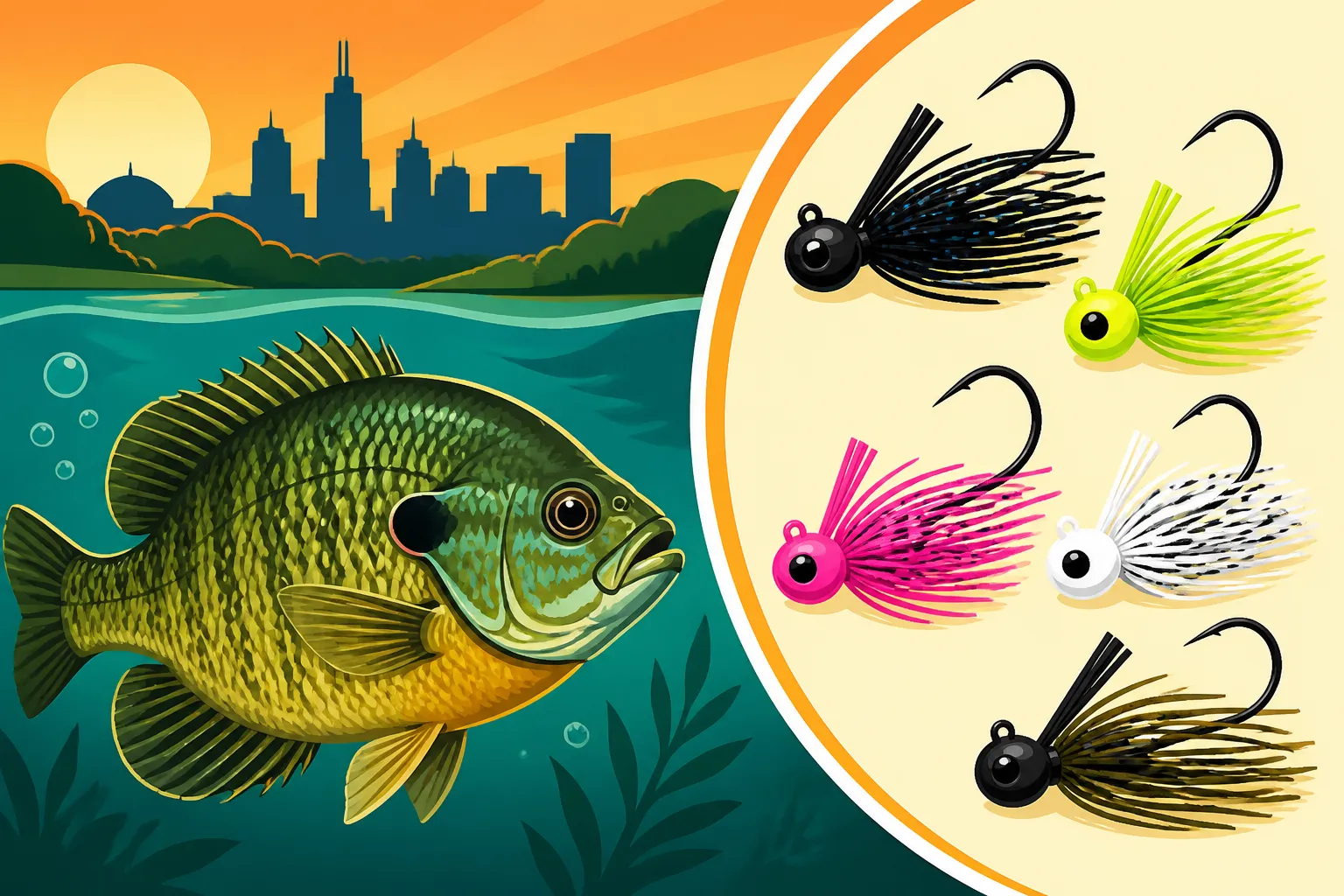
Color can make all the difference on a given day, and it's heavily influenced by factors like water clarity, light conditions, and the prevailing natural forage. In murky or stained water, bright, high-contrast colors like chartreuse, electric chicken, orange, or hot pink really shine. These vibrant hues stand out against the poor visibility, making it much easier for panfish to spot your jig from a distance. Think about those overcast days or when you're fishing a turbid river section of the Illinois River after a rain; a bright jig is often the key to getting noticed.
On the flip side, in clear water conditions or during bright sunshine, more natural and subtle colors often perform better. White, pearl, smoke, or realistic shades of brown and green can effectively mimic natural forage like minnows, insect larvae, or small crustaceans. When the sun is high and the water is glass-clear, try to "match the hatch" with these more muted tones. Sometimes, a little glitter in the plastic can add a subtle flash without being overly aggressive, mimicking the shimmer of tiny baitfish scales.
Don't overlook black and blue combinations; these are incredibly effective, especially in low light, at dawn or dusk, or even at night. The dark silhouette they create against the water's surface or the bottom can be very enticing to opportunistic panfish. Sometimes, it's not about the color itself, but the contrast and profile it presents to the fish that makes all the difference. Always carry a variety of colors in your tackle box, because what worked like magic yesterday might not even get a sniff today!
Mastering the Retrieve: Techniques for Every Scenario
Knowing how to work your jig is just as important as selecting the right one. Different retrieve methods can trigger bites based on the fish's mood and location. The "slow roll" is a fundamental panfish jigging technique that's incredibly effective. Cast your jig out, let it sink to the desired depth, and then slowly reel it in, just fast enough to impart a subtle action to the plastic tail. This steady, consistent retrieve is fantastic for covering water and enticing actively feeding fish, especially crappie that are suspended or cruising along weed lines.
When fish are holding tight to specific cover, like a submerged brush pile in Kinkaid Lake or a downed tree limb near the bank, vertical jigging comes into play. Position your boat or stand on the bank directly over the fish (if possible), drop your jig down, and then use short, subtle lifts and falls of your rod tip. The goal here is to keep the jig in the strike zone for as long as possible, making it look like an easy, wounded meal hovering in place. This technique requires patience but can be incredibly rewarding.
Sometimes, less is definitely more. "Deadsticking" involves casting your jig out and letting it sit almost motionless, with only the slightest twitches of the rod tip or natural water movement (like a gentle breeze or current) giving it any action. This technique is incredibly effective for finicky panfish in cold water, during post-front conditions when they're lethargic, or when fishing for bluegill in clear, still water. It mimics a dying baitfish or a struggling insect, an irresistible target for opportunistic predators that don't want to expend much energy. If you're out after a storm, consider reading Post-Rain Fishing Techniques for more ideas on how to adapt.
Essential Gear and Advanced Tips for Panfish Jigging Success
Even the best jig in the world won't perform optimally without the right supporting gear. Pairing your jigs with appropriate rods, reels, and lines will enhance your sensitivity, casting distance, and overall enjoyment. Beyond the gear, a few advanced tips can truly elevate your panfish jigging game.
The Right Rod, Reel, and Line for Jigs
For true panfish jigging enjoyment and maximum effectiveness, an ultralight or light action spinning rod is absolutely non-negotiable. A rod in the 5 to 6.5-foot range with a fast or extra-fast tip allows you to feel the most subtle bites, which are incredibly common when panfish are gently mouthing a small jig rather than aggressively striking it. The delicate, sensitive tip also allows for effortless casting of those tiny 1/32 or 1/64 ounce jigs, which can be challenging on heavier gear.
Pair that sensitive rod with a small, lightweight spinning reel, typically a 500 or 1000 series. These smaller reels balance perfectly with ultralight rods and are designed for handling light line. For line, 2 to 4 pound test monofilament is a classic choice, offering good knot strength and a bit of stretch for fighting panfish without tearing hooks out of their delicate mouths. Alternatively, super-sensitive braided line (4-6 pound test) can be used for maximum feel, often with a fluorocarbon leader (2-4 pound test) to reduce line visibility and still maintain that crucial bite detection.
Using a leader is a game-changer, especially in clear water where fish are more easily spooked. Fluorocarbon is nearly invisible underwater, giving you a stealth advantage that can significantly increase bites. It also offers excellent abrasion resistance if you're fishing around docks, brush, or rocky bottom structures. A simple Surgeon's Knot or Albright Knot can be used to securely connect your braid to your fluorocarbon leader, giving you the best of both worlds in terms of sensitivity and stealth. For a more detailed look at tackle, check out Panfish Tackle Setup. For specific recommendations for ultralight gear, refer to Ultralight Tackle for Panfish Fishing.
Enhancing Your Jig with Scent and Live Bait
While jigs are incredibly effective on their own, sometimes panfish need an extra nudge to commit, especially when they're less active. Scent attractants, readily available at sporting goods stores or through online retailers like Amazon, can significantly increase your strike rate. These gels, sprays, or pastes are designed to mask human scent and add a powerful fish-attracting odor that makes panfish hold onto the jig longer, giving you more time to feel the bite and set the hook.
Tipping your jig with a small piece of live bait is another tried-and-true tactic that combines the best of both worlds. A tiny crappie minnow hooked through the head on a tube jig, a single wax worm threaded onto a small spoon jig, or a maggot on an ice fishing jig can dramatically boost your presentation's effectiveness. The natural movement, vibration, and scent of the live bait, combined with the action and profile of the jig, create an irresistible offering, particularly for picky or sluggish fish.
For bluegill and other sunfish, a single wax worm or mealworm threaded onto a small jig head can be deadly. The combination of the jig's profile and the live bait's natural wiggle and scent often outperforms either element used alone. This is particularly effective in colder water or during times when fish are less willing to chase. If you're looking for tips on what bait pairs well, take a look at Best Bait for Crappie Fishing.
Locating Panfish: Where to Cast Your Jigs
Knowing what jig to use is only half the battle; knowing where to cast it is the other crucial component. Panfish, almost without exception, are structure-oriented fish, meaning they love to hang around cover that offers both protection and ambush points for feeding. Always start by looking for prominent weed lines, especially transitions from dense to sparse vegetation, as these provide excellent cover and concentrate baitfish.
Submerged brush piles, fallen trees, and natural rock piles are absolute magnets for crappie, bluegill, and perch. If you have a fish finder, use it to locate these hidden gems that are invisible from the surface. If not, systematically fan-cast your jigs around any visible cover, paying close attention to slight depth changes, current breaks, or areas where two different types of habitat meet. Many lakes in Illinois, like Lake of Egypt, are renowned for their excellent deep-water structure that holds panfish year-round.
Don't overlook man-made structures either, as they provide similar benefits. Boat docks, piers, bridge pilings, and even old tires or sunken pallets can hold massive schools of panfish. The shade and cover these provide make them prime panfish real estate, especially during bright, sunny days when fish seek refuge from intense light. Pitch your jigs carefully under and around these structures, letting them fall naturally. Often, the biggest panfish are lurking in these overlooked spots. For tips on where to start, explore Best Shore Fishing Access in Illinois and Best Pier Fishing Spots in Illinois. If you prefer fishing from the bank, How to Catch Crappie From the Bank offers more specific advice.
Disclaimer
This article is for general informational purposes only and does not constitute professional advice. Laws, prices and regulations vary by location and change over time. Consult a qualified professional for guidance on your specific situation.