Illinois Lake Michigan Trolling Gear Checklist
Oh, the sheer excitement and a touch of overwhelm that comes with planning a Lake Michigan trolling trip! It’s not like heading to your local pond with a cane pole. Lake Michigan is a vast, powerful fishery, and if you don’t have the right gear, you’ll spend more time worrying and less time reeling in those magnificent salmon and trout. This guide is going to walk you through every piece of trolling gear you need to confidently hit those big waters and come back with stories, not just excuses.
The Essentials: Your Boat and Safety Gear
Before we even talk about rods and reels, let's address the most critical piece of equipment: your boat, and the safety measures that go with it. Lake Michigan can be a challenging environment, changing from flat calm to treacherous chop in a blink, so a well-equipped and safe vessel is paramount.
Prepping Your Vessel for Lake Michigan
When you're heading out onto Lake Michigan, especially for trolling, your boat needs to be more than just seaworthy; it needs to be Lake Michigan-worthy. This typically means a boat designed to handle bigger water, often with a deep-V hull that can cut through waves, providing a more stable and comfortable ride. Think cuddy cabins, walkarounds, or even larger center consoles. A small jon boat or a flat-bottomed bass boat simply isn't going to cut it when those rollers start coming in. The size of your vessel directly impacts your safety and comfort. You’ll want something generally over 18 feet, though many serious trollers opt for 20-25 feet or more.
Beyond the hull design, engine reliability is key. You're often miles from shore, so having a well-maintained engine, or even better, dual engines, provides immense peace of mind. Regular maintenance, checking fuel lines, battery terminals, and prop condition before every trip is non-negotiable. And speaking of electronics, a reliable GPS and chartplotter are your best friends on Lake Michigan. You'll use them to navigate, mark waypoints where you're finding fish, and track your trolling speed and direction. A good marine-grade fish finder, ideally with side-imaging or down-imaging, is also crucial for locating schools of baitfish and the predators that follow them. It’s not just about seeing fish; it’s about understanding the underwater structure and thermoclines where fish prefer to hang out.
Non-Negotiable Safety Equipment
Safety isn't just a suggestion on Lake Michigan; it's a requirement that can literally save lives. The sheer size of the lake means help can be a long way off. First and foremost, you need enough Coast Guard-approved life jackets or Personal Flotation Devices (PFDs) for everyone on board, and they need to be readily accessible. For children under a certain age, wearing a life jacket at all times while underway is often mandatory. Don't skimp here; ensure they fit properly. You can find a great selection at retailers like Bass Pro Shops. For more detailed rules, check out our guide on Illinois Life Jacket and PFD Rules.
In addition to wearable PFDs, you’ll need at least one Type IV throwable PFD (a cushion or ring buoy) on boats 16 feet or longer, easily accessible for immediate deployment. A fully charged and recently inspected fire extinguisher is also critical, especially with fuel on board. Visual distress signals, such as flares or an orange flag, and an audible signaling device like a horn or whistle, are essential for attracting attention in an emergency. Beyond the legal requirements, a comprehensive first-aid kit, a marine VHF radio for communication, and a well-stocked tool kit for minor repairs can make a huge difference in an unexpected situation. Always keep your boat's registration and any required licenses readily available. For a full rundown, our Illinois Boating Safety Gear Checklist is a great resource.
Trolling Specifics: Rods, Reels, and Line
Once your boat is ready and safe, it's time to talk about the tools that connect you to the fish. Trolling for salmon and trout on Lake Michigan requires specialized rods, reels, and lines that can withstand the strain of powerful fish and the demands of deep-water techniques.
The Right Rods for Lake Michigan Salmon and Trout
Lake Michigan trolling isn't a one-rod-fits-all scenario. You'll likely need a variety of rod types depending on the specific technique you're employing.
- Downrigger Rods: These are typically longer, softer-tipped rods, often 8 to 10.5 feet, designed to bend and absorb the initial strike from a fish without ripping the bait out of its mouth. The softer tip also helps indicate a "strike" when the line releases from the downrigger clip. Their backbone allows for fighting strong fish once disconnected.
- Dipsy Diver Rods: These are generally shorter and stiffer than downrigger rods, often 7 to 9 feet. The stiffer action is necessary to handle the resistance of the dipsy diver, which pulls the line down and out to the side. They need to be strong enough to absorb the shock of a fish hitting the diver and prevent excessive rod flex.
- Planer Board Rods: These are often the longest rods in your arsenal, sometimes 10 to 14 feet, with a medium-heavy action. Their length helps spread out your lines away from the boat, creating a wider presentation. The action is usually moderate to fast, allowing for good hooksets while still providing enough give to handle the fish.
Having a good selection means you can adapt to different conditions and presentations. The construction, typically fiberglass or a composite, gives them the durability needed for constant trolling and heavy loads. For more specific recommendations, take a look at our Best Trolling Rods for Lake Michigan Salmon guide.
Reels Built for Big Water and Big Fish
Matching the right reel to your trolling rod is just as important. For Lake Michigan trolling, you'll almost exclusively be using baitcasting or conventional reels.
- Line Counter Reels: These are absolutely essential. They allow you to know exactly how much line you have out, which is critical for replicating successful presentations once you find where the fish are biting. Imagine finding salmon at 70 feet down, and then being able to precisely set multiple lines to that depth – that's the power of a line counter. Brands like Okuma, Daiwa, and Shimano are popular for their reliability.
- Robust Drag Systems: Lake Michigan salmon and trout are powerful fighters. Your reels need a smooth, consistent drag system that won't falter under pressure. A jerky drag can lead to lost fish or broken lines.
- High Line Capacity: You'll be using heavy line and often letting out a lot of it, so reels with ample spool capacity are necessary. Aim for reels that can comfortably hold 300+ yards of 20-30 pound monofilament or braid.
The gears and internal components of these reels are built to handle the immense strain and corrosion of a marine environment. Investing in quality reels is an investment in successful trips.
Line Choices: Mono, Braid, and Fluorocarbon Leaders
Your line is the direct connection to the fish, so choosing the right type and strength is critical.
- Monofilament (Mono): Many anglers still prefer mono as their main line, especially for downriggers. It offers good stretch, which can act as a shock absorber during a strike, preventing hooks from tearing out. A 20-30 pound test is common. However, mono has more water resistance and can be harder to get to deeper depths.
- Braided Line (Braid): Braid has virtually no stretch, offering incredible sensitivity and strength in a smaller diameter. This allows it to cut through the water better, reaching depths more efficiently, especially with dipsy divers. Its lack of stretch makes for powerful hooksets. A 30-50 pound test braid is often used. However, its lack of stretch can be unforgiving if your drag isn't set perfectly.
- Fluorocarbon Leaders: Regardless of your main line, a fluorocarbon leader is almost always recommended. Fluoro is nearly invisible underwater, making your presentation more natural, and it's highly abrasion-resistant, a big plus when fighting fish with sharp teeth or around structure. Leaders typically range from 15 to 25 pound test, depending on the target species and water clarity. You might run a 6-10 foot leader behind a dipsy diver or off a downrigger clip.
Understanding how each line type performs and choosing the right combination for your specific setup is a key part of successful Lake Michigan trolling.
The Secret Sauce: Lures, Baits, and Terminal Tackle
Once you’ve got the boat and the gear to present your offerings, you need something irresistible to tempt those deep-water giants. Lake Michigan salmon and trout have diverse diets and preferences, so a varied tackle box is crucial.
Spoons, Plugs, and Flies: Lure Arsenal
This is where the artistry and experimentation come into play. A well-stocked lure collection is essential for adapting to changing conditions and fish preferences.
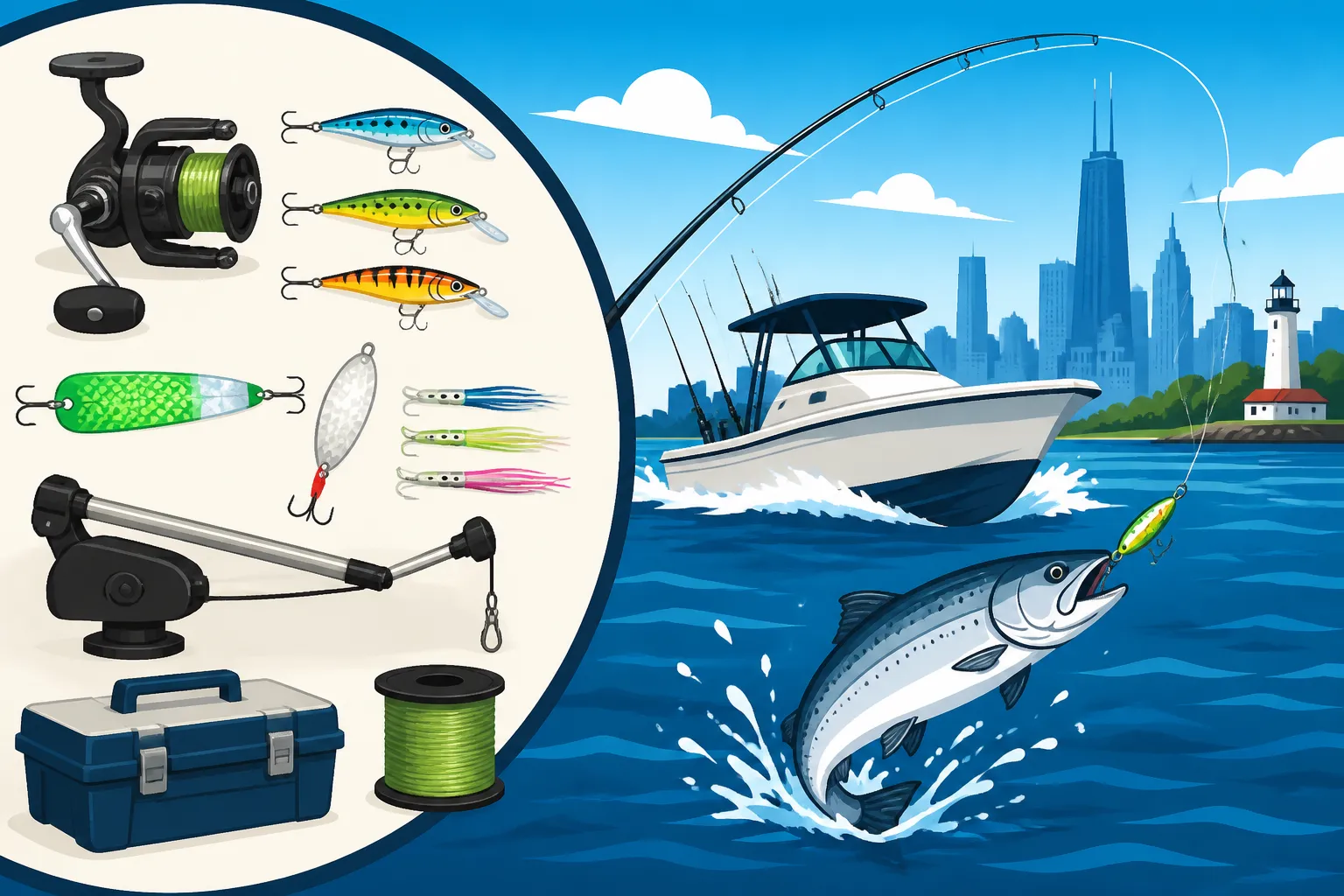
- Spoons: These are perhaps the most iconic Lake Michigan trolling lures. Their wobbling action mimics injured baitfish, and they come in a dazzling array of sizes, shapes, and colors. Different spoons have different actions: some are wide wobblers, others have a tighter wiggle. Popular colors often include green, blue, silver, black, and orange, especially those with reflective tape patterns. It's wise to have a selection of sizes, from small "peanut" spoons for subtle bites to larger spoons for aggressive kings.
- Plugs/Stickbaits: These lures dive to various depths and have a distinct swimming action. They are particularly effective for targeting larger salmon. Color patterns often mimic alewives or other forage fish. They can be trolled directly, off downriggers, or behind dipsy divers.
- Flies/Meat Rigs: These are typically used behind flashers or dodgers (which we'll discuss next). Flies are often small, Mylar-bodied creations that imitate small baitfish or insects, while meat rigs incorporate a real baitfish (like an alewife or smelt) cut to spin in the water, secured in a special holder. These are incredibly effective, especially for Chinook salmon.
The key is variety. Fish preferences can change hour by hour, day by day. What worked yesterday might not work today, so having options in color, size, and action is paramount. You can find a vast array of these lures at Bass Pro Shops or even specialty online retailers like Amazon.
Flashers, Dodgers, and Attractors
These aren't lures themselves, but they are absolutely critical components of a successful Lake Michigan trolling spread. Their purpose is to attract fish from a distance and provide an enticing action to the trailing lure or fly.
- Flashers: These are typically long, slender blades that rotate or wobble, creating flash and vibration in the water. They are usually rigged with a leader of 18-36 inches to a fly, spoon, or meat rig. The flash and vibration mimic a school of baitfish, drawing predators in. They come in many colors, often metallic or bright, with some having UV properties.
- Dodgers: Dodgers have a different action; they don't rotate but rather "dodge" back and forth, imparting a distinct, erratic swimming motion to the trailing lure. They create more water resistance and can be particularly effective when fish are active and responding to aggressive movements. They also come in a variety of colors and sizes.
The choice between a flasher and a dodger, and their respective colors and sizes, can greatly influence your success. They often account for a significant portion of your catch, especially for Chinook and Coho salmon. Experimentation is the name of the game here, as fish can be picky about their preferred attractor on any given day.
Hooks, Swivels, and Leaders
These small but mighty components ensure that once a fish strikes, it stays hooked and makes it to the boat.
- Hooks: Always use sharp, strong hooks. Many trolling lures come with decent hooks, but it's often a good idea to upgrade them, especially treble hooks on spoons and plugs, to higher quality, chemically sharpened models. Single hooks are often preferred on meat rigs and flies. Check your hooks regularly for sharpness and replace any that show signs of rust or bending.
- Swivels: Ball bearing swivels are essential for trolling, especially with lures that spin or rotate, like flashers and some spoons. They prevent line twist, which can weaken your line and cause tangles. Use strong, appropriately sized swivels for your line class. Many anglers use a high-quality snap swivel at the end of their main line to quickly change lures.
- Leaders: As mentioned before, fluorocarbon leaders are highly recommended due to their low visibility and abrasion resistance. The length and strength of your leader will vary. For dipsy diver setups, you might use a shorter, stronger leader to handle the pressure. For downrigger presentations, a longer, lighter leader might be preferred to give the lure a more natural action. Getting these small details right can make all the difference in converting a strike into a landed fish. Make sure you understand the nuances of Lake Michigan Salmon and Trout Fishing in Illinois to maximize your setup.
Specialized Trolling Systems and Accessories
Beyond the basics, certain specialized systems allow you to present your lures at precise depths and spread them out effectively, maximizing your chances of success.
Downriggers and Planer Boards
These two systems are foundational to effective Lake Michigan trolling. They allow you to control your lure depth and spread out your presentation, covering more water.
- Downriggers: These devices use a heavy weight (called a "cannonball") to carry your fishing line down to a precise depth. Your line is held by a release clip on the downrigger wire. When a fish strikes, the line pops free from the clip, allowing you to fight the fish directly on your rod and reel. Modern downriggers often feature electric motors, making it easier to raise and lower the weights, and some even have auto-stop and depth-tracking functions. Manual downriggers are also very effective, though they require more physical effort. The ability to precisely target specific depths where baitfish or temperature breaks are holding is a huge advantage. They are indispensable for targeting fish at 50, 70, or even 100+ feet down. Our Downriggers and Planer Boards for Lake Michigan guide offers an in-depth look.
- Planer Boards: These are essentially small, buoyant "boards" that attach to your main line and pull your line out to the side of the boat, away from your prop wash and other lines. This allows you to run multiple lines at varying distances from the boat, covering a much wider swath of water. There are two main types: in-line boards (which attach directly to your line) and mast systems (where multiple lines are clipped to a main tow line that pulls larger boards). Planer boards are excellent for presenting shallow-running lures or surface baits, or for getting deeper lures away from the boat without spooking fish. Having a wide spread increases your chances of encountering fish and helps you identify their preferred depth and distance from the boat. For optimizing your spread, check out Planer Board Setup for Trout and Salmon Trolling.
Essential Accessories for a Smooth Trip
While not directly part of your fishing presentation, a host of accessories make your Lake Michigan trolling trip safer, more efficient, and more enjoyable.
- Large Landing Net: You'll need a large, heavy-duty net with a long handle to land those big salmon and trout. A smaller bass net simply won't cut it. Look for a net with a rubberized mesh to protect the fish and prevent hooks from tangling.
- Cooler and Ice: A large cooler packed with plenty of ice is essential for keeping your catch fresh, especially on long summer days.
- Rod Holders: You'll need multiple robust rod holders mounted to your boat for all your trolling rods. They must be strong enough to withstand the violent strike of a salmon.
- Boat Cleaning Supplies: Lake Michigan fishing can get messy. Having a bucket, brush, and boat cleaner on board is always a good idea.
- Extra Batteries/Power: Ensure you have backup power for your electronics, especially your main battery. A portable jump starter or spare trolling motor battery can be a lifesaver.
- Tool Kit: A basic marine tool kit with wrenches, pliers, screwdrivers, electrical tape, and spare fuses can help you fix minor issues quickly.
- GPS/Chartplotter & Fish Finder: While mentioned under vessel prep, these are also accessories that require attention. Ensure your charts are updated, and you know how to operate all functions, including marking waypoints and identifying thermoclines.
- Tackle Box/Storage: A well-organized tackle box or system of storage bins keeps your lures, terminal tackle, and tools neatly arranged and easily accessible. A well-organized system will save you headaches when the bite is hot. While our Tackle Box Setup for Illinois Bass Anglers focuses on bass, the principles of organization and having essentials handy apply universally.
- Sun Protection: Don't forget sunscreen, sunglasses, and a wide-brimmed hat. Long days on the water under the sun can lead to severe burns and eye strain.
- Rain Gear: Weather on Lake Michigan can change quickly. Quality waterproof rain gear is a must.
This comprehensive checklist ensures you're prepared for the exciting challenge of trolling on Lake Michigan. Remember, preparation is key to a safe and successful fishing adventure. Understanding the Illinois Lake Michigan Trout and Salmon Fishery Explained will further help you optimize your gear and techniques.
Disclaimer
This article is for general informational purposes only and does not constitute professional advice. Laws, prices and regulations vary by location and change over time. Consult a qualified professional for guidance on your specific situation.