Planer Boards for Lake Michigan Trout Fishing
Picture this: you're out on the vast expanse of Lake Michigan, boat slowly cutting through the waves, hoping to entice a stubborn trout. It can feel like finding a needle in a haystack sometimes, can't it? The sheer size of the lake makes covering water and presenting your bait effectively a real challenge. That's where planer boards come into their own, offering a clever solution to spread your lines wide and increase your chances of hooking into those elusive Lake Michigan trout.
Why Planer Boards are a Game Changer for Lake Michigan Trout Fishing
When you're chasing trout on a massive body of water like Lake Michigan, simply running lines directly behind your boat only covers a narrow path. It’s like trying to sweep a ballroom with a tiny broom. Planer boards are the angling equivalent of upgrading to a wide-angle lens, allowing you to cover significantly more water and present your lures in a way that often proves irresistible to wary fish.
Expanding Your Spread and Reaching More Fish
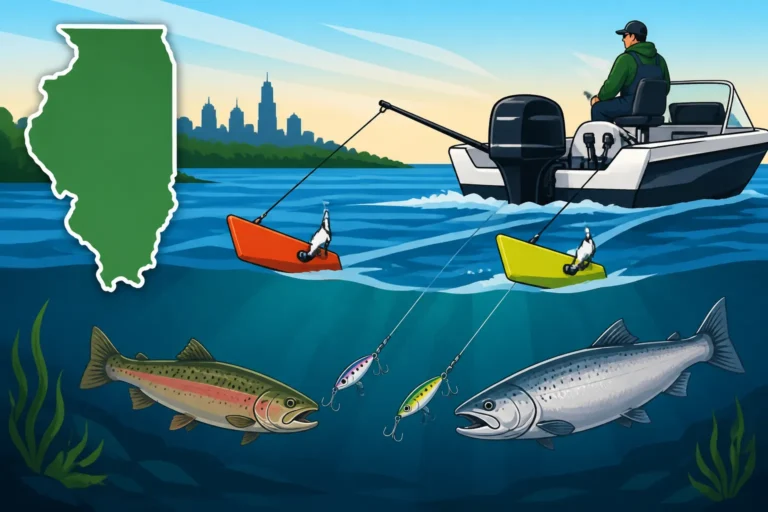
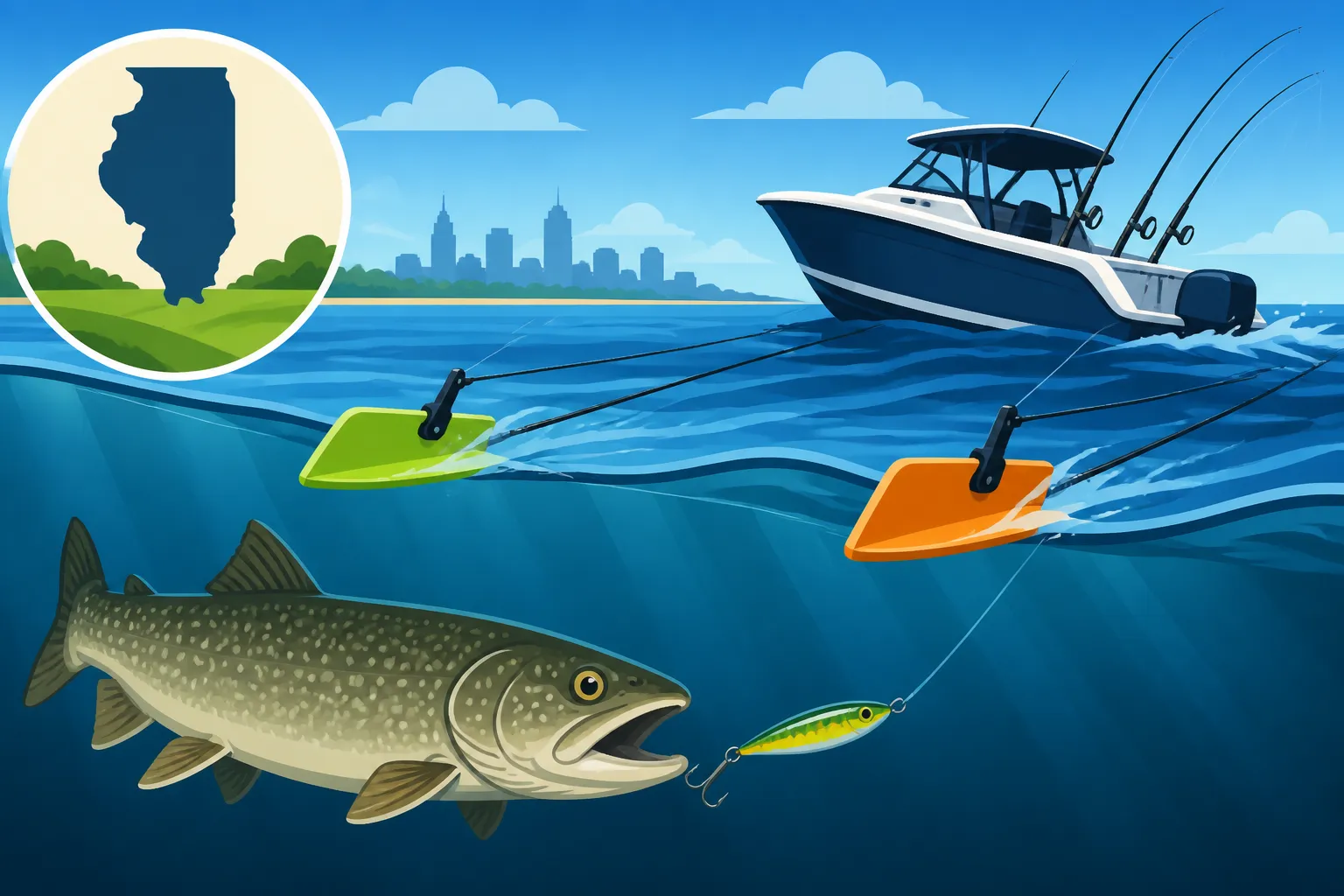
The most immediate benefit of using planer boards is how they allow you to run multiple lines far out to the sides of your boat. Instead of having all your baits clustered in the prop wash, planer boards act like small sails, pulling your lines away from the boat's path. This creates a much wider "spread" of lures, effectively turning your single boat into a broad fishing net. On a typical trolling pass, you might be covering 10-15 feet directly behind your boat. With a good set of planer boards, you could easily be presenting lures across a 50 to 100-foot wide swath of water, dramatically increasing the odds of encountering a hungry trout. This is especially crucial when you're trying to locate schools of fish in the immense open water.
Imagine you're trolling along a thermocline or a subtle depth contour that trout are known to frequent. Without planer boards, you're hoping the fish happen to be in that narrow corridor directly behind your boat. With boards, you can present baits across a much larger area around that specific structure or depth, significantly boosting your chances of a strike. It's all about maximizing your presentation window in a vast environment.
Presenting Baits Naturally Away from the Boat
Fish, especially larger, more experienced trout, can be incredibly boat-shy. The shadow, the engine noise, the vibration – all these factors can make them wary of anything directly in the boat's wake. This is a common frustration for many anglers who wonder why fish seem to scatter as their boat approaches. Planer boards overcome this by positioning your lures well away from the immediate disturbance of the boat.
When your bait is running 30, 50, or even 100 feet to the side of your hull, it looks and acts much more naturally. The fish aren't spooked by the boat's presence; instead, they see a delicious-looking lure swimming by in an unthreatening manner. This can make a huge difference, particularly on clear water days or when targeting highly pressured fish that have learned to associate boat noise with danger. The ability to present baits "in clean water" without the boat's influence can often be the deciding factor between a slow day and a successful outing. You’re essentially giving the trout a false sense of security, allowing your lure to pass by unnoticed until it's too late.
Handling Multiple Lines Without Tangling
One of the biggest headaches when trolling multiple lines is tangling. Whether it's during deployment, retrieval, or even a sudden turn, crossed lines can quickly ruin a good bite and lead to frustrating downtime. Planer boards are ingeniously designed to prevent this by keeping each line separate and running at a distinct distance from the boat and from each other.
With a well-organized planer board setup, each line is clipped to a board, which then pulls it out and away. This creates a staggered, orderly array of lines, making it much easier to manage. You can run lines at different distances from the boat, and even different depths, without them interfering with one another. When a fish strikes, the release mechanism on the board allows you to fight the fish directly without having to contend with other lines immediately. This streamlined approach means less time untangling and more time actually fishing, which is something every angler appreciates on the water. It’s about efficiency and reducing those frustrating moments that can happen when lines get crossed in a tight spread.
Types of Planer Boards for Lake Michigan Trout Fishing
Just like there are different boats for different fishing styles, there are various types of planer boards, each with its own advantages depending on your boat, your target species, and how many lines you want to run. Understanding the differences will help you choose the right system for your Lake Michigan adventures. You can often find a great selection of these at reputable retailers like Bass Pro Shops or online at Amazon.
Inline Planer Boards
Inline planer boards are perhaps the most popular choice for many Lake Michigan anglers, especially those in smaller to medium-sized boats or those just getting started with board fishing. These boards attach directly to your fishing line. They typically feature a clip at the front that secures the board to your main line and a release clip further back that holds the line under tension. When a fish strikes, the rear clip releases, and you fight the fish directly on your main line, with the board sliding down the line towards the fish. Some anglers prefer boards that stay connected to the line, while others use models that detach upon strike, allowing for a cleaner fight.
Inline boards are incredibly versatile. You can run several of them from a single side of the boat, staggering their distances to create a wide spread. They are relatively easy to deploy and retrieve, making them ideal for solo anglers or small crews. Brands like Offshore Tackle and Church Tackle make very popular inline boards that are rugged and reliable, perfect for handling Lake Michigan's sometimes choppy conditions. They're also great for targeting a variety of species, from brown trout near shore to coho salmon further out.
Mast Systems and Large Boards
For serious open-water trollers or those with larger boats who want to run a significant number of lines, a mast system with large planer boards is often the preferred choice. This setup is more involved, consisting of a mast mounted on the boat (usually at the bow), which spools out a heavy-duty "tow line" to the large planer boards. Your individual fishing lines are then attached to this tow line using special release clips, rather than directly to the boards themselves.
These larger boards are designed to pull a considerable amount of drag and can carry many fishing lines, often more than a dozen if set up correctly. They create an incredibly wide and stable spread, capable of presenting baits far from the boat in even rough conditions. When a fish strikes, the release clip detaches from the tow line, and you fight the fish. The mast system requires more initial setup and can be more cumbersome for smaller boats, but for dedicated trolling operations, it offers unmatched line capacity and spread width. If you're looking to upgrade to this kind of system, both the boards and the mast can be researched thoroughly on sites like Amazon to ensure you get the right components for your vessel. This kind of setup really shines when you're trying to target specific depths across a wide area, like during the Lake Michigan Salmon Trolling Setup period.
Choosing the Right Size and Style
Deciding between inline boards and a mast system, or even different sizes of inline boards, comes down to a few key factors.
First, consider your boat size and type. If you have a smaller fishing boat or a recreational craft that you occasionally use for trolling, inline boards are likely the most practical and easiest to manage. They require minimal additional rigging. For larger sportfishing boats or dedicated salmon/trout rigs, a mast system might be more efficient for running a high number of lines.
Second, think about the number of lines you typically want to run. If you're content with 2-4 lines per side, inline boards will serve you well. If your goal is to run 6 or more lines per side, a mast system will handle the load more effectively and keep everything organized.
Third, consider the water conditions you usually fish in. Larger boards, whether inline or mast system, generally handle choppy water better, providing more stability and keeping your lines tracking true. Smaller boards can sometimes dive or act erratically in rough seas.
Finally, your experience level plays a role. Inline boards have a gentler learning curve. Mastering a mast system requires a bit more practice in deployment and retrieval, especially with many lines out. Always remember that good quality boards are an investment that will pay off in performance and durability on Lake Michigan.
Here's a quick comparison of the two main types of planer board systems:
| Feature | Inline Planer Boards | Mast System Planer Boards |
|---|---|---|
| Attachment | Attaches directly to individual fishing lines | Attaches to a main tow line from a mast; fishing lines clip to tow line |
| Number of Lines | Typically 1-4 lines per side | Many lines, 5-10+ per side common with large boards |
| Boat Size | Smaller to medium boats, versatile for various craft | Larger boats, dedicated trolling setups |
| Deployment/Retrieval | Simpler, can be managed by single angler | More complex, often requires a dedicated crew member |
| Spread Width | Good, provides a wide presentation | Excellent, creates an incredibly wide spread |
| Line Management | Individual lines, less prone to tangles if spaced well | Highly organized on tow line, efficient for many lines |
| Cost | Generally lower initial investment | Higher initial investment for mast, boards, and accessories |
| Complexity | Beginner-friendly | More advanced setup and operation |
Setting Up Your Planer Board System for Lake Michigan
Getting your planer board system set up correctly is crucial for success on Lake Michigan. A sloppy setup can lead to tangles, lost fish, and frustration. Taking the time to do it right from the start will ensure a smoother, more effective trolling experience. Remember, having the right Illinois Lake Michigan Trolling Gear Checklist will make this process much easier.
Essential Components
Before you even think about hitting the water, make sure you have all the necessary pieces of your planer board puzzle. For a basic inline planer board setup, you'll need:
- Planer Boards: Of course! Have at least two, one for each side of the boat, but often more are used if you're running multiple lines per side. Make sure they're designed for the conditions you'll face on Lake Michigan.
- Release Clips: These are absolutely vital. They attach your fishing line to the planer board (for inline boards) or to the main tow line (for mast systems). Look for clips that hold securely but release cleanly when a fish strikes. Adjustable tension clips are a huge plus. Examples include OR12 releases or similar strong, reliable clips.
- Tethers (for inline boards): Some inline boards come with a small tether line that attaches to the front clip and then clips to your fishing line at the rod tip. This is a safety measure to prevent losing the board if the main line clip accidentally comes off.
- Flags (optional but recommended): Many planer boards feature flags that pop up when a fish strikes and releases the line. This visual indicator is incredibly helpful, especially when you have multiple boards out.
- Good Quality Fishing Line: Whether it's monofilament, fluorocarbon, or braid, ensure your line is strong enough to handle the drag of the board and the fight of a Lake Michigan trout. Knowing the Best Line Weight for Lake Michigan Trout is key.
- Rods and Reels: Use trolling rods that can handle the stress of pulling a board and fighting fish. Medium-heavy action rods are often preferred, paired with level wind reels that can hold plenty of line. Consider specific Best Trolling Rods for Lake Michigan Salmon.
Step-by-Step Rigging for Inline Boards
Let's walk through rigging an inline planer board, which is a common setup for many anglers.
- Tie on your lure or bait: Start by tying your preferred Lake Michigan trout lure – maybe a bright spoon, a flasher-fly combo, or a deep-diving stickbait – to your main fishing line.
- Determine your lead length: Decide how far behind the boat you want your lure to run before attaching the board. This is often called the "lead length." This distance can vary greatly depending on water clarity, target depth, and fish activity. Experimentation is key, but a good starting point might be 50 to 150 feet.
- Attach the rear release clip: Once your lure is at the desired lead length, attach the rear release clip of your planer board to your main line. This clip should be positioned so that it holds the line firmly but releases when a fish tugs.
- Attach the front clip: With the rear clip secured, attach the front clip of the planer board to your main line, further up towards your rod tip. This clip provides the pulling power for the board. Ensure the board is oriented correctly; most have an "L" or "R" for left or right side of the boat, indicating which way they'll pull out.
- Test the tension: Gently pull on the line with your hand to make sure both clips are holding securely. You don't want the board releasing prematurely. Adjust the clip tension if needed. If using a tether, attach it now from the front of the board to your main line near the rod tip.
This setup ensures that when a fish hits, the rear clip releases, and you're fighting the fish directly. The board slides down your line, often stopping at a swivel or another fixed point, making retrieval easier once the fish is in the boat.
Deploying and Retrieving Your Planer Boards
Successfully deploying and retrieving your planer boards requires a bit of finesse and practice.
Deployment:
- Start trolling: Begin your trolling pass at your desired speed.
- Let out your lure: Drop your lure into the water and let out line until you reach your predetermined lead length behind the boat.
- Attach the board: Clip your planer board onto the line as described above.
- Send it out: With the rod tip pointed towards the side of the boat you want the board to go, slowly let out more line. The board will begin to track away from the boat. Be mindful of other lines already in the water to avoid tangles.
- Stagger your lines: If deploying multiple lines with inline boards on one side, let the outermost board run the furthest, then the next board closer to the boat, and so on. This creates your wide, staggered spread.
Retrieval:
- Slow down (optional): If you have multiple lines out, you might consider slowing your boat slightly to make retrieval easier and reduce the chance of tangles.
- Bring in the outermost line first: Always retrieve the board and line that is furthest out from the boat first. This prevents lines from crossing.
- Wind in the line: Reel in steadily, guiding the board towards the boat. Once the board is close, detach it from your line and then continue reeling in your lure.
- Handle the fish: If you have a fish on, fight it directly. Once the fish is landed, then retrieve the board. The board will slide down the line, so you'll usually grab it just before the fish comes to the boat.
It takes a little practice to get the rhythm down, especially on a windy day or if Lake Michigan is acting up. But once you've got it, it becomes second nature.
Tactics and Tips for Maximizing Your Trout Catch with Planer Boards
Having the gear is one thing, but knowing how to use it effectively is where the real magic happens. Planer boards open up a world of tactical possibilities for Lake Michigan trout fishing, allowing you to fine-tune your presentation and respond to changing conditions. This is where understanding concepts like Water Temperature and Fish Activity Guide really comes into play.
Varying Depths and Speeds
Trout in Lake Michigan can be finicky about depth and speed. Planer boards allow for incredible flexibility in both areas.
- Depth Control: While planer boards themselves run at the surface, you can use various diving aids on your lines to get your lures down to specific depths. Lead core line, snap weights, diving planers (like Dipsy Divers or Jet Divers), or even small downriggers can be clipped to your line before your planer board. This allows you to present lures at different depths across your wide spread. For example, you might run a shallow-running spoon on an inline board furthest out, a mid-depth stickbait with a small snap weight on another board, and a deeper-running flasher-fly combo with a diving planer on a third, all simultaneously. This "spread of depths" helps you quickly identify where the active fish are holding.
- Speed Adjustments: Trout often have a preferred trolling speed, which can change day by day or even hour by hour. With a planer board system, you can easily experiment with boat speed to see what triggers bites. Pay attention to how your lures are behaving at different speeds; sometimes just a slight increase or decrease can make all the difference. When learning these techniques, don't be afraid to read up on Boat Fishing Tips for Beginners for more foundational knowledge.
Bait and Lure Selection on Planer Boards
The beauty of planer boards is that they can present almost any trolling lure effectively. However, some baits are perennial favorites for Lake Michigan trout.
- Spoons: Classic spoons like Dardevles, Little Cleos, or Michigan Stingers are incredibly effective. Their wobbling action is irresistible to trout and salmon. Experiment with different sizes and colors.
- Stickbaits/Minnow Imitations: Long, slender stickbaits (like Rapala or Storm Thundersticks) that imitate baitfish are excellent, especially for brown trout and coho salmon. Run them shallower for browns near shore or deeper for cohos.
- Flasher-Fly/Dodger-Fly Combos: These are a staple for salmon and trout. The flasher/dodger creates an enticing commotion and flash, attracting fish, while the trailing fly or squid rig seals the deal. These are often run deeper with diving planers or downriggers, with the planer board pulling them out to the side.
Don't be afraid to mix and match. Run different types of lures at different depths and distances from the boat. This shotgun approach often helps you discover what the fish are keying in on that particular day. If you're out there in chillier months, your bait selection might lean towards specific patterns as detailed in a guide on Cold Water Trolling Gear for Illinois's Lake Michigan Shore.
Reading Your Boards and Detecting Strikes
One of the cool things about planer boards is that they give you a visual cue when you have a fish on.
- Flag Drop/Board Lag: Many boards have flags that will drop down or pop up when a release clip lets go, signaling a strike. Even without a flag, you'll often notice a sudden change in the board's behavior. Instead of tracking steadily, it might lag significantly behind the other boards, or even start to run erratically.
- Rod Tip Movement: Of course, your rod tip will still be your primary indicator. A sharp tug, a steady bend, or even just an unnatural twitch can signal a bite. When a fish hits, the line pulls free from the rear clip, and you're directly connected to the fish. The board itself will often slide down the line towards the fish, or if it's a detachable model, it will float free (which is why marking your boards can be a good idea!).
- Responding to a Strike: When you see a strike, immediately grab the rod. If it's a solid hit, engage the reel and start fighting the fish. If it's a light tap, sometimes a slight pump of the rod or a brief acceleration of the boat can induce a stronger strike. Once the fish is on, ensure your drag is set correctly.
Always keep an eye on your boards. They tell a story about what's happening under the water, even if you don't feel every little bump.
Best Conditions for Planer Board Fishing
While planer boards are effective in a variety of conditions, some days are simply better than others for this technique.
- Calm to Moderate Chop: Planer boards perform best in calm to moderately choppy water. In very rough conditions, smaller boards can get tossed around violently, causing false releases or making it difficult to maintain a consistent spread. Larger boards or mast systems handle rougher water much better due to their greater stability.
- Current: Understanding the prevailing current on Lake Michigan is important. Your boards will track differently depending on whether you're trolling with, against, or across the current. Adjust your boat speed and lure choices accordingly.
- Wind: Wind can be your friend or your foe. A steady crosswind can actually help your boards track out, but strong, gusty winds from multiple directions can make maintaining a spread a frustrating exercise. Pay attention to how the wind affects your boat speed over ground and your lure presentation.
Ultimately, consistent experimentation and observation are your best tools. Pay attention to what works on different days, document your successes, and don't be afraid to try new things. Lake Michigan trout fishing is a rewarding challenge, and planer boards are a powerful tool to help you meet it head-on.
Disclaimer
This article is for general informational purposes only and does not constitute professional advice. Laws, prices and regulations vary by location and change over time. Consult a qualified professional for guidance on your specific situation.