Where to Catch Walleye on the Mississippi River’s Northern Illinois Stretch
Finding walleye on the vast and often intimidating northern stretch of the Mississippi River can feel like searching for a needle in a haystack, especially if you're not familiar with its ever-changing currents, deep channels, and hidden structures. This guide is designed to cut through the confusion, offering clear, actionable advice on where and how to target these elusive yet rewarding fish in Illinois's slice of the mighty Mississippi.
Understanding the Mississippi River's Northern Illinois Walleye Habitat
The Mississippi River is a dynamic ecosystem, and its northern Illinois stretch, particularly from Galena down past Rock Island, is a prime example. It's not a static lake; it's a series of navigation pools created by locks and dams, each with its own character and challenges. Understanding these unique features is paramount to finding walleye.
The River's Unique Structure and Flow
Unlike a traditional lake, the Mississippi River in northern Illinois is heavily influenced by navigation dams that create distinct pools. These pools, such as Pool 12 near Galena, Pool 13 around Clinton, Iowa (which borders Illinois), and Pool 14 and 15 in the Quad Cities area, are not uniform. Each pool features a main navigation channel, which is typically deep and constantly scoured by barge traffic and current, but also extensive backwater areas, side channels, and a myriad of submerged structures that offer prime walleye habitat. Walleye are ambush predators that thrive in current breaks and around structure that allows them to conserve energy while waiting for prey.
Think of the river as a series of different neighborhoods. The "downtown" area is the main channel, with its swift currents and deep shipping lanes. Walleye will be here, often hugging the bottom or hiding behind features that break the current. Then you have the "suburbs" – the wing dams, rip-rap shorelines, and main channel borders. These are man-made rock structures extending from the bank into the river, designed to maintain the navigation channel. They create eddies and current seams that are absolutely irresistible to walleye. The "rural areas" are the expansive backwaters, often shallower and slower-moving, which can hold walleye during certain times of the year, especially if they have deeper holes or connection points to the main river. Knowing how to read the river and identify these zones is crucial.
Seasonal Movements and Preferred Conditions
Walleye movements on the Mississippi River are highly seasonal, dictated by water temperature, flow, and spawning cycles. In early spring, as ice recedes and water temperatures begin to climb into the 40s and low 50s Fahrenheit, walleye concentrate near the dams for their annual spawn. The turbulent, oxygen-rich waters below the dams provide ideal spawning grounds and an abundance of stunned baitfish. This is often the most predictable time to target larger numbers of fish, though weather and river levels can be highly variable.
As summer progresses and water temperatures rise into the 60s and 70s, walleye disperse from the dam areas. They'll seek out cooler, deeper water with good current. This means they'll often be found along main channel borders, deep points, and the downstream side of wing dams, where cooler water and current bring them food. During fall, as water temperatures drop again, walleye begin to feed aggressively to build up fat reserves for winter. They'll often school up in predictable patterns, following baitfish into deeper holes in the main channel or concentrated around prominent structures like bridge pilings and rock piles. Understanding these seasonal shifts in location is critical for consistent success. If you're planning a trip, checking the local river conditions and forecasts is always a good idea, as river levels and current can change rapidly.
Prime Locations for Walleye Success in Northern Illinois
When it comes to specific hotspots for walleye on the northern Illinois Mississippi River, certain areas consistently produce results for savvy anglers. These locations offer a combination of ideal habitat, structure, and accessibility.
Key Pools and River Sections
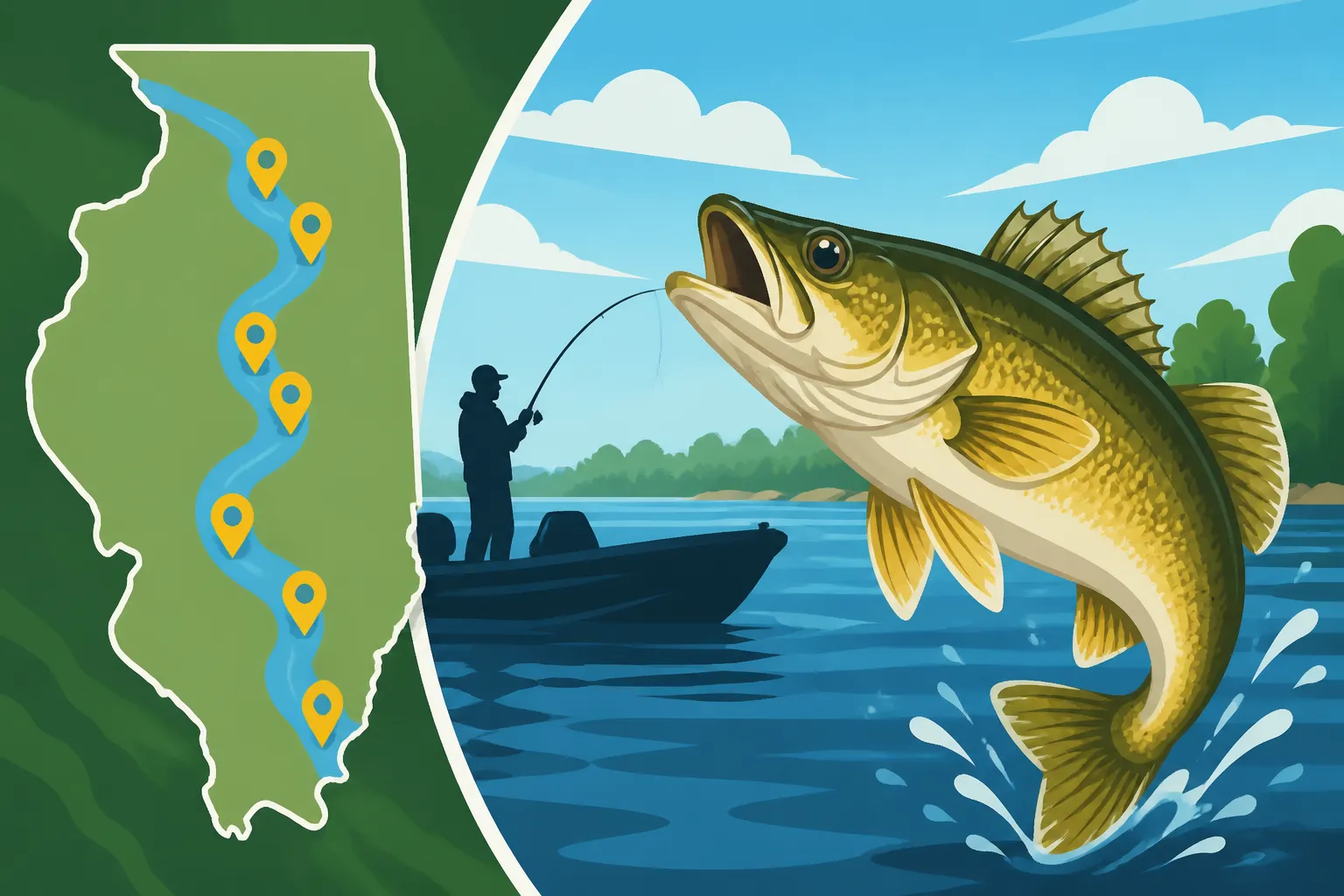
For northern Illinois anglers, the river stretches known as Pool 12, Pool 13, Pool 14, and Pool 15 are where the action primarily happens. Each offers unique opportunities.
- Pool 12 (Galena/East Dubuque Area): This pool, extending from Lock and Dam 12 near Bellevue, Iowa, up to Lock and Dam 11 near Dubuque, Iowa, offers excellent walleye fishing, particularly in the spring. The stretch near East Dubuque, Illinois, provides access to deeper main channel areas and a variety of wing dams. The current here can be significant, making it prime walleye territory. Anglers often focus on the areas just downstream from Lock and Dam 12, where fish stack up before and after the spawn. Further upstream, the vast backwater areas, while shallower, can hold fish during periods of stable water levels, especially if there are channels connecting them to the main flow.
- Pool 13 (Savanna Area): Extending from Lock and Dam 13 near Clinton, Iowa, up to Lock and Dam 12, Pool 13 provides diverse habitat. The Savanna area offers fantastic fishing, with numerous wing dams, rock piles, and main channel drop-offs. The historic Savanna Army Depot grounds offer plenty of shore access and deep pockets. This pool is particularly known for producing good numbers of fish, and during summer and fall, targeting the deeper edges of wing dams with jigs or crankbaits can be highly effective. The deeper holes here provide excellent holding areas during colder months as well.
- Pools 14 and 15 (Quad Cities Area): The Quad Cities region, encompassing Rock Island, Moline, and Davenport (IA), offers some of the most consistent walleye fishing, especially in Pool 15. Lock and Dam 15 at Rock Island is a major hotspot. The turbulent water below the dam is a magnet for walleye year-round, but especially in spring. Anglers frequently drift jigs or troll crankbaits in the strong current. The river in this area is characterized by numerous bridge pilings, rock reefs, and current seams that provide excellent ambush points. For those looking for a guided trip to maximize their chances, especially around these complex dam and bridge structures, services like FishingBooker can help connect you with experienced local guides who know these exact spots and the specific strategies that work. These pools are also known for sauger, a close cousin of the walleye, and you'll often catch both in the same areas.
Access Points and Launch Ramps
Getting your boat in the water or finding a good bank fishing spot is the first step. The northern Illinois stretch of the Mississippi has several excellent public access points.
- East Dubuque: The city of East Dubuque offers public boat ramps, providing direct access to Pool 12. These ramps are well-maintained and provide ample parking, which is crucial for early morning or weekend trips. Bank access here can be found along various riverfront parks and public lands, though care must be taken due to the swift current and varied terrain.
- Savanna: Savanna boasts excellent facilities for anglers. The Savanna Marina and several municipal ramps offer easy boat launching into Pool 13. For shore anglers, the Savanna Army Depot State Park provides extensive bank access, including jetties and rock structures that can be fished without a boat. This area is particularly productive during the spring and fall runs when walleye move closer to the banks. You can often find decent fishing right off some of the accessible causeways that extend into the backwaters here.
- Rock Island/Quad Cities: The Quad Cities area has numerous boat ramps on both the Illinois and Iowa sides, giving you plenty of options for getting onto Pool 15. In Rock Island, Sunset Park Marina offers good access, and there are several smaller public ramps along the riverfront. For bank anglers, the areas around Lock and Dam 15, the Arsenal Island Causeway (check access restrictions), and various riverwalks provide opportunities. While some spots might be crowded, the sheer amount of fishable water means there’s always a chance to find an open area. Remember, when fishing near dams, always be aware of restricted areas and swift currents; safety is paramount.
Key Strategies and Techniques for Mississippi River Walleye
Catching walleye on the Mississippi River isn't just about showing up; it's about understanding the nuances of river fishing. The fish are there, but they demand specific approaches.
Tried-and-True Baits and Lures
Walleye are opportunistic feeders, but they do have preferences, especially when influenced by current and water conditions. Matching your bait and lure to the situation is key.
- Live Bait: Minnows are universally effective for walleye, particularly in cooler water or when fish are less active. Fathead minnows, shiners, or even larger chubs can be fished on a plain hook with a split shot, a slip bobber rig, or a three-way swivel rig. Nightcrawlers, especially when trolled on a bottom-bouncer rig with a spinner blade, are killer in warmer water. Leeches are also excellent, particularly when drifted or fished under a bobber in slower current areas. Always use fresh, lively bait for the best results. The presentation should be natural, allowing the bait to drift or swim realistically in the current.
- Jigs: Jigs are perhaps the most versatile walleye lure on the Mississippi. A 1/8 to 1/2 ounce jig, tipped with a minnow, nightcrawler piece, plastic grub, or paddle tail, can be deadly. When fishing below dams or along wing dams, pitching jigs upstream and letting them tumble along the bottom with the current is incredibly effective. For those looking to learn more about specific jigging techniques, especially for river conditions, a detailed guide on Walleye Jigging Techniques can provide more insight. Experiment with jig color; chartreuse, orange, white, and black are common producers in varying water clarities. Heavy jigs are often necessary to maintain bottom contact in strong currents.
- Crankbaits and Spinner Rigs: Trolling crankbaits is a fantastic way to cover water and find active fish, especially along main channel breaks and large flats. Deep-diving models that can reach 10-20 feet are often needed to target walleye holding deeper in the river. Popular brands like Rapala, Berkley, and Bandit offer a range of colors and diving depths. During the spring run, shallow-running crankbaits can be effective near current breaks. Spinner rigs, often paired with a bottom bouncer and live bait (like a nightcrawler), are another excellent trolling option. These rigs create flash and vibration, mimicking baitfish and enticing strikes from aggressive walleye. This method can be particularly effective when fish are scattered or when you're trying to cover large areas of the river.
Mastering River Fishing Tactics
Fishing the Mississippi River is different from fishing a lake. The constant flow demands different tactics, whether you're in a boat or on the bank.
- Trolling: For covering vast stretches of the main channel or larger backwater areas, trolling is a highly effective method. Using your boat's electric motor or a small outboard, slowly pull crankbaits or spinner rigs along current seams, depth contours, or the edges of wing dams. Pay close attention to your electronics to identify baitfish schools or submerged structure. Vary your speed until you find what the walleye are responding to. A dedicated article on Walleye Trolling Techniques can offer more advanced tips for maximizing your trolling game. Keep your lines spread out and at different depths until you pinpoint the fish's preferred zone.
- Jigging and Drifting: In areas with strong current, like below dams or along the face of wing dams, vertical jigging or drifting with jigs and live bait is often the most productive approach. Position your boat upstream from the target area, drop your bait to the bottom, and allow the current to carry it naturally. Maintain just enough slack to feel the bottom occasionally, but not so much that you can't detect a bite. Walleye bites in current can be subtle – often feeling like a slight tick or simply added weight. For bank anglers, casting jigs upstream and letting them wash downstream, bouncing along the bottom, can mimic this action. This is where patience and a good feel for the retrieve come into play.
- Pitching to Structure: Walleye love structure. This includes wing dams, rip-rap shorelines, bridge pilings, and submerged timber. Pitching jigs, crankbaits, or even plastics to these areas allows you to target fish holding tight to cover. Position your boat so you can cast accurately to the current-facing side of the structure, where walleye will typically be waiting for food to wash by. Work your lure slowly, bumping it along the bottom or retrieving it just above the structure. This technique is often best in areas where you can precisely position your boat to hit multiple pieces of cover. If you're new to river fishing, or want to explore these precise spots without the trial and error, a local fishing guide found through platforms like FishingBooker can teach you these techniques firsthand on the water.
Navigating the Waters: Tips for a Safe and Successful Trip
The Mississippi River is magnificent, but it demands respect. Safety and adherence to regulations are non-negotiable for a rewarding fishing experience.
Essential Safety and Navigation on the Mississippi
The sheer power and size of the Mississippi River, especially in the navigation channels, present unique challenges and potential hazards. Barge traffic is constant, and these vessels have limited maneuverability and cannot stop quickly. Always give them a wide berth and understand that they have the right-of-way. The current itself can be incredibly strong, particularly near dams and in narrow sections, making boat control and anchoring critical. Always have a reliable marine radio for communication and up-to-date navigation charts (digital or paper) to understand channel markers, hazards, and depths.
Understanding how to read the river is crucial. Look for towheads (small islands or sandbars), snags, and other underwater obstructions that can appear with changing water levels. A good GPS and depth finder are invaluable tools for identifying safe passages and productive fishing spots. Always wear a life jacket, especially when the water is cold or if you're alone. Having a well-maintained boat with all the required safety equipment, including a whistle or horn, fire extinguisher, and extra personal flotation devices (PFDs) is not just good practice, it's often legally required. Before you even launch, ensure you know what's required on your vessel by checking the Illinois Boating Safety Gear Checklist.
Understanding Illinois Regulations for Walleye
Before you even think about casting a line, ensure you're up to date on all Illinois fishing regulations. These rules are in place to conserve fish populations and ensure fair fishing for everyone. You'll need an Illinois Fishing License Guide for 2026, and understanding the Illinois Fishing License Costs and Types is essential. For residents, an annual license is often the most cost-effective, but non-residents have other options like the Illinois Nonresident Fishing License Guide.
Specifically for walleye on the Mississippi River, the Illinois Department of Natural Resources (IDNR) sets specific size and catch limits. These can sometimes vary by water body, so it's critical to consult the current Illinois Fishing Information Guide for the Mississippi River. Generally, the statewide walleye minimum size limit of 14 inches applies, with a daily creel limit of six fish. However, specific pools or river sections might have special regulations or protected slot limits, so always double-check the latest rules. Penalties for Fishing Without a License in Illinois or exceeding catch limits can be severe, so it's simply not worth the risk. Make sure you understand the nuances of the Illinois Fishing Season and Catch Limit Rules before your trip, and don't hesitate to ask a local bait shop or the IDNR if you have any questions.
| Location / Pool | Primary Walleye Habitat | Best Season(s) | Key Techniques | Common Baits / Lures |
|---|---|---|---|---|
| Pool 12 (Galena/East Dubuque) | Below Dam 12, wing dams, main channel breaks, deeper backwater edges | Spring, Fall | Jigging, drifting, trolling | Minnows, jigs (1/4-1/2 oz), deep-diving crankbaits |
| Pool 13 (Savanna) | Wing dams, rock piles, main channel drop-offs, deep holes | Spring, Summer, Fall | Trolling, jigging, drifting | Nightcrawlers (spinners), minnows, crankbaits, jigs |
| Pools 14 & 15 (Quad Cities/Rock Island) | Below Dam 15, bridge pilings, rip-rap, main channel edges | Year-round | Vertical jigging, pitching, trolling | Jigs (1/4-3/4 oz), crankbaits, minnows, plastics |
Disclaimer
The information provided in this guide is for general informational purposes only and is subject to change. Always consult the official Illinois Department of Natural Resources (IDNR) regulations and local advisories before engaging in any fishing activities. Fishing conditions, regulations, and fish populations can vary, so staying informed is crucial for a safe and successful outing.