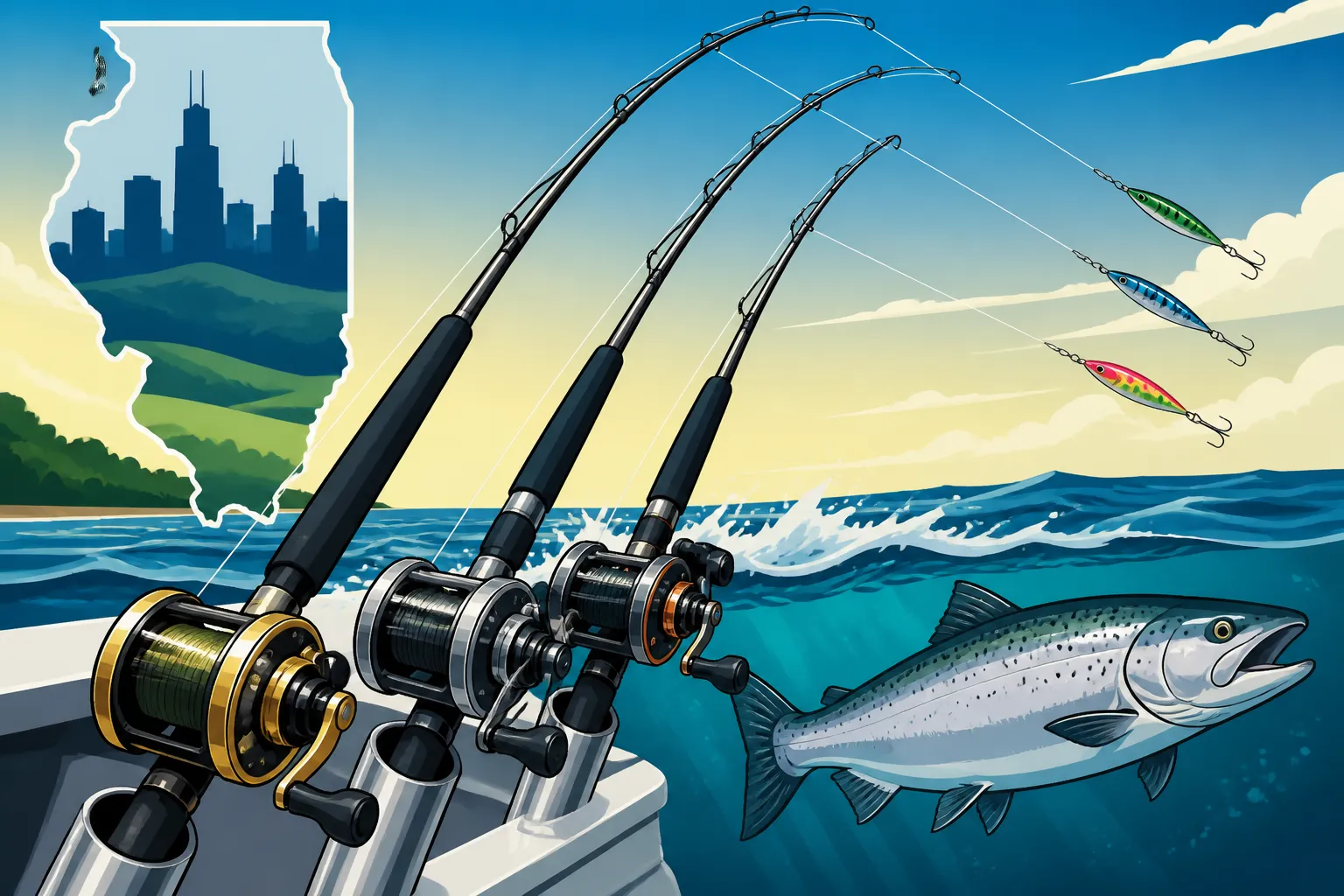
Best Trolling Rods for Lake Michigan Salmon
For anglers venturing onto Lake Michigan in Illinois, the quest for trophy salmon and trout is a thrilling challenge. However, showing up with the wrong gear can quickly turn that excitement into frustration, especially when it comes to the specialized world of trolling. This guide is designed to cut through the confusion and help you select the best trolling rods that can stand up to the powerful runs of Lake Michigan's magnificent salmon and trout, ensuring your time on the water is both productive and enjoyable.
Understanding the Unique Demands of Lake Michigan Salmon Trolling
Trolling for salmon and trout on Lake Michigan isn't like casting for bass in a farm pond. It's a highly specialized form of fishing that requires robust equipment capable of handling deep dives, heavy lures, and the sheer power of fish like Chinook (King) salmon and feisty Coho. The sheer size of Lake Michigan, coupled with the depths these fish often inhabit, means your rods need to be built for specific tasks.
The Forces at Play: Depths, Currents, and Powerful Fish
When you're out on Lake Michigan, you're not just dealing with the fish. You're contending with complex underwater currents, the tremendous drag from deep-diving lures or lead core lines, and the constant strain of running multiple lines with downriggers or planer boards. A rod that's too flimsy will buckle under the pressure, leading to missed strikes, lost fish, or even broken gear. You need a rod that can absorb shock, maintain a good lure presentation, and still have the backbone to fight a 20-pound king salmon. It’s a delicate balance that demands specific characteristics from your trolling rods.
Think about it: a downrigger ball can weigh upwards of 12-15 pounds, and you're adding the drag of a spoon or fly on top of that. If you're running lead core line, the weight and drag can be even more substantial, especially when you factor in hundreds of feet of line. Your rod needs to be able to "load" effectively under this constant pressure without feeling overloaded, allowing the downrigger clip to release cleanly when a fish strikes. Lake Michigan Salmon Season Timing in Illinois can dictate even deeper presentations, further emphasizing the need for appropriate gear.
Different Trolling Methods, Different Rod Needs
Not all trolling is created equal, and neither are the rods. The type of trolling you employ—be it downriggers, planer boards, Dipsy Divers, lead core, or copper line—will dictate the ideal characteristics of your rod. For instance, a rod used for downrigging needs a softer, more forgiving tip to absorb the shock of the downrigger clip release and to indicate a subtle strike, while still having power in the mid-section. Conversely, a rod designed for planer boards often benefits from greater length to spread lines wide and a more robust action to handle the drag of the board itself.
It's crucial to consider how many rods you plan to run and in what configuration. A typical spread might involve two downrigger rods, two planer board rods, and perhaps a couple of Dipsy Diver rods. Each position on the boat requires a rod with specific capabilities to work efficiently with its designated gear. This specialized approach ensures that each line is fishing effectively and minimizes tangles, making for a much more enjoyable day on the water, even when the fish are hitting hard.
Key Features to Look for in a Lake Michigan Trolling Rod
Choosing the right trolling rod isn't just about grabbing the longest, stiffest thing you can find. It's about matching specific rod characteristics to the demands of Lake Michigan salmon and the techniques you'll be using. Let's break down what truly matters.
Rod Action and Power: The Backbone of Your Setup
Rod action refers to where the rod bends when pressure is applied. For trolling, you'll generally look for moderate to moderate-fast actions. A moderate action rod bends more towards the middle, offering a smoother, more parabolic curve under load. This is excellent for absorbing the sudden shock of a salmon strike, especially when running multiple lines or when using downriggers, where the rod tip needs to "load up" before releasing from the clip. A moderate-fast action bends primarily in the upper third, providing a good blend of sensitivity and power. This can be versatile for various trolling methods.
Power, on the other hand, describes the rod's lifting strength or backbone. For Lake Michigan salmon, you'll almost always want a medium-heavy or heavy power rod. These fish are strong, and you'll need the leverage to turn their heads and bring them to the net. A medium-heavy power is usually sufficient for Coho and smaller Chinook, while heavy power is ideal for larger King salmon and lake trout, especially in deeper water. Trying to fight a hard-charging Chinook with an underpowered rod is a recipe for a long, exhausting battle that often ends with a broken line or a pulled hook.
Rod Length and Materials: Reaching Out and Standing Strong
The length of your trolling rod is critical and depends heavily on your chosen technique. For downriggers, rods between 7 and 9 feet are common. This length provides enough flex to load properly and keeps the line clear of the boat. For planer boards, longer rods, typically 9 to 12 feet, are preferred. The extra length allows you to spread your lines far out from the boat, covering a wider swath of water and preventing tangles, which is vital when running a full spread. Imagine trying to run two lines off each side of your boat with short rods—it would be a tangled mess in no time!
When it comes to materials, fiberglass, composites, and carbon fiber are the main players. Fiberglass rods are known for their durability and parabolic action, making them forgiving and excellent for absorbing shocks. They're often a bit heavier but are workhorses for trolling. Composite rods blend fiberglass and graphite, offering a good balance of strength, sensitivity, and lighter weight. Carbon fiber (graphite) rods are the lightest and most sensitive, providing excellent feedback on lure action and subtle strikes, but they can be more brittle than fiberglass if mishandled. Many anglers find composite rods to be the sweet spot for versatility and performance on Lake Michigan.
Quality Components: Guides, Reel Seats, and Handles
Don't overlook the smaller details of a trolling rod; they can make a huge difference in performance and longevity.
- Guides: Look for guides with sturdy frames and durable inserts, such as aluminum oxide or silicon carbide (SiC). These materials are excellent at reducing friction, allowing your line to flow smoothly, and resisting wear from braided or monofilament lines, especially when under the constant stress of trolling. Cheap guides can develop grooves, fraying your line and eventually leading to break-offs.
- Reel Seats: Your reel seat needs to be robust and securely hold your trolling reel in place. Heavy-duty graphite or aluminum reel seats are ideal. They should feature strong locking nuts that won't loosen under the constant vibration and strain of trolling. A loose reel is a major headache and can even lead to your reel falling off mid-fight.
- Handles: Comfortable, durable handles are a must for long days of trolling. EVA foam or cork are common materials, offering good grip even when wet. The length of the handle is also important; longer handles provide better leverage for fighting big fish and can be tucked under an arm or in a rod holder more securely. Many trolling rods feature slick, heavy-duty butt caps designed to slide easily in and out of rod holders, like those found on specific trolling rods at Bass Pro Shops.
Choosing rods with these quality components will ensure your investment lasts through many seasons of chasing salmon on Lake Michigan. Best Rods and Reels for Illinois Anglers provides a broader look at selecting gear.
| Feature | Downrigger Rods | Planer Board Rods | Dipsy Diver Rods | Lead Core/Copper Rods |
|---|---|---|---|---|
| Action | Moderate to Moderate-Fast | Moderate to Moderate-Fast | Moderate-Fast to Fast | Moderate to Moderate-Fast |
| Power | Medium-Heavy to Heavy | Medium-Heavy to Heavy | Heavy | Heavy |
| Length | 7' to 9' | 9' to 12' | 8' to 10' | 8' to 10' |
| Material | Fiberglass or Composite | Composite or Fiberglass | Composite or Fiberglass | Fiberglass or Composite |
| Guides | Durable, Friction-Reducing Inserts | Durable, Friction-Reducing Inserts | Heavy-Duty, Friction-Reducing | Heavy-Duty, Abrasion-Resistant |
| Reel Seat | Heavy-Duty Graphite or Aluminum | Heavy-Duty Graphite or Aluminum | Heavy-Duty Aluminum | Heavy-Duty Aluminum |
| Handle | Comfortable EVA/Cork, Long Butt | Comfortable EVA/Cork, Long Butt for leverage | Strong EVA/Cork, Durable Butt Cap | Strong EVA/Cork, Durable Butt Cap |
| Typical Use | Release from downrigger clip; light tip | Spread lines wide; absorb board drag | Handle aggressive dives and heavy drag | Manage heavy line weight and subtle bites |
Building Your Salmon Trolling Rod Arsenal
Once you understand the individual characteristics, it's time to think about how they come together to form a cohesive trolling spread. Most serious Lake Michigan anglers don't just have one or two rods; they have a dedicated set, each tailored for a specific role.
Matching Rods to Your Trolling Spread
A well-planned trolling spread on Lake Michigan might include anywhere from 4 to 10 rods, depending on your boat size, local regulations, and experience. For a typical setup, you'll want a mix:
- Downrigger Rods: These are often your shorter rods (7-8.5 feet) with a moderate action and medium-heavy power. Their job is to absorb the rod bend from the downrigger ball and then provide a clear "snap" when a fish hits and pulls the line from the release clip. The forgiving tip ensures the lure runs true while clipped in and also helps prevent the hook from tearing out during a salmon's violent head shakes near the boat. You can find excellent options specifically designed for this purpose, often at larger retailers like Bass Pro Shops, which cater to Great Lakes anglers.
- Planer Board Rods: These will be your longest rods (9-12 feet) with medium-heavy to heavy power and a moderate to moderate-fast action. The extra length is crucial for getting your lines out to the side, away from the prop wash and boat traffic. They need to be stout enough to handle the pull of a large planer board, especially when running multiple lines off a single board. A strong butt section is key here for leverage against both the board and a fighting fish.
- Dipsy Diver/Dispy Diver Rods: These specialized rods are typically 8-10 feet long with a heavy power and a moderate-fast to fast action. Dipsy Divers create significant drag and can take lures much deeper than many other methods. The rod needs to withstand this constant pressure and still have the power to turn a hard-charging salmon when it hits the diver. A more robust tip section helps manage the diver's aggressive diving action.
- Lead Core/Copper Line Rods: For these heavy lines, rods usually range from 8-10 feet with heavy power and a moderate to moderate-fast action. The significant weight of lead core and copper lines demands a rod with a strong backbone to handle the added strain and to keep the line moving through the water effectively. The action allows for the deep bend from the heavy line without feeling completely overloaded.
Mixing and matching these rod types ensures you can present a wide array of lures at different depths and distances, maximizing your chances of finding where the salmon are feeding. Lake Michigan Salmon Trolling Setup goes into more detail on how these pieces fit together.
Considerations for a Budget-Friendly Setup
Let's be real, outfitting a boat for Lake Michigan salmon trolling can get expensive, fast. If you're just starting out, or you're looking to upgrade without breaking the bank, there are smart ways to build a capable arsenal. You don't need top-of-the-line gear for every single rod, especially for your initial setup.
Consider starting with versatile composite rods that can pull double duty. A good 8.5-foot, medium-heavy, moderate-action composite rod can often serve reasonably well for both downriggers and lighter Dipsy Diver setups in a pinch. Focus on getting a few dedicated rods for your primary methods (e.g., two good downrigger rods and two solid planer board rods), then fill in with more versatile, budget-friendly options for your secondary lines. Companies offer solid entry-level trolling rods that perform far better than generic freshwater setups. Look for sales or combo deals on platforms like Amazon, but always prioritize quality components even on more affordable rods. A strong reel seat and durable guides are non-negotiable, regardless of the price point, to prevent mid-season failures.
Care and Maintenance of Your Trolling Rods
Your trolling rods are an investment, and like any good piece of fishing gear, they'll last longer and perform better with proper care. Lake Michigan's environment is tough on equipment, with saltwater-like conditions, constant UV exposure, and the general wear and tear of big fish battles.
Post-Trip Cleaning and Inspection
After every trip on Lake Michigan, take a few minutes to rinse your rods with fresh water. This is crucial for removing any salt spray, fish slime, and accumulated grime that can corrode guides and reel seats over time. Pay special attention to the guide feet and the area around the reel seat where salt can build up. A soft cloth or sponge can help dislodge any stubborn residue.
While rinsing, take the opportunity to inspect your rods thoroughly. Check all the guides for any signs of damage—cracks in the inserts, bent frames, or loose wrappings. Feel the inserts for any nicks or grooves that could fray your line. Make sure the reel seat is still tightly secured and inspect the handle for any damage. Catching these issues early can prevent a catastrophic failure when you're hooked into a trophy fish. If you notice any damage, address it before your next outing. Illinois Boating Safety Equipment Checklist includes broader gear checks, but specific rod inspection is vital.
Proper Storage and Transportation
How you store and transport your trolling rods can significantly impact their lifespan. Never just toss your rods into a pile in your garage or the bed of your truck. This is a surefire way to break guide inserts, bend frames, or even snap a rod tip.
Invest in rod sleeves or a dedicated rod rack for storage in your boat or garage. When transporting, especially if you have multiple rods, a rod case or a system that keeps them separated and secure is essential. Many anglers use horizontal or vertical rod holders in their boats that are designed to cradle trolling rods safely during transit on the water. If you're driving to the lake, consider using a specialized roof-mounted rod carrier or a secure in-vehicle system to prevent movement and damage. Protecting your rods from impacts and excessive bending will ensure they're ready for action every time you hit the water. This also prevents damage when you're launching your boat at busy spots, something to remember from Illinois Boat Trailer and Ramp Tips.
Remember, your trolling rods are the direct connection between you and that hard-fighting salmon. Treating them with care will not only extend their life but also give you greater confidence when that reel starts screaming and you know a big one is on the other end.
Disclaimer
This article is for general informational purposes only and does not constitute professional advice. Laws, prices and regulations vary by location and change over time. Consult a qualified professional for guidance on your specific situation.