How Much Does Illinois Boat Registration Cost for a Class 1 Boat
It's no secret that getting out on the water in Illinois brings a unique sense of peace and excitement. But before you can cast a line or simply cruise, many boat owners find themselves tangled in the sometimes confusing world of boat registration, especially when it comes to figuring out how much it's actually going to cost. It can feel like a maze of fees and regulations. This guide is here to untangle all of that for you, specifically focusing on Class 1 boats, so you can understand the costs involved and confidently get your vessel registered and ready for the water.
Understanding Illinois Boat Classes and Registration Basics
Before we dive into the nitty-gritty of costs, it's really important to understand what makes a boat a "Class 1" vessel in Illinois. The state categorizes boats based on their length, and these classifications directly impact the registration fees you'll pay. This system helps the Illinois Department of Natural Resources (IDNR) manage and fund boating-related services, from safety patrols to maintaining our beautiful waterways. It might seem like just another hoop to jump through, but these registrations contribute to the overall health and enjoyment of our lakes and rivers for everyone.
What Defines a Class 1 Boat?
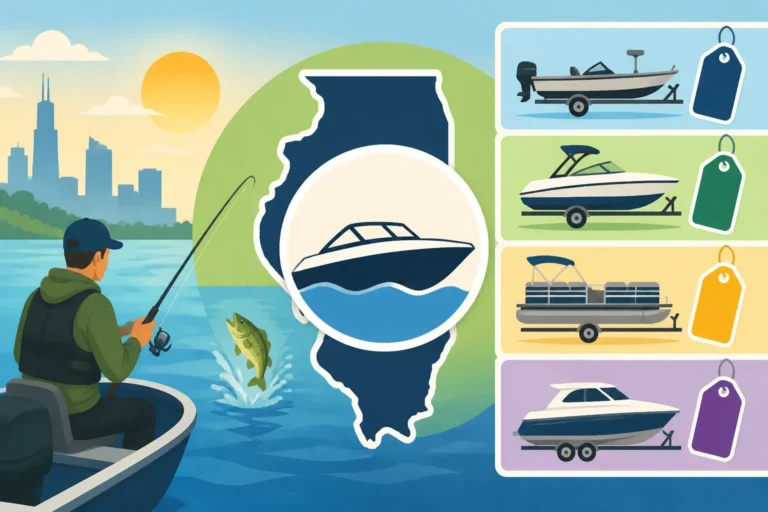
In Illinois, a Class 1 boat is generally defined as any vessel less than 16 feet in length. This typically includes many of the smaller fishing boats, jon boats, smaller runabouts, and even some inflatable boats or canoes/kayaks if they are propelled by a motor. If your kayak or canoe doesn't have a motor, you usually don't need to register it, which is a nice perk for paddle-powered enthusiasts. But once you add that small outboard or even an electric trolling motor, it usually tips it into the registration requirement category. It's a common misconception that electric motors are exempt, but if it's motorized, it likely needs to be registered.
For instance, if you've got a 14-foot aluminum fishing boat that you use to chase bass on Lake Shelbyville, or a 12-foot utility boat with a 5 HP outboard that you use for crappie on Rend Lake, chances are you're looking at a Class 1 registration. These are the workhorses for many recreational anglers and casual cruisers, and understanding their classification is the first step in figuring out your costs.
Why Do We Even Need to Register Boats?
You might wonder why all this paperwork is necessary just to enjoy a day on the lake. Boat registration serves several vital purposes. First and foremost, it's about safety. Registration allows the IDNR and other law enforcement agencies to identify boats, track ownership, and respond more effectively in emergencies. Imagine if your boat somehow drifted away or was stolen; without registration, identifying and recovering it would be incredibly difficult.
Beyond safety and identification, the fees collected from boat registrations directly support the very resources we love to use. These funds go towards maintaining boat ramps, performing vital safety checks, supporting rescue operations, and funding conservation efforts that keep our fish populations healthy. So, while it can feel like a burden when you're filling out forms, remember that your registration plays a part in preserving the Illinois fishing and boating experience for everyone, including future generations. It's truly an investment in the waterways we cherish. For more general information about getting your boat on the water, you might want to check out Illinois Boat Registration Basics for First-Time Owners.
Illinois Boat Registration Fees for Class 1 Vessels
Now for the question that brought you here: how much does it actually cost to register a Class 1 boat in Illinois? The good news is that for these smaller vessels, the fees are generally on the more affordable end of the spectrum compared to larger boats. The Illinois boat registration system operates on a biennial (two-year) cycle, meaning you pay once every two years. This helps simplify things by reducing the frequency of renewal.
Breaking Down the Initial Registration Fee
For a Class 1 boat, which, as we discussed, is any vessel less than 16 feet in length, the standard fee for a two-year registration is typically quite reasonable. At present, if you're registering a Class 1 boat for the first time or renewing it, you're usually looking at a fee that's designed to be accessible for smaller boat owners. This flat fee covers the entire two-year period, allowing you to enjoy your boating without annual worries about expiration dates. Remember that these fees are set by the state and can change, so it's always wise to double-check the current figures on the official IDNR website when you're ready to register. For a broader look at how fees are structured, you can learn more in Boat Registration Cost by Class in Illinois.
It's important to differentiate between the registration fee itself and any sales tax you might pay if you're purchasing a new or used boat. The registration fee is purely for the privilege of operating your vessel on Illinois waters, whereas sales tax is a one-time cost associated with the purchase transaction itself. Most folks factor in the registration as part of their initial investment, and it’s a necessary step to avoid penalties down the line.
Understanding Renewal Costs
Once you've got your Class 1 boat registered, the process repeats every two years. The renewal cost for a Class 1 boat is generally the same as the initial registration fee. The biennial cycle means your registration will have an expiration date, which in Illinois is consistently September 30th of the second year. So, if you registered your boat in March of one year, it would be valid until September 30th of the following year. It's crucial to mark your calendar! Missing that deadline can lead to complications and potential late fees.
Keeping track of this date can be a bit of a hassle, but many boaters set up reminders or even subscribe to email notifications from the IDNR if available. The state usually sends out renewal notices, but it's ultimately your responsibility as the boat owner to ensure your registration is current. You don't want to get caught on the water with an expired registration, as that can lead to fines and a less-than-pleasant conversation with a game warden. For a deeper dive into renewal specifics, check out Illinois Boat Registration Expiration and the September 30 Deadline.
Potential Additional Costs to Consider
While the registration fee is the primary cost, there are a few other potential expenses you might encounter. If you're buying a used boat, there could be a title transfer fee. All motorized boats, including Class 1 vessels, are required to be titled in Illinois, and transferring that title into your name incurs a separate, one-time fee. This is crucial for establishing legal ownership.
Another potential cost comes if you let your registration expire. The IDNR typically imposes late fees for renewals that are submitted after the September 30th deadline. These can add up, so it's always best to renew on time. Additionally, if you're using your Class 1 boat for specific activities like commercial fishing (though less common for Class 1) or certain tournaments, there might be other permits or licenses required, but these are usually separate from the standard boat registration. For a comprehensive look at what new owners might pay, see New Boat Owner Guide to Illinois Registration Fees.
Here's a quick overview of potential costs:
| Cost Type | Description | Class 1 Boat (Less than 16 ft) Fee Shape | Notes |
|---|---|---|---|
| Registration (Biennial) | Fee to operate your motorized vessel on Illinois waters. | Typically affordable, flat fee for 2 years | Required for all motorized vessels. |
| Title Application | Fee to apply for a new or transfer an existing boat title. | One-time fee, separate from registration | Required for proof of ownership. |
| Late Renewal Penalty | Applied if registration is not renewed by the September 30th expiration. | Additional, often fixed, fee | Varies; avoid by renewing on time. |
| Sales Tax | One-time tax on the purchase price of a new or used boat. | Percentage of purchase price | Paid to the state at the time of purchase/transfer of ownership. |
| Duplicate Decal/Card | Fee for replacement of lost or damaged registration decals or card. | Small, fixed fee | Only if needed. |
The Registration Process: How to Get Your Class 1 Boat on the Water
Once you've got your head wrapped around the costs, the next step is actually going through the registration process. It might seem daunting, but it's fairly straightforward if you gather your documents beforehand. The state has made it increasingly convenient to register your boat, offering several options to accommodate different preferences.
Gathering Your Documentation
This is probably the most critical step. Before you even think about filling out a form, make sure you have all the necessary paperwork in order. For a new Class 1 boat purchase from a dealer, you'll typically need your bill of sale and a manufacturer's statement of origin (MSO). If you're buying a used Class 1 boat from a private seller, you'll need the original signed-over title, a bill of sale, and proof of sales tax payment (if applicable). Don't overlook the title – it's your definitive proof of ownership in Illinois.
You'll also need a valid form of identification, such as your driver's license. It's a good idea to make copies of everything for your records before sending anything off or bringing it to an office. Missing a single document can cause delays, which can be frustrating when you're eager to hit the water. It’s a good habit to keep all your important boat-related papers organized in a dedicated folder.
Navigating the Application Process
Illinois offers a few ways to register your Class 1 boat. The most popular method for many people is online. The IDNR website has a dedicated portal where you can fill out the application electronically, pay the fees with a credit card, and often print out a temporary registration right away. This temporary permit allows you to legally operate your boat while you wait for your official decals and registration card to arrive in the mail. This is a huge convenience, especially if you're eager to get out on the water quickly.
Alternatively, you can choose to complete a paper application form. These forms are usually available for download on the IDNR website, or you can pick them up in person at IDNR offices or even some local sporting goods stores. Places like Bass Pro Shops sometimes have these forms available, and their knowledgeable staff might even be able to answer some of your basic questions about the process, though it's always best to rely on official IDNR channels for definitive guidance. Once completed, you mail the application and your payment to the address provided on the form.
What Happens After You Register?
After your application is processed and approved, the IDNR will mail you your official boat registration card and the numbered decals. These decals typically need to be prominently displayed on both sides of your boat's bow. It's not just for aesthetics; these numbers and decals are your proof that your boat is legally registered and make it easy for law enforcement to identify your vessel.
Always keep your physical registration card on board your Class 1 boat whenever you're out on the water. While digital copies can be convenient, having the physical card is generally required and can save you hassle during a routine check. Think of it like your driver's license for your car—you wouldn't drive without it. The same goes for your boat's registration. Losing these important documents means you'll need to apply for duplicates, which often comes with a small replacement fee. Keeping everything in a waterproof pouch on your boat is a smart move.
Common Questions and Important Considerations for Class 1 Boat Owners
Even after you've successfully registered your Class 1 boat, there are always a few lingering questions or situations that might pop up. Knowing these details upfront can save you headaches down the road and ensure you remain compliant with all state regulations.
New vs. Used Class 1 Boat Registration
The registration process has slight differences depending on whether your Class 1 boat is brand new or previously owned. For a brand-new boat purchased from a dealership, the dealer will often handle much of the initial paperwork for you, making the process relatively smooth. You'll typically get a temporary registration from them, and they'll submit the permanent paperwork.
For a used Class 1 boat purchased from a private seller, you, as the buyer, are primarily responsible for ensuring the title is properly transferred and the registration is updated. This means you'll need the original title, signed over by the previous owner, along with a bill of sale. It's critical to ensure the title is free of any liens and that the seller has properly endorsed it. Any mistakes here can prevent you from legally transferring ownership into your name. Always confirm the previous owner's registration is current or at least not heavily overdue, though you'll be starting fresh with your own biennial cycle.
Keeping Your Registration Valid and Up-to-Date
Life happens, and sometimes things slip through the cracks. But letting your Class 1 boat registration expire is a definite no-go. The September 30th deadline for renewal is firm, and penalties can apply if you're late. It's worth setting a reminder on your phone or marking it clearly on a calendar far in advance. The IDNR typically sends out renewal notices as a courtesy, but don't solely rely on them; sometimes mail gets lost or addresses aren't updated.
If you move, remember to update your address with the IDNR. This ensures you receive any important notices, including renewal reminders. You can usually do this easily through the IDNR website. Just like with fishing licenses, keeping your information current is key. If you need to renew, the process is very similar to how you registered the first time, often available online. For details specific to renewing, you can check out Illinois Boat Registration Renewal Cost Compared to New Registration.
Other Essential Boating Regulations for Class 1 Vessels
While registration gets you legal, there are other crucial regulations for Class 1 boats that you must be aware of for safety and compliance. First, life jackets are non-negotiable. Illinois Life Jacket and PFD Rules dictate that you must have a Coast Guard-approved life jacket for every person on board your vessel, and children under 13 must wear one while underway. This isn't just a rule; it's a lifesaver.
Furthermore, if your Class 1 boat is propelled by a motor of 10 horsepower or greater, and you were born on or after January 1, 1998, you are required to possess an Illinois Boater Education Card. This card proves you've completed a state-approved boating safety course. Even if you're exempt due to your birth year, taking a course is highly recommended for anyone operating a boat. Knowing the rules of the road and essential safety practices is paramount. You can find more information about this at Illinois Boater Education Card Requirements.
Finally, every boat needs basic safety equipment. Beyond life jackets, this includes things like a sound-producing device (like a whistle or horn), navigation lights if operating after sunset or before sunrise, and a fire extinguisher if your boat has an enclosed fuel compartment or other permanent fuel tank. You can find many of these essential safety items at reputable outdoor retailers like Bass Pro Shops or even conveniently through online platforms like Amazon. Having a well-stocked Illinois Boating Safety Equipment Checklist is not just about avoiding fines; it's about being prepared for anything on the water.
This article is for general informational purposes only and does not constitute professional advice. Laws, prices and regulations vary by location and change over time. Consult a qualified professional for guidance on your specific situation.