Best Crappie Lakes in Illinois for a Full Cooler
There's nothing quite like the thrill of a crappie bite – that subtle tug that tells you dinner is about to be served. But let's be honest, finding those prolific crappie holes can sometimes feel like searching for a needle in a haystack, especially in a state as vast and water-rich as Illinois. If you've ever felt the frustration of spending a day on the water only to come home with an empty cooler, you're not alone. This guide is dedicated to cutting through the guesswork, showing you the absolute best crappie lakes in Illinois where you can consistently fill your cooler, complete with specific insights and actionable tips.
Understanding Illinois Crappie Fishing
Crappie are undeniably one of Illinois's most beloved panfish, cherished by anglers for their spirited fight and delicious, flaky white meat. They're often found schooled up, meaning when you find one, you're likely to find many more – which is precisely why they're a top target for anglers looking to bring home a substantial catch.
Why Crappie are Such a Popular Target
Crappie provide a fantastic angling experience for everyone from seasoned veterans to excited youngsters. They're accessible, often found in relatively shallow waters during key seasons, and don't require overly complex gear. For many families, a crappie trip is a rite of passage, creating lasting memories and introducing new generations to the joy of fishing. Their cooperative nature and schooling tendency make them incredibly rewarding, perfect for those days when you truly want to feel like a successful angler.
Beyond the sheer fun of catching them, crappie are prized for their culinary value. Fried crappie fillets are a staple in many Midwestern households, and their mild flavor makes them appealing even to those who aren't usually big fish eaters. This combination of an enjoyable catch and a tasty meal firmly cements crappie's place as a top species for anglers across Illinois.
Identifying Black Crappie vs. White Crappie in Illinois Waters
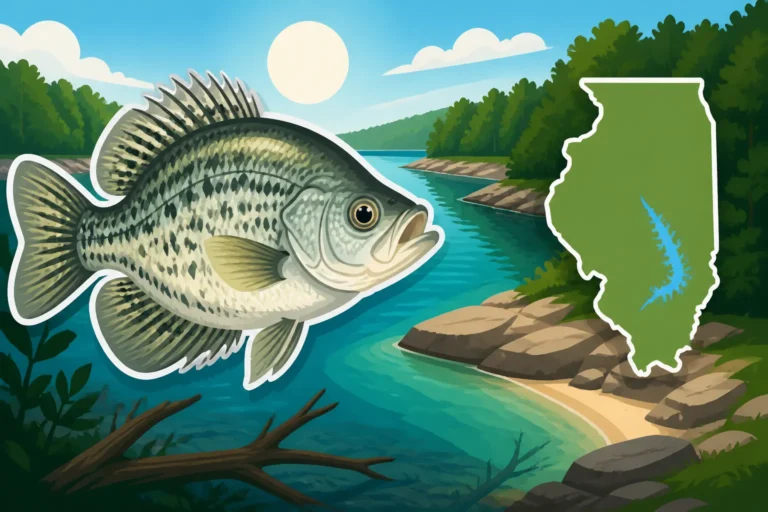
While both black and white crappie are abundant in Illinois, knowing the difference can sometimes give you an edge, as their preferred habitats can vary slightly. Black crappie generally prefer clearer, cooler water with more vegetation and structure, while white crappie tend to tolerate murkier, warmer conditions and are often found in open water near brush piles or river channels.
You can tell them apart by counting the dorsal fin spines: black crappie typically have 7 or 8 distinct dorsal spines, giving their dorsal fin a more pronounced, angular look. White crappie, on the other hand, usually have 5 or 6 dorsal spines, which results in a slightly smoother curve to their fin. Also, black crappie often have irregular dark spots scattered across their silvery-gold bodies, while white crappie tend to have more uniform vertical bars or stripes. For a deeper dive into these distinctions, check out our guide on how to tell the difference between Black Crappie vs White Crappie: How to Tell Them Apart.
General Crappie Behavior and Habitat
Crappie are ambush predators that love structure. Think submerged timber, brush piles, rock formations, bridge pilings, docks, and even dense weed beds. These areas provide cover from predators, a place to hide from bright sunlight, and excellent ambush points for their prey – primarily small minnows and insects. Their behavior changes significantly with the seasons, but their love for structure remains constant.
In spring, as water temperatures rise, crappie move into shallower waters to spawn. This is often the easiest time to find them, as they concentrate in predictable areas. As summer progresses, they retreat to deeper, cooler waters, often suspending over structure or along drop-offs. Fall sees them moving shallower again as they feed heavily to prepare for winter, while winter finds them deep, often suspended in schools near main lake channels or deep timber. Understanding these seasonal movements is crucial to consistent success.
Top Crappie Lakes in Illinois for Abundant Catches
Illinois is blessed with numerous fantastic crappie fisheries, but a few consistently stand out for their ability to produce not just numbers, but also quality fish. These lakes have developed reputations for being crappie havens, drawing anglers from across the state and beyond.
Rend Lake: A Southern Illinois Crappie Powerhouse
When you talk about crappie in Illinois, Rend Lake almost always comes up first. Located in Southern Illinois, this massive reservoir spans over 18,000 acres and is practically synonymous with excellent crappie fishing. Its vast expanse of submerged timber, brush piles, and countless fishing lanes make it an ideal habitat for both black and white crappie, which thrive here.
Anglers consistently report high catch rates at Rend Lake, with many fish falling into the desirable 10-12 inch range, perfect for the frying pan. Key areas to focus on include the numerous flooded timber areas, especially around the Nason Point, the Casey Fork, and the Big Muddy arms. The various rip-rap areas along the causeways and bridges are also prime spots, particularly during the spring spawn. Many local guides, some of whom can be found through services like FishingBooker, specialize in navigating Rend's timber and brush to find those honey holes. For a full breakdown of this prime crappie destination, refer to our comprehensive Rend Lake Fishing Guide for Illinois Anglers.
Lake Shelbyville: Consistent Catches and Diverse Structures
Further north, in Central Illinois, Lake Shelbyville offers another phenomenal crappie experience. While perhaps not as timber-dense as Rend, Shelbyville's diverse underwater landscape of standing timber, creek channels, deep points, and brush piles provides excellent crappie habitat. This 11,100-acre lake is known for producing consistent catches, and anglers often pull out both black and white crappie here.
During the spring, the shallow coves and protected areas, especially those with submerged brush, are teeming with spawning crappie. As the weather warms, look for them along the main river channel, especially around submerged points and drop-offs in the West Okaw and Kaskaskia River arms. The standing timber near the Wolf Creek and Lithia Springs areas are also year-round magnets for crappie. Whether you're casting jigs from the bank or using advanced electronics from a boat, Lake Shelbyville offers rewarding crappie action. Discover more about this central Illinois gem in our detailed Lake Shelbyville Fishing Guide.
Carlyle Lake: Illinois's Largest Lake for Crappie Pursuits
As Illinois's largest man-made lake, Carlyle Lake boasts over 24,000 acres of prime crappie territory. Located in Central Illinois, not far from Lake Shelbyville, Carlyle is a shallower, often turbid lake, which means white crappie tend to dominate the catches here, though healthy populations of black crappie are also present. The lake's vast flats, abundant brush piles, and old creek channels make it incredibly productive for crappie.
Prime crappie spots at Carlyle include the numerous rip-rap areas along the dam and causeways, especially early in the spring. The flooded timber and stump fields in the Kaskaskia River arm and the various shallow bays and coves throughout the lake also hold large numbers of crappie, particularly when they move up to spawn. Many of the crappie caught here are quality fish, making Carlyle a go-to for anglers hoping to fill a cooler. Local bait shops are invaluable resources for current conditions and hot spots, and if you're planning a trip, consider looking into a local guide to help navigate this expansive water body. To plan your trip, consult our Carlyle Lake Fishing Guide.
Here’s a quick comparison of these top crappie lakes:
| Lake Name | Primary Crappie Species | Key Features / Habitat | Best Season | Average Crappie Size (Inches) | Primary Techniques |
|---|---|---|---|---|---|
| Rend Lake | Black & White | Flooded timber, brush piles, rip-rap | Spring, Fall | 10-12 | Jigging, minnows, spider rigging |
| Lake Shelbyville | Black & White | Standing timber, creek channels, brush piles | Spring, Fall | 9-11 | Jigging, minnows, trolling, tightlining |
| Carlyle Lake | White (dominant) | Shallow flats, brush piles, rip-rap | Spring, Fall | 9-12 | Jigging, minnows, trolling, casting, tightlining |
Key Strategies for Filling Your Cooler with Crappie
Knowing where to fish is only half the battle; knowing when and how to fish for crappie is what truly leads to a full cooler. Crappie are creatures of habit, and understanding their seasonal patterns and preferred presentations will dramatically increase your success.
Best Times of Year to Target Illinois Crappie
Crappie fishing in Illinois is a year-round sport, but certain seasons offer peak opportunities for consistent catches:
- Spring (Pre-Spawn & Spawn): This is arguably the best time of year. As water temperatures climb into the 50s and 60s Fahrenheit, crappie move shallow to prepare for and engage in spawning. They become highly concentrated and aggressive, making them easier to locate and catch. Look for them in protected coves, shallow flats, and around submerged brush in 2-8 feet of water. This is when you can really put numbers in the boat. For a deeper understanding of this crucial period, explore our Illinois Crappie Spawn Season Guide.
- Fall: As summer heat breaks and water temperatures cool, crappie become very active again, feeding heavily to bulk up for winter. They'll often move back into shallower areas, mirroring their spring patterns but with less emphasis on specific spawning beds. Look for them around deeper brush piles, channel edges, and drop-offs.
- Summer: During the heat of summer, crappie typically retreat to deeper, cooler water. They often suspend over brush piles, along main lake channels, or near thermoclines. Finding them requires good electronics and patience, but summer crappie can be large and willing to bite if you present baits at their depth. Night fishing under lights can also be incredibly productive during summer.
- Winter (Ice Fishing): For dedicated anglers, ice fishing for crappie can be fantastic. They school up tightly in deep holes, along channels, or near submerged timber. Small jigs tipped with a wax worm or minnow are often irresistible to winter crappie. Always prioritize safety when venturing onto the ice.
Effective Baits and Techniques
Crappie aren't overly picky, but certain baits and techniques consistently outperform others:
- Jigging: This is a classic for a reason. Small jig heads (1/32 to 1/8 ounce) tipped with soft plastic bodies (like tubes, grubs, or small paddle tails) are incredibly versatile. Colors like chartreuse, white, black/chartreuse, and pink are perennial favorites. You can cast and retrieve, vertical jig, or even troll jigs slowly. Learn more about this popular method in our guide on Crappie Jigging Techniques.
- Minnows Under a Bobber: Sometimes, the simplest approach is the best. A small live minnow hooked through the lip or back, suspended under a slip bobber at the depth crappie are holding, is deadly effective. This works well from the bank, docks, or boats. The natural movement of the minnow is often irresistible.
- Spider Rigging: For boat anglers, especially on larger reservoirs like Rend or Carlyle, spider rigging is a highly efficient method. This involves deploying multiple rods (often 4-8) from the front of the boat, each with a jig or minnow rig, covering a wide swath of water at various depths as you troll slowly. It's an excellent way to locate fish and present multiple offerings.
- Tightlining: This technique involves fishing a jig or minnow straight down beneath the boat, often with minimal or no weight, allowing the bait to sink slowly into crappie schools detected on your fish finder. It's very precise and effective for suspended crappie. For more specific advice, see our guide on Crappie Tightlining Techniques.
Locating Crappie Hotspots on Any Lake
Finding crappie is all about understanding their preferences for cover, structure, and depth. Start by studying lake maps for creek channels, old river beds, and sharp contour changes. These are natural travel corridors and holding areas.
Next, look for visible cover like fallen trees, boat docks, bridge pilings, and weed lines. If you have a boat and electronics, use your fish finder to locate submerged brush piles, standing timber, and subtle bottom changes that don't show on the surface. Pay attention to areas where the wind has been blowing into a bank for a while, as this can concentrate baitfish and, subsequently, crappie. Don't be afraid to move around until you find them, as crappie often school tightly, meaning one spot might be barren while another just 50 yards away is loaded.
Essential Gear and Regulations for Illinois Crappie Anglers
Having the right equipment and understanding the rules are fundamental to a successful and legal crappie fishing adventure in Illinois. You don't need to break the bank for crappie gear, but a few specific items will make your experience much more enjoyable and productive.
Recommended Rods, Reels, and Line for Crappie
For crappie, light tackle is the name of the game. It allows for better feel of those subtle bites and makes even a modest crappie feel like a trophy.
- Rods: Opt for ultralight or light-action spinning rods, typically 5 to 7 feet in length. Longer rods (7-9 feet) are excellent for spider rigging, as they help spread out your lines. The sensitive tip of an ultralight rod is crucial for detecting crappie's notoriously light bite.
- Reels: Pair your rod with a small spinning reel (500-1000 size). It should balance well with the rod and have a smooth drag system.
- Line: Stick with light monofilament or fluorocarbon line, generally 4 to 6-pound test. Monofilament offers good knot strength and some stretch, while fluorocarbon is nearly invisible underwater and has less stretch for increased sensitivity. Some anglers prefer thin braided line for ultimate sensitivity, often with a fluorocarbon leader. For more general panfish setups, you can also check out our Illinois Panfish Tackle Setup guide.
Illinois Crappie Regulations and Licensing
Before you even cast a line, ensure you're compliant with Illinois's fishing regulations. All anglers aged 16 and over are required to possess a valid Illinois fishing license. You can purchase these online, at bait shops, or through various vendors like sporting goods stores. It's a straightforward process, but essential to avoid any legal trouble. For detailed information on obtaining your license, refer to our guide on How to Get an Illinois Fishing License.
Beyond the general license, be aware of statewide and site-specific regulations for crappie. While statewide daily catch limits often apply, many individual lakes, especially the larger reservoirs, have their own specific length and creel limits for crappie designed to protect the fishery. For instance, a lake might have a 10-inch minimum length limit and a 15-fish daily creel limit, whereas other waters might be different. Always consult the current Illinois Fishing Information Guide or check the Illinois Department of Natural Resources (IDNR) website for the specific lake you plan to fish. Understanding these nuances is key to responsible angling. Our Illinois Fishing Regulations Overview provides a great starting point for understanding the broader rules.
Disclaimer
Please note: Fishing conditions, regulations, and fish populations can change. Always consult the latest Illinois Department of Natural Resources (IDNR) regulations and local advisories before heading out on the water. This guide is for informational purposes only and does not constitute official legal advice.